
Do you dream of a quiet backyard? Many struggle with neighbor views. But, you can use botanical elements for a living wall.
Choosing the right plants makes barriers feel organic and inviting. It’s a great way to make your home look better.
Learning to grow flowers for natural privacy screens is rewarding. These walls are a soft, pretty choice instead of wood or metal fences. They change with the seasons, adding beauty to your home.
Planting smart is key to good outdoor privacy solutions. Mixing heights and textures blocks views and welcomes wildlife. These green walls are beautiful and useful. Start planning your garden today for a more peaceful space.
Assessing Your Garden Space for Privacy Needs
Turning your backyard into a private spot starts with checking your land. Before buying screening plants, map out your yard. This helps you know where you need privacy.
Identifying Sightlines and Privacy Gaps
Walk around your yard to find spots where others can see in. Stand where you hang out, like your patio. You might see a small area that needs a privacy wall.
Use stakes or flags to mark these spots. This helps you pick the best screening plants for your yard.
Evaluating Sunlight Exposure and Soil Conditions
Watch your garden at different times to see how sunlight changes. Some spots get a lot of sun, others are shady. Choose plants that like the light your spots get.
Test your soil to see what it’s like. Healthy plants need the right soil. Use a table to keep track of your findings before you start.
| Site Factor | Observation Method | Impact on Selection |
|---|---|---|
| Sunlight | Track light for 8 hours | Determines plant species |
| Soil Type | Perform a squeeze test | Affects root health |
| Sightlines | View from seating areas | Dictates placement density |
| Drainage | Check for standing water | Prevents root rot issues |
With this info, you can plan your garden privacy ideas better. Good planning means your garden will look great for a long time.
Selecting the Best Flowers for Natural Privacy Screens
Choosing the right plants is key to a lasting privacy screen. The right screening plants can turn an open yard into a private spot. A good plan makes your garden look great and work well.
Choosing Tall Annuals for Quick Seasonal Coverage
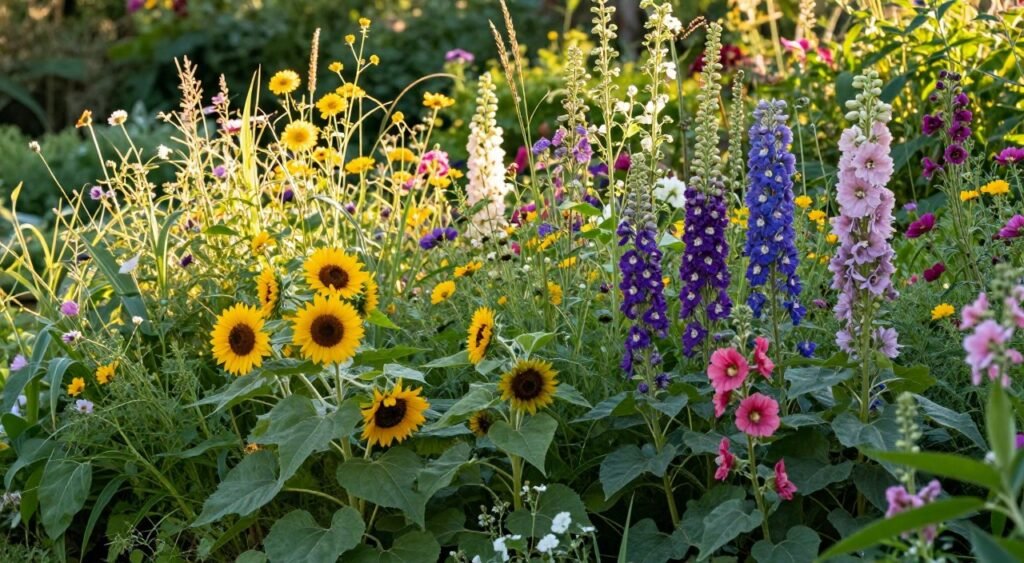
Tall flowering plants grow fast for quick results. Sunflowers, castor beans, or tall zinnias can grow tall in months. They create a colorful, dense barrier in summer.
Annuals finish their life in one season. This lets you change your garden every year. You can try new colors and textures while keeping your space private. Quick growth is their big plus.
Perennial Shrubs and Vines for Long-Term Privacy
Perennial shrubs and vines are great for lasting privacy. These screening plants grow back every year, getting stronger. Shrubs like hydrangeas or viburnums make a thick wall.
Vines on vertical supports add height without taking up much space. They’re perfect for small gardens. Investing in perennials keeps your screen looking good all year.
Considering Native Species for Low-Maintenance Success
Native plants are a smart choice because they fit your local climate well. They need less care than non-native plants. Choosing local plants helps your garden and the environment.
Native tall flowering plants have strong roots for local weather. They also fight off pests and diseases better. Picking these plants means your screen will do well with little work from you.
Preparing the Soil for Optimal Growth
To get a dense privacy screen, you need more than just the right plants. You also need to prepare the soil well. Healthy soil is key for your privacy landscaping to grow tall and block views. Spending time on your garden beds now helps avoid problems later.
Testing and Amending Soil pH
Most plants like slightly acidic to neutral soil. First, test your soil with a home kit. If it’s too acidic, add garden lime. For high pH, use elemental sulfur.
Improving Drainage for Healthy Root Systems
Waterlogged soil hurts your plants. It can cause root rot and poor health. Add coarse sand or fine gravel to clay soils to help water drain. This lets your plants grow strong and deep.
Adding Organic Matter for Nutrient-Rich Beds
Make your garden beds rich with organic matter. Mix in compost, aged manure, or leaf mold. They give nutrients for fast growth. They also make soil better for roots to grow.
| Amendment Type | Primary Benefit | Best Use Case |
|---|---|---|
| Garden Lime | Raises pH levels | Acidic, sour soil |
| Elemental Sulfur | Lowers pH levels | Alkaline, chalky soil |
| Compost | Adds nutrients | All soil types |
| Coarse Sand | Improves drainage | Heavy clay soil |
Designing Your Floral Privacy Layout
Improving your garden aesthetics means planning well. You want your privacy screen to look good and work well. A neat arrangement turns simple flowers into a beautiful barrier.
By organizing your beds, you make a special place. It feels welcoming and thoughtful.
Layering Plants for Depth and Fullness
To make your screen interesting, use plants of different heights. Put the tallest ones at the back. This creates a strong base.
Then, add shorter plants in front. This adds texture and makes your garden design layout more interesting.
This way, your screen looks full and lush from all sides. You can mix different shapes and colors. This makes your garden more lively.
Spacing Requirements for Maximum Density
Spacing is key for a thick screen. Give each plant enough space to grow. But make sure they touch a bit at the end.
Check each plant’s needs for the right spacing. Consistent spacing helps plants grow well. It keeps your garden looking good and private.
Creating Focal Points Within Your Privacy Screen
Your screen should also be beautiful. Add special plants or decorations to make it stand out. This makes your garden look like a work of art.
These special touches add style and interest. They make your garden feel like a masterpiece. Strategic placement makes your screen a highlight of your home’s look.
Planting Techniques for Dense Coverage
The secret to a beautiful garden barrier is in how you plant. Use dense planting techniques for a thick, green wall. This makes your garden look professional and private.
Digging and Positioning Your Plants
Start by digging holes that are twice as wide as the plant’s roots. Don’t dig too deep. Careful attention to plant spacing is key to avoid overcrowding.
Loosen the roots before planting. This helps them grow outward. Backfill with soil and press down to remove air pockets. Consistent depth helps roots grow strong.
Staggering Rows to Eliminate Gaps
Don’t plant in straight lines. Use a zigzag pattern to fill gaps. This creates a dense, multi-layered effect.
Proper plant spacing is crucial. Offsetting plants blocks sightlines, making your screen look natural and strong.
Mulching to Retain Moisture and Suppress Weeds
Apply organic mulch after planting. It keeps soil moist and stops weeds. This helps your plants grow better.
Keep mulch away from stems to avoid rot. A well-mulched bed looks neat and helps your plants thrive.
Supporting Tall Flowering Plants
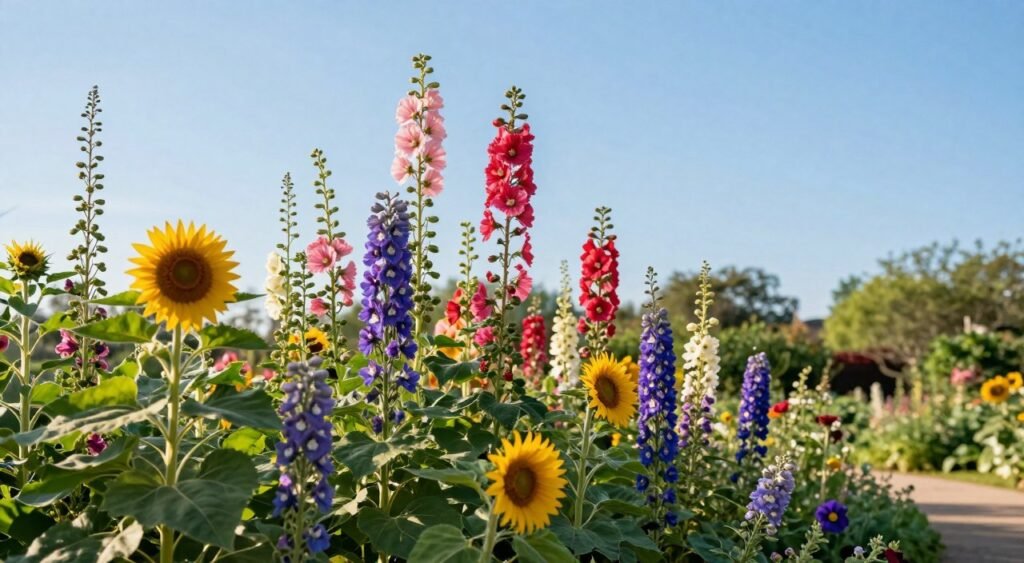
Vertical gardening turns simple flower beds into green walls. Tall flowering plants need support to grow tall. Without it, they may lean or break, ruining your screen.
Installing Trellises and Arbors for Climbing Varieties
Trellises and arbors are key for a dense screen. They help climbing vines grow up, not out. Choose durable materials like cedar or steel for lasting support.
- Cedar trellises look natural and fit well with gardens.
- Metal arbors are strong for heavy vines.
- Wall-mounted panels work great in tight spaces.
Using Stakes and Cages for Sturdy Stems
Not all plants climb, but they still need support. Stakes and cages keep stems upright in bad weather. Put them in early to avoid harming roots.
Place stakes near the stem and use soft ties. This gentle approach keeps the plant healthy and the foliage intact.
Training Vines to Cover Vertical Structures
Training vines makes your garden screen denser. As plants grow, weave new shoots through trellis openings. This fills gaps, making a solid wall of color and texture.
Regular care is crucial for vertical gardening. Check plants weekly to guide growth. This keeps your screen lush and perfect all summer.
Watering and Fertilizing for Lush Foliage
Proper garden irrigation and nutrients are key for a thriving privacy screen. When you give your plants what they need, they grow thick and block views. Follow plant care tips to keep your green wall healthy and vibrant all year.
Establishing a Consistent Watering Schedule
Your plants need steady moisture for thick stems. Watch the weather, as hot and windy days dry out soil fast. In summer, deep waterings are better than shallow sprinkles.
«The secret to a lush garden lies not in the plants themselves, but in the care provided to the soil that sustains them.»
Change your garden irrigation based on your plants’ needs. Some need less water, while others need it often. Always check soil moisture before watering.
Choosing the Right Fertilizer for Flowering Plants
For dense growth, your plants need balanced nutrients. Use a slow-release fertilizer for leaves and flowers. Look for formulas with nitrogen for leaves and phosphorus for blooms.
| Plant Type | Watering Frequency | Fertilizer Focus |
|---|---|---|
| Flowering Shrubs | Deep, weekly | Balanced NPK |
| Climbing Vines | Consistent, moderate | High Phosphorus |
| Tall Annuals | Daily in heat | High Nitrogen |
Applying Mulch to Protect Roots from Heat
Organic mulch is great for soil health. It keeps roots cool in hot afternoons. It also saves water, so you water less often.
Use two to three inches of wood chips or bark around plants. Keep it a few inches from stems to avoid rot. This helps roots grow deep and plants stay healthy.
Pruning and Maintenance for Privacy Density
You can make your garden a lush haven with a few simple steps. Regular garden maintenance keeps your privacy screen lush and full. Just a little time each week keeps your plants thick and private.
Deadheading to Encourage Continuous Blooms
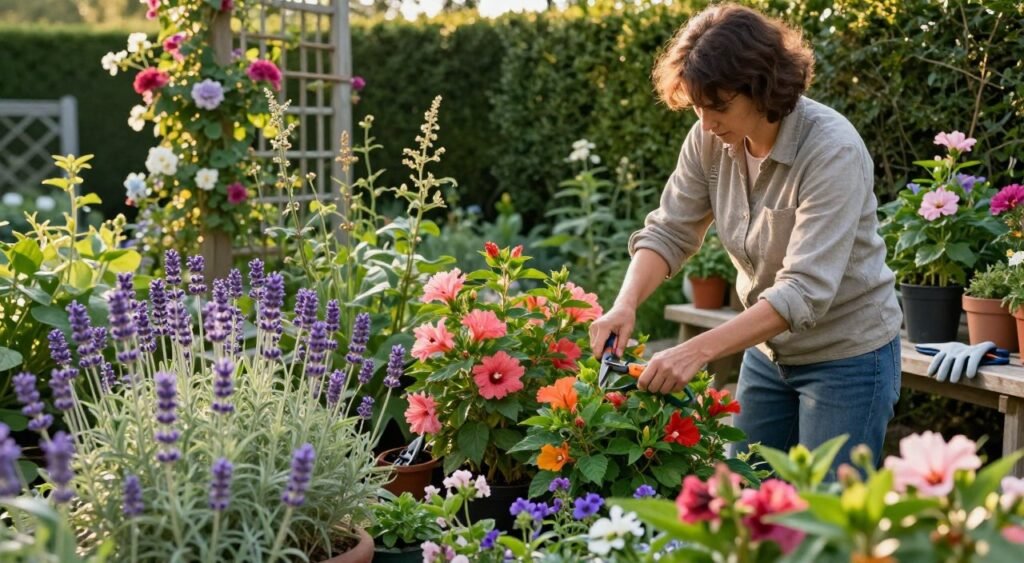
Deadheading is key for flowering privacy screens. It stops plants from making seeds. Instead, they make more flowers and grow stronger.
This simple act keeps your screen colorful all season. Just cut off old flowers above healthy leaves. You’ll see more blooms if you do this often.
Pinching Back Stems to Promote Bushier Growth
Pinching is vital for a denser screen. It makes plants grow wider, not just taller. This is great for pruning shrubs or tall plants.
By removing the top bud, plants grow more bushy. This makes a better barrier without heavy tools.
Removing Dead or Diseased Foliage
Check your plants for dead or sick parts often. Dead leaves look bad and can spread disease. Cutting them off keeps your screen healthy.
Use clean, sharp tools for cuts. This stops disease and helps plants heal fast. Good garden maintenance keeps your wall alive and green for years.
Managing Pests and Diseases in Dense Plantings
Dense plantings can attract pests and diseases. Your privacy screen is beautiful but can trap moisture and heat. This creates a microclimate that pests and fungi might like.
Monitoring for Common Garden Pests
Watching your garden closely is key. Check it once a week, focusing on the undersides of leaves. This way, you can catch problems early.
Look out for these signs of trouble:
- Discolored or spotted leaves mean fungal infections.
- Sticky residue on stems is a sign of aphids or scale.
- Chewed foliage or holes show caterpillars or beetles.
Implementing Natural Pest Control Methods
Don’t use harsh chemicals when you find pests. Organic gardening keeps your plants safe and the ecosystem balanced. Natural methods are better for bees and ladybugs.
Try these eco-friendly pest control methods:
- Bring in beneficial insects like lacewings to fight aphids.
- Use neem oil or insecticidal soaps for small problems.
- Make garlic or chili sprays to keep pests away.
Ensuring Proper Air Circulation to Prevent Fungal Issues
Fungal diseases love damp, still air. Make sure plants have enough space for air to move. This helps keep your garden healthy.
If your screen is too dense, prune it. This improves air flow and lowers disease risk. A well-ventilated garden needs less help over time.
Seasonal Care and Winterizing Your Screen
Winterizing garden plants is key to keeping your privacy screen healthy when spring comes. As the growing season ends, your garden needs special seasonal garden care to face winter’s cold. By doing this now, your garden will stay lush and private for many years.
Preparing Perennials for Dormancy
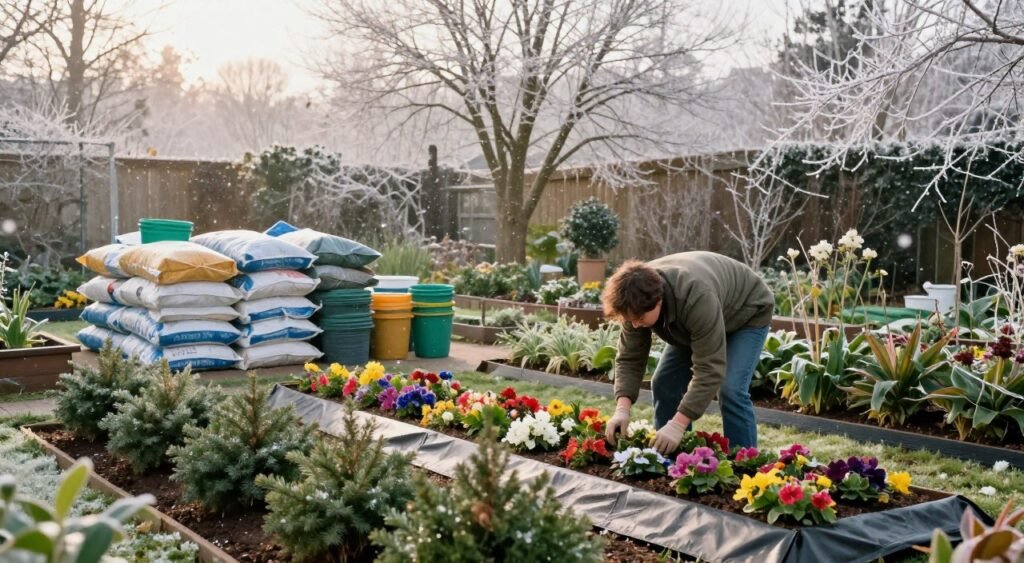
Most perennials need a break to save energy for next year. Wait for the first hard frost to cut back dead leaves to the ground. This stops pests from staying in the debris and keeps your garden neat.
Adding a new layer of organic mulch around your plants is a good idea. This protective blanket keeps the soil warm and stops roots from freezing. Make sure the mulch doesn’t touch the stems to avoid rot.
Protecting Sensitive Plants from Frost
Some plants in your privacy screen might be more sensitive to cold. You can protect these plants with physical barriers during very cold weather. Here are some ways to keep them safe:
- Burlap wraps: Use breathable fabric to shield evergreen shrubs from drying winter winds.
- Frost blankets: Drape lightweight garden fabric over smaller plants to trap heat radiating from the soil.
- Cloches: Place glass or plastic covers over individual sensitive specimens for added warmth.
Planning for Next Year’s Growth Cycle
Winter is a great time to think about your privacy screen’s performance. Note which plants worked best and where you might need more next year. This helps with long-term seasonal garden care.
Use this quiet time to check your soil pH and order new seeds or starts for spring. By strategically planning your next planting, your garden will grow stronger and more effective. Good planning today means a better garden tomorrow.
Conclusion
Creating a lush barrier around your home makes it a special place. Flowers for privacy screens block unwanted views and add color. This turns your yard into a personal retreat.
Choosing the right plants and keeping the soil healthy is key. You get a dense, living wall that’s better than fences or stone walls. It’s good for local pollinators and keeps your home quiet.
Watch how your garden changes with the seasons. Change your care to meet your plants’ needs as they grow. Your garden will become more beautiful and useful every year.
Share your garden with neighbors or gardening groups. Your design shows your style and makes your property more attractive. Start your garden today for a secluded, blooming oasis.