
Start by dreaming of a colorful yard. Think of your yard as a blank canvas. You can make it a stunning focal point that shows off your style.
Choosing the right flowers for colorful garden beds is key. Look for plants that are both beautiful and easy to care for. This way, your garden will look great all season.
Know your yard and pick plants that love your climate. This makes gardening easier and more fun. Planning ahead helps your garden look great and stay healthy all year.
Assessing Your Garden Environment
Good gardening starts before you even dig. Watching your yard helps you grow a healthy garden. These garden design tips will help you avoid mistakes that can hurt your plants.
Evaluating Sunlight Exposure Patterns
Plants need light to grow. It’s important to see how the sun moves in your yard. Watch your garden at different times to see if it’s sunny, shady, or somewhere in between.
Shadows change with the seasons. A sunny spot in spring might be shady in summer. Plan for the most intense light your garden will get in the summer.
Analyzing Soil Composition and Drainage
Healthy roots need water and air. Check if water drains well around your plants. Bad drainage can cause roots to rot and kill plants.
Try filling a hole with water. If it drains fast, your soil is sandy. If it stays for hours, it’s clay and needs help to breathe.
Considering Your Local Hardiness Zone
Your area’s weather decides which plants will make it through winter. The USDA has a map for this. Knowing your zone helps pick plants that fit your weather.
Choosing the right plants means they’ll come back every year. Don’t ignore these tips, or your flowers won’t make it. Always check the plant tag for zone info before buying.
Understanding Color Theory for Garden Design
Professional garden design tips often use color to make a big impact. By using garden color theory, you can make your plants look great together. It’s like painting a picture outside.
Utilizing Complementary Color Schemes
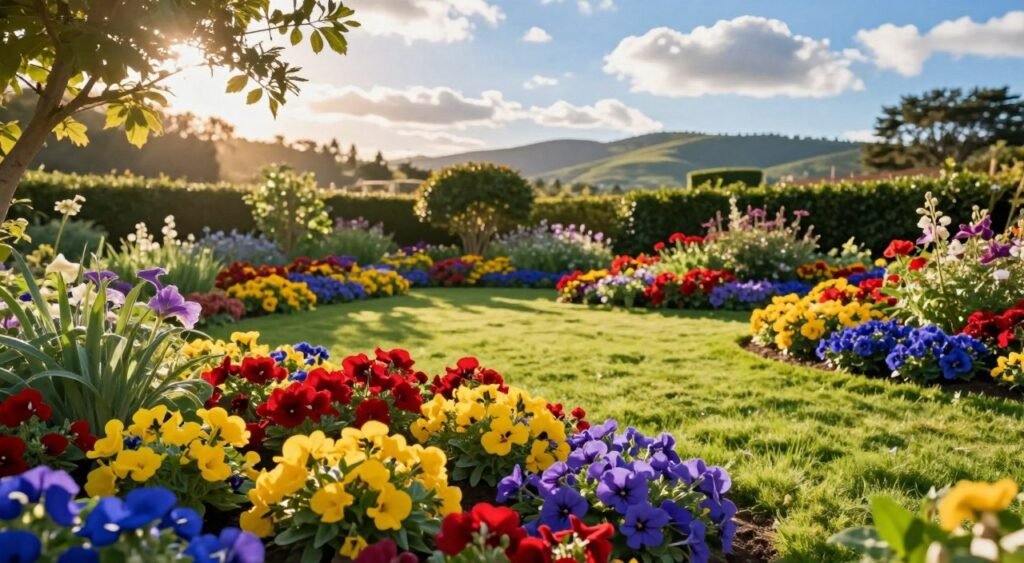
Complementary colors are opposite each other on the color wheel. Like blue and orange, or purple and yellow. Planting these together makes your flowers stand out.
This is great for spots where you want to draw attention.
«Color is a power which directly influences the soul. A garden should be a reflection of that power, balanced by the natural light of the seasons.»
Creating Depth with Analogous Color Palettes
For a calm garden, try analogous colors. These are next to each other on the wheel. Like blue, blue-violet, and violet. This makes your garden feel bigger and more peaceful.
Layering different shades of the same color adds depth. It keeps your garden looking good and not flat.
The Impact of Warm Versus Cool Tones
Knowing about warm and cool colors helps set the mood of your garden. Warm colors like red, orange, and yellow are lively. Cool colors like blue, green, and purple are calming.
| Color Category | Primary Effect | Best Use Case |
|---|---|---|
| Warm Tones | Energetic & Bold | High-traffic social areas |
| Cool Tones | Calming & Spacious | Private reading nooks |
| Complementary | High Contrast | Entryways and focal points |
| Analogous | Harmonious Flow | Border plantings and paths |
By mixing these colors, you can change how your garden feels. Use these garden design tips to make your garden a welcoming place. It will show off your style and make your home look better.
Selecting Flowers for Creating Colorful Garden Beds
Creating a colorful garden bed is like art. It mixes annuals, perennials, and bulbs. This mix keeps your garden bright from spring to frost.
This layered plan makes your garden change and stay fresh. Each plant has its own role in your design.
Choosing Annuals for Instant and Long-Lasting Color
Annuals bring quick, bright color that lasts all summer. Look for best annuals for color like petunias and zinnias. They bloom all summer without a break.
These plants fill gaps and brighten containers. They focus all their energy on producing flowers for you.
Integrating Perennials for Year-After-Year Beauty
Good perennial garden planning picks plants that get better every year. These plants are the backbone of your garden. They provide structure and leaves all year.
Choosing many perennials means less replanting. They make your garden strong and lasting. Think of them as your garden’s long-term investment.
Selecting Bulbs for Early Season Vibrancy
For a garden that blooms early, pick choosing garden bulbs like tulips. Plant them in fall for color as snow melts.
These early bloomers add energy to your garden after winter. Their leaves hide as perennials and annuals grow.
Planning for Seasonal Succession and Bloom Times
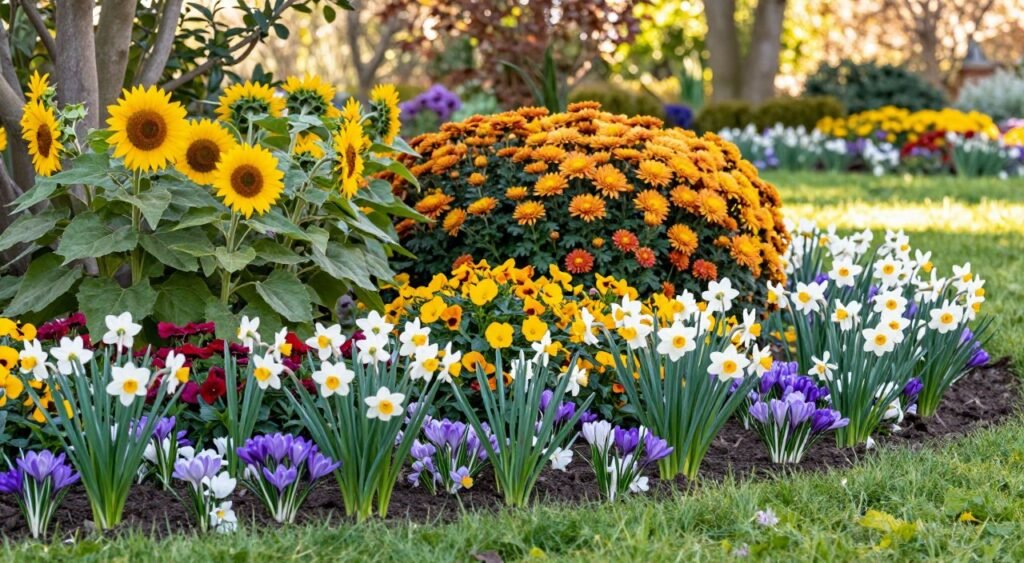
To have a garden that looks great all year, plan for seasonal bloom succession. Organize your planting to keep your garden lively from spring to fall. This way, your garden won’t just look good for a short time.
Mapping Out Spring to Fall Color Transitions
Start by making a simple calendar for when each plant blooms. Group your plants by when they bloom best. This helps you see when your garden will look its best.
- Early Spring: Focus on bulbs like tulips and daffodils.
- Mid-Summer: Introduce heat-loving perennials such as coneflowers and daylilies.
- Late Autumn: Incorporate asters and sedum to provide a final burst of color.
Layering Plants to Ensure Continuous Blooms
Layering plants is key to keeping your garden interesting. Place taller plants behind shorter ones for a seamless transition. This way, as one plant fades, another takes over.
Think about how your plants grow when layering. You want a balanced look, with no part of the bed too crowded. Give each plant enough space to grow well and add to your garden’s beauty.
Managing Overlapping Bloom Cycles
For a garden that looks professional, manage when plants bloom together. You want the colors to blend smoothly from spring to summer. This keeps your garden full and beautiful.
«A garden is a grand teacher. It teaches patience and careful watchfulness; it teaches industry and thrift; above all, it teaches entire trust.»
By picking plants that bloom at different times, your garden stays vibrant all year. Keep an eye on your garden and adjust your plan as needed. With the right care, your garden will be a source of joy for many years.
Incorporating Texture and Height for Visual Interest
Texture and height make a flower bed look amazing. Color catches the eye, but plants’ structure keeps it looking good. Mixing shapes makes your garden look planned and neat all season.
Utilizing Foliage as a Backdrop for Flowers
See your plants as more than just flowers. Using garden texture and foliage makes a green base for your flowers. Big leaves contrast with small, feathery blooms, adding depth.
Use plants with colorful leaves or deep purple to keep interest when flowers are gone. This keeps your garden looking good all season. Rich foliage supports your bright flowers well.
Creating Vertical Interest with Tall Spikes
Adding height stops your garden from looking flat. Vertical garden interest comes from tall, spiky plants in the back. These plants make your garden feel dramatic.
Tall plants like Delphiniums or Foxgloves add variety. They act as pillars, guiding your view. Layering these heights makes your garden feel full and fancy.
Adding Softness with Mounding and Trailing Varieties
Spikes give structure, but soft plants finish your garden. Mounding and trailing plants spill over, blending soil and plants. This softens your garden’s edges.
Low-growing plants fill gaps, making your garden dense. This adds valuable garden texture and foliage. Mixing these soft plants with vertical garden interest makes your garden look balanced and professional.
| Plant Form | Primary Function | Visual Effect |
|---|---|---|
| Tall Spikes | Verticality | Creates drama and height |
| Mounding | Filling gaps | Adds density and volume |
| Trailing | Softening edges | Provides a finished look |
| Broad Foliage | Background | Enhances color contrast |
Preparing Your Soil for Optimal Growth
Your garden’s success starts deep down where roots grow. Soil preparation for flowers is key to your plants’ health. It helps them grow strong and fight off bad weather.
Testing and Amending Soil pH Levels
First, test your soil pH. Most flowers like a slightly acidic to neutral soil, between 6.0 and 7.0. You can buy simple test kits at garden centers.
If your soil is too acidic, add lime. For too alkaline soil, use elemental sulfur. Consistency is key when changing these levels.
Improving Soil Structure with Organic Matter
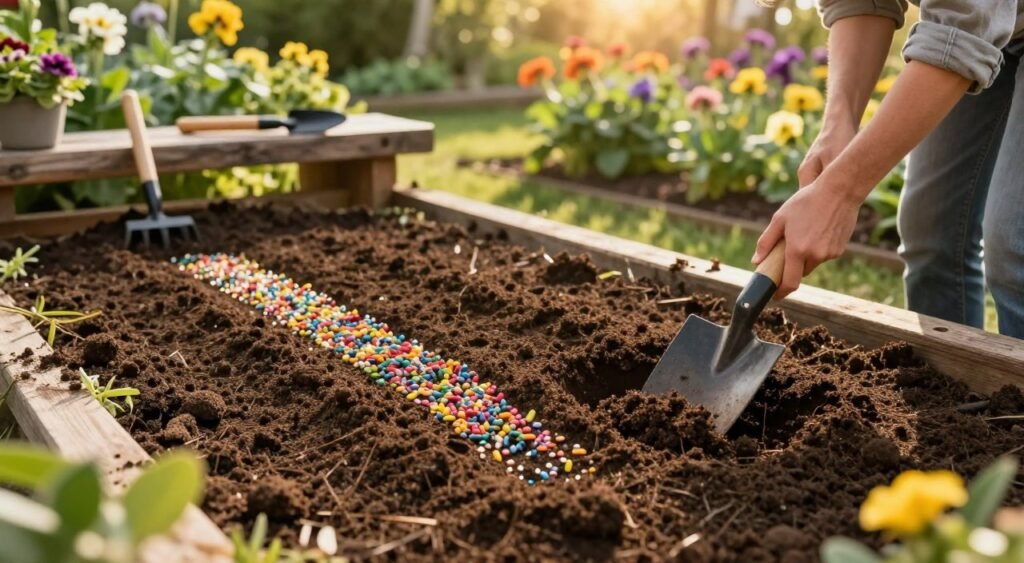
Soil needs nutrients and air for roots to grow well. Adding compost, leaf mold, or aged manure makes soil better. It turns clay or sandy soil into a rich environment.
Try to mix in two to three inches of organic material in the top six inches of your bed. This feeds the soil and keeps it moist. Consistent soil preparation for flowers keeps your garden productive for years.
Establishing Proper Drainage Systems
Waterlogging can kill plants. Roots need air to live. Improving garden soil drainage is key, more so in rainy areas.
Use raised beds or add perlite or grit to your soil. These help water drain, keeping roots healthy. Good moisture control stops diseases and helps plants grow strong.
| Amendment Type | Primary Benefit | Best Use Case |
|---|---|---|
| Compost | Nutrient density | General soil health |
| Perlite | Garden soil drainage | Heavy clay soils |
| Garden Lime | pH adjustment | Acidic soil correction |
| Peat Moss | Moisture retention | Sandy soil improvement |
Planting Techniques for Healthy Flower Beds
When you move plants to the garden, start building a strong root system. A good planting guide for beginners helps you avoid mistakes. This care leads to a beautiful and lasting garden.
Determining Proper Spacing for Air Circulation
Space is key for a healthy garden. Too close, plants fight for food and light. Poor airflow also brings diseases and pests.
Check the plant tag for spacing tips. This ensures your flowers grow well and stay healthy.
Step-by-Step Guide to Planting Potted Flowers
Start by digging a hole twice as wide as the pot. Don’t dig too deep. Carefully remove the plant from its pot by turning it sideways.
If the roots are tangled, gently tease them apart. This helps them grow into the soil.
Put the plant in the hole so the root ball is level with the soil. Fill the hole with native soil and compost. Press down to remove air pockets.
Watering and Mulching Immediately After Planting
Watering right after planting is crucial. It helps the soil settle and reduces shock. Then, add a two-inch layer of mulch to keep moisture in and weeds out.
| Plant Type | Average Spacing | Primary Benefit |
|---|---|---|
| Small Annuals | 6–8 inches | Full, lush coverage |
| Medium Perennials | 12–18 inches | Improved air circulation |
| Large Shrubs | 24–36 inches | Prevents overcrowding |
Maintenance Strategies for Sustained Color
Keeping your flower beds colorful is easy with regular care. By doing routine tasks, you protect your plants and keep them looking great all season. Good flower bed maintenance makes your garden look like a pro’s work.
Deadheading Techniques to Encourage Reblooming
Deadheading means cutting off old flowers. This stops the plant from making seeds. Instead, it makes new, bright flowers.
Use sharp shears to cut the stem just above healthy leaves. This keeps your garden neat and tells the plant to grow more flowers. It’s a key sustainable gardening practice for more blooms.
Fertilization Schedules for Heavy Bloomers
Plants like roses need lots of energy to bloom. A regular fertilizer schedule gives them the nutrients they need. Start with a balanced, slow-release fertilizer in the early season.
In mid-season, add a liquid fertilizer for an extra boost. Always follow the instructions to avoid too much fertilizer. Good nutrition is key for flower bed maintenance.
Pruning and Grooming for Aesthetic Appeal
Grooming is more than just deadheading. It also means trimming stems and removing damaged leaves. This keeps air moving and stops disease. It keeps your garden looking neat and balanced.
By following these sustainable gardening practices, your garden stays healthy and beautiful. Use this guide to stay on top of your garden tasks all year.
| Task | Frequency | Primary Benefit |
|---|---|---|
| Deadheading | Weekly | Encourages new blooms |
| Fertilizing | Monthly | Supports heavy growth |
| Grooming | Bi-weekly | Improves plant health |
| Mulching | Seasonally | Retains soil moisture |
Managing Pests and Diseases in Your Flower Garden
A healthy garden needs you to watch for problems early. This way, you keep your garden colorful and green. Start by watching your plants closely and knowing what they need.
Identifying Common Garden Pests Early
Check your garden often to catch pests early. Look for signs like chewed leaves, sticky spots, or discolored stems. Catching pests early helps you stop them before they spread.
Look for aphids, spider mites, and slugs on the underside of leaves. A small magnifying glass can help you find them fast. If you see damage, act fast to stop more problems.
Implementing Integrated Pest Management Practices
Using sustainable gardening practices keeps your garden healthy. Integrated Pest Management (IPM) helps prevent problems instead of just treating them. Plant different flowers to attract good bugs like ladybugs and lacewings.
If you need to use chemicals, choose the least harmful ones. Try horticultural oils, insecticidal soaps, or row covers. These methods protect your garden and the good bugs that help it.
Preventing Fungal Issues Through Proper Watering
Fungi love damp places. To avoid fungal diseases, water wisely. Spray water at the base of plants, not on the leaves.
Water in the morning so leaves can dry during the day. Space plants well to improve air flow. This keeps your garden dry and healthy. These sustainable gardening practices help your flowers stay bright and healthy all season.
| Pest or Disease | Primary Sign | Management Strategy |
|---|---|---|
| Aphids | Curled leaves/sticky sap | Blast with water or use neem oil |
| Powdery Mildew | White dusty coating | Improve airflow and water at base |
| Slugs | Holes in foliage | Hand-pick or use copper tape |
| Spider Mites | Fine webbing | Increase humidity and wash leaves |
Troubleshooting Common Garden Bed Issues
When your plants don’t look right, flower bed troubleshooting is key. Even experienced gardeners face surprises. Spotting problems early helps your garden stay healthy.
Addressing Stunted Growth and Nutrient Deficiencies
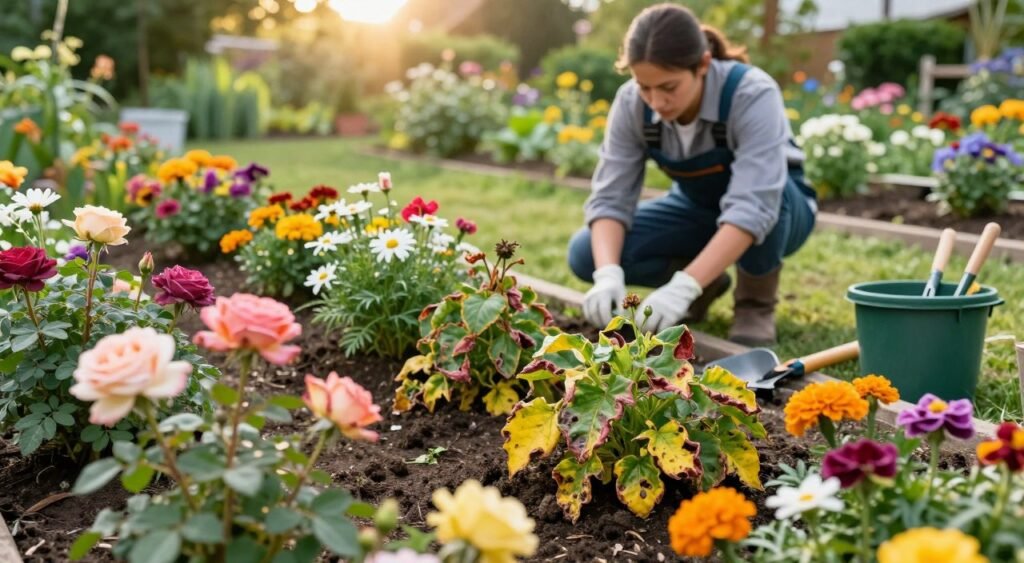
If your flowers are small or have yellow leaves, they might need more nutrients. Stunted growth means the soil is missing important stuff. A soil test will show what’s missing.
After finding the problem, use organic fertilizer to fix it. Watching your plants closely is crucial. The right food at the right time helps them grow strong.
Correcting Overcrowding and Competition
Plants too close together fight for sunlight, water, and air. This makes some plants weak. Thin out seedlings or move bigger plants to fix this.
Enough space lets each plant grow well. This reduces disease and improves air flow. It’s a simple fix that makes a big difference.
Dealing with Unexpected Weather Damage
Storms or sudden heat can hurt your garden. If plants are bent, gently straighten them. Patience is key when fixing your garden after bad weather.
For plants stressed by heat, water deeply in the morning. Good flower bed troubleshooting means watching how plants react. With care, most will recover and keep your garden colorful.
Conclusion
Creating a colorful garden bed is a mix of art and gardening skills. You now know how to make a simple area into a beautiful piece that shows your style.
Gardening is a journey that keeps changing. Every season brings new chances to pick better plants and design your garden. You’ll find new ways to show off colors and textures as your plants grow.
Be proud of the work you do on your soil and plants. Taking good care of them makes your flowers bloom all season. Enjoy watching your garden grow and change with your help.
Share your garden with local groups or neighbors. Your beautiful garden shows your hard work and creativity. Start your garden project today and see your dream come true in your backyard.