
There’s a timeless charm in a lush, overflowing garden. It feels both wild and planned. To get this look, you need to think carefully about your design.
When you pick the right flowers for cottage style gardens, your outdoor space becomes alive. It turns into a colorful, living sanctuary.
Success comes from mixing beauty with what your local environment needs. Think about your soil, sunlight, and climate. This ensures your plants grow well all season.
By choosing flowers that go well together, you create a layered look. Strategic planning keeps your garden healthy and easy to care for. With the right choices, you’ll have a beautiful retreat that shows off your style and honors traditional gardening.
Understanding the Cottage Garden Aesthetic
Many gardeners dream of a lush, overflowing landscape. It feels both wild and perfectly curated. The cottage garden design is rooted in history. It combines utility and beauty.
Defining the Traditional Cottage Look
The traditional look is dense and overflowing with plants. You’ll see heirloom flowers, shrubs, and edible plants together. This style avoids straight lines, preferring a relaxed look.
Layering different heights and textures adds depth. It’s not about perfection. It’s about creating a welcoming space that changes with the seasons.
Balancing Wildness with Intentional Design
A good cottage garden layout balances nature and human touch. Plants may look like they grew by chance. But, clear pathways are key to structure.
Using stone or gravel for beds helps. It frames your plants, keeping the garden tidy. Here’s how cottage gardens differ from formal ones:
| Feature | Formal Garden | Cottage Garden |
|---|---|---|
| Planting Style | Symmetrical and spaced | Dense and overlapping |
| Pathways | Straight and paved | Curved and organic |
| Plant Selection | Uniform varieties | Diverse heirloom mix |
| Overall Goal | Order and precision | Abundance and charm |
Your cottage garden design should show your taste. It should blend structure with wildness. This way, you create a vibrant sanctuary.
Assessing Your Garden Environment
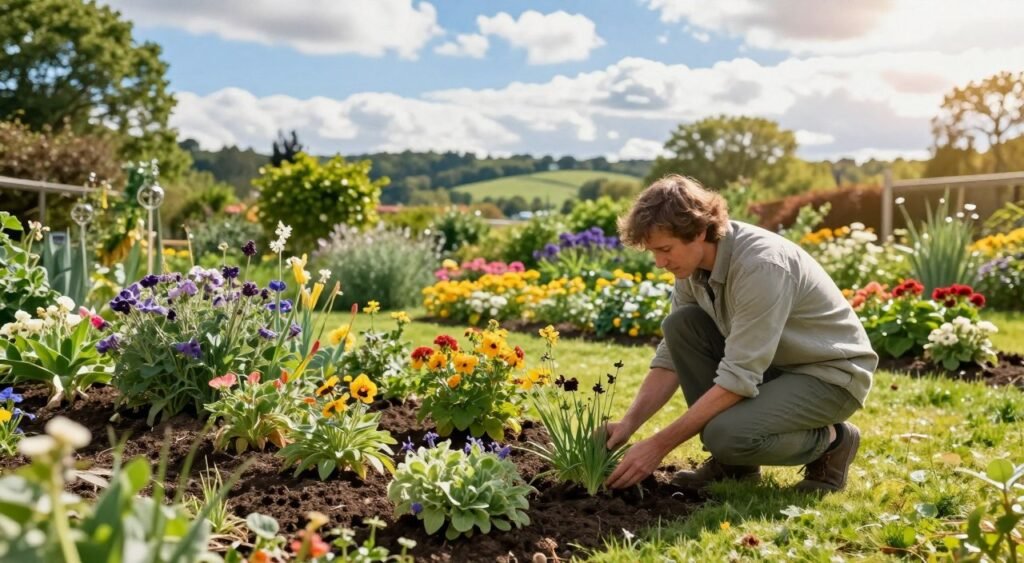
Starting a garden is more than just picking plants. You need to know your garden’s special conditions. This way, your plants will grow well.
Evaluating Sunlight Exposure and Patterns
Sunlight is key for your garden. But, its strength changes during the day. Watch how long your beds get direct sun in summer.
Shadows from trees and buildings change with the seasons. This is important to know.
Most plants like full sun. But, some do well in partial shade. Watch your yard at 9:00 AM, 1:00 PM, and 5:00 PM. This helps you place plants right.
Understanding Your Local Hardiness Zone
Choosing the right plants is crucial. The USDA garden hardiness zones help. They show the average winter temperature in your area.
Find your zone by entering your zip code online. This is very helpful.
«The secret of gardening is to work with nature, not against it, by choosing plants that belong in your climate.»
Always check a plant’s hardiness rating before buying. Picking plants that fit your zone means they’ll come back every year. This makes your garden easy to care for.
Analyzing Soil Composition and Drainage
Soil is vital for your garden. Test it to see if it’s sandy, loamy, or clay. Good drainage is key for most plants.
If your soil is heavy clay, add organic matter. Sandy soils might need something to hold moisture. Using native plant species is often best. They’re already suited to your soil.
| Soil Type | Drainage Quality | Best Practice |
|---|---|---|
| Sandy | Fast | Add compost to retain moisture |
| Loamy | Excellent | Maintain with organic mulch |
| Clay | Poor | Amend with grit and organic matter |
Selecting Flowers for Cottage Style Gardens
Creating a beautiful garden starts with picking the right plants. When you choose flowers for cottage style gardens, you’re making a living picture. It should show your style and the natural beauty around you.
Prioritizing Heirloom and Old-Fashioned Varieties
Using heirloom flowers connects you to gardening’s past. These plants are known for their exceptional resilience and timeless beauty. They often have a charm that newer flowers lack.
Choosing these plants adds a special, old-world charm to your garden. They are also perfect candidates for a garden that’s easy to care for but looks amazing.
Choosing Plants That Suit Your Climate
The key to a great garden is picking plants that fit your area. By choosing plants that love your local weather, you reduce the need for lots of care or chemicals.
Going for native or climate-friendly heirloom flowers lets your garden work with nature. This way, your garden is not only easier to take care of but also better for the planet. Your plants will do well for years to come.
Incorporating Perennials for Long-Term Beauty
Perennials are the heart of your garden, bringing beauty all year. They come back every year, making your garden grow strong. This lets your garden look good all the time, ready for new things.
Selecting Reliable Foundation Plants
Choose plants that look good and bloom often. These plants keep your garden interesting, even when other flowers are gone. Reliability is key when picking your main plants.
Here are some great choices for a strong garden base:
- Peonies: They grow big and bloom beautifully in spring.
- Daylilies: They’re very hardy and come in many colors.
- Coneflowers: They bloom a lot and attract bees and butterflies.
- Russian Sage: It’s soft, airy, and doesn’t need much water.
«A garden is a living tapestry that grows in wisdom and beauty with every passing season, provided you choose the right threads to start.»
Managing Perennial Growth Habits
Even the prettiest plants need care to look good. Without enough space, they can grow too big and block air. Always check how big a plant will get before planting it.
To keep your long-blooming perennials healthy, divide them every three to four years. This keeps the plant in the middle from dying and helps new growth. By spacing plants right, your garden stays beautiful and not messy.
Adding Annuals for Continuous Color
Perennials are the main part of your garden. But annual flowers make it bright from late spring to frost. They fill the gap between your shrubs and flowers.
These plants keep your garden lively. They add effortless charm that’s perfect for a cottage look.
Choosing Self-Sowing Annuals for a Natural Look
For a real cottage feel, pick plants that spread seeds. These self-sowing annuals come back every year. They make your garden look soft and wild.
California poppies, nigella, and sweet alyssum are great picks. They fill gaps with a natural look.
«The garden is a work of art that is never finished, but rather, it is a living canvas that changes with every passing season.»
Filling Gaps with Seasonal Favorites
Placing annual flowers right keeps your garden interesting all season. When spring bulbs or summer flowers rest, these plants bring color.
Here’s how to fill gaps:
- Use tall, airy annuals like cosmos to add height behind shorter perennials.
- Tuck low-growing varieties into the edges of your pathways for a softened, inviting look.
- Group plants in odd numbers to create a more natural, flowing display rather than rigid rows.
Think of your garden as a changing space. Swap plants to keep colors fresh. This way, your garden stays a delightful retreat from spring to autumn.
Integrating Fragrant and Pollinator-Friendly Blooms
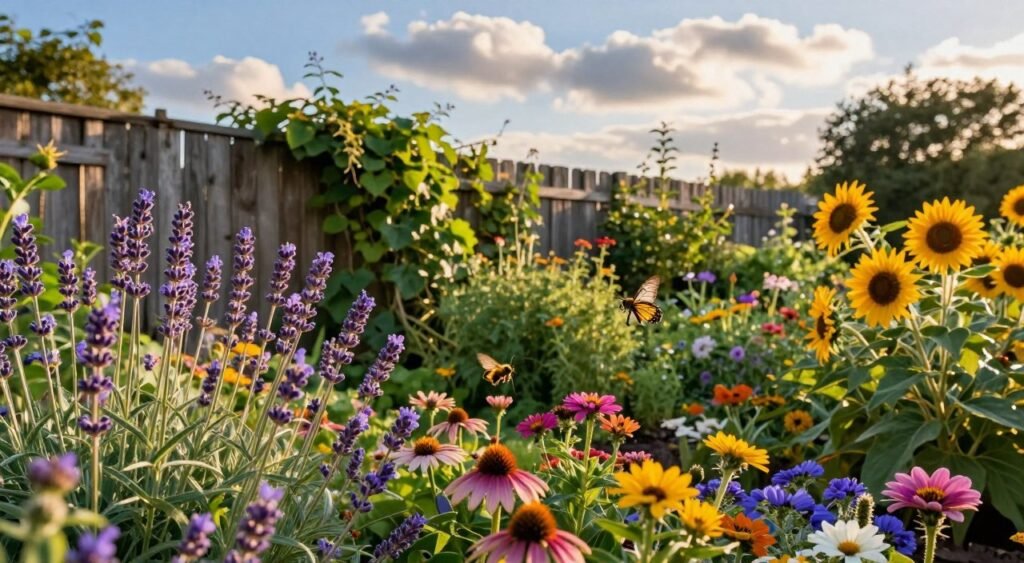
Your cottage garden can be a busy spot for pollinators and smell great. It can also be a home for local wildlife. By picking the right plants, you make your garden beautiful and good for the planet.
Selecting Flowers That Attract Beneficial Insects
To help bees, butterflies, and hummingbirds, choose pollinator-friendly plants. These plants have shapes and colors that insects need to find food.
Here are some good plants for your garden:
- Lavender: A classic choice that attracts a wide variety of bees.
- Bee Balm (Monarda): Highly favored by hummingbirds and butterflies for its tubular blooms.
- Coneflowers (Echinacea): These provide a sturdy landing pad for many beneficial insects.
- Sedum: An essential late-season food source when other flowers begin to fade.
Maximizing Scent in Your Planting Scheme
Adding scent to your garden is important. Place fragrant garden flowers near where you sit or walk. This makes your garden smell nice.
Here are some plants that smell great:
- Sweet Peas: Perfect for vertical structures near garden benches.
- Nicotiana: These release a lovely, sweet scent during the evening hours.
- Heliotrope: Known for a deep, vanilla-like fragrance that lingers in the air.
- Garden Phlox: Offers a sweet, spicy aroma that defines the traditional cottage aesthetic.
By mixing fragrant garden flowers with pollinator-friendly plants, your garden stays lively. This design makes your garden colorful and fragrant all year.
Planning for Seasonal Succession
You can make your outdoor space lively by knowing the seasons. A garden that’s alive all year needs careful planning. It’s not just luck.
Creating a Bloom Calendar for Year-Round Interest
To keep your garden bright, make a seasonal bloom calendar. It shows when each plant blooms best. This way, as one flower ends, another starts.
Here’s how to plan:
- Find out when each plant blooms.
- Put plants that bloom together in groups.
- Add plants that look good all year, even when flowers are gone.
«The garden is a work of art that is never finished, but rather, it is a living performance that changes with every passing month.»
Layering Bulbs for Early Spring Color
Using spring bulbs is a great way to start your garden in spring. Plant bulbs under your perennials for a surprise.
Strategic layering uses space well. When it’s not too cold, these bulbs bloom first. They add color while your perennials sleep.
Here’s how to plant bulbs:
| Bulb Type | Planting Depth | Bloom Timing |
|---|---|---|
| Snowdrops | 3 inches | Late Winter |
| Crocus | 4 inches | Early Spring |
| Daffodils | 6 inches | Mid Spring |
Planting bulbs right makes your garden change and stay interesting all year. This way, your garden looks good all the time.
Designing for Texture and Height
To add depth to your outdoor space, think about vertical elements and textures. A flat garden bed can feel one-dimensional. But, you can turn it into a dynamic, three-dimensional landscape by adding height. This is key in cottage garden design.
Utilizing Vertical Elements and Climbing Plants
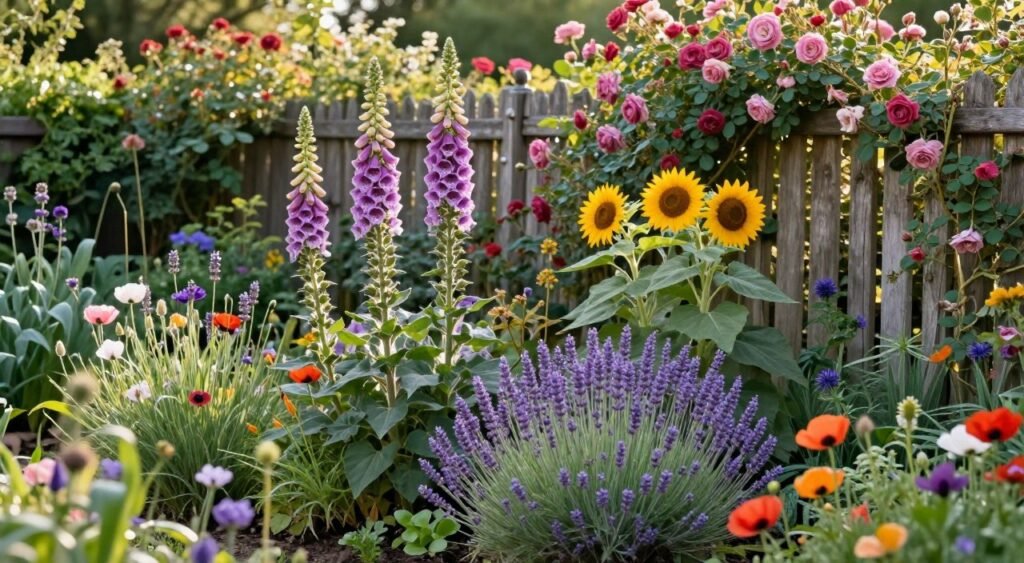
Use trellises, arbors, and obelisks to add height without big trees. These support climbing plants, which are the backbone of your vertical space. Training vines or roses to grow up creates a cozy, intimate feel.
Vertical gardening makes the most of your space and adds interest. Choose strong materials like cedar or wrought iron for your structures. These vertical features are focal points that guide visitors through your garden.
Mixing Foliage Shapes and Textures
Flowers add color, but foliage keeps your garden looking good all year. Mix different leaf shapes, like hostas and ferns. This contrast in form keeps your garden interesting all the time.
Think about the colors of your leaves too. Blend deep greens with variegated or silver-toned ones. Layering textures makes your garden feel lush and intentional. This is crucial for a cottage garden design that looks great all year.
Adding these elements to your vertical gardening plan makes your garden balanced and layered. Variety keeps your landscape fresh and exciting. With the right mix of height and texture, your garden will be a true sanctuary.
Preparing the Soil for Success
A vibrant cottage garden needs more than just pretty flowers. It starts with the ground. Healthy soil is key, giving plants the nutrients they need. Good garden soil preparation helps plants grow all season.
Amending Soil with Organic Matter
To make your garden thrive, add organic soil amendments. Use compost, leaf mold, or aged manure. They make soil better and hold water.
Adding these yearly keeps your garden fertile. It stops soil from getting too hard. This saves you from using harmful fertilizers.
Establishing Proper Planting Techniques
When your soil is ready, plant your flowers right. Dig a hole twice as wide as the root ball. Don’t make it too deep.
Tease out circling roots before planting. This helps roots grow well. After planting, firm the soil and water well. This helps plants adjust fast.
| Amendment Type | Primary Benefit | Best Use Case |
|---|---|---|
| Compost | Nutrient density | General soil enrichment |
| Aged Manure | Nitrogen boost | Heavy feeding perennials |
| Leaf Mold | Moisture retention | Sandy or dry soil |
| Peat Moss | pH balancing | Acid-loving flowers |
Maintenance Tips for a Thriving Garden
A thriving garden comes from small, careful actions all season. By following garden maintenance tips, your garden stays beautiful. It won’t turn into a messy patch of land.
Mastering Deadheading and Pruning
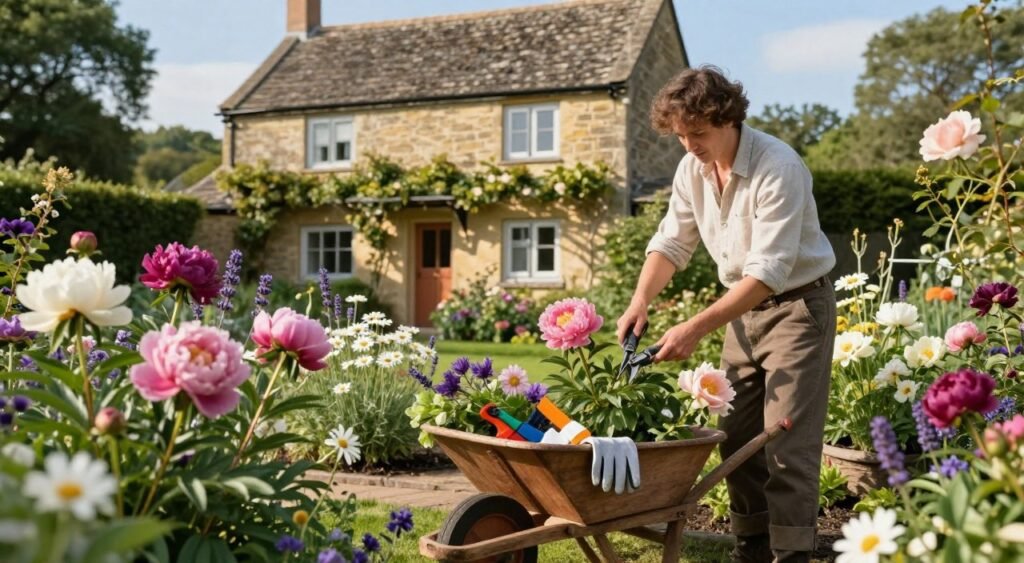
Keeping flowers fresh is easy with deadheading perennials. This means cutting off old blooms before they make seeds. It tells the plant to make more flowers.
By deadheading perennials, you make your garden look great longer. Use sharp shears to cut just above healthy leaves. This keeps your garden looking good all summer.
Managing Water and Mulching Needs
Watering plants right is key, more so in hot, dry times. Water early in the morning. This cuts down on evaporation and stops diseases.
Adding organic mulch is also key. It keeps weeds away and keeps soil cool and wet. Use two inches of wood chips or shredded leaves for best results.
| Task | Frequency | Primary Benefit |
|---|---|---|
| Deadheading | Weekly | Encourages repeat blooms |
| Deep Watering | Twice Weekly | Promotes deep root growth |
| Mulching | Annually | Retains moisture and suppresses weeds |
| Pruning | Seasonally | Maintains plant shape and health |
Conclusion
Creating a lush landscape is fun and rewarding. It mixes your creative ideas with nature’s rhythms. You can turn any outdoor area into a beautiful spot that looks great all year.
Gardening is a journey, not a fixed goal. Your garden will change and grow as you learn about your local area. Watch how your plants react to light and soil to improve your gardening skills.
Choose plants that make you happy. A garden that shows your personality is the most rewarding. Begin your gardening project today. See how nature and your garden come together to welcome you and pollinators.