
Your home’s entryway is the first thing visitors see. By using seasonal flowers for porch decoration, you can make it welcoming. It shows off nature’s beauty all year.
Good curb appeal tips can make your home look better. You can pick the right plants, no matter if you’re new to gardening or not. This makes your entrance stand out.
Consistency is key for keeping your porch looking great. This guide helps you match plants with your home. You’ll learn to pick plants that do well in your area, making your home look good all year.
Assessing Your Porch Environment
Starting a porch landscaping project needs a good look at your outdoor space. Before buying plants, see how your area changes with the day. This helps keep your plants healthy and bright.
Evaluating Sunlight Exposure
Sunlight is key when choosing porch plants. Watch how much sun your porch gets in the morning, noon, and late afternoon. Full sun needs at least six hours of direct light. Plants that like shade prefer indirect light.
Remember, sun changes with the seasons. What’s bright in spring might be too hot in summer. Keep a notebook to track light changes over a few days.
Understanding Local Climate Zones
Your area’s climate tells you which plants will do well. Use the USDA Plant Hardiness Zone Map to find your zone. This helps pick plants that can handle your area’s temperature changes.
Picking the right plants for your zone saves time and effort. Hardy perennials are good for all year. Annuals add color for each season. Always check plant tags for the right zone.
Checking Wind and Airflow Patterns
Wind affects plants and pots. Strong winds dry out soil fast, so you’ll need to water more. Also, windy areas can tip over light pots, so choose sturdy plants.
Good airflow fights off diseases but can harm leaves. If it’s very windy, use heavy pots. Place pots where they’re protected from strong winds.
Planning Your Seasonal Flowers for Porch Decoration
Start with a clear plan for your porch makeover. Good planning helps keep your porch looking great all year. By planning well, your seasonal flowers for porch decoration will welcome everyone.
Defining Your Color Palette
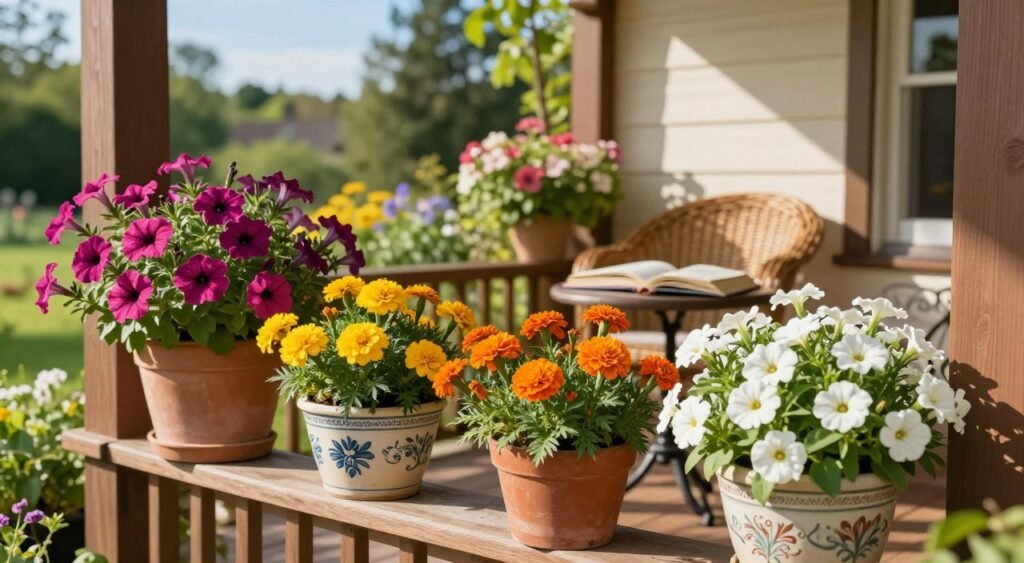
Think about your home’s colors and style. Look at your siding, trim, and door to pick flowers that match. Consistency is key for a fancy look.
«Color is a power which directly influences the soul.» — Wassily Kandinsky
Use a color wheel to find colors that go well together. Choose one color for a fancy look or many for fun. A clear color plan makes picking plants easier.
Choosing Between Annuals and Perennials
Annuals add quick color that lasts all season. They’re great for trying new colors without a big commitment.
Perennials are good for saving money and effort. They come back every year. Here’s a table to help you decide:
| Plant Type | Primary Benefit | Best Use Case |
|---|---|---|
| Annuals | Continuous Blooms | Seasonal color pops |
| Perennials | Longevity | Structural base layers |
| Shrubs | Year-round form | Permanent porch accents |
Budgeting for Seasonal Changes
Keep your porch looking good without spending too much. Focus on key areas and use the same pots. Choose plants that change with the seasons easily.
- Invest in quality soil to ensure plant health and reduce replacement costs.
- Shop for smaller starter plants that grow quickly rather than buying expensive, mature specimens.
- Plan your purchases around end-of-season sales to stock up on perennials for the following year.
By planning smart, you can keep your porch beautiful without overspending. Good planning makes your seasonal flowers for porch decoration a year-round highlight.
Selecting the Right Containers and Soil
Choosing the right containers and soil is key for a great porch garden. When you look at container gardening ideas, you see that the plant’s home is very important. It affects their health and how well they grow.
Matching Pot Materials to Your Style
The pot’s material is more than just looks. It affects how your plants grow. For example, terracotta pots let roots breathe but dry out fast.
When picking outdoor flower containers, think about these materials:
- Terracotta: Classic and breathable, great for plants that like dry soil.
- Resin or Plastic: Light and keeps moisture well, good for thirsty plants.
- Glazed Ceramic: Adds color and holds moisture, but is heavy.
Ensuring Proper Drainage
A key container drainage tip is to have at least one hole at the bottom. Without it, plants can get root rot, which is deadly for flowers.
«Good drainage is the silent partner of every successful gardener; without it, even the most vibrant blooms will struggle to survive.»
If your pot doesn’t have a hole, you can drill one. Or, use a plastic liner for easy drainage.
Choosing the Best Potting Mix
Many beginners use regular garden soil in pots. But, it’s too dense. It stops roots from getting air and nutrients.
Instead, choose a light, high-quality potting mix made for containers. These mixes keep the right amount of moisture and air. They help your porch plants stay healthy all season.
Spring Planting Strategies for Early Color
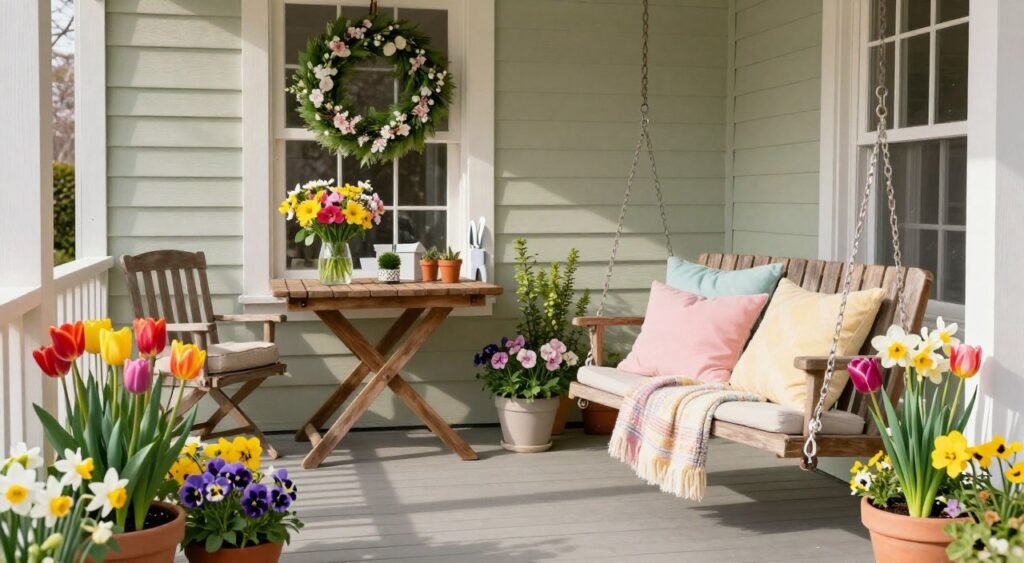
After a long winter, your porch needs a fresh look. Choose plants that can handle cold mornings. This way, you can make your porch look stunning for spring.
Selecting Cold-Hardy Spring Flowers
Look for plants that do well in cool weather. Pansies, violas, and snapdragons are great for this time. They come in many colors to brighten your porch.
Always check the plant tags to make sure they fit your area. This helps your plants survive sudden cold.
Layering Bulbs for Continuous Blooms
Use the layering method to make the most of your space. Start with big bulbs like tulips at the bottom. Then add soil, and top with small bulbs like crocuses.
This way, as one set of flowers goes away, another starts to bloom. It makes your porch look lively for weeks.
Protecting Early Shoots from Frost
Even tough plants need help when it gets cold. Keep frost blankets or burlap ready to cover your pots. Proper protection keeps your plants safe.
If frost is forecast, cover your pots at night. Remove the cover in the morning. This is a key habit for a beautiful spring porch.
Summer Blooms for High Heat and Sun
To make your porch bright and lively in summer, pick the right plants. These plants must handle hot sun and dry air well. The right plants keep your porch welcoming all summer.
Drought-Tolerant Varieties for Sunny Porches
South or west-facing porches get strong sun in the afternoon. Choose drought-tolerant plants that save water and don’t wilt easily. Lantana, Sedum, and Verbena are great for sunny spots.
These plants need less water, perfect for those who are busy. They keep your porch colorful even when it’s very hot. Grouping these plants together makes your porch look great and stay cool.
Shade-Loving Plants for Covered Areas
For covered or north-facing porches, you can grow lush plants. These plants add a cool look to your home’s outside. Begonias, Impatiens, or Boston Ferns are good choices for shaded spots.
These plants love the filtered light and cooler air of shaded areas. They have bright flowers that look good against dark leaves. Make sure to keep them watered well, as they dry out fast.
Managing Heat Stress in Containers
Summer container gardening needs extra care to avoid heat stress. Use organic mulch to keep the soil moist. Also, move pots to cooler spots during the hottest part of the day to protect roots.
Good drainage is key to prevent plants from sitting in hot water. Check the soil moisture every day during hot spells. Use this guide to pick the best plants for your porch.
| Plant Type | Sun Requirement | Water Needs | Best For |
|---|---|---|---|
| Lantana | Full Sun | Low | Sunny Porches |
| Boston Fern | Partial Shade | High | Covered Entries |
| Sedum | Full Sun | Very Low | Heat Resistance |
| Begonia | Shade | Moderate | Cooler Corners |
Transitioning to Autumnal Porch Displays
When the air gets cool, your porch is ready for a change. A seasonal plant rotation helps you move from summer’s light to autumn’s warmth. Use warm colors and thick textures to make your porch welcoming.
Incorporating Mums and Ornamental Grasses
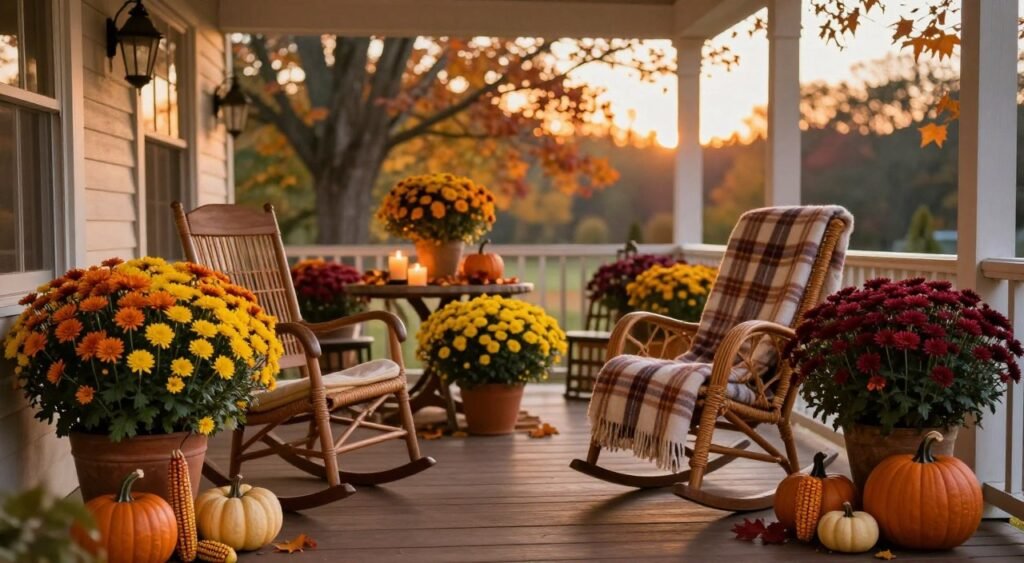
Chrysanthemums are key for fall porch flowers. They come in many colors like orange, burgundy, and yellow. Pair them with ornamental grasses for height and movement.
Grasses like fountain or maiden grass look great with mums. They add a natural, rustic elegance to your porch. Pick pots that match these earthy tones for a complete look.
Adding Texture with Pumpkins and Gourds
Pumpkins and gourds make your seasonal flower arrangements better. They add organic shapes and colors. Place them near your containers or on the porch floor for a layered look.
Using different sizes and textures, like warty gourds or smooth pumpkins, adds depth. This makes a welcoming focal point that looks curated. Mix heirloom varieties with traditional orange pumpkins for a rich color palette.
Extending the Life of Summer Survivors
You don’t have to throw away all your summer plants. Plants like coleus or sweet potato vine can last into autumn. Keeping these plants makes your porch look good all year.
Just add your new fall plants around the old ones. This fills gaps and brings new colors. Your summer plants will be the perfect background for your autumn display.
Winter Hardy Plants and Decorative Accents
You can keep your entrance bright and welcoming even in the cold. Choose the right winter porch plants to do this. Your home can stay beautiful and inviting, even when it’s gray outside.
Focus on texture and color to make stunning displays. These can stand up to the cold.
Using Evergreens for Structure
Evergreens are key for a good winter display. They add structure when other plants are sleeping. Use hardy types like boxwood, juniper, or dwarf spruce for your outdoor flower containers.
These plants keep your containers looking full and green. Arrange them in different heights for a professional look. This makes your home look better.
Adding Berries and Branches for Color
After setting up your evergreens, add festive touches. Bright red holly berries or winterberry stems look great against green. You can also use curly willow or dogwood branches for height and interest in your seasonal flower arrangements.
These decorations make your porch feel like a holiday wonderland. Strategic placement lets you make it your own. Mix in natural textures like pinecones or dried eucalyptus for more depth.
Protecting Roots from Freezing Temperatures
Even cold-hardy plants can hurt their roots in containers. Soil in outdoor flower containers can freeze and damage roots. Use frost-resistant pots like heavy-duty plastic, resin, or treated wood.
Wrap pots with burlap or bubble wrap in very cold weather. Proper drainage is also key. Water that freezes can crack your pots. These steps help your seasonal flower arrangements last until spring.
Essential Watering and Fertilization Techniques
Your porch plants need your help to live well in pots. Pots dry out and lose nutrients fast. Learning porch plant care keeps your plants looking good all season.
Determining Watering Frequency
How often to water depends on a few things. Check pots every day in hot, windy weather. Big pots hold water longer than small ones.
Plants with big leaves need more water than those that don’t. Always check the soil before watering. If it’s dry an inch down, it’s time to water.
Water until water comes out of the bottom. This makes sure the roots get enough water.
Applying Liquid vs. Slow-Release Fertilizer
Feeding your plants is key because water washes away nutrients. You can use liquid or slow-release fertilizers. Liquid fertilizers give a quick boost, great for plants that bloom a lot.
Slow-release fertilizers feed plants over months. They’re good for those who don’t water often. The table below helps choose the right fertilizer for you.
| Fertilizer Type | Application Frequency | Best Use Case | Nutrient Delivery |
|---|---|---|---|
| Liquid Feed | Every 1-2 weeks | High-energy annuals | Immediate absorption |
| Slow-Release | Once per season | Low-maintenance pots | Steady, long-term |
| Water-Soluble | Monthly | General maintenance | Balanced growth |
Avoiding Common Over-Watering Mistakes
Many think more water is always better. But too much water causes root rot, which can kill plants fast. Make sure pots have holes for water to drain.
Look for signs of stress like yellow leaves or wilting. If you see these, stop watering and let the soil dry. This keeps your plants healthy all year.
Managing Pests and Plant Health
Keeping your porch display bright needs watching for pests and regular care. Catching small problems early keeps your flowers the best part of your home. Quick action is key for porch pest control.
Identifying Common Porch Plant Pests
Even healthy plants get pests in warm weather. Check leaves and stems weekly. Look for sticky stuff, webs, or spots.
Aphids are small bugs that gather on new growth. Spider mites are hard to see but leave webs. Catching them early stops them from spreading.
Natural Remedies for Aphids and Mites
You don’t need harsh chemicals to protect your plants. Organic solutions are great for porch pest control. A mix of dish soap and water can get rid of aphids.
Neem oil is good for mites. Ladybugs can also help control pests. Treat plants in the morning or evening to avoid damage.
Pruning and Deadheading for Growth
Regular care is key for healthy plants. Deadheading tells plants to make more flowers. This keeps your display looking great.
Pruning helps with air flow and stops diseases. Use sharp shears to cut just above a leaf node. This keeps your plants strong and blooming.
| Pest Type | Primary Sign | Natural Treatment |
|---|---|---|
| Aphids | Sticky residue | Soapy water spray |
| Spider Mites | Fine webbing | Neem oil application |
| General Pests | Leaf discoloration | Beneficial insects |
Designing for Curb Appeal and Symmetry
Your porch is the first thing people see. It’s key for curb appeal. By placing things carefully, you can make it welcoming and show your style. A balanced look makes your porch feel harmonious.
Creating Focal Points at the Entrance
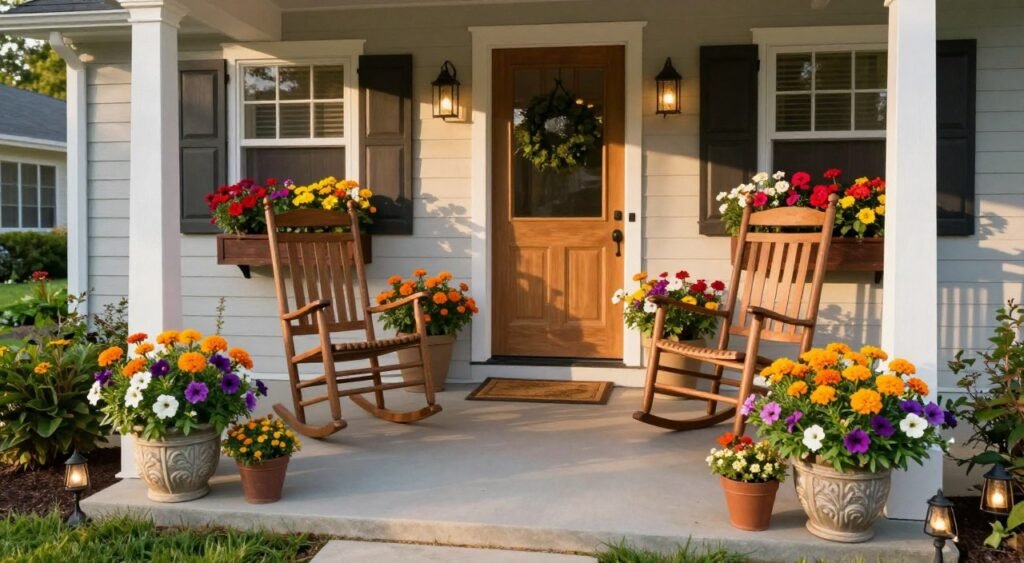
Put big or bright containers by your front door. This draws the eye to the door. It makes a clear path for visitors. Symmetrical arrangements on both sides look classic and nice.
Using Height Variations for Visual Interest
Good porch landscaping uses vertical space well. Mix tall plants with short ones for layers. This makes your display look interesting and professional.
Balancing Colors and Textures
Think about how plants look together. Mix big, bold plants with soft, feathery ones. This makes your porch look planned and not messy.
| Design Element | Purpose | Recommended Plant Type |
|---|---|---|
| Vertical Anchor | Adds height and structure | Tall Grasses or Shrubs |
| Mid-Level Filler | Provides volume and color | Flowering Annuals |
| Trailing Accent | Softens container edges | Vines or Ivy |
Maintenance Routines for Longevity
Keeping your porch beautiful for a long time needs a good plan. A steady porch plant care routine keeps your plants looking great all season. This way, you avoid problems before they happen.
Daily and Weekly Care Checklists
Having a simple plant maintenance guide helps you stay on track. Every day, walk around your porch to check for wilting or thirst. Consistency is your best tool for spotting issues early.
Once a week, do a deeper check of your containers. Remove dead leaves, spent blooms, and debris that pests might hide in. This keeps your porch looking neat and helps your plants grow.
Refreshing Soil Mid-Season
Even the best soil gets old as plants use up nutrients. When you seasonal plant rotate, add compost or slow-release fertilizer to your pots. This gives your plants a boost for the rest of the season.
If the soil feels hard, gently loosen it with a small hand trowel. This helps water and air get to the roots better. Healthy roots are key to a thriving porch.
Cleaning Containers for Re-use
Don’t just throw away your pots when the season ends. Cleaning them well is key to stop diseases from spreading. Use a mild soap and water to clean them, then rinse well to remove dirt and salt.
Let your pots dry completely before storing them in a cool, dry place. This way, they’re ready for the next season. Taking care of your tools now saves you time later.
Conclusion
Your porch is like a warm welcome to your home. By using these tips, you can make it change with the seasons.
Good gardening needs planning and care. Seeing how plants do in your area helps you. Proven Winners makes picking plants easier all year.
Trying new things is key to finding what works for you. You might love certain looks more than others. Don’t be afraid to try and see what you like.
This guide helps you make your porch lively and inviting. You have everything you need to make your porch stand out. Start your next project today and see your porch become a favorite spot.