
Do you dream of a backyard full of colors and greenery? To get a stunning landscape, you need to know what your soil and plants need. Giving them the right food is key to a successful flower garden care all season.
Choosing the best fertilizers for healthy flowering plants is the first step. It helps your plants grow strong and bloom well. Seeing your backyard turn into a beautiful place is very rewarding.
In this guide, we’ll talk about how minerals help plants grow strong and flowers bloom brightly. You’ll learn how to feed your soil right. This way, your garden will be a highlight all year. Let’s start making your home garden more beautiful and productive.
Understanding the Nutritional Needs of Your Flowering Plants
Every flower in your garden needs special care to stay healthy and look good. Knowing how to give the right mix of minerals is key. Consistent care is the base for a beautiful garden.
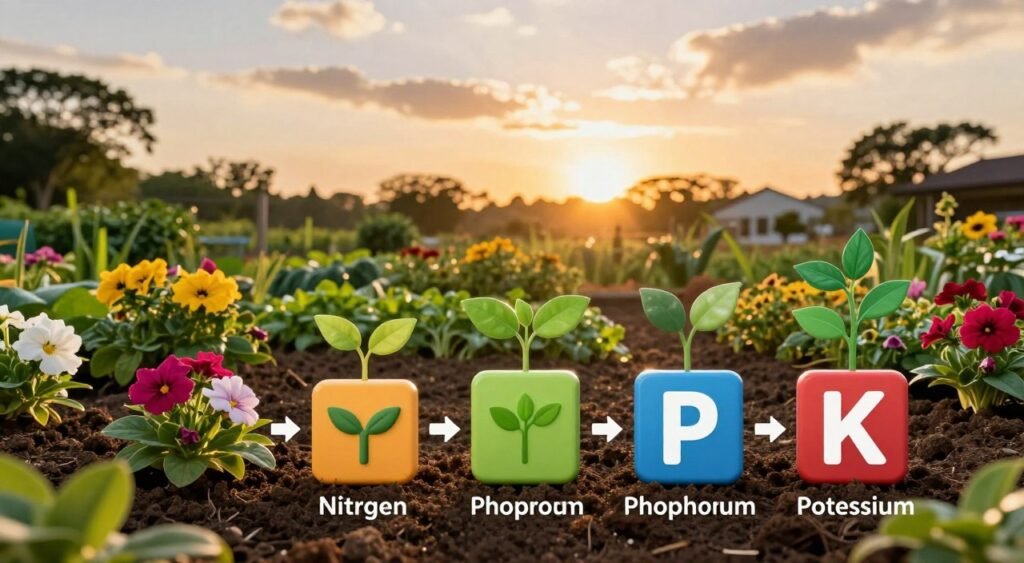
The Role of N-P-K Ratios in Bloom Production
Fertilizer labels show three numbers: Nitrogen, Phosphorus, and Potassium. These are the main parts for your plants. Nitrogen helps leaves grow, and phosphorus makes roots strong and flowers bright.
Potassium keeps plants healthy and uses water well. Knowing this balance helps pick the right fertilizer for more flowers. A high middle number means more flowers.
Distinguishing Between Annuals and Perennials
Annuals and perennials need different food. Annuals grow and bloom in one season and need constant food. Give them small amounts often until it gets cold.
Perennials come back every year and need less food. They do best with slow-release fertilizer in spring. Patience is key for perennials, as they build roots first.
Identifying Signs of Nutrient Deficiencies
Spotting a plant nutrient deficiency early is important. Yellow leaves or slow growth mean your plants need more minerals. Fixing this fast keeps your flowers strong against pests and bad weather.
| Symptom | Potential Cause | Recommended Action |
|---|---|---|
| Yellowing lower leaves | Nitrogen deficiency | Apply balanced fertilizer |
| Purple-tinted foliage | Phosphorus deficiency | Use bloom-booster formula |
| Brown, scorched leaf edges | Potassium deficiency | Incorporate organic compost |
| Stunted, pale growth | General nutrient lack | Test soil pH levels |
Selecting the Best Fertilizers for Healthy Flowering Plants
Choosing the best fertilizers for healthy flowering plants is important. You need to know how they work with your soil and roots. Every garden is different, and the right fertilizer makes a big difference.
By picking the right fertilizer, your plants get the nutrients they need. This helps them grow strong and healthy all season long.
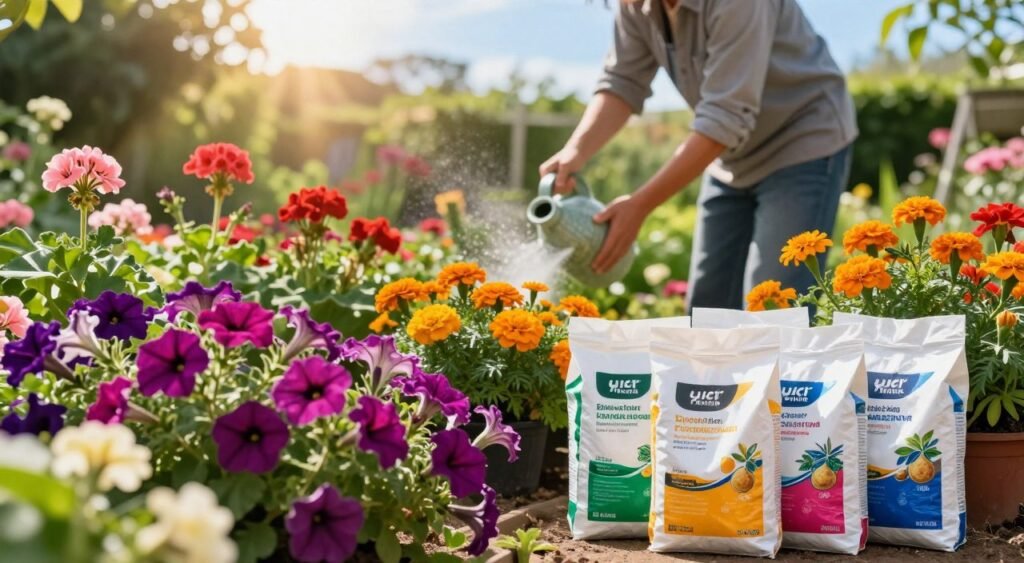
Granular Versus Liquid Fertilizer Formulations
There are two main types of fertilizers: granular and liquid. A granular fertilizer is spread on the soil and breaks down slowly. It’s great for those who like to set it and forget it.
Liquid fertilizers, on the other hand, give plants nutrients right away. They’re perfect for when your plants look stressed or need a quick boost. Choosing between them depends on whether you prioritize convenience or rapid growth.
Organic Options Like Espoma Flower-tone
An organic flower fertilizer like Espoma Flower-tone is good for soil health. It uses natural ingredients that help soil microbes. This makes your flowers grow strong and healthy.
Organic fertilizers are better for the environment and don’t burn plants. They give nutrients slowly, helping plants grow steadily. Building a strong foundation in your soil is key to a healthy garden.
Synthetic Solutions Like Miracle-Gro Water Soluble Bloom Booster
Sometimes, your garden needs a quick fix. A synthetic bloom booster like Miracle-Gro Water Soluble Bloom Booster works fast. It’s great for getting a lot of flowers for special events.
These formulas are very concentrated. They work quickly to make plants look vibrant. Used correctly, these products can turn a lackluster garden into a vibrant, colorful masterpiece.
Slow-Release Pellets for Long-Term Feeding
A slow-release fertilizer is perfect for busy gardeners. These pellets release nutrients slowly over months. You only need to apply them once or twice a season.
This steady supply of nutrients keeps plants healthy. It’s great for those who don’t want to fertilize every week. Consistency is the key to beautiful blooms all season.
Preparing Your Soil Before Application
Great blooms start deep beneath the surface. Your plants interact with the earth. Before applying any organic flower fertilizer, make sure your garden beds are ready. Preparing your ground is key to healthy growth.
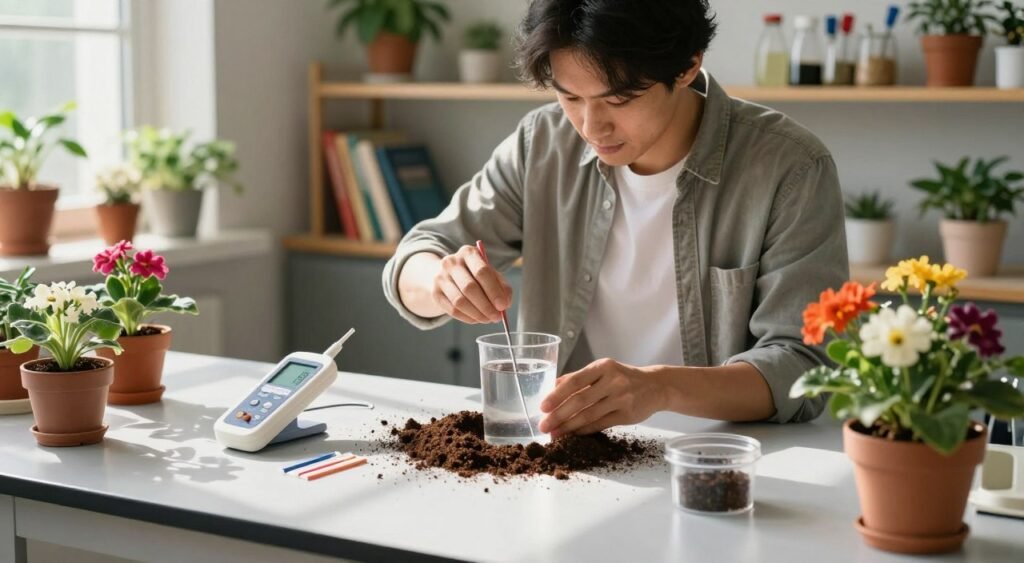
Testing Your Soil pH Levels
Your plants need specific chemical conditions to absorb minerals. If the pH is off, they may not thrive. Regular soil pH testing helps adjust the environment for better nutrient access.
«To plant a garden is to believe in tomorrow.»
Amending Soil with Organic Matter
Improving garden soil health means adding organic matter. Compost or aged manure makes the soil loose and crumbly. This helps roots spread and keeps flowers hydrated in summer.
Enriching your beds creates a vibrant home for microbes. These tiny helpers break down nutrients for your plants. Quality earth supports long-term beauty.
Clearing Debris and Weeds for Better Absorption
Clear dead leaves, twigs, and weeds before feeding. They compete with flowers for water and sunlight. This ensures your organic flower fertilizer reaches the soil without interference.
A clean garden bed improves airflow and prevents pests. Soil pH testing and a tidy space boost garden soil health. Your flowers will surely thank you for the extra care.
Step-by-Step Guide to Applying Granular Fertilizers
Want to make your garden soil health better? Learning to use granular fertilizer right is key. It makes sure your plants get the nutrients they need without waste or harm to the environment.
Measuring the Correct Dosage for Your Garden Beds
First, read the label on your fertilizer. It tells you how much to use based on your garden’s size.
Use a special scoop or spreader to get it right. Don’t guess the amount. Too much can hurt your plants over time.
«The secret to a flourishing garden lies not in how much you feed your plants, but in how consistently and carefully you provide that nourishment.»
Evenly Distributing Fertilizer Around the Drip Line
The drip line is where your plant’s roots are most active. It’s the best place to put granular fertilizer.
Spread the fertilizer evenly around the plant. Don’t put it too close to the stem or trunk. It can damage the plant.
Incorporating Fertilizer into the Top Layer of Soil
After placing the fertilizer, mix it into the top two inches of soil. This helps the nutrients reach the roots.
Don’t dig too deep to avoid harming the roots. Then, water well to help the nutrients dissolve and reach the roots.
Mastering Liquid Fertilizer Application Techniques
Learning to use liquid plant food can really help your garden. It gives your flowers a quick boost when they need it most. By picking the right way to apply it, your plants get the nutrients they need to grow well.
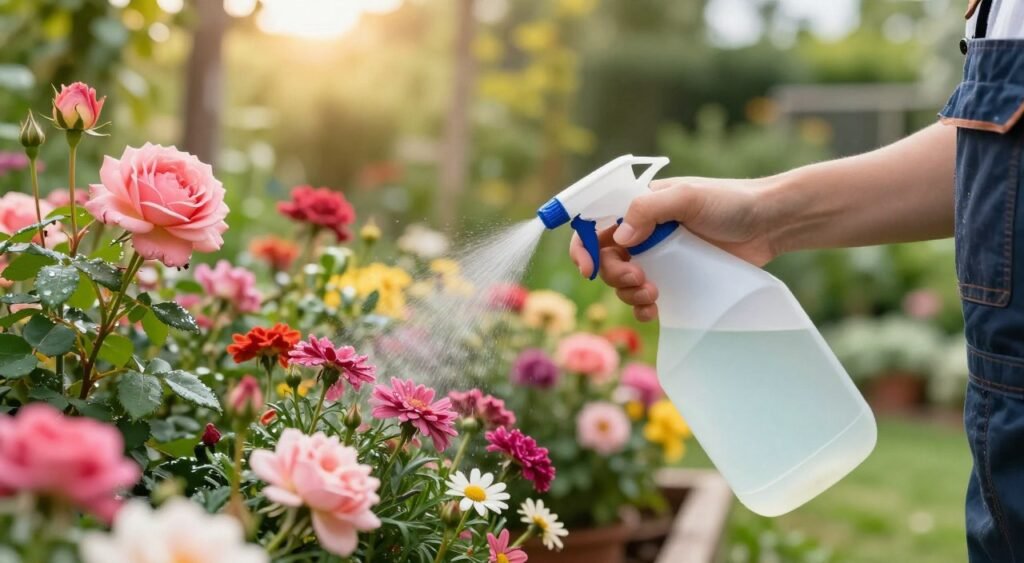
Mixing Concentrates Safely for Optimal Strength
When using strong formulas, be very careful. Always check the label to know how much to mix. Too much can hurt your plants, and too little won’t help them grow.
Wear gloves and eye protection when mixing strong chemicals. Mix it in a clean bucket or can. Make sure the concentrate is fully dissolved before you use it. This way, all your plants get the nutrients they need.
Using Foliar Feeding to Boost Immediate Growth
Foliar feeding means spraying nutrients on your plants’ leaves. Leaves can soak up nutrients faster than roots. It’s great for fixing nutrient problems quickly.
For best results, spray in the morning or evening. Don’t spray in the hot sun. Make sure to spray both sides of the leaves for the best absorption.
Establishing a Consistent Watering and Feeding Schedule
Make sure to mix your fertilizer with your regular watering. This stops your plants from getting too wet or losing nutrients. Many gardeners use a mix of water and fertilizer to keep the soil right.
Being consistent is key to a healthy garden. Keep track of when you feed your plants. This helps you avoid forgetting or over-feeding. Use the table below to see how different methods work for your garden.
| Method | Primary Benefit | Frequency | Best For |
|---|---|---|---|
| Soil Drench | Deep Root Nutrition | Every 2 Weeks | Established Perennials |
| Foliar Feeding | Rapid Nutrient Uptake | Weekly | Stressed Plants |
| Bloom Booster | Enhanced Flower Count | During Budding | Annual Flowers |
Timing Your Fertilization for Maximum Blooms
Learning when to feed your plants is key to getting the most blooms. By matching your care with the plant growth cycle, your flowers get the nutrients they need. This way, your garden stays healthy all year round.
Feeding During the Early Spring Growth Phase
When the soil gets warm, plants start growing again. It’s a good time to use a slow-release fertilizer. This gives them nutrients as they grow.
Consistency is key in this early stage. It helps plants grow fast.
Adjusting Frequency During Peak Summer Heat
In hot weather, plants might slow down. You should feed them less to avoid harming their roots. Try foliar feeding in the cool morning. It gives them a quick boost without stressing the soil.
«To everything there is a season, and a time to every purpose under the heaven: a time to plant, and a time to pluck up that which is planted.»
Knowing When to Stop Fertilizing Before Winter Dormancy
As fall comes, start to stop feeding your plants. Too much fertilizer can hurt them when it gets cold. Stopping by late summer helps them prepare for winter.
| Season | Feeding Strategy | Best Method |
|---|---|---|
| Early Spring | High Nitrogen | Granular Application |
| Peak Summer | Balanced/Light | Foliar Feeding |
| Late Autumn | None | Dormancy Preparation |
By following this plan, your plants will bloom well. Always watch your plants. Every garden is different.
Safety Precautions and Best Practices for Gardeners
Gardening is fun, but it needs careful steps to stay safe. By following garden safety tips, your time outside will be great. A little extra prep can help a lot.
Protecting Your Skin and Eyes During Handling
Working with strong fertilizers can hurt your skin and eyes. Always wear protective gloves and safety glasses. It is truly essential to wash your hands well after gardening.
If you get product on your skin, rinse it under cool water for a few minutes. A clean workspace lowers the chance of getting hurt. This way, you keep safe while taking care of your plants.
Preventing Fertilizer Runoff into Local Waterways
Being kind to the environment is key for gardeners. Too much fertilizer can harm waterways. This is because it can wash away during rain.
To stop this, always use the right amount as the label says. Don’t put fertilizer down before a big rain. Being careful with your application helps your plants and the environment.
Storing Chemicals Safely Away from Pets and Children
Storing chemicals right is important. Keep them in their original containers so you can see the warnings. Store them in a cool, dry, locked spot where kids and pets can’t get them.
Don’t keep garden chemicals near food or drinks. If a container is damaged or the label is gone, throw it away safely. Taking these simple steps makes your home safer.
Troubleshooting Common Fertilization Mistakes
Even the most dedicated gardeners sometimes struggle to feed their plants right. It’s easy to think more nutrients mean faster growth. But that’s not always true. Knowing how to spot and fix these mistakes can keep your garden looking great.
Correcting Over-Fertilization and Salt Buildup
Seeing a white, crusty layer on your soil? That’s over-fertilization. It stops roots from getting water. To fix it, rinse the soil with lots of water to get rid of extra salts.
After rinsing, check the soil pH testing to make sure it’s balanced. If it’s not, your plants might not get the nutrients they need. Keep an eye on it to avoid problems later.
«The secret of gardening is to learn from your plants, as they are the best teachers of what they truly need to thrive.»
Addressing Leaf Burn and Wilting Issues
Leaf burn shows up as brown, crispy edges. It’s a sign of over-fertilization. If you’ve used too much liquid plant food, stop feeding right away. Rinse the leaves with water and wait for them to get better.
If your plants are wilting, they might not have enough nutrients. This can happen if the soil is too tight or the pH is wrong. Check the soil moisture and roots before adding more fertilizer.
Adjusting Strategies for Potted Versus In-Ground Plants
Feeding plants in pots is different from those in the ground. Potted plants lose nutrients fast because of drainage holes. Use smaller amounts of fertilizer more often to avoid shocking the roots.
Plants in the ground have a more stable place to grow. But they still need careful feeding. Make sure to adjust your fertilizer schedule for each plant’s environment for the best results.
Conclusion
Your journey to a vibrant landscape needs consistent habits and knowing plant biology. By using the right nutrients at the right time, you make your outdoor space colorful.
Good flower garden care takes patience and watching closely. You learn to understand what your plants need. Small changes in how you feed them can make big differences in blooms.
Remember to follow garden safety tips to keep your family and the environment safe. Storing products like Espoma Flower-tone or Miracle-Gro correctly keeps your home safe. Using these products wisely helps keep your neighborhood beautiful.
Keep learning about what your plants need. Your hard work makes a place where nature can flourish. Enjoy seeing your garden grow into a beautiful work of art.