
Do you dream of a garden full of color all season? Getting that lush look is easier than you think. The key is knowing when to prune flowering plants correctly to make your garden the best it can be.
Timing is key in gardening. By matching your care with your plants’ growth, you get strong growth and stunning floral displays. This simple change helps you get the best blooms and keeps your garden healthy.
Learning these tips lets you take care of your garden with ease. Whether you’re new to gardening or have been doing it for years, these tips will make your yard a beautiful place. Let’s see how you can take care of your garden the right way.
Understanding the Science Behind Pruning
When you pick up your shears, you start a special talk with your garden. Pruning is more than just cleaning up. It’s a way to help your plants grow better.
How Pruning Stimulates Growth
Removing a stem makes the plant do something cool. It feels the loss and starts to send energy to the buds left. This makes new, strong shoots grow instead of old ones.
By cutting off dead or weak branches, you help the plant. It uses its energy for healthy parts. This keeps your plants strong and your garden full of life.
The Role of Apical Dominance in Flowering
Most plants have a special rule called apical dominance. The top bud makes the plant grow up, not out. Pruning the tip lets the side buds grow.
This makes your plant bushy and full of flowers. Knowing this trick helps your garden bloom more.
| Pruning Intensity | Primary Effect | Best Use Case |
|---|---|---|
| Light Tipping | Encourages minor branching | Maintaining shape |
| Moderate Heading | Promotes dense foliage | Increasing bloom count |
| Hard Rejuvenation | Triggers vigorous new growth | Reviving old, woody shrubs |
Using these pruning techniques helps control your plants’ hormones. This makes your garden stand out. Watch how your plants react to learn more.
Essential Tools for Your Pruning Kit
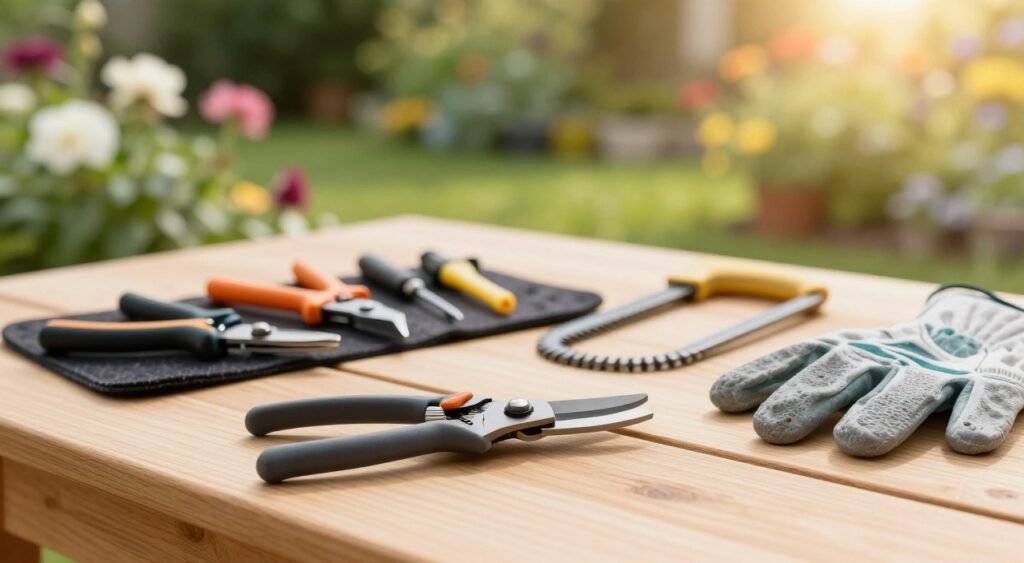
A good kit is key for every gardener. The right pruning tools help make clean cuts. These cuts heal fast and don’t get sick.
Choosing the Right Bypass Pruners
Choose bypass pruners for living plants. They cut like scissors, making clean cuts. This helps plants heal fast and stay healthy.
Anvil pruners crush stems, leaving them to struggle. Bypass pruning tools keep your plants strong and bright.
Maintaining Sharp Blades for Clean Cuts
Tools get dull over time. Sharp blades are important for clean cuts. Keep your pruning tools sharp for every garden session.
Here’s how to keep your tools sharp:
- Sharpen blades with a whetstone or diamond file.
- Clean blades after each use to remove sap and debris.
- Oil the pivot point and blades to prevent rust.
- Inspect the tension nut for perfect blade alignment.
Proper care makes your work easier. It also stops diseases from spreading. Taking care of your pruning tools is a smart choice for your garden’s future.
Determining When to Prune Flowering Plants Correctly
Learning when to prune flowering plants correctly makes your garden look great. If you prune at the wrong time, you might cut off next year’s flowers. Knowing when to prune keeps your garden colorful all year.
The Importance of Bloom Cycles
Every plant has its own bloom cycle. Knowing this helps you work with nature. When you know when your plants set buds, you can prune at the right time.
Plants save energy all year for next year’s flowers. Pruning too late makes them use that energy on new growth that might not make it. Pruning at the right time keeps your garden strong and full of life.
Distinguishing Between Spring and Summer Bloomers
To keep your garden looking good, know the difference between spring-flowering plants and summer-flowering plants. The main difference is when they bloom.
Spring bloomers need last year’s wood to bloom. Pruning them too early means no flowers. Summer bloomers bloom on this year’s growth, so they’re easier to prune.
| Plant Type | Bloom Timing | Pruning Window | Growth Habit |
|---|---|---|---|
| Spring Bloomers | Early Season | Immediately after petals drop | Old Wood |
| Summer Bloomers | Mid to Late Season | Late winter or early spring | New Growth |
| Evergreen Shrubs | Varies | Late spring or early summer | Mixed |
Knowing this simple difference helps keep your garden beautiful. Always check your plant to see what it needs. With a bit of practice, you’ll be a pro at gardening all year.
Step-by-Step Guide to Pruning Spring-Flowering Shrubs
Pruning your favorite shrubs at the right time makes them bloom beautifully every year. When you prune flowering shrubs right, they grow strong buds for next year. This keeps your garden looking great.
Timing Your Cuts After Petals Drop
For spring-flowering plants, wait until the flowers fall off. This is when they start making buds for next year. If you prune too late, you might cut off those buds.
Try to prune within a few weeks after the flowers fade. This best time lets the shrub grow strong before summer. Quick pruning keeps your garden lively and colorful.
Identifying Old Wood Versus New Growth
It’s important to know the difference between old and new stems. Old wood is darker and thicker. New growth is green and soft. Cut out dead or tangled branches from the older parts.
Don’t cut too much of the new growth. This is where next year’s flowers will grow. Selective pruning helps keep your plant small but beautiful. Here’s a guide to help you tell old from new during pruning.
| Growth Type | Visual Appearance | Pruning Strategy |
|---|---|---|
| Old Wood | Dark, woody, brittle | Remove dead or diseased stems |
| New Growth | Light green, flexible | Trim lightly to shape |
| Flowering Buds | Plump, rounded tips | Avoid cutting these areas |
Managing Summer-Flowering Plants for Maximum Impact
Summer-flowering plants need special care before the heat hits. Knowing your garden’s cycles helps get the best blooms when it’s warm. Good care makes your outdoor space lively and healthy.
Pruning During the Dormant Season
The best time to shape your shrubs is in the dormant season pruning period. This is late winter or early spring. Plants are resting, so it’s easy to shape them without stress.
By pruning in the dormant season, you clear out crowded branches. This helps prevent disease and makes the plant strong. Your summer-flowering plants will grow stronger as the weather gets warmer.
Techniques for Encouraging Late-Season Blooms
Keeping your garden in shape all summer is key. To keep flowers blooming into autumn, follow some simple steps. These tips will keep your garden looking spectacular.
Here are some important tips for a vibrant garden:
- Regular deadheading: Take off wilted flowers right away to stop seed making.
- Strategic pinching: Trim stem tips lightly to make plants bushy and more flower-y.
- Consistent hydration: Water plants well when it’s dry to keep them blooming.
- Balanced feeding: Use slow-release fertilizer for more color.
By doing these things, your garden will be a beautiful part of your home. Regular care is the secret to best blooms and a colorful summer.
Deadheading Techniques to Extend Your Season
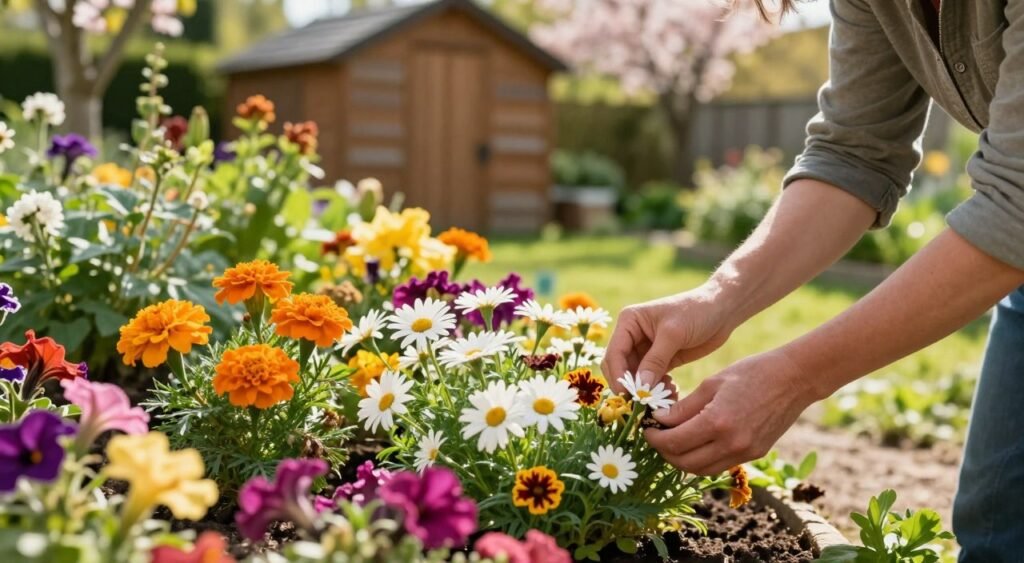
If you want your garden to look great all season, learn to remove old blooms. This simple act, called deadheading flowers, makes your garden vibrant. Just a few minutes each week can make a big difference.
Why Removing Spent Blooms Matters
When a flower fades, the plant starts making seeds. This means the plant thinks it’s almost done growing. By removing old blooms, you stop this and make the plant make more flowers.
This trick is key for pruning techniques every gardener should know. It makes the plant think it needs to make more flowers. So, you get more color in your garden all summer.
How to Properly Pinch Back Annuals
Pinching back your annuals makes them bushier. Instead of just cutting off the flower, cut the stem back to the first set of leaves. This makes the plant grow more side shoots and flower more often.
Use clean, sharp tools or your fingers for these cuts. Good pruning techniques help your plants grow well. With care, your garden will stay beautiful from spring to autumn.
Handling Perennials and Herbaceous Plants
When it gets cold, you need to change how you take care of perennial care. Herbaceous plants die back to the ground each year. You must adjust your care to protect the plant’s crown and prepare for a bright spring.
Cutting Back Foliage After the First Frost
Timing is key when getting your garden ready for winter. Wait until after the first hard frost to cut back dead foliage. This lets the plant store nutrients in the roots, making the crown stronger for next year.
Removing dead leaves after they turn brown stops pests and diseases. Leaving decaying leaves on the ground invites slugs and fungal spores. Use clean, sharp shears to cut just above the soil line, avoiding dormant buds.
Managing Evergreen Perennials
Not all plants are the same, like evergreen perennials that keep their leaves year-round. Plants like Heuchera or Iberis need a gentle touch. Avoid cutting them back too much, as they need their leaves for photosynthesis.
Instead, remove only damaged or yellowing leaves. This keeps the plant looking good and healthy. Also, make sure to keep these plants watered during dry winter months.
| Plant Type | Pruning Timing | Maintenance Goal |
|---|---|---|
| Herbaceous | After first frost | Prevent pest buildup |
| Evergreen | Early spring | Remove winter damage |
| Ornamental Grass | Late winter | Protect crown from rot |
Safety and Sanitation Practices for Healthy Plants
You might not know that your favorite shears can harm your plants. Pruning is good for growth but can spread bad stuff if not clean. Keeping your garden clean is key to keeping your plants healthy.
Sterilizing Tools to Prevent Disease Spread
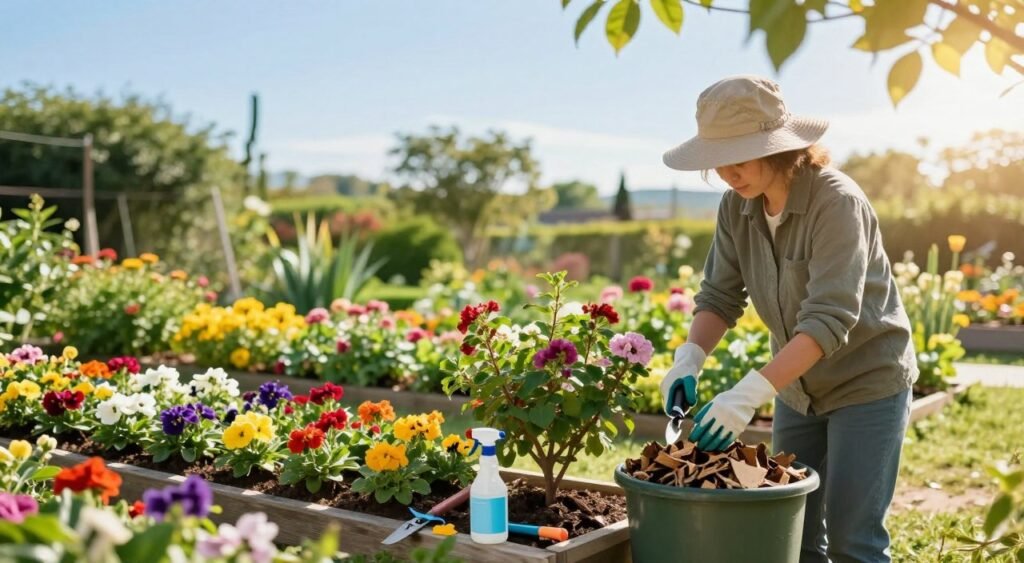
Small bad guys can stay on blades after cutting a sick branch. To stop them from getting to healthy plants, clean your tools often. Rubbing alcohol or a bleach solution works great for this.
Just wipe the blades with a cloth soaked in your solution. Let them dry a bit before using them again. This simple step is crucial for your garden’s health.
Protecting Yourself While Working in the Garden
It’s just as important to keep yourself safe as your plants. Good garden safety helps avoid injuries like cuts and strains. Always wear strong gloves to protect your hands from sharp things.
Here are some tips to stay safe:
- Wear long sleeves and pants to keep bugs and irritants away.
- Use safety goggles when cutting above you to avoid eye injuries.
- Keep your tools sharp to avoid accidents.
- Take breaks to stretch and avoid getting tired.
By following these safety tips, you make a safe place to work. Keeping your garden clean and following good habits helps you and your plants stay healthy.
Identifying and Removing Damaged or Diseased Growth
Keeping your plants healthy means watching for and removing bad growth. This keeps your garden bright and healthy. Always check your plants to keep your garden looking great all year.
Spotting Signs of Pests and Fungal Issues
Check your plants often for changes in color or texture. Look for yellow leaves, spots, or sticky stuff. These signs mean pests might be there.
Fungi show up as powdery stuff or dark spots on stems. If you see these, separate the sick part to stop it from spreading. Quick action keeps your garden healthy.
«A garden is a living, breathing entity that requires your constant attention to flourish. By removing the weak, you allow the strong to reach their full potential.»
The Three D Rule: Dead, Damaged, and Diseased
The «Three D Rule» helps gardeners. Remove anything that’s Dead, Damaged, or Diseased. This helps plants grow strong and healthy.
When you find problems, cut them off with sharp, clean tools. Cut just outside the branch collar. This helps plants heal fast and stay healthy. Good gardening habits make your plants last longer.
| Condition | Visual Indicator | Recommended Action |
|---|---|---|
| Dead | Brittle, dry, no green cambium | Prune back to healthy tissue |
| Damaged | Broken stems or torn bark | Clean cut to prevent rot |
| Diseased | Spots, mold, or wilting | Remove and discard away from garden |
Common Mistakes to Avoid During Pruning
Pruning mistakes can hurt your plants’ beauty. Even garden experts can make mistakes. These mistakes can harm your plants’ health and flowers.
The Dangers of Over-Pruning
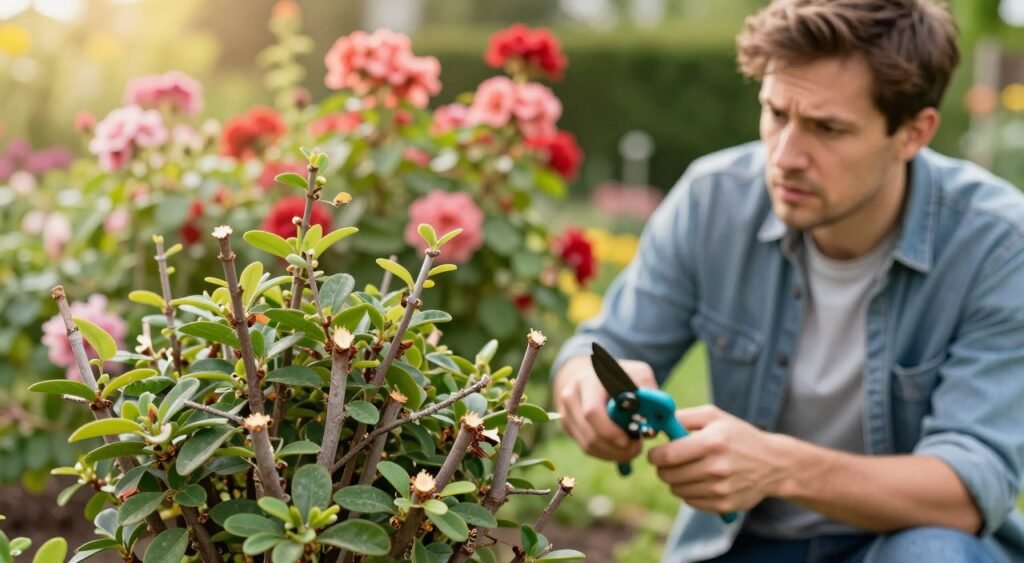
Removing too much foliage at once is a big mistake. Cutting off more than one-third of a plant’s leaves stresses it out. This can make the plant grow weak and not bloom well.
Too much pruning can even kill your plants. It uses up all their energy. This makes them weak to pests and diseases. Always prune carefully to keep your plants healthy.
Avoiding Cuts During Extreme Weather Conditions
When to prune is as important as how. Never prune in extreme weather like deep freezes or hot summers. This makes it hard for plants to heal.
In hot weather, plants lose water. Cutting them makes it harder for them to survive. Pruning in cold weather can also hurt plants. Wait for calm, mild weather to prune.
| Action | Result | Impact on Plant |
|---|---|---|
| Over-pruning | Weak, spindly growth | High stress |
| Pruning in heat | Moisture loss | Poor healing |
| Pruning in frost | Tissue damage | Increased disease risk |
| Proper timing | Vigorous blooms | Optimal health |
Seasonal Maintenance Schedules for Your Garden
A thriving yard is not just luck. It’s the result of consistent, timely actions. By organizing your garden maintenance tasks, you give each plant the right care at the right time. This way, you stay ahead of the seasons.
Creating a Yearly Pruning Calendar
Make a personalized seasonal pruning calendar for your plants. List every shrub, tree, and perennial. Note their bloom times and growth habits. Then, map these tasks on a monthly grid to see your yearly workload.
Keep this calendar where you can easily see it, like in a garden shed or a digital app. Consistency is key for success. It helps you avoid missing important pruning times and prevents gardening emergencies.
Adjusting Your Schedule Based on Local Climate
While a general seasonal pruning calendar is good, you must be flexible. Your local climate and yard spots affect when plants grow or rest. For example, a sunny wall might warm up sooner than a shaded area.
Watch your plants each year to improve your garden maintenance plan. If plants grow early because of a mild winter, adjust your schedule. Adapting to these natural cues helps your pruning support plant health, not harm it.
Conclusion
Learning how to prune makes your garden come alive. Every cut you make helps your plants grow strong and look great.
You know how to care for your plants now. Using good tools helps them heal fast and grow strong.
Your garden shows how much you care all year round. Keeping it up means you’ll have beautiful plants forever.
Look at your garden and see what needs help this week. Taking care of your plants makes your yard a happy place.
Tell your friends about your garden. Sharing your love for plants encourages others to garden too.