
Imagine stepping outside and smelling something amazing. Fragrant flowering plants for home gardens make your yard special. They make you feel calm and happy.
Choosing the right plants is key. They make your yard feel alive. With plants that smell at different times, your yard is always a delightful retreat.
These plants make your yard a special place. They make your yard a truly aromatic paradise. Start today and make your yard amazing for years.
Planning Your Aromatic Garden Layout
Starting a fragrant garden is fun. You need to think about your plants and how you live. A good garden is not just pretty. It’s a place to relax and enjoy nature.
By planning your garden, you help your plants grow well. This makes your garden even more special.
Assessing Sunlight and Soil Conditions
First, check your yard’s sunlight and soil. Most aromatic plants for landscaping need lots of sun. Watch how the sun moves to find the best spots.
Soil is also key. Test it to see if it’s good for plants. Healthy, nutrient-rich soil helps plants grow strong and smell good.
Mapping Scent Zones for Maximum Impact
Plan where to put your plants for the best smell. Group them near places you like to sit or walk. This way, the scent follows you.
Choose aromatic plants for landscaping wisely. Think about how big they’ll get and how strong they smell. Place strong-smelling plants where you walk a lot. This makes your garden feel more alive.
Use the table below to plan your garden. It shows what plants need based on sunlight and soil.
| Plant Variety | Sunlight Requirement | Soil Preference | Fragrance Intensity |
|---|---|---|---|
| Lavender | Full Sun | Well-draining | High |
| Jasmine | Partial Shade | Moist, Rich | Very High |
| Gardenia | Filtered Sun | Acidic | High |
| Sweet Alyssum | Full to Partial | Loamy | Moderate |
Selecting the Best Fragrant Flowering Plants for Home Gardens
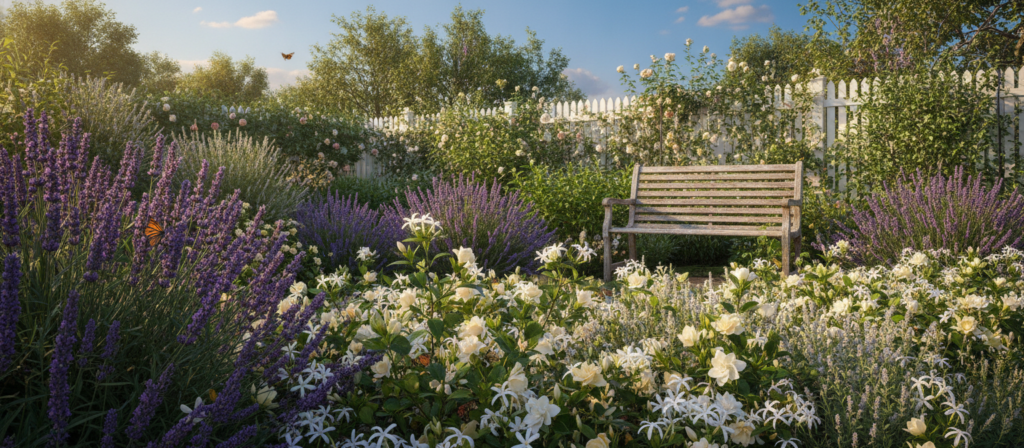
Make your backyard smell amazing by picking the best fragrant plants for garden. Choose plants that fit your local weather. This keeps your garden healthy and pretty.
Choosing Plants Based on Your Climate Zone
First, find out your USDA hardiness zone. This tells you which plants can handle your winters. Native plants are usually the best because they’re already used to your area’s weather.
Think about these things when picking plants:
- Temperature extremes: Make sure the plant can handle your coldest winters.
- Humidity levels: Some plants like dry air, others like it humid.
- Microclimates: See how your yard holds heat or moisture compared to others.
Balancing Bloom Times for Year-Round Fragrance
To keep your yard smelling good all year, plant at different times. Pick a mix of fragrant flowering plants for home gardens. This way, you’ll get different smells as the seasons change.
Here’s how to keep your garden smelling nice:
- Start with early-spring bloomers like lilacs or viburnum.
- Choose mid-summer favorites like jasmine or gardenias for evening smells.
- End with late-blooming perennials for fragrance until the first frost.
By mixing these plants, your garden will always be inviting. This planning makes your best fragrant plants for garden dreams come true. Your garden will smell great all season long.
Preparing Your Soil for Optimal Growth
Your garden’s success starts deep down where roots grow. Healthy soil is key for strong growth and smell. Good soil helps your aromatic plants for landscaping grow well.
Testing and Amending Soil pH
First, test your soil pH before adding plants. Most plants like a slightly acidic to neutral soil. You can buy a testing kit at a garden center.
If your soil is too acidic, use garden lime. For too alkaline soil, add peat moss or sulfur. Keeping the pH right is very important.
Improving Drainage for Sensitive Scented Varieties
Many plants don’t like wet soil, which can cause root rot. Make sure your garden drains well. Add compost or sand to help.
Raised beds are great for drainage in wet areas. They keep your plants healthy and bright. Here’s a table with soil amendments to help you.
| Amendment Type | Primary Benefit | Best Use Case |
|---|---|---|
| Organic Compost | Improves nutrient density | General soil enrichment |
| Coarse Sand | Enhances water drainage | Heavy clay soil areas |
| Garden Lime | Raises soil pH | Acidic soil correction |
| Peat Moss | Lowers soil pH | Alkaline soil correction |
Planting Techniques for Success
Turning your yard into a fragrant place needs careful planting. The first step is to plant right. This helps your plants grow strong roots fast.
Digging and Spacing Requirements
Begin by digging a hole that’s twice as wide as the root ball. Make it no deeper than the container. This lets the roots spread out well.
Always check the plant tag for how deep to plant. Some plants like their crown a bit above the soil.
Spacing is key to stop plants from fighting for food and water. Too close and they can get sick. Give them space to grow and smell great.
Watering Strategies During the Establishment Phase
The first weeks are very important for your garden. Keep the soil moist to help roots settle. Water deeply right after planting to remove air pockets.
Check the soil daily during this time. If it’s dry an inch down, it’s time to water. Keeping the soil moist is the secret to success for your plants.
Caring for Fragrant Shrubs and Perennials
Take care of your shrubs and perennials to keep your garden smelling great. Spend time on routine care to keep your best fragrant plants for garden beds healthy and blooming all season.
Pruning Practices to Encourage More Blooms
Pruning keeps your plants looking good and strong. Cut out dead or damaged parts to help the plant grow new, flower-bearing stems.
Removing spent flowers, called deadheading, is key. It stops the plant from making seeds and makes it bloom again. This keeps your garden smelling lovely.
Fertilization Schedules for Aromatic Health
Give your plants the right food at the right time for the best fragrant shrubs for home garden displays. Use a balanced, slow-release fertilizer in early spring. It helps with strong leaves and lots of flowers.
Don’t over-fertilize, as it can make too many leaves and not enough flowers. Stick to a schedule that meets your perennials’ needs. This keeps them healthy and smelling good.
| Plant Type | Pruning Time | Fertilizer Frequency |
|---|---|---|
| Lavender | Late Summer | Once in Spring |
| Gardenia | After Flowering | Monthly in Summer |
| Peony | Late Autumn | Early Spring |
| Lilac | Post-Bloom | Once in Spring |
Managing Pests and Diseases in Scented Gardens
Keeping your flowers safe from pests is key to a lively outdoor area. Growing beautiful scented plants for landscaping is a big deal. You want them to stay healthy and pest-free.
Identifying Common Garden Pests
Many insects love the smell of plants. Aphids cluster on new growth, sucking sap and leaving a sticky mess. Spider mites make webs on leaves, causing them to turn yellow or fall off.
Beetles and caterpillars can chew holes in leaves. Regular inspection helps catch these pests early. This way, you can stop them from harming your beautiful scented plants for landscaping.
Organic Solutions for Protecting Your Fragrant Blooms
You don’t need harsh chemicals to protect your garden. Organic methods are effective and safe for pollinators. Neem oil repels and treats soft-bodied insects.
Here are some natural ways to keep your garden healthy:
- Companion Planting: Plant marigolds or basil to keep pests away.
- Beneficial Insects: Ladybugs and lacewings eat pests like aphids.
- Manual Removal: A hose blast can remove small pests without harming the plant.
Using these gentle yet effective methods keeps your garden safe. Regular care and watching your garden will make it lush and fragrant all season.
Maximizing Fragrance in Small Outdoor Spaces
You don’t need a lot of space to have a fragrant garden. Even a small balcony or patio can be a paradise of smells. By using vertical gardening and the right containers, you can enjoy lovely scents without a big yard.
Utilizing Vertical Gardening for Scented Vines
Use your walls and railings when space is tight. Vertical gardening is a game-changer for growing scented vines in small areas. A simple trellis or wall-mounted grid lets plants like Star Jasmine or Honeysuckle climb up.
This method makes your garden taller and more lush. It creates a living screen that smells great. Vertical structures save space and direct fragrance to your seating area. It’s a smart way to add fragrant flowers for small gardens without taking up too much room.
Container Gardening Tips for Patios and Balconies
Pots and planters are great for small spaces. You can move them to get the best sunlight or to be near your favorite chair. Picking the right pots is key to keeping your sweet smelling plants for outdoor spaces healthy and bright all season.
Think about using hanging baskets to reach even higher. Make sure your containers have holes for water to drain. This prevents root rot, a big problem in small spaces. By picking the right fragrant flowers for small gardens, you can make a cozy, scented spot that feels bigger than it is.
Incorporating Indoor Fragrant Plants
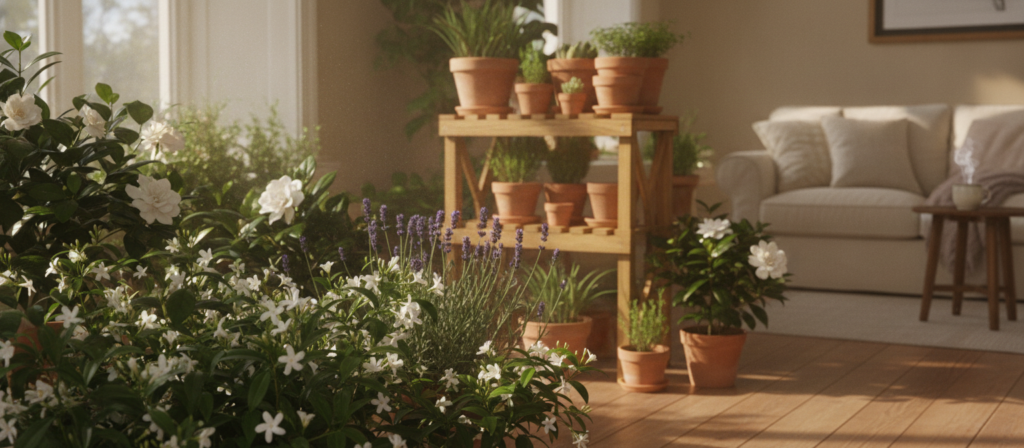
Your home can be a natural scent paradise with indoor fragrant plants. Bringing the garden inside lets you enjoy calming scents all year. You can pick the right plants to make any room feel fresh.
Selecting Varieties That Thrive in Low Light
Many think scented flowers need lots of sun. But, some beautiful ones like Jasminum polyanthum, or Pink Jasmine, do well in less light. It blooms with white flowers that smell sweet and floral.
The Hoya carnosa, or Wax Plant, is another great choice. It’s a hardy vine with star-shaped flowers that smell like chocolate. These indoor fragrant plants are great for spots with moderate light.
Maintaining Humidity for Indoor Aromatic Species
Most scented tropical plants need more moisture than homes usually have. You can increase humidity by putting pots on a tray with pebbles and water. This method helps keep your plants happy and healthy.
Grouping plants together also helps with humidity. As plants release moisture, they create a humid space for all. Don’t forget to mist them, too, to keep the air moist, even in winter.
Designing for Evening Fragrance
Make your backyard magical by picking plants that bloom at night. Many focus on daytime looks, but scented flowers for home garden that bloom at night add mystery and calm. They make your outdoor space special.
These plants give off intoxicating perfumes when it’s dark. By picking the right ones, your garden stays lively and fragrant even after it gets dark.
Selecting Moon-Blooming Flowers
For a moonlit garden, choose plants that bloom at night. They attract night pollinators and fill the air with sweet smells.
Here are some great picks for your garden:
- Moonflower (Ipomoea alba): It has big, white blooms that open at twilight.
- Nicotiana (Flowering Tobacco): It smells like jasmine and gets sweeter at night.
- Evening Primrose: It has yellow or white petals that glow in the dark.
- Night-Blooming Jasmine: It has a strong perfume that can fill your patio.
Strategic Placement Near Seating Areas
Plant your scented flowers for home garden near where you sit outside. This could be decks, patios, or benches.
Also, put them near windows or doors. This lets the scent come inside on warm nights. Proximity is key for the scent to stay strong.
Grouping these plants near your favorite spots makes your garden a sensory-rich environment. It invites you to enjoy the outdoors more. Your garden’s scent will make your evening gatherings even more special.
Seasonal Maintenance and Winter Protection
Keeping your fragrant garden safe in the cold helps it bloom again in spring. Taking steps now protects your best fragrant shrubs for home garden from freezing. This way, your plants can rest safely and grow well when it gets warmer.
Mulching Techniques for Root Protection
Using organic mulch is a great way to keep your soil warm. A 3-to-4-inch layer of wood chips, straw, or leaves protects your roots. It stops the soil from freezing and thawing too fast, which can harm your plants.
Mulch also keeps the soil moist and prevents erosion. It covers the soil, keeping it wet during the cold months. Keeping the soil moist is key, even when plants are sleeping, to stop them from drying out.
Preparing Tender Plants for Cold Weather
Not all plants can handle very cold weather. If you have plants that can’t take the cold, move them inside. For plants in the ground, use burlap or frost cloths to protect them from wind and snow.
When picking the best fragrant shrubs for home garden, check their hardiness zone. This tells you if they need extra care in winter. A little extra care for sensitive plants keeps them healthy and ready to bloom again. A well-prepared garden is key to a beautiful and fragrant outdoor space.
Common Mistakes to Avoid When Growing Scented Flowers
Many common mistakes can harm your favorite blooms. Even experts sometimes miss the needs of scented flowers for home garden. Catching these errors early helps keep your plants bright and fragrant all season.
Overwatering and Root Rot Prevention
Watering is tricky. Too much water can cause devastating root rot. Roots need air, not waterlogged soil, to stay healthy.
Check the soil’s top inch before watering. If it’s damp, wait a day or two. Good drainage is key for scented flowers for home garden. Make sure pots have holes and garden beds have organic matter.
«To plant a garden is to believe in tomorrow.»
Avoiding Overcrowding for Better Air Circulation
It’s tempting to fill garden beds with many plants. But, this can make a humid, disease-prone space. Plants need room for air to prevent fungal problems.
Too close together, plants fight for nutrients and sunlight. This leads to weak growth and scents. Follow spacing guidelines on plant tags for a healthy garden. A well-spaced garden is easier to care for.
| Common Mistake | Negative Impact | Corrective Action |
|---|---|---|
| Excessive Watering | Root rot and decay | Check soil moisture first |
| Tight Spacing | Poor air circulation | Follow label spacing guides |
| Ignoring Drainage | Waterlogged roots | Add perlite or compost |
Conclusion
Creating a sensory garden takes time and planning. You now know how to pick, plant, and care for beautiful plants.
Your journey to a sensory oasis begins with knowing your local weather. Picking the right plants makes your garden grow all year. These plants make your hard work pay off.
Keeping up with your garden is key. Regular care keeps your flowers bright and your air smelling nice. Your garden will be a peaceful spot just outside your door.
If starting feels too big, start small. Begin with one corner of your yard or a few pots on your patio. Your hard work will create a fragrant haven that brings joy and calm for years.
Share your garden’s growth with local gardening groups or neighbors. Your story can inspire others to enjoy scented plants. Watch as your garden becomes a colorful and fragrant masterpiece.