
Your backyard can be a safe home for local animals. By picking native flowering plants for pollinators, you make a place where they can thrive. This helps keep your area’s ecosystem in balance.
These plants give bees and butterflies the food they need to live. By growing them, you help save these important insects in your area.
Every garden matters for a healthier world. Planting local plants helps a big effort to protect nature all over the U.S.
Begin today and keep your garden lively and useful. You can help nature and enjoy the beauty of these special plants in your yard.
Assessing Your Garden for Pollinator Potential
Your garden has secrets waiting to be discovered. Before buying pollinator-friendly plants, check your garden’s needs. This step is key to a healthy, green space.
Evaluating Sunlight and Soil Conditions
Most native pollinator plants need the right light to bloom. Watch how sunlight changes in your yard. Look for areas that get full sun, partial shade, or deep shade.
Check how well your soil drains to avoid root rot. Dig a hole and fill it with water. If it drains quickly, your soil is good. If it takes a long time, pick plants that like wetter soil or fix the area.
«The best way to support local biodiversity is to work with the land you have, rather than trying to force it into something it is not.»
| Soil Type | Drainage Speed | Best Plant Strategy |
|---|---|---|
| Sandy | Fast | Drought-tolerant species |
| Loamy | Moderate | Wide variety of natives |
| Clay | Slow | Moisture-loving perennials |
Identifying Existing Native Flora
Look at the plants already in your garden. You might find native pollinator plants that are already there. These plants are perfect for your area.
Get rid of plants that take over. This helps your new pollinator-friendly plants grow better. A balanced garden is stronger and easier to care for.
Selecting the Best Native Flowering Plants for Pollinators
You can make your backyard a lively place by picking the right native flowering plants for pollinators. It’s important to choose plants that bloom all season. This way, you help local insects all year.
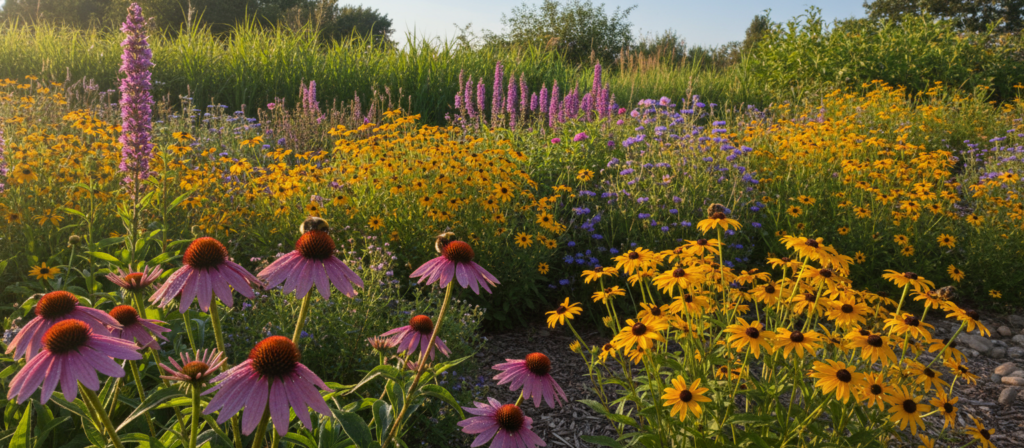
«The beauty of a garden is not just in its appearance, but in the life it sustains through thoughtful design and native plant choices.»
Choosing Plants for Different Pollinator Species
Each insect likes different flowers. Butterflies need deep flowers, while bees like open ones. Attracting pollinators with native plants means having many types of flowers.
Choosing the right plant species for pollinator conservation gives insects nectar and pollen. Here’s a table to help pick the right plants:
| Pollinator Type | Preferred Flower Shape | Native Plant Example |
|---|---|---|
| Bumblebees | Open, bowl-shaped | Wild Bergamot |
| Butterflies | Flat-topped, tubular | Milkweed |
| Moths | Pale, fragrant, deep | Evening Primrose |
Prioritizing Bloom Times for Continuous Support
Don’t plant all flowers at once. This can leave insects hungry. Attracting pollinators with native plants means planting at different times.
Plant three types of native flowering plants for pollinators for each season. Spring flowers help queens, and fall flowers help migrants. This keeps your garden lively all year.
Designing Your Pollinator-Friendly Landscape
A good pollinator garden design needs careful planning. It should look like nature. This helps bees, butterflies, and other insects live well.
Think of your garden as a home for wildlife. It should have everything they need to live well.
Grouping Plants for Maximum Visibility
Insects have a hard time finding flowers when they fly fast. Plant pollinator-friendly plants in big groups. This makes it easier for them to find food.
Plant at least three to five plants together. This makes a big splash of color and smell. It attracts pollinators from far away.
Incorporating Layers for Diverse Habitats
A good garden needs different levels. This gives shelter and places to nest. It keeps insects safe from bad weather.
Using Groundcovers and Perennials
Groundcovers and perennials are the bottom layer. They keep the soil moist. They also protect bees and insects that crawl.
Pick native plants that bloom at different times. This keeps your garden busy all year. It’s a great way to help pollinators.
Adding Shrubs and Small Trees
Shrubs and small trees are like the roof of your garden. They give nesting sites and places to hide. They help birds and insects stay safe.
| Layer Type | Primary Function | Pollinator Benefit |
|---|---|---|
| Groundcover | Soil protection | Nesting sites |
| Perennials | Nectar source | Foraging efficiency |
| Shrubs | Vertical shelter | Larval host plants |
| Small Trees | Canopy cover | Overwintering habitat |
Preparing the Soil for Native Plant Success
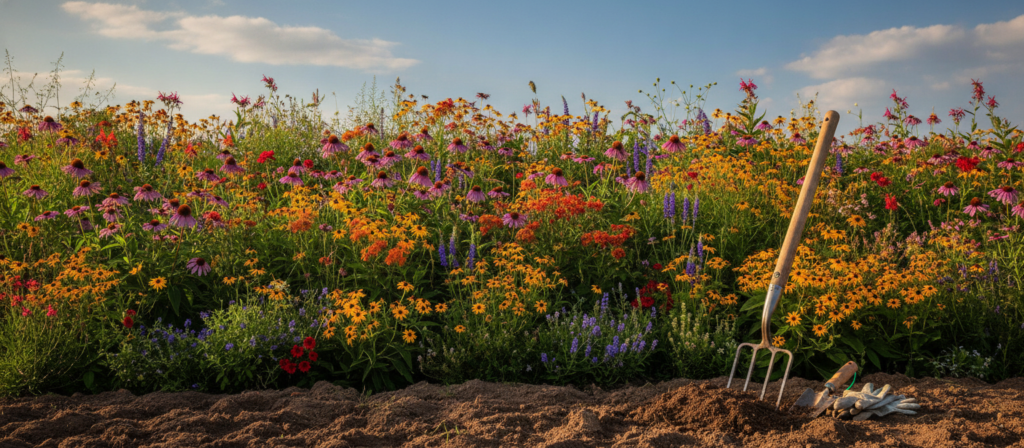
Healthy soil is key for a thriving native plant garden. It’s like the engine that makes your garden work well. By taking care of the soil, you help your plants grow strong without using bad chemicals.
Testing Your Soil Composition
First, you need to know what your soil needs. Start by testing your soil to find out its pH levels and texture. Many places in the U.S. offer cheap soil test kits that give you precise data on what your soil needs.
Knowing if your soil is sandy, clay-heavy, or loamy helps pick the right plants. This is important for keeping your garden healthy and needing less care later.
Removing Invasive Species Before Planting
Invasive weeds can steal water and sunlight from your plants. You should pull them out by hand to avoid harming the soil. Use a garden fork or trowel to get the roots out completely.
Don’t use chemical weed killers because they can hurt the insects you want to attract. Instead, try solarization or mulching with cardboard to keep weeds away naturally. Clearing the area well helps your plants grow better without problems.
Amending Soil Naturally Without Synthetic Fertilizers
Native plants usually don’t need a lot of fertilizer. If your soil is poor, add compost or leaf mold to make it better. These natural helpers improve the soil without harming it.
Mix the organic stuff into the top of your garden bed. This gentle approach helps good microbes grow, which is good for your plants. By working with nature, you make a place that’s good for many kinds of wildlife.
Step-by-Step Planting Guide for Native Species
Starting with native flowering plants for pollinators is key. The right way to plant helps them grow strong roots fast. This lets them do well in your area.
Timing Your Planting for Regional Climate Zones
When you plant is very important. Plant in the spring or fall when it’s cooler. This keeps your plants safe from too much heat or cold.
Look at your local USDA hardiness zone map for the best time. Plant when the soil is soft and the weather is mild. This helps your native flowering plants for pollinators get settled without harm.
Digging and Spacing Techniques
How big your hole is matters a lot. Make it twice as wide as the root ball but not deeper than the pot.
Spacing is also key for good air and growth. Here are some tips:
- Group plants in clusters of three to five to attract pollinators.
- Check the plant tag for mature width to avoid overcrowding.
- Leave enough space between species for natural spread and air.
Proper Root Placement and Backfilling
When your hole is ready, carefully take the plant out of its container. If the roots are circling, gently spread them out.
Put the plant in the hole’s center, making sure the root ball is level. Fill with native soil, pressing it down gently to remove air pockets.
Don’t bury the stem or crown of the plant, as this can cause rot. A well-installed plant will have a solid base. It’s ready to support the native flowering plants for pollinators in your garden.
Watering and Mulching Techniques for New Plants
Give your new native pollinator plants the right care. This helps them grow strong roots. They need your help during their first year to thrive in your garden.
Establishing a Watering Schedule
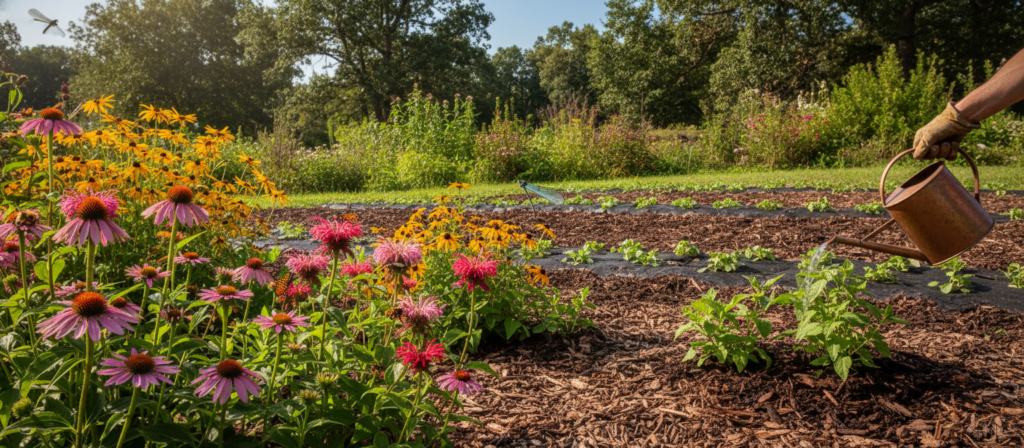
Water them deeply, not just on the surface. Water once or twice a week, depending on how much rain you get.
Consistency is key. Water at the base of the plant. This keeps the roots wet without getting the leaves wet.
Selecting Organic Mulch for Moisture Retention
Organic mulch keeps weeds away and soil moist. Use shredded bark, pine straw, or compost around your pollinator-friendly flowers.
A two-inch layer of mulch stops water from evaporating. It helps you water less and keeps the soil cool for your plants’ roots.
Avoiding Common Over-Watering Mistakes
Don’t think more water is always better. Too much water can harm your plants.
Check the soil moisture with your finger. If it’s damp, wait a day or two before watering again.
| Plant Type | Watering Frequency | Mulch Depth |
|---|---|---|
| Drought-Tolerant Natives | Weekly (First Season) | 1-2 Inches |
| Moisture-Loving Species | Twice Weekly | 2-3 Inches |
| Established Perennials | As Needed | 1 Inch |
Managing Pests and Weeds Without Harmful Chemicals
Keeping your garden safe from pests doesn’t need harsh chemicals. These chemicals can harm your pollinators. By creating a balanced garden, you keep your pollinator-friendly flowers safe for bees and butterflies.
A healthy garden can control pests on its own. Just make sure it has the right environment for natural predators.
Identifying Beneficial Insects vs. Garden Pests
Not all insects in your garden are bad. Many are natural guardians that fight off pests. For example, ladybugs and lacewings eat aphids, which harm plants.
It’s important to know who your friends are in the garden. Before using chemicals, watch the insects on your plants. A mix of pests and predators means your garden is balanced.
Manual Weed Control Strategies
Weeds take away from your native pollinator plants. The best way to stop them is to pull them out by hand. Do this before they spread seeds.
Using organic mulch also helps. It stops weeds and keeps the soil moist. This makes your garden look better and saves you time.
Make sure to pull out the whole weed to stop it from coming back.
Using Integrated Pest Management Practices
Integrated Pest Management (IPM) is a smart way to keep your garden healthy. It uses science to prevent pests. Only use treatments when pests are a big problem.
When you do need to act, choose natural solutions. Use beneficial nematodes or insecticidal soaps carefully. This protects your garden and keeps it growing well.
| Common Garden Pest | Natural Predator | Control Method |
|---|---|---|
| Aphids | Ladybugs | Manual removal or water spray |
| Caterpillars | Parasitic Wasps | Hand-picking |
| Spider Mites | Predatory Mites | Increased humidity/mulching |
| Slugs | Ground Beetles | Copper barriers |
Seasonal Maintenance for Year-Round Pollinator Support
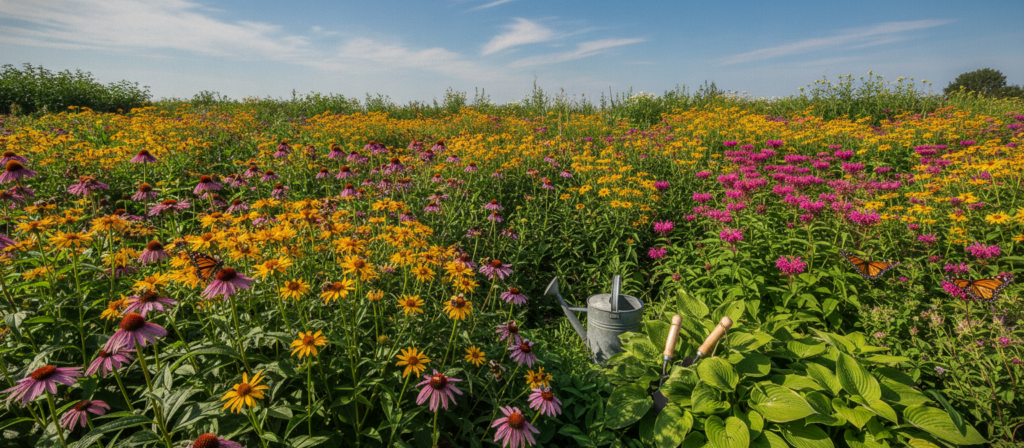
A good habitat needs care all year. Your garden needs different care as seasons change. This keeps it a good place for pollinators.
Spring Cleanup and Early Bloomers
Don’t clean your garden too much when it warms up. Many insects, like native bees, hide in stems or under leaves. Gentle cleanup helps these insects.
- Wait until temperatures consistently stay above 50°F.
- Clear only the debris that blocks new growth.
- Leave patches of bare soil for ground-nesting bees.
Summer Care and Deadheading Practices
When your garden is at its best, careful care helps it last longer. Deadheading makes many pollinator-friendly plants bloom again. This keeps nectar flowing in the hottest months.
«A garden is a living, breathing entity that rewards the gardener who listens to the rhythm of the seasons.»
Remove spent flowers before they seed. This helps plants grow more roots and flowers. Watch for signs of drought, as plants need water in the summer.
Fall Preparation for Overwintering Pollinators
In autumn, focus on keeping your garden safe for winter. Don’t cut back your garden. Leave stalks and seeds for winter insects.
Keeping plants up helps pollinator-friendly plants and their visitors. Clean up in spring, but for now, let nature do its thing. This keeps your garden safe until spring.
Creating Essential Habitats Beyond Flowers
Flowers are great for nectar, but gardens need more. To attract pollinators, think about their whole life. Offer shelter and water to make your yard a safe haven.
Providing Water Sources for Bees and Butterflies
Bees and butterflies find it hard to find water in summer. Place shallow dishes with water and stones in your garden. The stones help bees drink safely.
Butterflies like to «puddle» in damp soil or shallow trays. Add sea salt or compost to the water for minerals. This helps them a lot.
Building Nesting Sites for Solitary Bees
Most native bees nest alone, not in hives. Leave patches of bare soil in sunny spots for them. Don’t use too much mulch there.
For bees that nest in wood, use nesting blocks or hollow reeds. These mimic natural cavities. Providing these nesting sites helps pollinators in your area.
«Nature is not a place to visit. It is home.»
Leaving Leaf Litter for Larval Development
Butterflies and moths need fallen leaves to grow. Leave leaf litter in your garden beds. It protects larvae and pupae in winter and makes soil better.
| Habitat Feature | Primary Beneficiary | Maintenance Level |
|---|---|---|
| Shallow Water Station | Bees and Butterflies | Low |
| Nesting Blocks | Solitary Bees | Medium |
| Leaf Litter Layers | Moths and Butterflies | Very Low |
Don’t clean up your garden in fall. Leaving natural debris helps insects survive winter. Your garden will be full of life in spring.
Monitoring and Documenting Your Pollinator Garden
Watching your plants is key to a good pollinator garden design. It shows you which plants do well in your area. This makes your garden a fun science project.
Tracking Pollinator Visits Throughout the Season
Keep a logbook or use a digital spreadsheet. Write down the date, time, and which flowers attract visitors. Consistency is key for a creating a pollinator habitat that supports many insects.
Watch your garden during peak hours, like mid-morning or late afternoon. See if bees, butterflies, or hoverflies visit your native flowers. This tells you which plants are most important.
| Observation Metric | Why It Matters | Actionable Insight |
|---|---|---|
| Visitor Frequency | Indicates plant popularity | Increase plant density |
| Bloom Duration | Shows seasonal coverage | Fill gaps in bloom time |
| Insect Diversity | Measures ecosystem health | Add varied plant shapes |
Adjusting Your Plant Selection Based on Observations
After collecting data, you can choose better plants for next year. If a flower gets few visitors, pick a new one that attracts more. This is how you improve your pollinator garden design.
You might find your garden needs more flowers in spring or fall. Use your notes to pick new plants that fill these gaps. Thoughtful adjustments keep your creating a pollinator habitat lively and helpful all year.
Conclusion
Turning your outdoor area into a home for bees and butterflies makes a big difference. Your work with native plants is key to the ecosystem. Every flower you grow helps animals in your area.
Creating a green space needs time and effort all year round. You know how to keep your garden healthy and full of life. This helps many insects and makes your garden bright for the future.
Look around and see the life you’ve welcomed. Tell your neighbors about your garden to encourage them. Even small changes help the planet a lot. Your garden shows how caring for the earth matters.