
Make your patio or balcony bright with the right flowers. Pick the best flowers for outdoor container displays to create a beautiful spot. It should show off your style and grow well in your area.
Before you go to the nursery, think about your space. Check how much sun it gets and the wind. Knowing these things helps your plants stay healthy and green all season.
Follow these tips to make your containers look amazing. Whether you’re experienced or new, the right flowers will make your home look great. They’ll add a refreshing pop of color to your day.
Assessing Your Outdoor Environment and Microclimate
Start by learning about your microclimate. Watch how your space changes during the day. These container gardening tips will help your plants stay healthy.
Evaluating Sunlight Exposure Patterns
Measuring daily light hours is key. See if your space gets full sun, partial shade, or deep shade. Remember, sunlight for container flowers changes with the seasons.
Sort your space by light levels:
- Full Sun: Six to eight hours of direct light daily.
- Partial Shade: Three to six hours of light, best in the cooler morning.
- Full Shade: Less than three hours of direct sunlight or filtered light all day.
Understanding Local Temperature and Humidity Zones
Your local USDA hardiness zone guides plant choice. It shows which flowers can handle your area’s temperature changes. Always check the plant tag for climate suitability.
Humidity affects plant health too. High humidity can cause fungal issues, while dry air can make flowers wilt. Pick plants that match your local humidity.
Accounting for Wind and Exposure Factors
Wind dries out soil fast. In windy areas, water your containers more often. Choose strong plants that won’t break or tip over.
For windy spaces, try these:
- Use heavy, stable pots that resist tipping.
- Group containers together to create a windbreak.
- Choose compact, low-growing plants that are less susceptible to wind damage.
By understanding these factors, you’re ready to start. These container gardening tips will keep your flowers looking great, no matter the weather.
Selecting the Right Containers for Your Floral Vision
Your choice of container is key for a great floral display. It affects your plants’ health and how long they live. Follow container gardening tips to pick the right pots for your plants.
Material Considerations for Moisture Retention
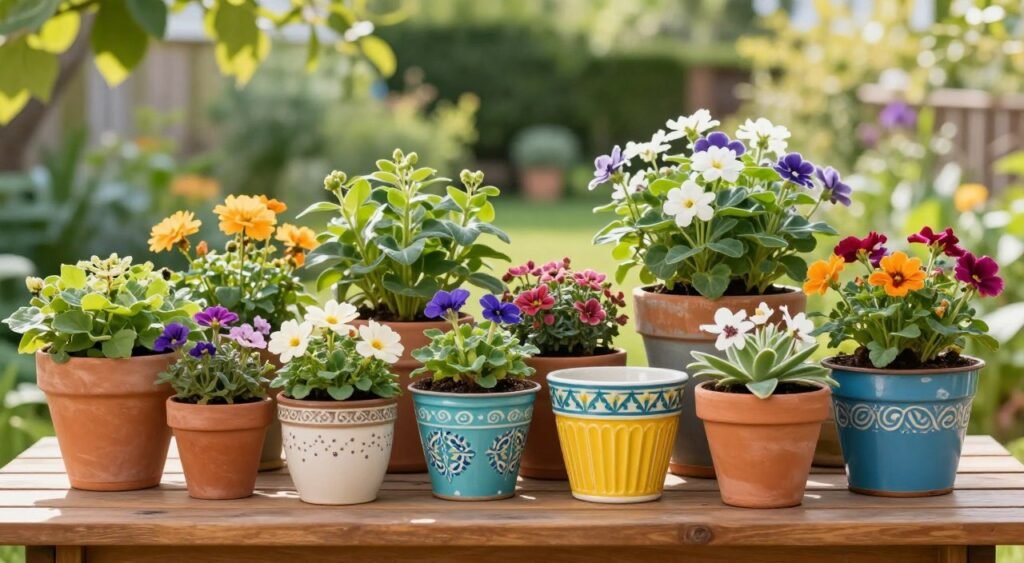
The type of pot you choose affects how fast the soil dries. Terracotta pots let air and moisture through, good for dry plants. Glazed ceramic, plastic, or metal pots keep moisture longer, great for thirsty plants.
| Material | Moisture Retention | Best For |
|---|---|---|
| Terracotta | Low | Succulents, Herbs |
| Plastic | High | Annuals, Tropicals |
| Glazed Ceramic | Medium-High | General Flowering Plants |
Ensuring Proper Drainage for Plant Health
Good container plant drainage stops root rot. Water at the bottom of the pot can harm roots. Make sure your pots have holes for drainage before planting.
- Check for pre-drilled holes at the base of the vessel.
- Use pot feet to elevate the container, allowing excess water to escape freely.
- Avoid placing saucers directly under pots unless you empty them promptly after watering.
Matching Container Size to Root System Requirements
When choosing flower pots, think about your plant’s root size. A pot that’s too small can cause wilting. A pot that’s too big can hold too much water. Always aim for a balance that lets roots grow without too much soil.
Choose a pot that’s two inches wider than your plant’s current pot. This helps roots grow strong. It’s key for your plants to grow well and bloom long and bright.
Understanding the Best Flowers for Outdoor Container Displays
Knowing how plants grow helps your containers look great all season. Choosing the best flowers for outdoor container displays means picking plants that look good and are easy to care for. Grouping plants with the same needs makes caring for them simple.
Categorizing Plants by Growth Habit
Plants grow in different ways. Some grow up, some spread out, and some trail down. Grouping plants with similar habits keeps your garden looking neat and healthy.
Make sure plants have enough space. This stops them from getting too crowded. Good spacing also helps prevent diseases in tight spaces. This way, your garden will look great from the start.
Identifying Thriller, Filler, and Spiller Varieties
The thriller filler spiller method makes your garden look amazing. It uses three types of plants for depth and interest.
- Thrillers: These are tall plants that grab your attention.
- Fillers: These plants spread out and cover the soil.
- Spillers: These plants hang over the edges, making the pot look soft.
| Plant Role | Primary Function | Visual Impact |
|---|---|---|
| Thriller | Vertical height | Dramatic focal point |
| Filler | Volume and mass | Full, lush appearance |
| Spiller | Trailing growth | Softens container edges |
Selecting Long-Blooming Annuals for Continuous Color
To keep your patio colorful, pick the right annual flowers for pots. Choose plants that bloom a lot to save time. Focusing on high-performance annuals means your garden stays beautiful all season.
«A well-planned container garden is a living piece of art that evolves with the changing light and temperature of the seasons.»
Look for plants that handle heat well and don’t need much care. Plants that bloom a lot mean less work for you. You get to enjoy your garden more.
Matching Soil Quality and Nutrient Needs
Your flowers need a good start. Using backyard dirt can cause problems. Instead, choose potting soil for containers that’s high quality.
Choosing the Ideal Potting Mix Composition
A good mix is made for containers. It has peat moss, coconut coir, perlite, or vermiculite. This makes the soil light and fluffy.
It lets roots breathe and keeps water in. This is key for your flowers to stay hydrated.
- Perlite: Helps with drainage and prevents soil from getting too tight.
- Peat Moss or Coir: Keeps the soil moist for the roots.
- Compost: Helps the soil stay healthy over time.
Incorporating Slow-Release Fertilizers
Even the best soil loses nutrients as plants grow. Add fertilizer for potted flowers when you plant. This gives a steady flow of nutrients.
Slow-release fertilizers avoid the feast and famine cycle. They’re great for those who don’t have time to water every day. Just make sure to follow the instructions for the right amount.
Managing Soil pH for Specific Flower Varieties
Knowing the soil pH for flowers is key. Some plants, like hydrangeas, need acidic soil. Others prefer neutral or alkaline.
«The secret to a lush container garden lies in the chemistry of the soil, which dictates how effectively your plants can access the nutrients they need to bloom.»
You can test your soil with a simple kit. If it’s not right, you can adjust it. Adding lime or sulfur can help. This makes sure your fertilizer for potted flowers works well, leading to beautiful blooms.
Planning Your Color Palette and Design Aesthetic
Your choice of colors can make a simple pot stand out. A good flower container design needs more than just pretty flowers. It’s about how colors work together in a small space.
Utilizing Color Theory for Visual Impact
First, learn about the color wheel. It helps you pick colors that make your container garden color palette look professional. You can choose colors that feel calm or bright and fun.
- Analogous colors: These are next to each other on the wheel. They make a soft, nice look.
- Complementary colors: These are opposite each other. They create a bold contrast that grabs your attention.
- Neutral tones: Colors like white, gray, and green help keep things from getting too busy.
Creating Monochromatic vs. Complementary Arrangements
For a fancy look, try a monochromatic scheme. Use different shades of one color. This makes your display calm and intentional.
Or, go bold with a complementary container garden color palette. Mix deep purple petunias with bright yellow marigolds. This makes your arrangement stand out.
Balancing Texture and Foliage Contrast
A great flower container design is about more than flowers. You need different textures to keep things interesting, even when plants aren’t blooming.
Think about these things to add depth:
- Fine-textured foliage: Grasses or ferns add movement and lightness.
- Bold, broad leaves: Plants like hostas or coleus provide a strong base.
- Variegated patterns: Leaves with white or yellow edges brighten up dark spots.
By mixing these textures, your containers stay visually captivating all season. Remember, leaf shape contrast is as key as color.
Step-by-Step Planting Process for Success
Starting a container garden is easy with the right steps. First, get your containers ready and pick the right spot. A good flower container design makes your garden look great.
Preparing Your Containers and Drainage Layers
Make sure your container has holes for water to drain. If not, drill holes in the bottom. This keeps your plants from getting too wet.
For big pots, add a layer of gravel or broken pottery at the bottom. It helps water flow and keeps the soil clean. This makes your plants happy and healthy.
Arranging Plants for Optimal Growth and Aesthetics
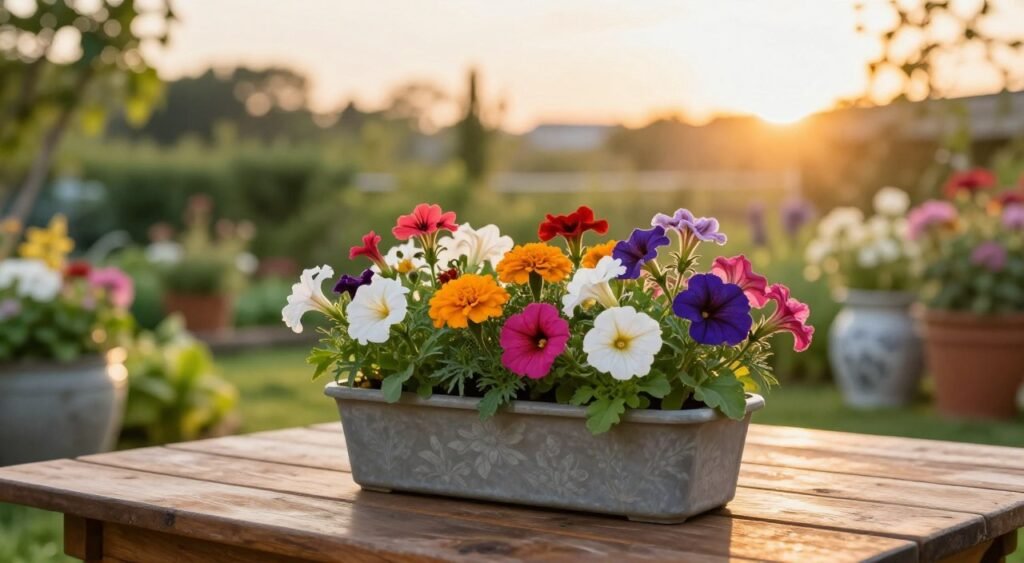
A good display needs balance. Put your thriller plants in the middle or back. They are the tallest and catch your eye first.
Then, add filler plants around the base. They add color and volume. Finish with spiller plants at the edges. They spill over and make your garden look amazing.
Techniques for Proper Planting Depth and Spacing
When planting, put each flower at the same depth as in its pot. Planting too deep or shallow can harm your plants. Proper planting depth helps roots grow strong.
Don’t crowd your plants. Give them enough space for air to move. This keeps them healthy and stops diseases. It also lets them grow big and strong.
Watering Strategies for Container-Grown Flowers
Pots dry out fast because they have little soil. Watering container plants needs a careful plan. Unlike ground, pots dry out quickly because air touches them on all sides.
Having a regular watering schedule keeps your flowers looking good. This is key to keeping them healthy all season.
Determining Frequency Based on Weather Conditions
Change your watering based on the weather. On hot days, you might need to water more than once. Windy conditions also dry out the soil fast, so water more then.
On cloudy or humid days, the soil stays wetter. Check the soil by sticking your finger in it. If it’s damp, wait a day before watering again.
Recognizing Signs of Overwatering and Underwatering
It’s important to know when your plants need water. If they wilt and the soil is dry, they need water. But, if leaves turn yellow or stems get mushy, you’re watering too much.
Getting the right balance is crucial. If the pot feels light, it’s dry. If it’s heavy and soggy, stop watering.
Implementing Efficient Irrigation Methods
Using the right tools makes caring for plants easier. Drip irrigation or self-watering pots are great for keeping moisture steady. They water the roots directly, saving water and preventing diseases.
| Weather Condition | Watering Frequency | Moisture Level |
|---|---|---|
| High Heat/Wind | Daily | Keep consistently moist |
| Mild/Cloudy | Every 2-3 days | Allow top inch to dry |
| Cool/Rainy | As needed | Check for drainage |
Learning to water your plants well helps them grow strong. Always watch your plants closely for the best results.
Maintenance Practices to Keep Displays Vibrant
Take care of your potted plants to keep them looking good all season. Container plant maintenance is key to a lively display. Spend a little time each week to keep your garden lush and vibrant until the first frost.
Deadheading Techniques for Prolonged Blooming
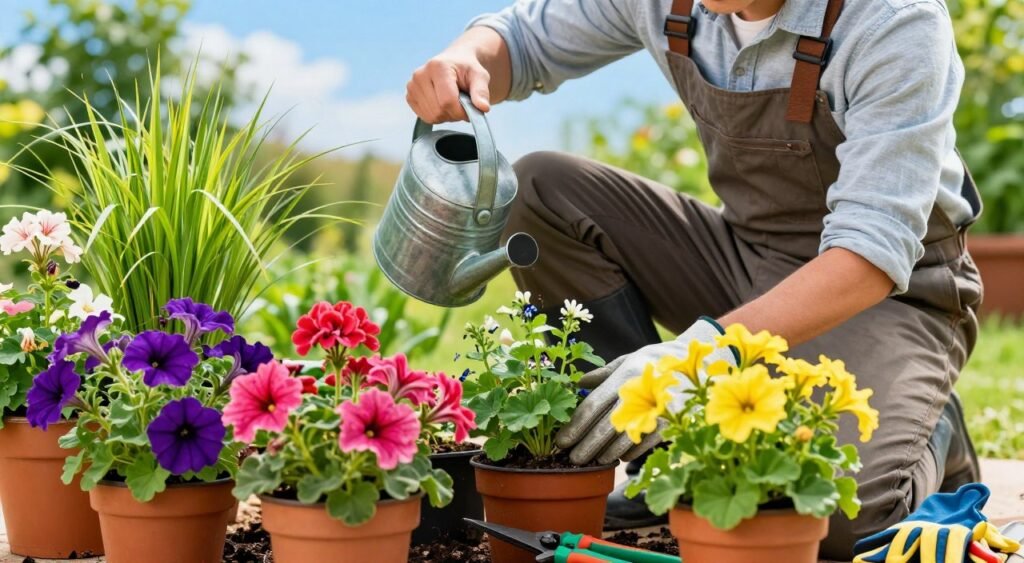
Deadheading flowers is a great way to keep your display fresh. It stops the plant from making seeds. This lets it focus on growing new, colorful flowers instead.
Just pinch off the old flower head and its stem. For big clusters, use clean shears to cut just above healthy leaves. This keeps your containers full of color.
Pruning and Pinching for Bushier Growth
Prune and pinch plants that look leggy or sparse. Pinching the tips makes them branch out. This makes your plants fuller and more compact.
Pruning also removes damaged or yellow leaves. This keeps your plants looking good and healthy. It also helps with airflow in the container.
Monitoring for Common Pests and Diseases
Check your plants for container plant pests while you’re grooming them. Aphids, spider mites, and whiteflies often hide on leaves. Catching them early stops them from spreading.
Look for sticky spots, discolored leaves, or webs. If you find pests, treat the plant with insecticidal soap or neem oil. Keeping things clean helps prevent disease and pests.
| Task | Frequency | Primary Benefit |
|---|---|---|
| Deadheading | Twice Weekly | Promotes new blooms |
| Pinching | As needed | Encourages bushiness |
| Pest Inspection | Weekly | Prevents infestations |
| Foliage Pruning | Monthly | Improves airflow |
Seasonal Transitions and Refreshing Your Displays
Learning to update your containers seasonally keeps them eye-catching all year. By planning seasonal container arrangements, your porch or patio stays fresh, no matter the weather.
Swapping Out Plants for Seasonal Interest
Don’t let cold weather dull your garden. Just swap out warm-weather plants for cool-weather ones like pansies or kale.
This simple rotation keeps your outdoor space colorful and lively. It’s a smart way to keep your area looking vibrant and planned.
Revitalizing Soil Mid-Season
Plants use up soil nutrients after blooming a lot. Adding fresh compost on top brings back life to your plants.
Or, use a balanced liquid fertilizer for an immediate boost. This helps your flowers keep blooming all season.
Preparing Containers for Winter Dormancy
When frost hits, it’s key to winterize container plants right. Protect the roots of perennials and early spring bulbs from cold.
Move pots to a safe spot, like a garage or covered porch. This keeps the soil from freezing. Caring for them during winter ensures they’ll bloom again in spring.
Common Mistakes to Avoid When Planting Containers
Many container gardening mistakes can be avoided. Knowing what to watch for helps keep your plants healthy and bright all season.
Preventing Root Rot Through Proper Drainage
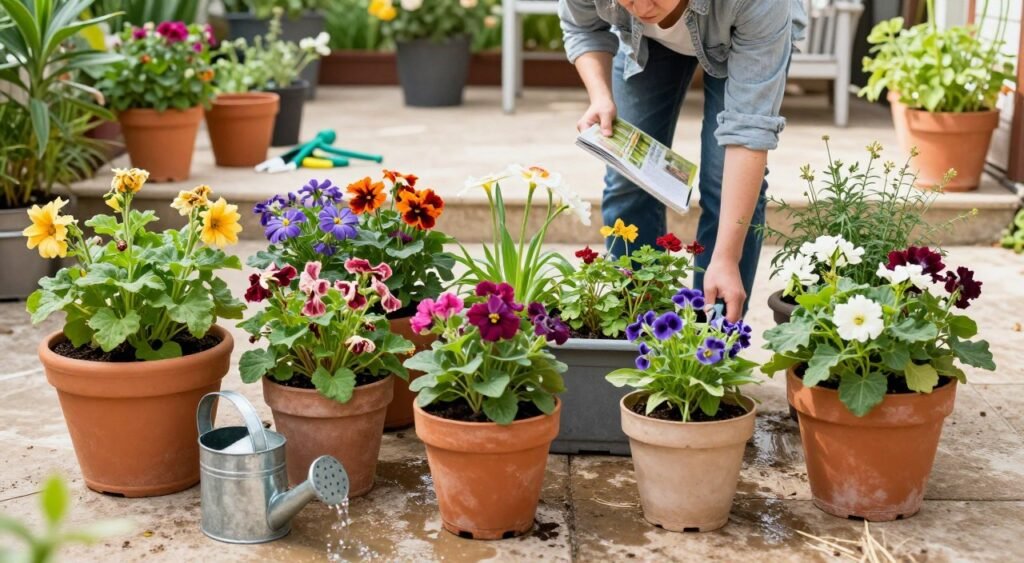
Not having enough container plant drainage is a big problem. Water at the bottom of a pot can kill roots and cause decay.
Make sure your pots have big holes at the bottom. If your pots don’t have holes, use a smaller pot inside. This lets water out.
Avoiding Overcrowding in Small Vessels
It’s tempting to fill a pot with lots of flowers. But, too many plants in one pot can harm them.
Too much foliage can also lead to fungal diseases. Give plants enough space for better health and longer life.
Correcting Nutrient Deficiencies Early
Even with good potting soil for containers, plants can lose nutrients. Watch for yellow leaves or slow growth, which mean plants need more food.
Early action helps a lot. Use a balanced fertilizer right away to fix problems before they get worse.
| Common Issue | Primary Cause | Recommended Solution |
|---|---|---|
| Root Rot | Poor drainage | Add drainage holes or gravel |
| Stunted Growth | Overcrowding | Thin out plants |
| Yellowing Leaves | Nutrient deficiency | Apply liquid fertilizer |
| Wilting | Improper watering | Adjust irrigation schedule |
Conclusion
Creating beautiful outdoor container displays is fun. It mixes art with taking care of plants. Now, you know how to make your patio or porch look great.
Your garden journey begins with small choices. Look at your space and pick the right plants. This way, your pots will do well all year.
Water and feed your plants regularly. This keeps them looking good and healthy. Your pots will become beautiful works of art that show off your style.
Use these tips to try new colors and textures. Companies like Proven Winners have many plants to help you be creative.
With a little care, your containers will be a big part of your outdoor area. Share your favorite plants with friends or gardening groups. This will inspire others in your area.
Begin your next garden project today. Watch as your idea grows into a beautiful display. It will make your home happy all year.