
Starting a home garden is very joyful. But, many beginners face unexpected problems. They might find their plants don’t bloom, even when they try their best.
Knowing the common mistakes when growing flowers is key. It helps turn your backyard into a colorful haven.
Careful planning is the secret to a great garden. Preparing your soil and picking the right plants for your area is important. It makes a strong foundation for nature to help.
This way, you save time and avoid stress. Learning how to grow beautiful flowers is not hard. With the right plan, your garden will flourish all year.
Let’s look at the key techniques to make your garden bloom this year.
Assessing Your Garden Site and Soil Quality
Success in the garden starts before you even start digging. By checking your yard, you can avoid problems that hurt plants. These garden care tips will help your flowers grow well.
Understanding Your Hardiness Zone
The USDA splits the country into zones based on winter temperatures. Knowing your zone helps pick plants that will survive your winters. You can find your zone by typing your zip code into USDA maps.
Testing Soil pH and Nutrient Levels
Before planting, focus on healthy soil preparation. A garden soil testing kit shows what your soil lacks. Most flowers like a slightly acidic to neutral soil pH.
If your soil is too acidic or alkaline, you might need to add lime or sulfur. Always follow your test kit’s instructions to add the right nutrients. This prevents mistakes like over-fertilizing or using the wrong products.
| Soil Type | Water Retention | Nutrient Level | Best For |
|---|---|---|---|
| Sandy | Low | Low | Root vegetables |
| Clay | High | High | Heavy feeders |
| Loam | Moderate | High | Most flowers |
Evaluating Sunlight Exposure Patterns
Sunlight is key for your plants. Watch how light moves in your yard. Some plants need full sun, while others like shade.
- Full Sun: At least six to eight hours of direct sunlight daily.
- Partial Shade: Three to six hours of sunlight, preferably in the morning.
- Full Shade: Less than three hours of direct sunlight, often found under trees.
By tracking sunlight, you place plants where they’ll do best. These steps for healthy soil preparation and site analysis save time and effort.
Selecting the Right Flowers for Your Environment
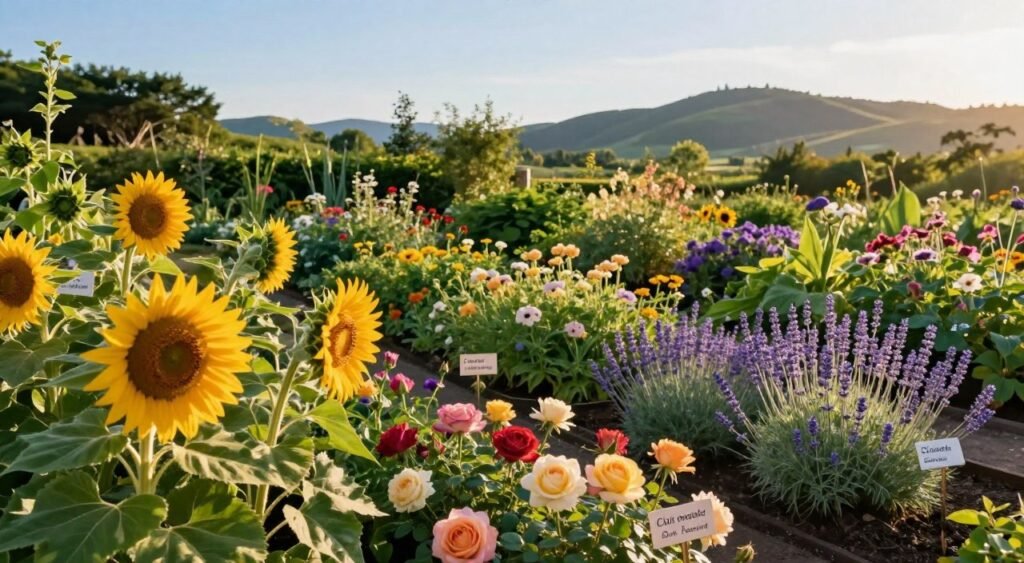
To grow beautiful flowers, you need to know they don’t all like the same place. Many beginners start without checking if their flowers can handle the weather. It’s key to research your area first for success.
Matching Plant Needs to Your Climate
Every plant likes a certain temperature. Find the best flowers for your climate by using a hardiness zone map. This helps your plants survive your area’s cold or heat.
«The secret to a successful garden is not in the effort you put in, but in the wisdom of choosing plants that want to live where you live.»
Distinguishing Between Annuals and Perennials
Knowing about plant lifecycles helps set your garden goals. Annuals bloom for a season and then go away. Perennials come back every year from the same roots.
- Annuals: Great for seasonal color and filling gaps.
- Perennials: Perfect for a lasting garden.
- Maintenance: Perennials need less replanting but might need pruning.
Considering Native Plant Benefits
Using native plants is good for you and the planet. They grow well in your soil and weather, needing less water and fewer fertilizers. They also help bees and butterflies.
Native plants are the backbone of a sustainable garden. They fight pests and diseases naturally, cutting down on chemicals. Choosing them makes your garden strong and beautiful.
Mastering Proper Planting Techniques
Starting your flower gardening for beginners is exciting. But, planting your plants right is key. It’s not just about digging a hole and putting a plant in. You need to do it right for your plants to grow well.
Preparing the Planting Hole Correctly
First, test your garden soil to know what it needs. Make the hole twice as wide as the plant’s roots but not deeper than the pot. This lets the roots spread out in the soil.
«The secret to a flourishing garden lies in the preparation of the soil before the plant ever touches the ground.»
Loosen the soil at the bottom and sides of the hole. This stops roots from circling. Water the plant well before moving it to reduce shock.
Avoiding the Pitfall of Planting Too Deep
Don’t plant too deep. Burying the stem too low can harm the plant. Make sure the top of the roots is level with or above the soil.
- Check the plant level before filling the hole.
- Gently firm the soil around the base to remove large air pockets.
- Avoid piling mulch against the main stem of the plant.
Spacing Plants for Optimal Airflow
Space your plants right for a healthy garden. Too close and moisture stays on leaves, inviting diseases. Check the tag for spacing based on the plant’s size.
Give your plants room to breathe. This keeps them strong and vibrant without needing chemicals. A little extra space now saves a lot of work later.
Establishing a Consistent Watering Routine
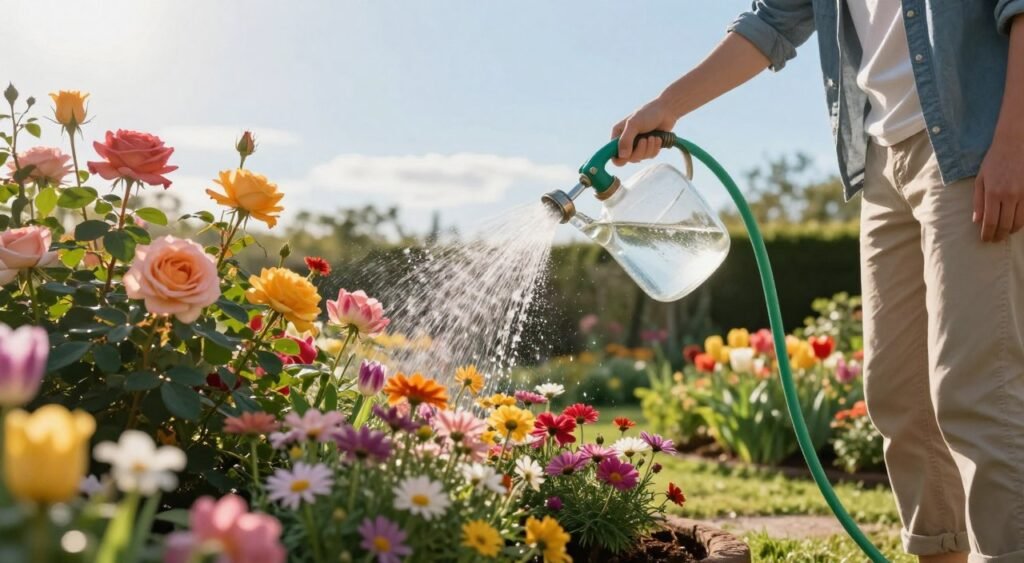
Changing your garden can start with better watering. Learning to water flower beds right keeps colors bright and plants healthy all season.
Identifying Signs of Overwatering
More water isn’t always better. Too much can harm plants as much as too little. Roots can’t breathe when waterlogged, leading to rot.
Look for yellow leaves or soft stems. Soggy soil or a bad smell means you’re giving too much water.
Recognizing Underwatering Symptoms
Plants stressed from lack of water show it quickly. Leaves might droop or curl, worst in hot sun.
Check the soil. Dry and pulling away from pots means plants need water. Crispy, brown edges on leaves also mean they need more water.
Utilizing Drip Irrigation vs. Overhead Watering
Choosing how to water wisely saves time and keeps plants healthy. Overhead watering can make leaves wet, leading to diseases.
Drip irrigation is better for watering flower beds. It waters roots directly, reducing evaporation and keeping leaves dry.
When picking the best flowers for your climate, remember their water needs differ. Always check what your plants need for the best care.
Navigating Common Mistakes When Growing Flowers Through Proper Fertilization
Many gardeners face challenges with plant nutrition. This often leads to common mistakes when growing flowers. Giving too much food can harm plants. A balanced approach helps plants grow well.
Choosing the Right Fertilizer Ratio
Fertilizer labels show three numbers for Nitrogen (N), Phosphorus (P), and Potassium (K). Nitrogen helps leaves grow, phosphorus helps roots and blooms, and potassium keeps plants healthy. An organic fertilizer guide helps pick the right mix for your soil.
Start with a 10-10-10 formula for general use. But, flowering plants need more phosphorus for vibrant, long-lasting blooms. Always test your soil first to avoid adding too much.
Avoiding Over-Fertilization Damage
Applying too much fertilizer at once is a big mistake. It can burn roots and stop plants from getting water. You might see yellow leaves or slow growth if you’ve overdone it.
If you think you’ve over-fertilized, wash the soil with lots of water. Gentle care is better than too much food. Remember, less is more for a healthy garden.
Timing Applications for Growth Cycles
When you fertilize is just as important as what you use. Most flowers need nutrients in spring and early summer. Don’t fertilize late in the season, as it can harm plants.
Match your fertilizer schedule with your plants’ natural cycles. Consistent, moderate feeding works better than too much at once. Keep a garden journal to track your fertilizer use.
Managing Pests and Diseases Proactively
You can make your backyard a happy place by learning to protect plants. A healthy garden needs you to spot problems early. This way, you can effectively preventing plant disease and keep your flowers bright all season.
Identifying Early Signs of Infestation
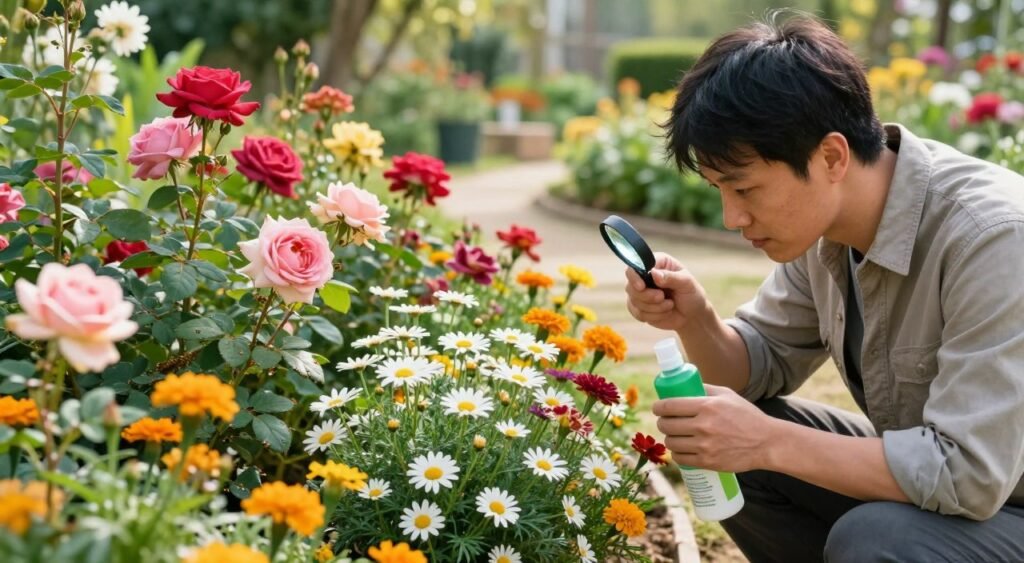
Checking your garden often is key to keeping pests away. Look at the underside of leaves for hidden insects. Watch for yellow leaves, sticky spots, or small holes that mean pests are there.
Spotting problems early makes pest control for flowers simpler. If plants wilt even with enough water, check the roots for decay or fungus. Quick action can save your plants from big damage.
Implementing Integrated Pest Management
Integrated Pest Management (IPM) is a smart way to protect your garden. It uses natural methods instead of harsh chemicals. This method works well with an organic fertilizer guide to keep plants strong.
Using Natural Predators
Nature has its own helpers to keep your garden balanced. Ladybugs, lacewings, and wasps can fight off aphids and mites. These tiny helpers keep your garden healthy without chemicals.
Applying Organic Remedies Safely
When natural helpers need a bit of help, organic solutions can be used. Neem oil or insecticidal soaps are good for preventing plant disease. Use these treatments in the early morning or evening to protect bees and other pollinators.
| Common Pest | Early Warning Sign | Organic Solution |
|---|---|---|
| Aphids | Curled, sticky leaves | Neem oil spray |
| Spider Mites | Fine webbing on stems | Strong water blast |
| Slugs | Large holes in foliage | Copper tape barriers |
| Powdery Mildew | White dusty patches | Baking soda solution |
Pruning and Deadheading for Continuous Blooms
Keeping your garden looking good is easy with a few simple steps. Regular care makes your garden bright and full of flowers all summer. While proper planting depth helps plants grow, caring for them keeps flowers coming.
Understanding When to Deadhead
Deadheading means taking off old flowers from your plants. This stops them from making seeds. Instead, they make more beautiful blooms.
Start deadheading when flowers start to turn brown or droop. This is great for annuals and many perennials. It makes your garden look neat and keeps flowers blooming longer.
Using the Correct Pruning Tools
The right tools make pruning flowering plants safer and easier. For most flowers, use sharp bypass hand pruners. These cut cleanly and help plants heal fast.
Don’t use dull blades, as they can hurt stems. A sharp cut shows you’re a good gardener. Keep your tools sharp to help your garden grow well.
Sanitizing Equipment to Prevent Disease Spread
Keeping your garden healthy means stopping disease. Moving between plants can spread germs on your tools. Cleaning your tools stops this.
Wipe your pruners with rubbing alcohol or bleach mix. This keeps your garden safe from disease. Clean tools mean your hard work in gardening pays off with a healthy garden.
Mulching and Weed Control Strategies
A well-mulched garden is key for every gardener. It creates a barrier that helps with flower bed maintenance. It also keeps the ground cool and moist.
This makes watering flower beds less often. You get to enjoy your blooms more, not just water them.
Selecting the Best Mulch for Flower Beds
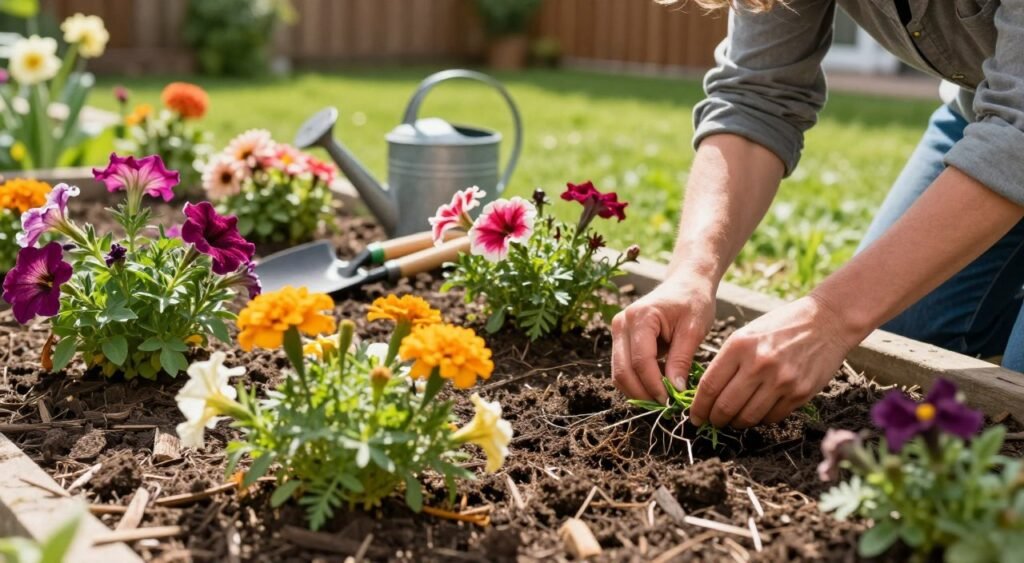
Choosing the right mulch is important. Organic mulches like shredded bark or pine needles are great. They break down and add nutrients to the soil.
Inorganic mulches like gravel or fabric are permanent but don’t add nutrients. Most gardeners like organic mulch for its benefits.
«The best time to plant a tree was twenty years ago. The second best time is now.»
Applying Mulch Without Harming Stems
How you apply mulch matters a lot. Use two to three inches to block sunlight from weeds. Make sure to leave a gap around your flowers.
Don’t pile mulch against stems. It can cause rot or diseases. Instead, make a «donut» shape around each plant.
Managing Invasive Weeds Early
Weeds compete with your flowers for water and nutrients. Pull them when they’re small. Waiting too long can harm your flowers.
Check your beds often to catch weeds early. This keeps your garden clean and beautiful. Regular care is what makes a garden stunning.
Preparing Your Garden for Seasonal Transitions
Changing your garden with the seasons is key to a healthy landscape. Adjusting your care helps plants handle tough weather. Keeping up with seasonal flower care keeps your garden ready for growth.
Protecting Perennials During Winter
When it gets cold, perennials need extra help to make it through winter. A thick layer of organic mulch keeps the soil warm. This protects the roots from damage.
For plants that are very sensitive, use burlap wraps or frost cloths. These garden care tips keep your plants cozy. Make sure the covers let air in to avoid moisture problems.
Cleaning Up Debris to Prevent Pests
Getting rid of dead leaves and plants is crucial for pest control for flowers. Insects and spores hide in debris. Clearing your garden reduces pest risks in spring.
Don’t put sick plants in your compost. A clean garden is a healthy garden. This makes your garden ready for a great growing season.
Planning for Next Season’s Success
At the end of the season, think about what worked and what didn’t. Write it down in a garden journal. This helps you choose the best plants for your garden next time.
Planting bulbs for spring now is smart. It’s a key part of garden care tips. Organizing your garden now helps keep pests away all year.
Conclusion
Your journey to a vibrant landscape starts with daily observation. Avoiding common mistakes makes your space strong and beautiful all year.
Learning to prune flowering plants keeps your garden healthy. With care, your yard turns into a colorful masterpiece.
Good flower bed maintenance makes your soil rich. You learn to understand your plants’ needs better.
Seasonal flower care gets your beds ready for winter and spring. Every small step helps your plants grow stronger.
Share your gardening journey with others in your community. Your hard work will bring beauty to your garden for years.