
Do you dream of a vibrant backyard oasis? Worrying about the time it takes to see results? Gardening is rewarding, even with fast growing flowering plants that bloom quickly. You don’t need a green thumb or years of experience to make your yard colorful.
Choosing the right plants can change your yard in just one season. These plants are perfectly suited for beginners. They let you enjoy lush blooms without waiting.
When you pick the right plants for your soil, nature rewards you fast. Whether you have a small patio or a big yard, these fast growing flowering plants make your space lively. Start today and watch your outdoor area grow with little effort.
Selecting the Best Fast Growing Flowering Plants for Your Climate
Success with fast growing flowering plants starts with knowing your local climate. Check your environment before planting. This keeps your garden healthy and bright all season.
Early steps prevent common problems. They help your flowers grow to their best.
Understanding Your USDA Hardiness Zone
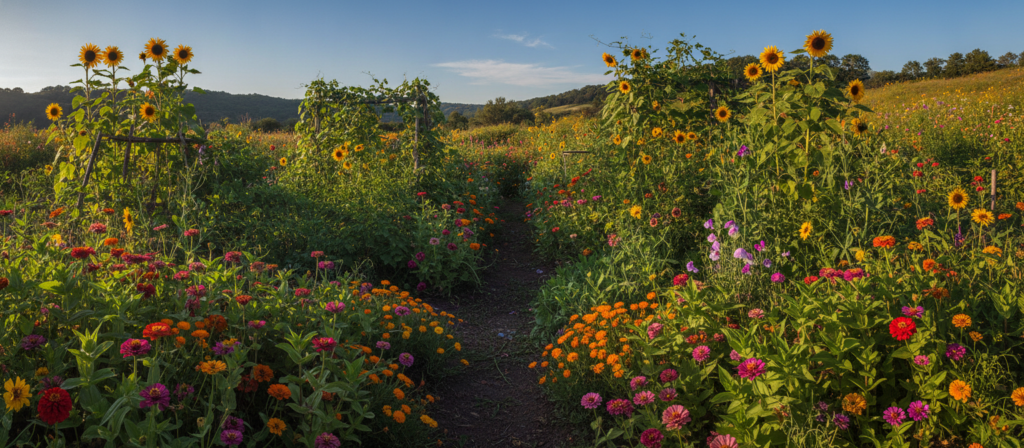
The USDA Hardiness Zone map is key for plant survival. It groups areas by winter temperatures. Knowing your zone helps pick plants that can handle cold nights.
Summer heat also matters. Some plants love sun, while others need shade. Always check the zone on seed packets or tags for the best match.
Matching Sunlight Requirements to Your Garden Space
Most rapid bloomers need specific light. Watch how shadows move in your garden. Six or more hours of direct light is best for sun-loving plants like sunflowers or zinnias.
Shaded areas have options too. Group plants by light needs for easy care. This ensures your flowers get the light they need to grow and bloom well.
Choosing Between Annuals and Perennials for Instant Impact
Annuals and perennials offer different benefits. Annuals grow fast and bloom all season. Perennials come back year after year, building your garden’s structure.
| Plant Type | Growth Speed | Longevity | Best Use |
|---|---|---|---|
| Annuals | Very Fast | One Season | Instant Color |
| Perennials | Moderate | Multiple Years | Garden Structure |
| Rapid Bloomers | Fast | Variable | Quick Fills |
Mixing both types makes a strong garden. Use annuals for quick color and let perennials grow. This keeps your garden full all year.
Preparing Your Soil for Rapid Growth
Your garden’s success starts with the soil. Healthy soil is key for quick growing flowers to grow well. By taking care of your soil, you’ll get beautiful blooms all season.
Testing and Amending Soil pH
First, check your soil’s chemical balance. Most plants like a slightly acidic to neutral pH. You can buy a simple soil testing kit at your local garden center.
If your soil is too acidic, add lime. For too alkaline soil, use sulfur or peat moss. Getting the pH right is crucial for your plants.
Incorporating Organic Matter for Nutrient Density
Organic matter makes your soil rich. Add compost, aged manure, or leaf mold to improve it. This is great for rapid growth perennials that need lots of energy.
These materials help roots grow deep. Your plants will be stronger and bloom more with rich soil.
Ensuring Proper Drainage to Prevent Root Rot
Even the best soil can be bad if it’s too wet. Poor drainage causes devastating root rot. Test your soil by digging a hole and filling it with water. If it takes too long to drain, your soil needs help.
Use coarse sand or perlite to improve clay soils. Raised beds are also good for wet areas. Aerated soil keeps your quick growing flowers and rapid growth perennials healthy and bright.
| Amendment Type | Primary Benefit | Best Use Case |
|---|---|---|
| Compost | Nutrient Density | General soil enrichment |
| Garden Lime | Raises pH | Acidic soil correction |
| Coarse Sand | Improves Drainage | Heavy clay soil |
| Elemental Sulfur | Lowers pH | Alkaline soil correction |
Essential Tools and Supplies for Planting Success
Getting the right tools is key to a great garden. Good gear helps your plants grow well. This is very important for speedy flowering shrubs that need care to bloom fully.
Selecting Quality Gardening Hand Tools
Good hand tools are essential for gardening. Choose tools made from forged steel to last longer. Tools with comfy handles help you work longer without pain.
A good set has a strong trowel, sharp pruners, and a soft rake. These help you work the soil and cut plants well. Keeping tools clean and sharp makes them last longer.
Choosing the Right Fertilizers for Blooming
For lots of flowers, pick fertilizers made for them. Look for ones with more phosphorus in the N-P-K ratio. Phosphorus helps flowers grow big and bright.
Liquid fertilizers are best for quick growth. Always follow the directions to avoid harming your plants. Regular feeding keeps your plants growing strong.
Setting Up Efficient Watering Systems
Keeping your garden moist is very important. Even tough speedy flowering shrubs need water to bloom well. Drip irrigation or soaker hoses are great because they water the roots.
These systems save water and keep leaves dry. This helps prevent diseases. It also means your plants get water even when you’re busy.
| Tool Name | Primary Use | Key Benefit |
|---|---|---|
| Bypass Pruners | Trimming stems | Clean, healthy cuts |
| Hand Trowel | Digging holes | Precision planting |
| Soaker Hose | Deep watering | Prevents root rot |
| Garden Gloves | Hand protection | Prevents blisters |
Step-by-Step Guide to Planting Your Flowers
Start by placing your flowers in the right spot. This is key for their health. Follow these proven techniques to make your garden bloom fast.
Preparing the Planting Hole
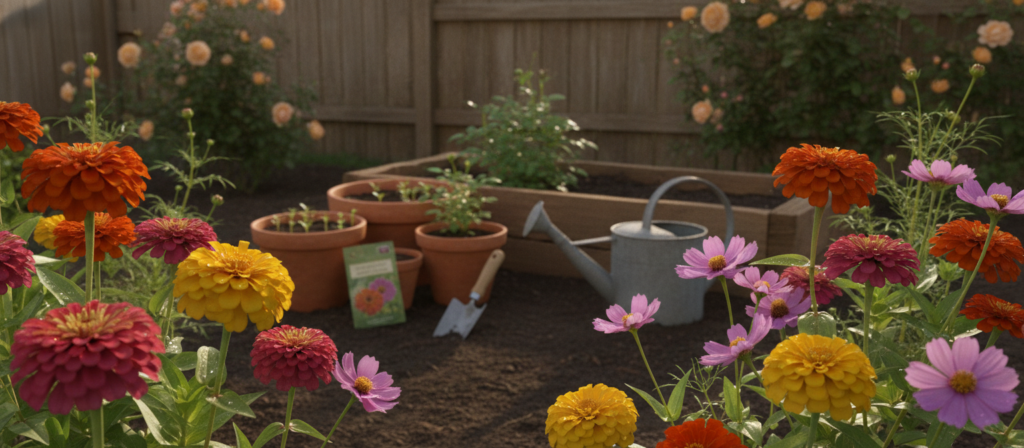
First, make the soil ready for your plants. Dig a hole that’s twice as wide as the plant’s roots. But don’t dig too deep.
If your soil is hard, add some compost. This helps the roots grow. Make sure the soil level is even with the plant’s roots.
Proper Techniques for Transplanting Nursery Starts
Transplanting needs care to avoid shocking the roots. Gently squeeze the pot to loosen the soil. Never pull by the stem to avoid damage.
Loosen any circling roots with your fingers. This helps them grow outward. Firm the soil around the plant to keep it moist.
Direct Sowing Seeds for Quick Germination
Direct sowing is great for fast-growing flowers. Check the seed packet for planting depth. Most seeds need just a little soil to start.
Use a fine mist to water the seeds. Once they grow, thin them out. This helps them get enough air and grow strong.
| Method | Best For | Time to Bloom | Effort Level |
|---|---|---|---|
| Nursery Starts | Instant Impact | Immediate | Low |
| Direct Sowing | Cost Efficiency | Moderate | Medium |
| Bulb Planting | Seasonal Color | Delayed | High |
Watering and Fertilization Strategies for Blossoming Speedily
Your garden can be lush with smart watering and feeding. Keeping a regular care routine helps your rapid bloomers grow well. Giving them the right food at the right time lets them grow fully.

Establishing a Consistent Watering Schedule
Plants need steady water for fast growth. A set watering schedule stops heat stress. It keeps your garden blossoming speedily all summer.
- Water early in the morning to minimize evaporation.
- Check soil moisture levels daily by inserting your finger an inch deep.
- Aim for deep, infrequent watering to encourage strong root development.
Applying Liquid Fertilizers for Immediate Nutrient Uptake
Liquid fertilizers work fast. They give an immediate nutrient boost that granular fertilizers can’t. Your plants take in these nutrients quickly through their roots or leaves.
For the best results, follow these simple guidelines:
- Dilute the fertilizer according to the package instructions to avoid root burn.
- Apply the solution every two weeks during the active growing phase.
- Focus the application at the base of the plant to ensure direct absorption.
Using Mulch to Retain Moisture and Suppress Weeds
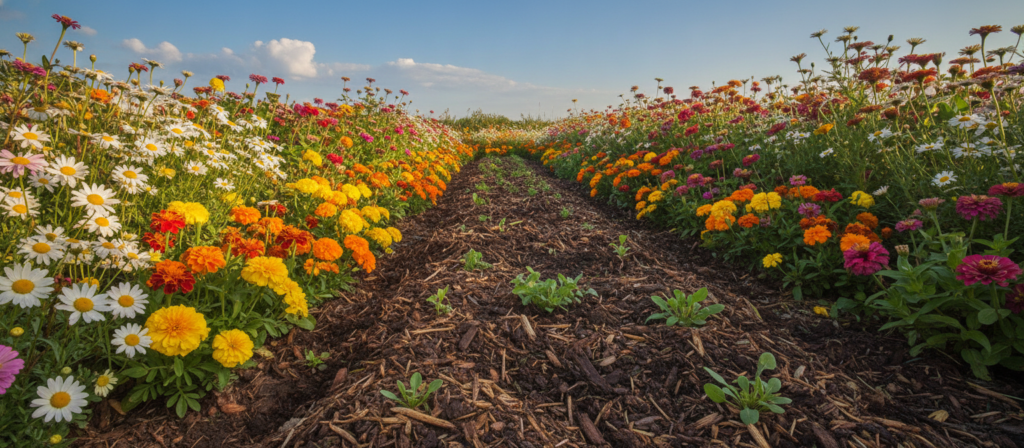
Mulch protects your soil from the sun. It keeps the ground cool. This helps your rapid bloomers not waste energy on drought.
Mulch also stops weeds from getting nutrients. This keeps your garden beds clean. Your flowers can focus on blossoming speedily. Wood chips or straw are great for improving soil health.
Maintenance Tips to Encourage Continuous Blooms
Keeping your plants colorful all summer is easy. Just spend a few minutes each week on your garden. This way, your flowers will bloom fast until the first frost.
Deadheading Spent Flowers to Promote New Growth
Deadheading is a simple trick for gardeners. It stops plants from making seeds. Instead, they make more flowers.
Just cut off the old flowers above the first green leaves. This tells the plant to grow more leaves and flowers. You’ll see more blooms soon.
Pinching Back Stems for Bushier Plants
Want fuller flowers? Pinch the stems. This makes the plant grow more stems and flowers.
Do this early to stop plants from getting too tall. Your garden will look neat and full.
Monitoring for Common Pests and Diseases
Watch your garden closely to catch pests and diseases early. This stops them from harming your plants.
Look for spots, holes, or sticky stuff on stems. Fix problems fast with soap sprays or by cutting off bad parts. This keeps your garden healthy and blooming.
Top Varieties of Fast Growing Flowering Plants
Want a garden that looks great fast? These plants are your best choice. They keep your garden colorful and healthy all season. These fast growing flowering plants fill spaces quickly.
Zinnias for Vibrant Summer Color
Zinnias bring color fast. They love the sun and heat. You can find them in many colors, from soft to dazzling neon hues.
Marigolds for Reliability and Pest Resistance
Marigolds are tough and pretty. They keep pests away from veggies. They bloom well even in tough conditions.
Cosmos for Low-Maintenance Beauty
Cosmos add elegance with their airy look. They grow easily from seed and need little care. Their graceful, daisy-like flowers attract pollinators.
Sunflowers for Rapid Vertical Growth
Sunflowers add height and drama. They grow fast, reaching several feet high. Some are rapid growth perennials for year-round interest.
- Zinnias: Best for continuous, bright summer blooms.
- Marigolds: Ideal for natural garden protection.
- Cosmos: Perfect for low-effort, high-reward beauty.
- Sunflowers: Excellent for creating height and focal points.
Troubleshooting Common Issues in Your Garden
Even the most vibrant gardens can face unexpected hurdles. Plants often show their needs through subtle changes. Learning to read these signs helps you keep your garden healthy.
Addressing Yellowing Leaves and Nutrient Deficiencies
Yellowing leaves mean your plants are struggling to get nutrients. This often means they lack nitrogen, iron, or magnesium. Testing your soil pH helps find out if the soil is too acidic or alkaline.
If the test shows a deficiency, a balanced fertilizer can help. Consistent monitoring is key to catch these issues early. Always follow the fertilizer instructions to avoid harming your plants.
Managing Overcrowding and Airflow Issues
Proper spacing is crucial for your garden’s health. Too close together, plants fight for sunlight and water. This leads to weak stems and poor blooms. Also, bad airflow invites fungal diseases.
Thin out seedlings or transplant when it’s cooler. This improves air flow and helps plants dry faster. Prioritizing space from the start prevents these problems later.
Dealing with Unexpected Weather Fluctuations
Sudden temperature changes can shock plants. Whether it’s hot or cold, protecting your garden is key. Use frost cloths or shade to shield your plants.
Organic mulch helps with soil temperature and moisture. It keeps roots cool in summer and warm in winter. Being prepared keeps your garden beautiful and thriving, no matter the weather.
| Symptom | Likely Cause | Recommended Action |
|---|---|---|
| Yellowing lower leaves | Nitrogen deficiency | Apply balanced fertilizer |
| Stunted growth | Overcrowding | Thin or transplant |
| Wilting in heat | Water stress | Increase mulch/hydration |
| White powdery spots | Poor airflow | Prune for circulation |
Conclusion
Creating a lively garden with fast-growing flowers makes your home look amazing. You know how to pick the best flowers and make your soil healthy.
Keeping your garden in good shape is key. By watering, feeding, and taking care of it, your garden will stay beautiful all season.
Start by checking your garden this weekend. Use tips from Burpee or Miracle-Gro to help you. Seeing your seeds grow into colorful flowers is very rewarding.
Share your garden with friends or join local gardening groups. Your garden shows off your hard work and planning. Enjoy watching your garden become a peaceful place.