
Do you dream of a garden that stays bright all year? It’s easier than you think. The key is to pick the right plants that look good for a long time.
Choosing special plants makes your garden a stunning focal point. These plants stay colorful and don’t need to be replanted often. This way, you can have a beautiful yard with little work.
In this guide, we’ll show you the best flowers with long lasting blossoms for your garden. You’ll learn how to pick plants that do well in your area. Get ready to make your backyard a breathtaking sanctuary that blooms all year.
Understanding the Biology of Extended Bloom Times
Learn how plants use energy to grow. Each flower has a special plan for its life. By knowing this, you can make your flowers bloom longer.
Plants turn sunlight and food into energy. When you help them, they make flowers last longer. This means more beauty in your garden.
The Role of Deadheading in Prolonging Life
Deadheading is a great way to keep your garden looking good. It means removing old flowers. This stops the plant from making seeds too soon.
When plants make seeds, they think they’ve done their job. By not making seeds, they keep making new flowers. This means more colors in your garden all season.
Environmental Factors That Influence Bloom Duration
The weather affects how long flowers bloom. Hot weather makes plants grow faster. This means flowers don’t last as long.
How much light a flower gets also matters. Too much sun can stress plants. Keep your plants cool and moist to make flowers last longer.
Selecting the Best Long Lasting Flowers for Your Climate
Choosing the best long lasting flowers means looking at your local area. Your garden is special and reacts to heat, cold, and moisture in its own way. Knowing these things helps pick flowers that do well, not just get by.
Assessing Your Hardiness Zone and Microclimates
Start by finding your USDA Hardiness Zone. This map shows which plants can handle your winter. But, your garden might have microclimates that are different.
Watch how sunlight hits your garden. A south-facing wall might be warmer, while a low spot could be colder. These small changes in temperature and light are key when picking the best long lasting flowers for your garden.
«The secret to a perennial garden that blooms for months is not just the plant itself, but the harmony between the plant’s needs and the garden’s microclimate.»
Matching Soil Conditions to Durable Flower Varieties
After knowing your climate, check your soil. Flowers that last long often like certain soil types and pH levels. Sandy soil drains fast, while clay soil keeps moisture and nutrients longer.
Testing your soil helps you choose the right flowers. You can change the soil’s pH or add organic matter. The table below shows how popular flowers match with different soil and climate needs.
| Flower Variety | Preferred Soil Type | Sun Exposure | Hardiness Zones |
|---|---|---|---|
| Coneflower | Well-drained | Full Sun | 3-9 |
| Black-Eyed Susan | Loamy | Full Sun | 4-9 |
| Zinnia | Rich, Fertile | Full Sun | Annual |
| Geranium | Moist, Drained | Partial Shade | 9-11 |
By matching these factors, your garden will be beautiful all season. Picking the best long lasting flowers makes your outdoor space a colorful, reliable haven.
Preparing Your Garden Beds for Maximum Performance
A great garden starts before you plant. The key to vibrant, long-lasting blossoms is good soil. Spend time on your soil to help your plants grow well all season.
Soil Amendment Techniques for Nutrient-Rich Growth
Good soil holds the nutrients your flowers need. Add well-rotted compost or aged manure to your beds. These help the soil and roots get water better.
Adding organic matter to the top six to eight inches of soil makes it better. It helps microbes break down nutrients for plants. Regular soil care gives your flowers the energy for more blooms.
Optimizing Drainage to Prevent Root Stress
Good drainage is as important as nutrients. Bad drainage can hurt roots and cause diseases. Make sure your soil drains well.
If your soil is heavy clay, add sand or mulch. Raised beds are also a great idea for wet or hard ground. They let water drain, keeping your plants healthy.
Top Perennial Flowers with Lasting Blooms
You can make your outdoor space beautiful with perennial flowers with lasting blooms. These plants are easy to care for and bloom year after year. They keep your garden colorful and help local pollinators.
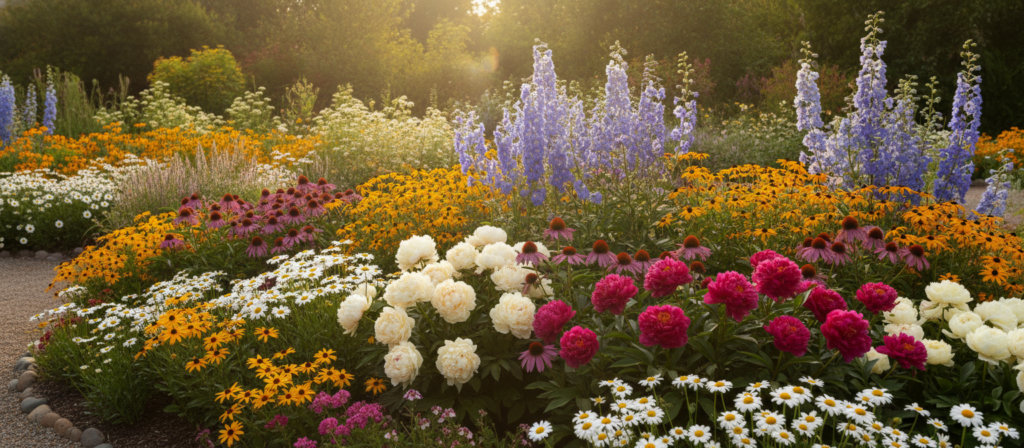
Coneflowers for Summer-Long Color
Coneflowers, or Echinacea, are great for long-lasting flowers. They have strong stems and pretty petals that last all summer. They grow well in full sun and are very durable.
These flowers attract butterflies and bees. Even when the petals fall off, the cones feed birds in winter. They are very useful in your garden.
Black-Eyed Susans for Reliable Autumn Interest
Black-Eyed Susans, or Rudbeckia, shine in the fall. They are very hardy and bloom late into autumn. They keep your garden looking good even when it’s cold.
These plants are easy to grow and need little care. They look great with ornamental grasses. Here’s a table to help you choose between them.
| Plant Variety | Average Height | Bloom Season | Sun Requirement |
|---|---|---|---|
| Coneflower | 24-48 inches | Early Summer – Fall | Full Sun |
| Black-Eyed Susan | 18-36 inches | Mid-Summer – Late Fall | Full Sun |
| Maintenance Level | Low | Low | Low |
Annual Varieties That Offer Flowers That Bloom for Months
Filling your garden with flowers that bloom for months is easy. Choose the right annuals for a colorful garden all season. They fill gaps in beds or brighten patios.
Zinnias for Continuous Cut Flower Production
Zinnias are loved by gardeners for their relentless beauty. They bloom from early summer to first frost. These plants love the heat and grow more buds when you cut them.
Plant zinnias in full sun for the best look. They are durable and low-maintenance, great for beginners. They make your cutting garden vibrant all season.
Geraniums for Versatile Container and Bedding Success
Geraniums are known for their incredible versatility. They handle weather changes well and stay bright. They look good in baskets or beds, adding color all the time.
Geraniums quickly fill space and keep weeds away. They are reliable flowers that bloom for months. Regular deadheading keeps them looking fresh and encourages new blooms.
Essential Watering Strategies for Flowers with Long Lasting Blossoms
Watering is key for flowers with long lasting blossoms. In hot summer, plants need water to stay strong. Without water, even tough plants can wilt or lose their flowers early.
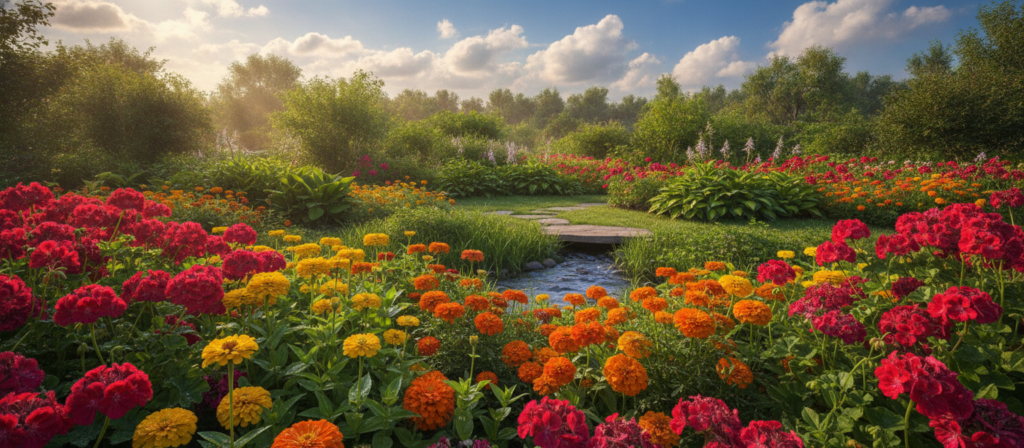
Drip Irrigation Versus Manual Watering Methods
Choosing how to water depends on your garden size and how much time you have. Drip irrigation is good because it waters roots directly, saving water. It’s best for big gardens where watering by hand takes too long.
Watering by hand lets you check each plant for problems. It gives more control over what each plant needs. Many gardeners mix both methods to keep flowers blooming all season.
Timing Your Watering to Reduce Fungal Risks
When you water is as important as how much. Watering in the morning helps soil stay moist during the day. This lets leaves dry fast, which lowers fungal disease risks like powdery mildew.
Try not to water at night. Wet leaves in cool air overnight are bad for plants. Watering in the morning keeps your garden healthy and bright.
| Method | Efficiency | Labor Intensity | Disease Risk |
|---|---|---|---|
| Drip Irrigation | High | Low | Low |
| Hand Watering | Moderate | High | Moderate |
| Sprinkler System | Low | Low | High |
Fertilization Schedules to Support Extended Bloom Time
Feeding your garden right is key to keeping flowers with extended bloom time bright all season. These plants work hard to keep colors coming. Giving them the right food at the right time keeps your garden looking great.
Choosing the Right NPK Ratio for Flowering Plants
When you see three numbers on a fertilizer bag, they stand for Nitrogen, Phosphorus, and Potassium. For long-blooming plants, phosphorus is most important. It helps roots grow and buds form well.
Choose fertilizers with a higher middle number. This helps plants focus on making flowers, not just growing. Using it as directed keeps your plants happy and blooming.
| Nutrient | Primary Function | Impact on Blooms |
|---|---|---|
| Nitrogen (N) | Leafy growth | Supports foliage density |
| Phosphorus (P) | Bud development | Increases flower count |
| Potassium (K) | Overall health | Improves stress resistance |
Avoiding Over-Fertilization That Inhibits Bud Formation
Too much fertilizer can be bad. Too much nitrogen makes plants grow leaves but not flowers. This hurts flowers with extended bloom time because they focus on leaves instead of blooms.
Stick to the recommended amount to avoid harming your plants. Moderation is important for a healthy garden. A balanced schedule lets your plants grow well without too much stress.
Managing Pests and Diseases That Shorten Bloom Life
Even the most vibrant flowers can suffer if you ignore the early signs of garden invaders. Pests and pathogens often act quickly. They can cut short the lifespan of your most beautiful blossoms. By staying vigilant, you can stop these threats before they cause lasting damage to your garden display.
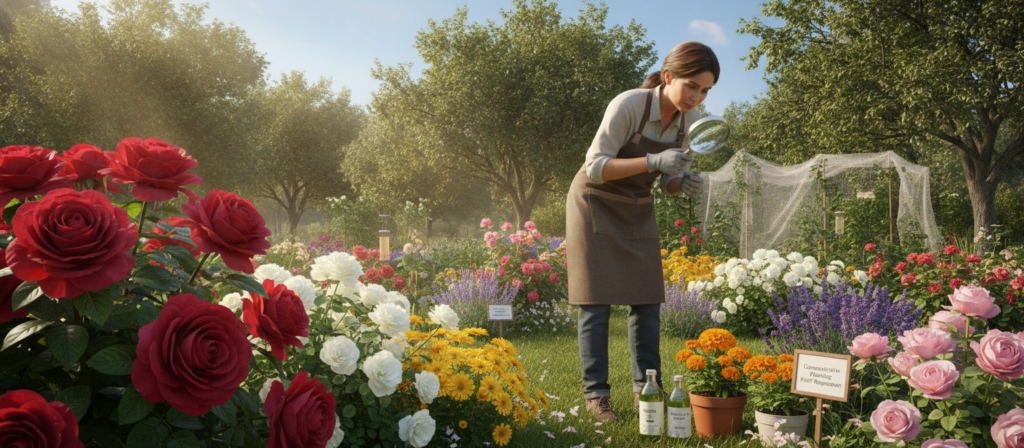
Identifying Common Garden Pests Early
Regular inspections are the most effective way to catch problems before they spread. You should walk through your garden at least twice a week. Check the health of your plants.
Look closely at both the tops and the undersides of leaves. Many insects prefer to hide in shaded areas.
Keep an eye out for these common warning signs that indicate your flowers are under attack:
- Small holes or ragged edges on petals and foliage, which often suggest chewing insects like beetles or caterpillars.
- Sticky residue or honeydew on leaves, a frequent sign of aphids or scale infestations.
- Yellowing or mottled leaves, which can indicate a viral infection or the presence of sap-sucking mites.
- Sudden wilting despite adequate soil moisture, which may point to root-level pests or fungal pathogens.
Organic Solutions for Protecting Your Floral Investment
You do not need harsh chemicals to keep your garden thriving. Many natural and organic methods are highly effective at controlling pests. They keep your local ecosystem safe and balanced. These strategies help you protect your plants without harming the beneficial pollinators that visit your flowers.
Consider implementing these eco-friendly management techniques to safeguard your blooms:
- Introduce beneficial insects: Ladybugs and lacewings are excellent predators. They naturally reduce populations of aphids and mites.
- Apply neem oil: This organic treatment acts as a powerful deterrent. It disrupts the life cycle of many common garden pests.
- Use physical barriers: Floating row covers can protect young or vulnerable plants. They keep flying insects away during the early stages of growth.
- Practice companion planting: Growing aromatic herbs like basil or marigolds near your flowers can naturally repel unwanted visitors.
Taking these small, consistent steps ensures that your garden remains a healthy sanctuary. When you prioritize preventative care, you allow your flowers to reach their full potential. They can bloom for as long as possible.
Advanced Techniques for Maintaining Vibrant Garden Displays
To make your garden look great, you need more than just basic care. By going beyond the basics, your plants can do better even when it’s hard. This keeps your garden visually stunning and full of life all season.
Mulching Strategies to Retain Moisture and Suppress Weeds
Using organic mulch is a top way to protect your soil and plants. It keeps the soil warm and stops weeds from growing. This helps your plants stay healthy.
Here are some best practices for mulching:
- Choose organic mulch like shredded bark or compost to make the soil better.
- Put down a layer two to three inches thick to block weeds.
- Don’t put mulch too close to plant stems to avoid rot and pests.
Pruning Practices to Encourage Secondary Flushes
Pruning is key for keeping your garden looking good longer. By cutting plants right, you can make them grow more. This brings new blooms when others are fading.
Here’s how to prune for the best results:
- Shearing back perennials by one-third after they bloom to get new stems.
- Take off dead flower spikes to stop plants from making seeds.
- Thin out crowded branches to keep air moving and prevent disease.
By using these advanced methods, your garden will be strong and colorful. It will stay sustained color and full of life late into the season.
Troubleshooting Common Issues with Durable Flowers
Even the strongest plants can face problems in your garden. You picked durable flowers for their toughness. But, they still need care. Spotting problems early keeps your garden looking great all season.
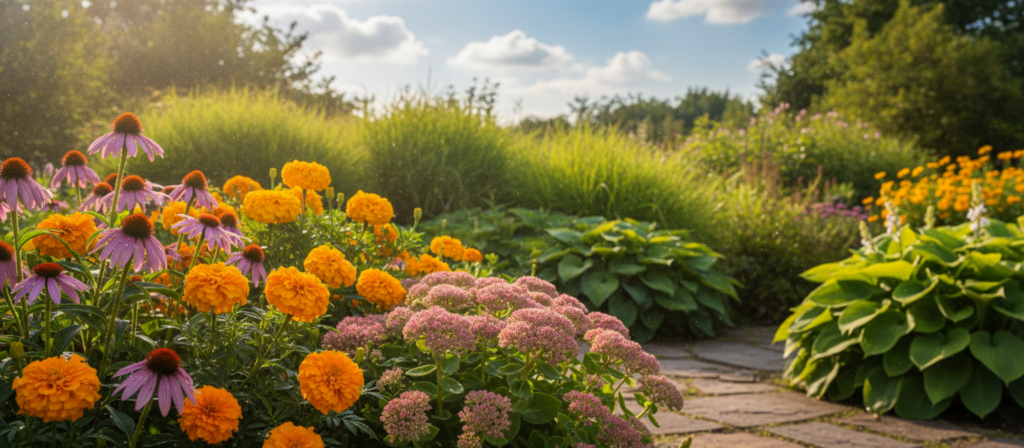
Addressing Yellowing Leaves and Stunted Growth
Yellow leaves mean your plants might not be getting enough nutrients. This can happen if the soil pH is off. First, check if the soil is too wet. Overwatering can hurt your plants.
If the soil is wet, wait a bit before watering again. Stunted growth means your plants are struggling. A balanced fertilizer can help them grow again.
Correcting Environmental Stressors in Real-Time
Plants don’t like sudden changes in temperature or light. If they look wilted in the heat, they might be stressed. Try giving them shade or watering more deeply.
«A garden is a conversation between the gardener and the soil; listen to what your plants are telling you through their leaves.» — Anonymous
Changing how you care for your plants can help during bad weather. Watch how they react to these changes. Being consistent helps them get better and bloom again.
| Symptom | Likely Cause | Immediate Action |
|---|---|---|
| Yellowing Leaves | Nutrient Deficiency | Apply balanced fertilizer |
| Stunted Growth | Poor Drainage | Aerate soil or amend |
| Wilting Blooms | Heat Stress | Provide shade and water |
| Brown Leaf Edges | Salt Accumulation | Flush soil with water |
Keep a close eye on your durable flowers to catch problems early. Acting fast helps your garden stay healthy, no matter what.
Conclusion
Creating a garden that stays vibrant needs patience and smart planning. You now know how to make your outdoor space colorful all year. This is thanks to your hard work and knowledge.
Success comes from the small choices you make every day. By taking care of the soil and plants, you help them grow well. This turns gardening into a fun and rewarding hobby.
Try these tips in your backyard this weekend. See how your garden changes with your care. You’ll see the beauty of your work in every flower and leaf.
Share your garden’s progress with others in your area. Your story can help them grow strong gardens too. Start your garden journey today and enjoy the lasting beauty it brings.