
Starting a home garden is a rewarding journey. It turns your outdoor area into a lively haven. You don’t need to be a pro to grow beautiful plants. By picking the best flowering plants for beginner gardeners, your first garden project will be easy and fun.
Choosing plants that do well in your area is key. These hardy plants need little care but look amazing all year. Whether you have a tiny balcony or a big backyard, these plants will help you feel more confident. You’ll learn about soil and how to water it.
Key Takeaways:
- Focus on low-maintenance species to guarantee early success.
- Understand your local sunlight and soil conditions before planting.
- Enjoy the therapeutic benefits of nurturing your own living space.
Assessing Your Garden Environment Before You Plant
Understanding your outdoor space is key to picking the right beginner garden plant recommendations. Before buying anything, know your yard’s unique conditions. This ensures your plants will do well.
Choosing easy to grow flowers for beginners is easier when you know your environment.
Understanding Your Hardiness Zone
The USDA Plant Hardiness Zone Map is very helpful. It shows which plants can survive in your area. Always check your specific zone before buying plants.
Evaluating Sunlight Exposure in Your Yard
Most flowers need direct sunlight to bloom well. Watch your garden to see how much light it gets. Full sun means at least six hours of direct light. Partial shade is best for cooler-loving plants.
Testing Your Soil Quality and Drainage
Soil health is crucial for a good garden. You can test it by squeezing damp soil. Sandy soil drains fast, while clay soil holds water.
If your soil is heavy or sticky, add organic matter. Good drainage stops root rot. These steps save time and effort later.
Selecting the Best Flowering Plants for Beginner Gardeners
You can make your outdoor space beautiful by picking the best flowering plants for beginner gardeners. Start with the right plants to have a garden that grows well. Knowing how plants grow helps you succeed in gardening.
Choosing Annuals for Instant Color
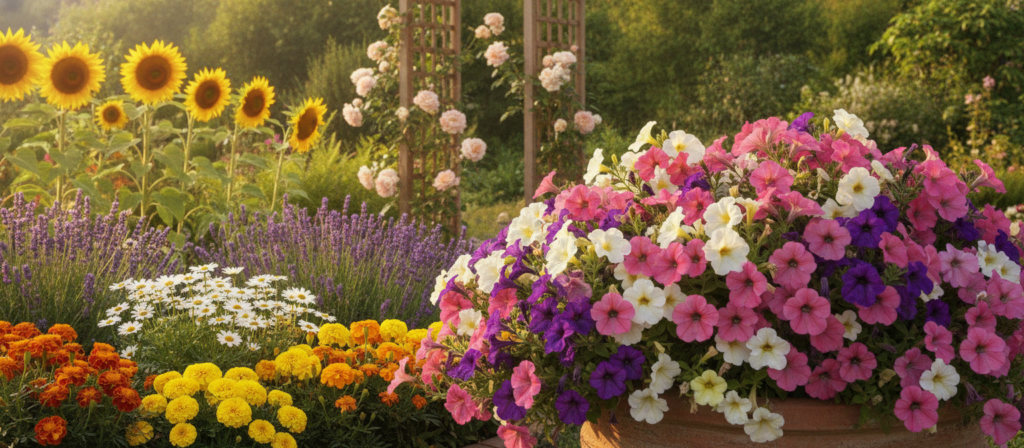
Annuals give your garden color right away. They grow, bloom, and die in one season. They are great for filling in your garden while you learn.
Marigolds, petunias, and zinnias are easy to grow. They bloom from spring to fall. These plants are perfect for beginners who want quick results.
Selecting Perennials for Long-Term Growth
Perennials make a garden that gets better with time. They come back year after year. Many are easy to care for because they don’t need to be replanted often.
«To plant a garden is to believe in tomorrow.»
Choose hardy plants like coneflowers, daylilies, or hostas. They need little care once they’re settled. These plants make your garden beautiful over time.
Identifying Beginner-Friendly Flowering Shrubs
Flowering shrubs add structure to your yard. They grow into a permanent part of your garden. They need only occasional pruning to stay healthy.
Hydrangeas or spirea are good choices. They have beautiful flowers and lush leaves. They help define your garden’s borders or create focal points. The table below compares these plants to help you choose.
| Plant Type | Lifespan | Maintenance Level | Primary Benefit |
|---|---|---|---|
| Annuals | One Season | Low | Instant Color |
| Perennials | Multiple Years | Moderate | Long-term Growth |
| Shrubs | Many Years | Very Low | Structural Beauty |
Preparing Your Garden Beds for Success
A great garden starts before you plant your first seed. Good soil is key for beginner-friendly blooming plants to grow well. It helps your flowers get the nutrients they need all season.
Clearing Weeds and Debris
First, get rid of any unwanted plants. Weeds take water, sunlight, and nutrients from your flowers. Pull weeds by the root to stop them from coming back fast.
Also, take out rocks, sticks, and old plant parts. A clean bed lets you focus on your flowers’ health. This makes planting easier and more fun.
Amending Soil with Organic Matter
Good soil is crucial for a great garden. Adding compost or aged manure helps a lot. It makes the soil better for your beginner-friendly blooming plants.
Blend the organic matter into the top six to eight inches of soil. This helps your flowers grow deep roots. Rich, dark soil means your garden is ready for planting.
Setting Up Basic Irrigation Systems
Keeping your flowers watered is key in summer. A simple irrigation system, like a soaker hose, saves time. It waters the plants at the base, avoiding leaf diseases.
If you like to water by hand, make sure your hose can reach everywhere. Good watering keeps your flowers looking great all season. Early irrigation keeps your garden healthy, even when you’re busy.
Planting Your Flowers Step-by-Step
When you put your flowers in the soil, you start their journey to health. Choosing top picks for novice gardeners means they get a great start. The right way to plant helps them avoid shock and grow well.
Digging the Proper Hole Depth
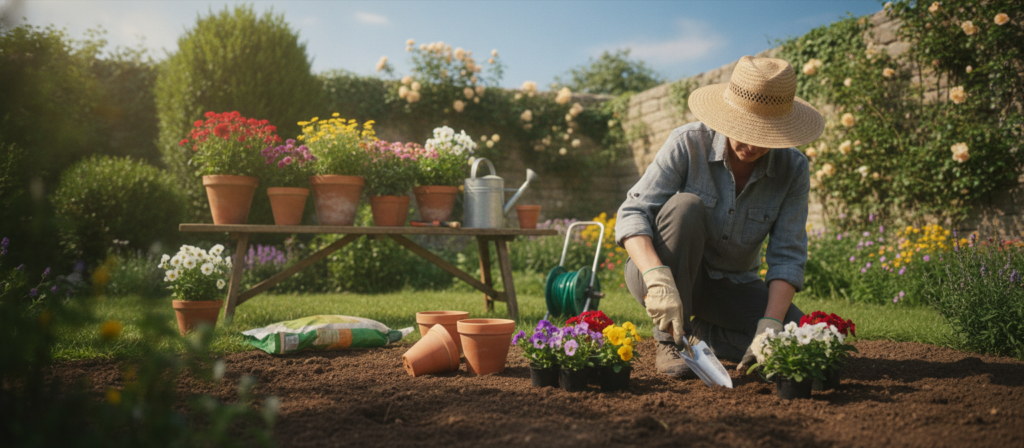
Planting too deep or too shallow is a big mistake. Dig a hole as deep as the plant’s container. Burying the stem can cause rot, and exposed roots dry out fast.
Measure the hole depth before planting. The root ball’s top should be even with the soil. This is key for beginner garden plant recommendations.
Handling Root Systems During Transplanting
When you take a plant out of its pot, the roots are tangled. Planting them this way can make them grow in circles. Gently tease the roots to help them spread.
If roots are very tight, make shallow cuts on the sides. This encourages new growth and helps the plant settle faster. Be careful not to hurt the main stem.
Spacing Plants for Optimal Airflow
Spacing plants right is key for their health. Crowded plants fight for food and water. They also block air, creating a humid spot for diseases.
Look at the plant tag for spacing advice. Give each plant enough space for air. This proactive approach keeps your garden bright and healthy all season.
Mastering Watering Techniques for Blooming Plants
Watering your plants right is as key as how much you water them. It’s the base for beginner-friendly blooming plants to grow well in your garden. Just follow a few easy steps to make sure your flowers get what they need.
Determining When Your Plants Need Water
The best way to see if your flowers need water is the finger test. Stick your finger into the soil about two inches deep. If it’s dry, it’s time to water deeply.
Don’t water based on a set schedule. Soil moisture changes every day. Watch for signs like wilting or droopy leaves. These signs mean your beginner-friendly blooming plants need water fast.
Applying Water at the Base to Prevent Disease
Always water at the soil, not the leaves. Wet leaves can cause fungal infections and diseases. Keeping leaves dry keeps your garden healthy.
Using a soaker hose or drip irrigation is smart. They water the roots well. This is great for beginner-friendly blooming plants all season.
Adjusting Watering Schedules Based on Weather
Your watering plan must change with the weather. Plants need more water in hot, dry times. But skip watering if it rains a lot.
Check the weather forecast before watering. If it’s going to rain, wait. This saves water and prevents too much water in the soil. Here’s a quick guide for watering your garden.
| Plant Type | Watering Frequency | Soil Preference |
|---|---|---|
| Annual Flowers | Daily in extreme heat | Consistently moist |
| Perennial Blooms | 2-3 times per week | Well-drained |
| Flowering Shrubs | Weekly deep soak | Deeply hydrated |
Watching your plants closely is key. By paying attention to soil and weather, your garden will be full of life all year.
Essential Fertilization Practices for Novice Gardeners
Feeding your flowers the right nutrients at the right time makes your garden lush. Even simple-to-care-for flowering plants need regular food to bloom well. Learning about plant nutrition keeps your garden healthy all season.
Understanding NPK Ratios for Flowers
Fertilizer packages have three numbers, called the NPK ratio. Nitrogen (N) makes leaves green. Phosphorus helps flowers grow.
Potassium keeps plants healthy and fights off diseases. For simple-to-care-for flowering plants, choose a fertilizer with more phosphorus for more blooms.
Choosing Between Granular and Liquid Fertilizers
There are two main types of fertilizers. Granular ones are solid and slow-release. They’re great for those who don’t want to fertilize often.
Liquid fertilizers are mixed with water and applied directly. They give plants a quick nutrient boost. Think about your schedule to choose the right one:
| Feature | Granular Fertilizer | Liquid Fertilizer |
|---|---|---|
| Application Frequency | Every 4 to 8 weeks | Every 1 to 2 weeks |
| Nutrient Release | Slow and steady | Fast and immediate |
| Best Use Case | General garden maintenance | Quick growth spurts |
Applying Fertilizer Without Burning Roots
It’s key to apply fertilizer correctly. Water your soil well before fertilizing to avoid root burns. Keep granular fertilizers away from plant stems.
With liquids, don’t splash on leaves to avoid scorch. Follow these tips to keep your garden safe and colorful all season.
Managing Common Garden Pests and Diseases
Being a gardener means learning to protect your plants. You need to watch your beginner garden flowers closely. This way, you can keep your garden looking great all season.
Identifying Early Signs of Aphids and Beetles
Small pests like aphids hide on leaves or in buds. Look for curled or yellowing foliage to spot them. They also leave a sticky stuff called honeydew that ants like.
Beetles are easier to see because they damage plants. Look for holes in leaves or petals. Check your plants in the morning or evening to catch pests early.
Using Natural Remedies for Pest Control
You don’t need harsh chemicals for a beautiful garden. Eco-friendly options like insecticidal soap or neem oil work well. They kill soft-bodied insects safely.
«The best fertilizer is the gardener’s shadow, and the best pest control is the gardener’s eye.»
Planting herbs like basil or marigolds near your flowers helps too. They confuse or keep pests away. This holistic approach helps your beginner garden flowers thrive.
Preventing Fungal Issues Through Proper Spacing
Fungal diseases love damp, crowded places. Give your plants space to avoid powdery mildew. Follow the spacing on your plant tags for good air flow.
| Pest or Disease | Primary Symptom | Natural Solution |
|---|---|---|
| Aphids | Sticky residue on leaves | Mild soap spray |
| Japanese Beetles | Holes in foliage | Hand-picking |
| Powdery Mildew | White dusty spots | Improved airflow |
Keep your garden bed clean to prevent diseases. Remove fallen leaves and debris often. This keeps your garden a peaceful place for you and your plants.
Deadheading and Pruning for Continuous Blooms
To keep your flowers blooming, learn deadheading and pruning. These tasks keep your garden bright all season. Even with simple-to-care-for flowering plants, a bit of effort makes a big difference.
The Importance of Removing Spent Flowers
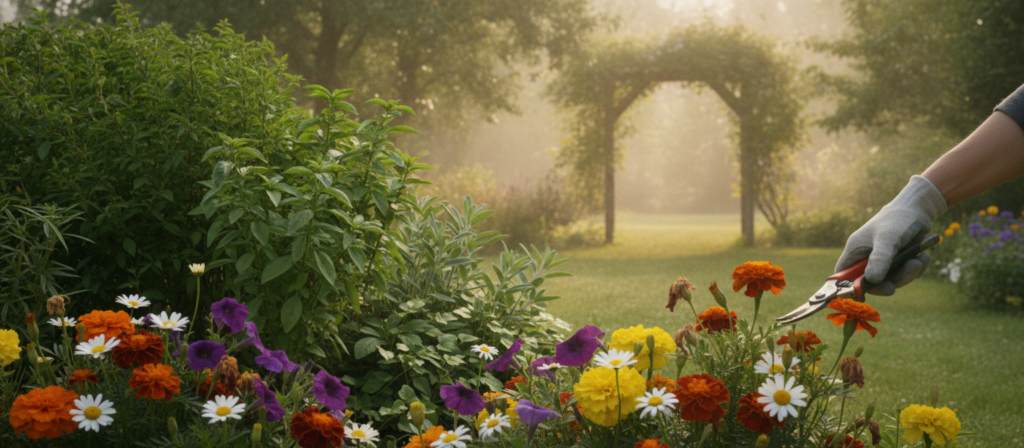
Deadheading means taking off old, wilted flowers. This stops the plant from making seeds. Instead, it makes new buds and leaves.
«To plant a garden is to believe in tomorrow.»
This simple step keeps your garden colorful for longer. It’s a great way to keep your simple-to-care-for flowering plants looking neat.
Tools You Need for Clean Cuts
Using the right tools is key for healthy cuts. Dull tools can hurt your plants. Keep your tools sharp and clean for quick healing.
- Bypass Pruners: Best for stems up to half an inch thick.
- Garden Snips: Ideal for delicate flowers and soft, herbaceous stems.
- Hedge Shears: Useful for shaping larger shrubs and bushes.
Timing Your Pruning to Encourage New Growth
Pruning at the right time is crucial. Cut back tall growth for a fuller plant. Remove dead branches for better air and to stop diseases.
| Plant Type | Maintenance Frequency | Best Tool |
|---|---|---|
| Annuals | Weekly | Garden Snips |
| Perennials | Monthly | Bypass Pruners |
| Flowering Shrubs | Seasonal | Hedge Shears |
Regular care keeps your simple-to-care-for flowering plants healthy. Follow these steps for a beautiful garden all year.
Mulching and Weed Control Strategies
Mulching can make your garden work easier. It covers your soil, stopping weeds and keeping your low maintenance flowering plants looking great all season.
Benefits of Organic Mulch for Moisture Retention
Organic mulch like shredded bark or pine needles gives your soil nutrients as it breaks down. It keeps the soil moist by blocking the sun. This helps your flowers stay hydrated.
This is key in hot summer months in the US. As it breaks down, it makes the soil better for your plants to grow.
Applying Mulch Correctly Around Stems
How you apply mulch matters a lot. Use two to three inches to block sunlight from weed seeds.
Spread it carefully, leaving a small gap around your plants. This «donut» technique stops mulch from rotting your plants.
Keeping mulch off your plants keeps them healthy and bright. A clean garden bed helps your flowers grow well.
Seasonal Maintenance Tips for Your Flower Garden
Gardening is a year-round commitment. It changes with the seasons. Even popular flowers for beginners need special care in each season.
Preparing Your Garden for Spring Growth
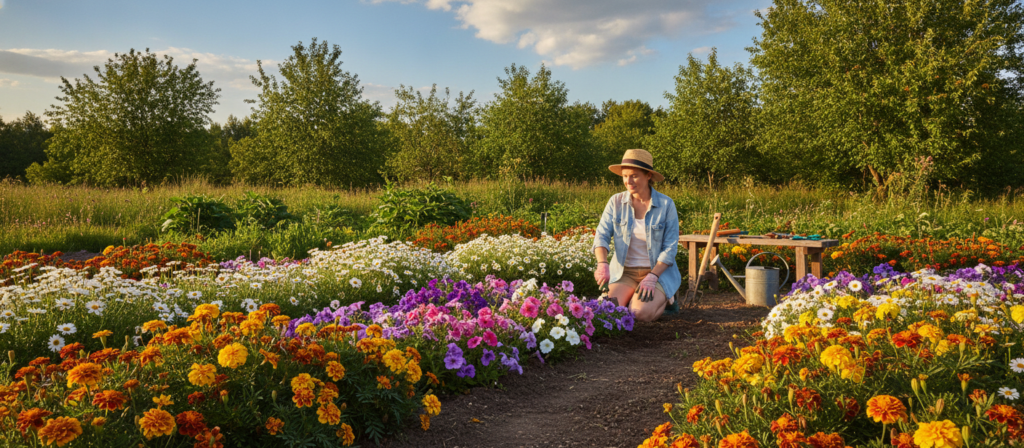
When the frost melts, your garden needs your help. Start by removing dead leaves and debris. This stops pests and diseases early.
After cleaning, gently mix the soil. Add organic compost to feed your top picks for novice gardeners. This helps roots grow strong.
Protecting Tender Plants During Summer Heat
Summer heat can be tough on plants. Use a lot of mulch to keep the soil cool and moist. This is key for popular flowers for beginners in dry times.
Water in the morning to help plants drink before it gets hot. If plants look wilted, give them shade. These steps help top picks for novice gardeners stay cool.
Winterizing Your Garden for Dormancy
When it gets cold, plants need to rest. Stop feeding in late autumn to prevent damage from frost. Water deeply before the ground freezes to keep roots moist.
Use straw or pine needles to cover plants. This keeps roots warm. Winterizing helps your garden stay strong through the cold and bloom again in spring.
| Season | Primary Task | Goal |
|---|---|---|
| Spring | Soil Amendment | Nutrient Boost |
| Summer | Mulching | Moisture Retention |
| Autumn | Winterizing | Frost Protection |
| Winter | Planning | Future Preparation |
Common Mistakes to Avoid as a New Gardener
Starting a garden is exciting, but beginners often make mistakes. Even pros can slip up. Knowing what to avoid saves time and stress. Spotting these mistakes early makes gardening more fun and successful.
Overwatering and Its Consequences
Too much water is a big mistake. It can cause root rot and diseases. Most easy to grow flowers for beginners like soil that’s a bit dry between waterings.
Check if the soil is damp by sticking your finger in it. If it’s wet, wait a day before watering again. Good drainage keeps your plants healthy.
Ignoring Plant-Specific Sunlight Requirements
Every plant needs different light. Putting a shade plant in the sun will hurt it. Sun plants need light to bloom well.
Watch how the sun moves in your yard before planting. This helps your plants grow well. It’s key for popular flowers for beginners.
Planting Too Many Varieties at Once
It’s tempting to buy many plants at once. But, a big garden is hard to manage. Start small to learn each plant’s needs.
Choosing a few plants helps you learn without getting stressed. You can add more next year. Being consistent is key to a great garden.
| Common Mistake | Negative Impact | Recommended Solution |
|---|---|---|
| Overwatering | Root rot and decay | Check soil moisture first |
| Ignoring Light Needs | Stunted growth or wilting | Map sun exposure in your yard |
| Over-planting | Maintenance burnout | Start with a small, manageable bed |
Conclusion
Creating a lively outdoor space is a fun journey. It gets easier with each season. You now know how to pick the best flowers for your area and soil.
Success in your garden needs steady habits and patience. Choose the right plants and take care of them well. This way, your garden will grow into a beautiful place with little work.
Brands like Burpee and Miracle-Gro help you grow as a gardener. Use these resources to get better and try new flowers every year. Your garden will become a colorful spot that makes you happy every day.
Share your garden’s growth with local clubs or online groups. This will inspire you more. Every flower you grow shows your hard work. Enjoy watching your flowers grow all season.