
Imagine walking into your backyard and seeing lots of color. You won’t need to replant every spring. A landscape designed for longevity lets you enjoy nature’s beauty and saves time.
Switching to hardy perennials is smart for busy gardeners. These easy flowers that bloom every year make your outdoor space colorful all the time. Choose plants that fit your local soil and sunlight for a low-maintenance garden.
Key Takeaways:
- Focus on perennials to reduce seasonal replanting labor.
- Match plant species to your specific USDA hardiness zone.
- Prioritize native varieties for better resilience and lower water needs.
- Invest in soil health to support long-term growth and vitality.
Understanding the Benefits of Perennial Gardening
Turning your backyard into a lively spot is easy. Choose the right plants, and your garden will bloom year after year with little work. Adding low maintenance perennial flowers means you can relax more and garden less.
Why Perennials Are the Best Choice for Busy Gardeners
If you’re always busy, you need plants that don’t need much care. Unlike annuals, easy care flowering plants grow strong roots. They survive and grow year after year, needing less water and weeding.
Here’s why perennials are great for you:
- Consistency: They bloom every year without needing to start over.
- Resilience: They can handle local weather changes well.
- Time Efficiency: You save hours each spring by not replanting every year.
The Economic and Environmental Impact of Hardy Plants
Buying perennials is a smart money move. They might cost more upfront, but you only buy them once. This saves you money over time since you don’t buy new plants every season.
Perennials also help the environment. They feed local bees and butterflies all season. Their strong roots also stop soil erosion and make the soil better, helping your whole yard.
Selecting the Right Easy Flowers That Bloom Every Year for Your Climate
Creating a garden that blooms year after year needs careful planning. You must know your local area’s weather. Choosing easy flowers that bloom every year that fit your climate keeps your garden healthy and bright all year.
Identifying Your USDA Hardiness Zone
The USDA Plant Hardiness Zone Map is key for gardening success. It divides the U.S. into zones by winter temperature. Knowing your zone helps pick plants that won’t freeze.
Always check the plant tag or catalog description for your zone. In cold areas, choose plants with lower zone numbers. This avoids losing plants to cold.
Matching Sunlight Requirements to Your Garden Layout
After finding your zone, watch how sunlight moves in your yard. Most easy flowers that bloom every year need specific light. Spend a few days noting where shadows fall at different times.
Full Sun vs. Partial Shade Varieties
«Full sun» plants need at least six to eight hours of direct sunlight. «Partial shade» plants prefer four to six hours, often needing shade in the afternoon. Knowing this helps place plants right for their best growth.
| Plant Type | Light Requirement | Best Location |
|---|---|---|
| Sun-Loving Perennials | 6+ Hours Direct Sun | South-facing borders |
| Partial Shade Perennials | 4-6 Hours Direct Sun | Under tree canopies |
| Shade-Tolerant Perennials | Less than 4 Hours | North-facing walls |
By checking your light and climate, your easy flowers that bloom every year will grow well. The right spot is key for a beautiful, easy garden.
Preparing Your Soil for Long-Lasting Perennial Blooms
Healthy soil is key for your garden. It helps plants grow and bloom. By preparing your soil well, you help your plants bloom for a long time.
Testing Your Soil pH and Composition
First, find out what your soil needs. Most plants like a slightly acidic to neutral soil. You can buy a home testing kit to check your soil.
Soil texture matters too. Sandy soil drains fast but loses nutrients. Clay soil holds water but can hurt roots. Knowing this helps you choose the right soil for long-lasting blooms.
Amending Soil with Organic Matter
Adding organic matter improves your soil. Compost, aged manure, or leaf mold feed your plants slowly. This helps your plants stay healthy and vibrant.
| Amendment Type | Primary Benefit | Best Use Case |
|---|---|---|
| Compost | Nutrient density | General soil enrichment |
| Aged Manure | Nitrogen boost | Heavy feeders |
| Peat Moss | Moisture retention | Sandy soil types |
| Perlite | Improved aeration | Heavy clay soils |
The Importance of Drainage for Perennial Health
Drainage is crucial for perennials. Waterlogged soil can kill your plants. Adding organic matter helps water drain better.
Make sure your garden beds are raised or sloped. This prevents water from pooling. Good drainage keeps your plants healthy and blooming all year.
Step-by-Step Guide to Planting Your Perennials
Starting your flowers right is key. The right way to plant them boosts your chances of having year-round blooming flowers. Preparing well keeps your garden healthy and bright for years.
Timing Your Planting for Maximum Success
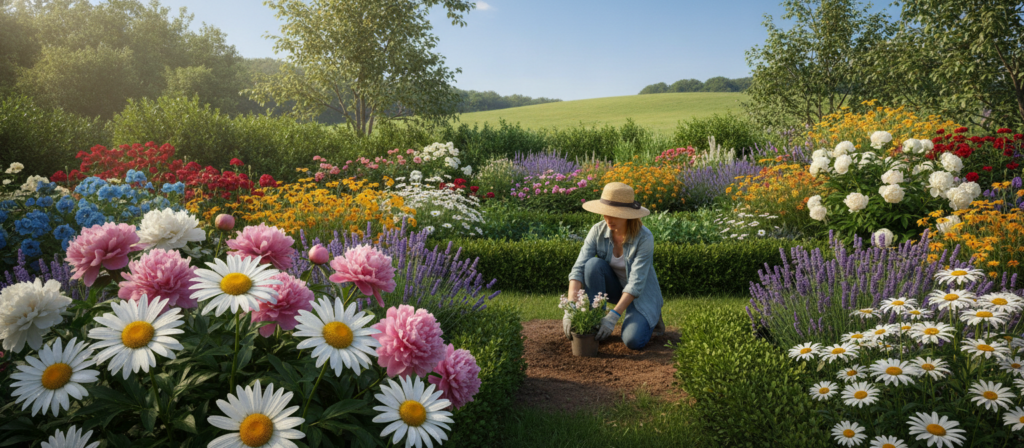
Plant perennials when they’re dormant or semi-dormant. In the U.S., early spring or early autumn is best. These times are cooler, helping roots grow without summer heat stress.
«To plant a garden is to believe in tomorrow.»
Digging the Perfect Hole
Dig a hole twice as wide as the container but not deeper than the root ball. Planting too deep can rot the stem. Planting too shallow can dry out roots. Make sure the root ball is level with the soil surface for best growth.
Proper Spacing to Prevent Overcrowding
Space plants right to let them breathe and get nutrients. Crowding can stunt growth and increase disease. Use this guide to space your plants correctly.
| Plant Size | Spacing Distance | Growth Habit |
|---|---|---|
| Small Perennials | 12 inches | Clumping |
| Medium Perennials | 18-24 inches | Spreading |
| Large Perennials | 36+ inches | Mounding |
Handling Root-Bound Nursery Plants
If roots circle the pot, your plant is root-bound. Gently spread the roots or make shallow cuts. This helps your plant grow well and keeps your garden year-round blooming flowers beautiful.
Essential Watering Techniques for Hardy Perennial Plants
Your hardy perennial plants need careful watering to grow well. These flowers are tough but still need water to grow strong roots. The right amount of water at the right time helps them bloom brightly every year.
Establishing a Consistent Watering Schedule
Being consistent is key in gardening. Perennials like deep water less often than shallow water every day. This helps their roots grow deep, making them stronger against drought.
Water your garden in the morning. This helps the leaves dry before the sun gets too hot. Always water at the base of the plant to get water to the roots well.
Drip Irrigation vs. Hand Watering
Choosing how to water depends on your garden size and time. Hand watering lets you check for pests or disease. But it can be slow and uneven.
Drip irrigation is better for big gardens. It waters slowly and directly to the soil, saving water. A timer ensures your plants get water even when you’re not home.
Signs of Overwatering and Underwatering
Knowing your plants is important. If plants look wilted but the soil is wet, you might be overwatering. This can harm the roots. On the other hand, dry, brown leaves mean they need more water.
| Feature | Hand Watering | Drip Irrigation |
|---|---|---|
| Efficiency | Low | High |
| Labor Intensity | High | Low |
| Cost | Minimal | Moderate |
| Best For | Small Gardens | Large Landscapes |
Mulching and Fertilizing for Optimal Growth
A good garden bed is key for your favorite plants. It helps them grow well. This care is important for year-round blooming flowers to make your garden bright.
Choosing the Best Organic Mulch
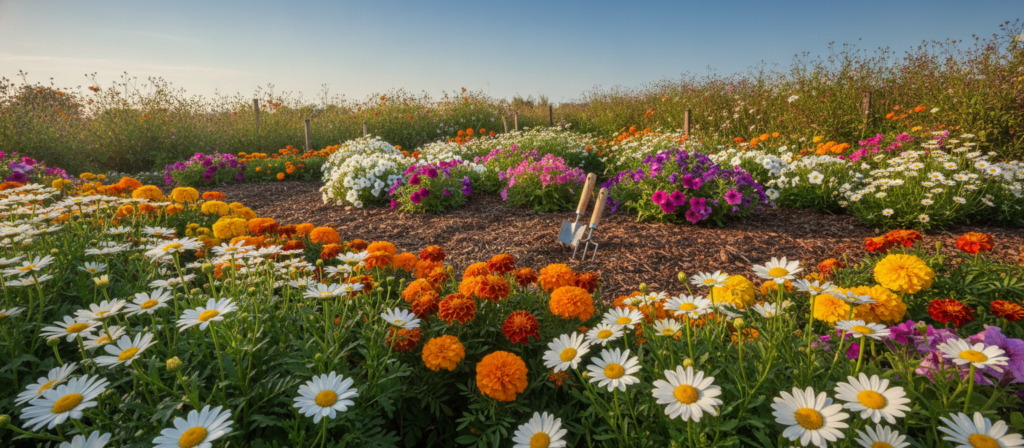
Organic mulch keeps your soil safe. It keeps roots cool in summer and warm in winter. It also stops weeds from getting nutrients.
Good mulch choices are shredded bark, pine needles, or compost. They add nutrients to the soil slowly. Use a two-to-three-inch layer to keep soil moist and healthy.
Applying Fertilizer Without Burning Roots
Fertilizing helps plants grow strong. But, be careful not to hurt the roots. Water your garden well before and after fertilizing.
Use slow-release organic fertilizer for steady nutrients. This method avoids too much fertilizer. Always follow the instructions for the right amount.
When to Feed Your Perennials During the Season
Feeding your garden at the right time is important. Most plants need fertilizer in early spring. This helps them grow well all season.
Don’t fertilize too late in summer or early fall. It can hurt plants before the first frost. Stop feeding in mid-summer to help plants get ready for winter.
Managing Pests and Diseases in Your Low Maintenance Garden
Even tough plants need care. Your low maintenance perennial flowers face challenges. Watch them closely to keep your garden beautiful.
Identifying Common Garden Pests
Check leaves and stems often. Aphids, slugs, and beetles love green plants. Catching them early helps a lot.
- Aphids: Find tiny insects on new growth.
- Slugs: Look for holes and slimy paths.
- Beetles: Find eaten leaves.
Natural Remedies for Disease Prevention
Stop fungal problems before they start. Space plants well for air. Keep leaves dry at night to avoid mildew.
«The best fertilizer for a garden is the gardener’s shadow.»
Use neem oil or soaps for disease. These help without harming bees. Remove sick plants to stop spores.
When to Use Integrated Pest Management
IPM keeps your garden healthy. Only use it when pests are a big problem. This way, you watch your garden more than spray chemicals.
IPM brings in good bugs like ladybugs. This makes your garden a safe, growing place for years.
Pruning and Deadheading for Continuous Seasonal Color
Keeping your garden looking good is easy. Just a little care each week can make a big difference. This way, your plants will keep blooming all season long.
The Art of Deadheading Spent Blooms
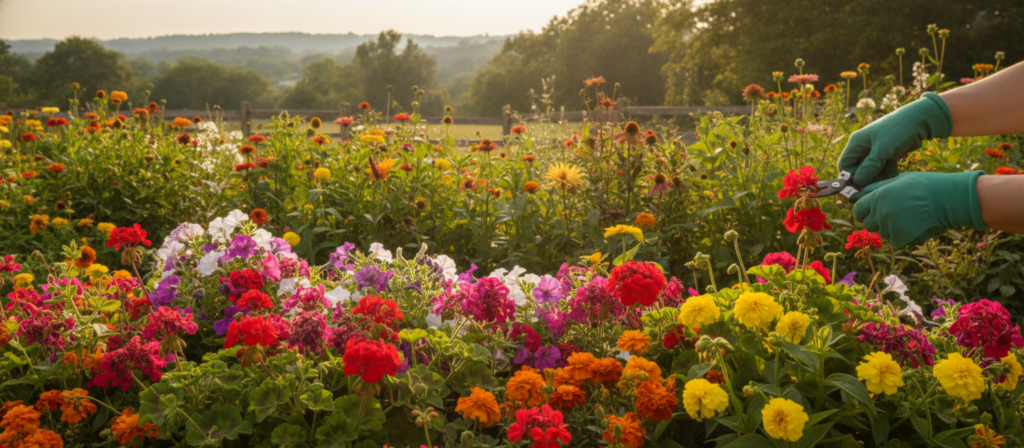
Deadheading means cutting off old flowers. It helps your plants make more flowers instead of seeds. Consistency is key for long-lasting blooms all year.
Just pinch or snip the stem right below the old flower. For tall plants, cut the whole stalk back to healthy leaves. This keeps your garden neat and encourages plants to grow well.
Seasonal Pruning Schedules
Each plant needs special care at different times. In early spring, remove dead leaves from winter. In mid-summer, prune to refresh plants that have stopped blooming.
Tools You Need for Clean Cuts
Sharp, clean tools are important for your plants. Use sharp bypass pruners for quick, clean cuts. Dull tools can hurt your plants. Always disinfect your tools with rubbing alcohol between plants to stop disease.
| Plant Type | Maintenance Task | Best Season |
|---|---|---|
| Spring Bloomers | Deadhead spent flowers | Late Spring |
| Summer Perennials | Cut back for long-lasting blooms | Mid-Summer |
| Fall Foliage | Light trim for shape | Early Autumn |
| All Varieties | Sanitize tools | After every use |
Winterizing Your Garden to Ensure Spring Returns
Winterizing your landscape keeps your garden looking great all year. When it gets cold, your hardy perennial plants go dormant. Taking care of them now helps them come back strong when it warms up.
Protecting Crowns from Frost Heave
Frost heave happens when the ground freezes and thaws a lot. This makes the soil move, pushing roots out of the ground. To stop this, put a thick layer of organic mulch around your plants.
Straw, shredded leaves, or pine needles work well as mulch. They keep the soil warm. This simple step can help your plants survive the winter.
Deciding What to Cut Back Before Winter
Choosing which plants to prune can be hard. Some plants need cutting back to stay healthy, but others are important for winter interest or insects.
- Cut back plants with powdery mildew to stop spores from spreading.
- Leave seed heads on plants like coneflowers for birds to eat.
- Keep ornamental grasses up until spring to protect the crown from too much water.
Using Protective Covers for Sensitive Varieties
Some hardy perennial plants need extra care if they’re new or sensitive to cold. Use burlap wraps or frost blankets to protect them from wind and ice. Don’t use plastic on the leaves, as it can cause rot.
«A garden is a grand teacher. It teaches patience and careful watchfulness; it teaches industry and thrift; above all, it teaches entire trust.»
Common Mistakes to Avoid When Growing Perennial Flowers for Beginners
Even the most excited gardeners can make mistakes when starting. Growing easy care flowering plants is rewarding but small errors can stop your garden from being its best. Knowing these common mistakes is the first step to becoming a confident gardener.
Ignoring Plant Labels and Instructions
Every plant you buy has a tag that is like a vital roadmap for success. These tags tell you about sunlight, water, and how big the plant will get. Not reading this can lead to putting a plant in the wrong place.
Always read the instructions before planting. Following these tips helps your perennial flowers for beginners grow well. The right place is key for a healthy garden.
Planting Too Deeply or Too Shallowly
How deep you plant your perennials is very important. Planting too deep can cause the plant to rot or not come up in spring. Planting too shallow can dry out the roots.
Plant at the same depth as in the nursery. Firm the soil gently to avoid air pockets. This helps your plants grow strong.
Neglecting Early Season Maintenance
«The garden is a teacher that rewards patience and consistent care, turning small efforts into a lifetime of beauty.»
Many new gardeners think hardy plants need no care once planted. But early season care is key for health. Clearing winter debris and checking for pests helps your garden start well.
| Common Mistake | Negative Impact | Corrective Action |
|---|---|---|
| Ignoring Labels | Poor growth or death | Check light and water needs |
| Incorrect Depth | Root rot or dehydration | Match nursery container level |
| Skipping Maintenance | Disease and pest buildup | Clean beds in early spring |
Being proactive helps avoid plant problems. Watching your garden closely lets you fix issues early. Your hard work in the early season will lead to beautiful blooms all year.
Conclusion
Building a vibrant landscape needs patience and a clear vision. You now know how to pick hardy plants that come back every year. These plants add color to your yard without needing to replant all the time.
Success comes from caring for your plants well. Small steps like checking if they need water and removing old stems help a lot. You’ll see your plants get stronger with each season.
Plan your garden beds this weekend. Start with easy plants from places like Burpee or Proven Winners. Your garden will be a happy place for years.
Share your garden with local groups or neighbors. This way, you can learn more about gardening in your area. Every plant you care for makes your neighborhood prettier and healthier. Enjoy watching your garden grow through the seasons.