
Turning a small patio or balcony into a green oasis is easy. First, know your space well before planting. This helps you pick the right plants for your area.
Choosing the right plants stops them from getting too crowded. This keeps your plants healthy all season. By picking the best compact flowers for small gardens, you make a lively spot that suits you. Careful planning is key to success in tiny outdoor spaces.
Assessing Your Small Garden Environment
Success in a small garden starts with a careful look at your environment. Before buying small garden flowers, understand your outdoor area’s unique conditions. This prevents future frustration and helps your plants thrive.
Evaluating Available Sunlight Patterns
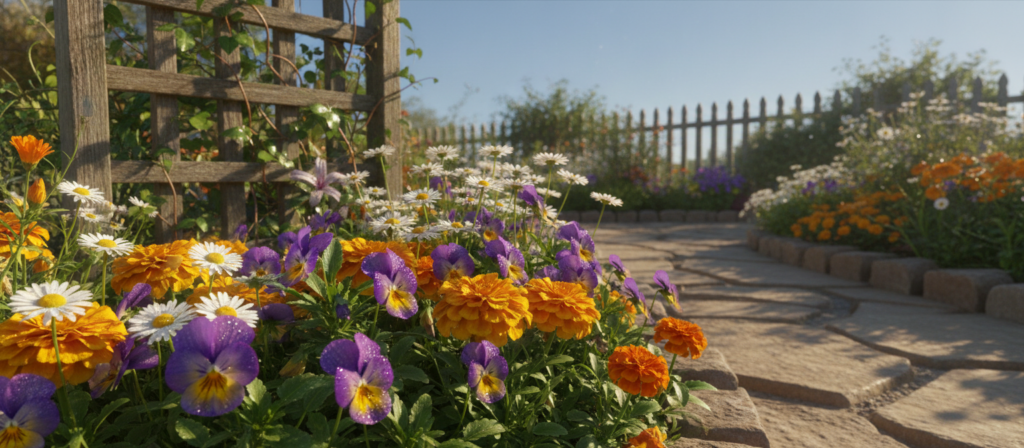
Sunlight is key for healthy growth. Track how many hours of direct light your garden gets each day. Some spots get intense morning sun, while others are shadowed by walls or fences.
Keep a simple log of these patterns for a few days. This helps pick the right small space gardening flowers for your light levels. Remember, even a small light change can affect which flowers bloom best.
Understanding Your Local Hardiness Zone
Your local hardiness zone is a guide for plant survival. It shows which species can handle your area’s temperature changes. Checking your zone map is a vital step before buying plants.
Choosing plants suited to your climate ensures they come back year after year. If you pick plants that can’t handle your area’s temperatures, they’ll struggle. Always check the zone rating on plant labels for a perfect match.
Measuring Your Planting Footprint
Accurate measurements are key in small spaces. You need to know your beds or containers’ exact sizes to avoid overcrowding. By measuring your planting footprint, you use every inch well without stressing plants.
Careful planning lets you display more without feeling cluttered. Knowing your limits helps pick the right number of plants for a lush, healthy look. This precision is the secret to a professional garden in a tiny space.
How to Choose Compact Flowers for Small Gardens
When you have little space, picking the right plants is key. You want your garden to look good and be easy to care for. Choose plants that grow well in small spaces and look good together.
Prioritizing Growth Habits and Mature Size
Check the mature size of plants before buying. Don’t pick young plants that will grow too big. Plants that grow slowly or stay small are best for small gardens.
Selecting Plants with Long Blooming Cycles
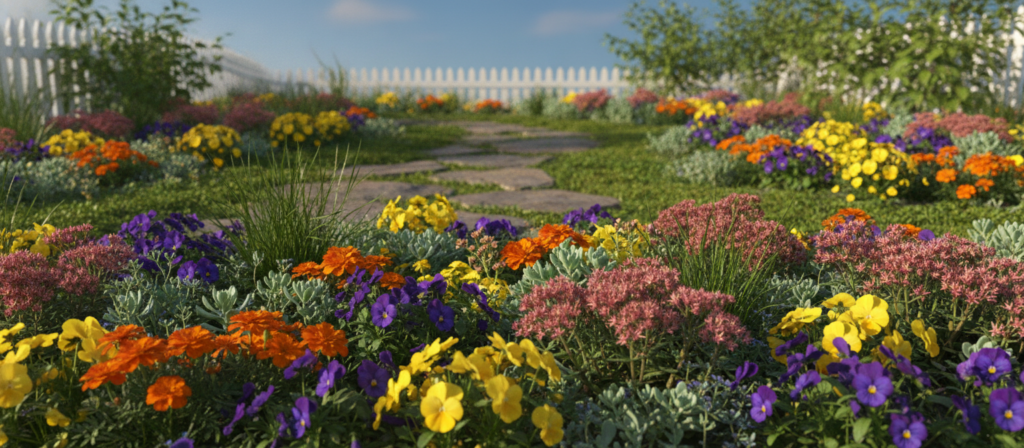
Choose compact flowering plants that bloom for a long time. Plants that bloom all season are better than those that bloom for just a few weeks. This keeps your garden colorful without needing to replant often.
«A small garden is not a limitation, but an invitation to focus on the exquisite details that larger landscapes often overlook.»
Balancing Color Palettes in Limited Areas
Using a few colors makes a small garden look bigger and more planned. Too many colors can make it look messy. Use a table to help pick plants that fit your garden’s look.
| Plant Type | Growth Habit | Bloom Duration | Visual Impact |
|---|---|---|---|
| Dwarf Perennials | Slow/Controlled | Long | High |
| Annuals | Fast/Bushy | Very Long | Very High |
| Trailing Varieties | Spreading | Moderate | Medium |
By picking the right compact flowers for small gardens, you make your garden look great. Remember, plants that look good together make your garden even better.
Selecting Varieties Based on Sunlight Requirements
You can make any small space look lush by picking the right plants. Choose plants that match the light your garden gets. This is key for compact flowering plants to grow well.
Watch how light changes in your patio or balcony. This helps your plants grow well.
Full Sun Options for Radiant Displays
Full sun plants need at least six hours of direct light. They grow well and bloom brightly in this light. If your spot gets afternoon sun, it’s perfect for these plants.
Here are some good choices for sunny spots:
- Zinnias: Known for their intense colors and heat tolerance.
- Dwarf Sunflowers: Provide a classic look without the massive height.
- Lantana: Excellent for attracting pollinators in tight spaces.
Partial Shade Selections for Cozy Corners
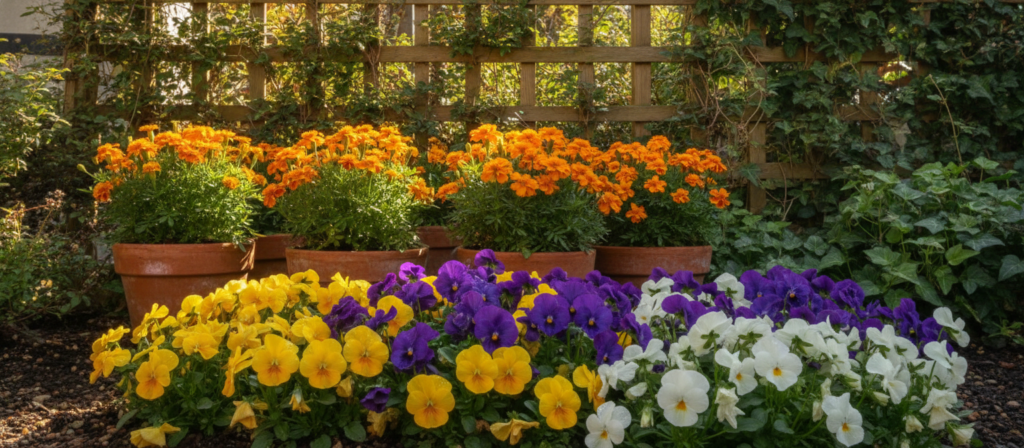
Many compact flowering plants do well in filtered light or a few hours of morning sun. These spots are cooler and don’t get too hot. Choosing the right plants here makes these areas bright.
Try these varieties for your partially shaded zones:
- Begonias: Offer lush, waxy leaves and consistent blooms.
- Fuchsias: Perfect for hanging baskets in cooler, shaded spots.
- Impatiens: Provide a reliable pop of color in dim environments.
Deep Shade Solutions for Under-Canopy Planting
Find plants that do well in deep shade to brighten up dark spots. These plants may not bloom as much but add a sophisticated look. Choose plants with interesting leaves and small flowers.
These options do well in little light:
- Heuchera: Valued for stunning leaf colors and delicate flower spikes.
- Hostas: Ideal for filling space with rich, textured greenery.
- Torenia: Often called the «wishbone flower,» it thrives in low-light conditions.
Even shade-loving compact flowering plants need water to stay healthy. By picking the right plants for the light, your garden stays lively all season.
Soil Preparation and Container Essentials
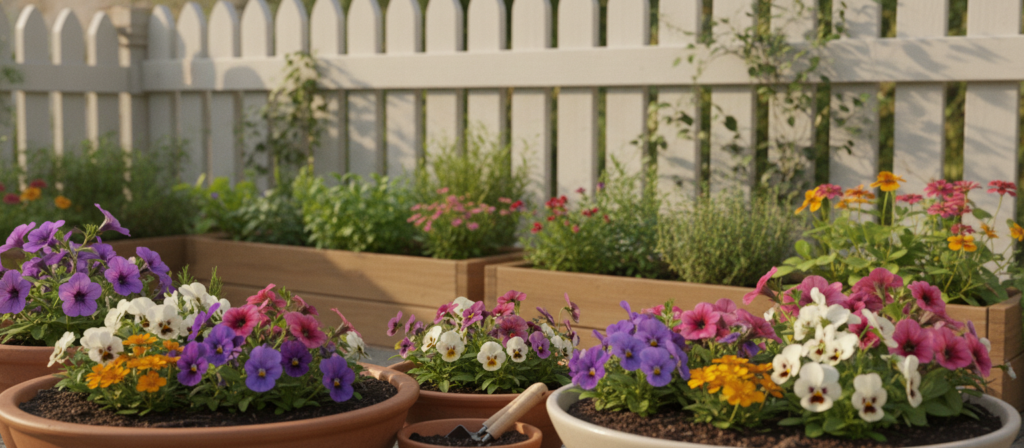
Your success with space-saving garden flowers starts with good soil in your containers. Since your plants have less soil, they need the best mix. This keeps your flowers bright all season.
Choosing the Right Potting Mix for Drainage
Don’t use regular garden soil in pots. It’s too heavy and can get stuck. Choose a light potting mix made for containers. It has peat moss, perlite, or vermiculite for good aeration and to stop roots from drowning.
Drainage stops root rot, a big problem for container plants. If the soil is too wet, your space-saving garden flowers can’t get oxygen. Make sure your mix lets water flow but keeps enough moisture.
«The secret to a flourishing container garden lies not just in the plant itself, but in the life-sustaining environment of the soil beneath it.»
Selecting Containers That Maximize Root Space
Choose pots that are deep and wide for root growth. A small pot can make plants root-bound, which hurts their growth. Make sure pots have holes at the bottom to drain water.
| Material | Pros | Cons |
|---|---|---|
| Terracotta | Breathable, classic look | Dries out quickly |
| Plastic | Lightweight, retains moisture | Can crack in extreme cold |
| Glazed Ceramic | Decorative, holds moisture | Heavy, expensive |
Nutrient Management in Confined Soil
Nutrients leave the soil fast in small spaces. You need to feed your space-saving garden flowers often. Use a slow-release fertilizer at planting time for months of nutrients.
For plants that bloom a lot, add liquid fertilizer every few weeks. Watch your plants for signs of trouble. With the right soil care, your plants will thrive in small spaces.
Best Dwarf Varieties for Tiny Gardens
You can make any small area look like a garden paradise. Pick the right dwarf varieties to do this. These plants help you have a diverse garden without using too much space. By choosing small garden flowers that don’t grow too big, your garden will look great and easy to take care of.
Miniature Roses for Classic Appeal
Miniature roses bring a classic, elegant look to small spaces. They are as beautiful as big roses but smaller. They’re perfect for pots, adding elegance without taking up too much room.
«The smallest of flowers can hold the greatest of joys for a gardener who knows how to appreciate them.»
Dwarf Lavender for Fragrance and Texture
Dwarf lavender adds a nice smell and interesting texture. It’s great for small spaces because it’s easy to care for. Its silver-toned leaves and purple flowers look nice against other plants.
Petite Marigolds for Vibrant Borders
Petite marigolds are great for adding color to your garden. These miniature garden flowers are tough and bloom a lot. They do well in small pots and help mark your garden’s edges.
Compact Petunias for Hanging Baskets
Compact petunias are perfect for hanging baskets. They make the most of vertical space. These dwarf varieties for tiny gardens spill over, making your garden look lush. They need little care but bloom brightly all season.
Implementing Vertical Gardening Techniques
When you don’t have much ground space, think about using walls. Growing plants up instead of out lets you use space-saving garden flowers well. This makes your garden look lush and adds a cool, modern touch to your home.
Utilizing Trellises for Climbing Compact Flowers
Trellises are great for vertical gardens. They help climbing plants reach the sun without taking up too much space. You can make a living tapestry of colors by letting vines grow through the trellis.
«The best way to grow a garden is to think in three dimensions, letting your plants reach for the sky.»
Installing Wall-Mounted Planters
Wall-mounted planters are perfect for keeping your floor free. They let you show off miniature garden flowers right at eye level. By putting them on fences or walls, you turn empty spots into beautiful views.
Creating Tiered Displays for Depth
Tiered stands are smart for layering plants. They make sure each plant gets optimal sunlight and air. This makes your small space feel bigger and more welcoming.
Maintenance Tips for Petite Blooms
Looking after your petite blooms for small spaces is fun. It keeps your garden bright and healthy. Simple care makes your plants look great, even in small spots.
Deadheading Strategies for Continuous Growth
Deadheading keeps your garden looking new. It stops plants from making seeds. Instead, they make more flowers.
Check your plants often. Just cut off old flowers above healthy leaves. This makes your plants bloom longer.
Watering Schedules for Small Containers
Small containers dry out fast. In summer, check the soil every day. Keeping them watered helps the roots.
Feel the soil’s top inch before watering. If it’s dry, water well. Make sure water drains out to keep roots healthy.
Pruning Techniques to Maintain Shape
Pruning keeps your low maintenance flowers for small gardens neat. It stops them from getting too big. Use sharp shears to trim stems.
Also, cut off any bad leaves. This helps air move and stops diseases. A clean garden is always beautiful.
Troubleshooting Common Small Space Issues
Even the most beautiful petite blooms for small spaces can face challenges. When you work with limited square footage, you must stay vigilant. This ensures your garden stays vibrant.
Managing Pests in Dense Plantings
Dense arrangements attract pests like aphids and spider mites. Regular inspection of leaves is key to spotting them early.
If you find pests, act fast. Use organic soaps or neem oil to control them. This stops small problems from getting big.
Preventing Overcrowding and Airflow Problems
Good airflow stops fungal diseases like powdery mildew. Plants need space to avoid moisture buildup. Always follow plant tag spacing.
If containers are too full, prune some plants. Strategic thinning lets air reach the center. Healthy plants need air to grow well.
Addressing Nutrient Deficiencies Early
Container plants need you for nutrients. Soil nutrients wash away fast. Watch for signs like yellow leaves or slow growth.
Use a balanced fertilizer to help your plants. Consistent feeding keeps them strong against stress. This helps your garden thrive all season.
Conclusion
Creating a colorful oasis in a small space is very rewarding. You can make a tiny balcony or patio look amazing with the right plants.
Choosing dwarf plants for small gardens is a great idea. They add variety and color without taking up too much room. These plants fit well in pots or hanging gardens, making your space look neat and tidy.
Opting for easy-to-care-for flowers saves you time. Keeping your soil and water right helps your plants stay healthy and strong.
You’re ready to create a beautiful space that shows off your style. Begin planting today and watch your small garden come alive with color and life.
Show off your garden on social media or with local gardening groups. Your success shows that even small spaces can be stunning.