
Make your outdoor space bright and beautiful. Start by picking the right plants. They will make your garden look great all year.
Choosing the best flowering shrubs makes your garden a work of art. They add beauty and structure to your yard.
Strategic planning is key to a successful garden. Pick plants that fit your climate well. This way, your garden will grow strong with little care.
Investing in good plants today means a beautiful garden for years. Begin your garden journey this weekend. Add these flowering shrubs with colorful blooms to your garden.
Assessing Your Garden Environment for Optimal Growth
Checking your garden’s microclimate is key for your colorful shrubs for gardens to grow well. Before buying new plants, watch how your yard reacts to the weather. This step helps avoid mistakes and keeps your garden healthy.
Evaluating Sunlight Exposure and Soil Drainage
Most vibrant blooming shrubs need certain light to bloom well. Watch your garden during the day to see sunlight hours. Morning sun is softer than afternoon sun.
Soil drainage is also crucial. Many plants don’t like wet roots. Here’s a simple test:
- Dig a hole 12 inches deep and wide.
- Fill it with water and wait for it to drain.
- Then, fill it again and see how long it takes to drain.
If water drains in under four hours, your soil is good. If it takes more than twelve hours, you might need to add organic matter or pick plants that like wetter soil.
«The secret to a thriving garden is not just the plants you choose, but how well you understand the ground they call home.»
Understanding Your USDA Hardiness Zone
The USDA Hardiness Zone map helps pick plants that can handle your winters. These zones show the average coldest temperature in your area. Always check the zone rating on any plant tag before buying.
Choosing a shrub for your zone means it can handle the coldest nights. Plants for warmer zones won’t make it through your first frost. Plants for colder zones might not do well in your summer heat.
Selecting the Best Flowering Shrubs with Colorful Blooms
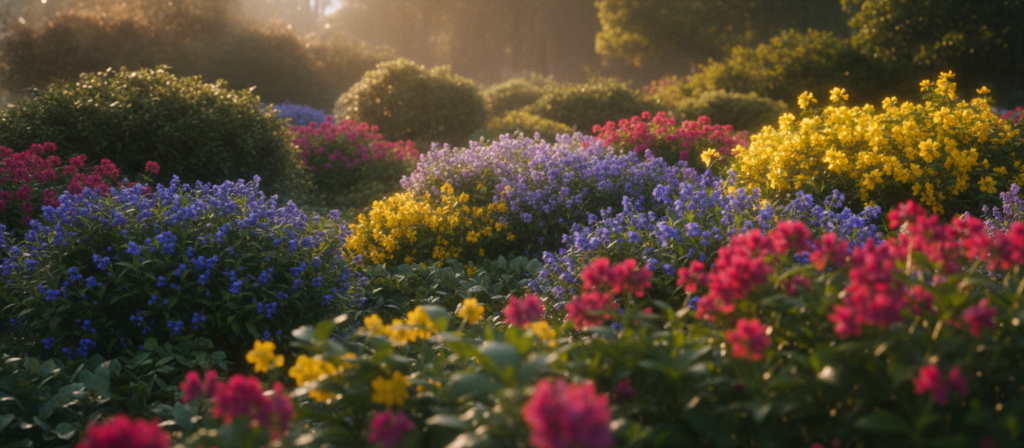
Creating a beautiful garden all year needs a smart plan. Pick the right flowering shrubs with colorful blooms to make your garden welcoming.
Choosing Shrubs Based on Bloom Time and Color Palette
Plan when your plants will bloom. Don’t pick all to bloom at once. This way, your garden stays interesting all year.
«A garden is a grand teacher. It teaches patience and careful watchfulness; it teaches industry and thrift; above all, it teaches entire trust.»
Think about how colors work with your house. You can pick bold or calm colors. The best flowering shrubs make your garden look good now and later.
Considering Evergreen Versus Deciduous Varieties
Know the difference between evergreen and deciduous shrubs. Evergreens keep your garden looking good all winter. Deciduous shrubs change with the seasons, showing off in fall.
| Shrub Type | Primary Benefit | Seasonal Interest | Maintenance Level |
|---|---|---|---|
| Evergreen | Year-round structure | Consistent foliage | Low to Moderate |
| Deciduous | Seasonal color shifts | Flowers and fall foliage | Moderate |
| Mixed Border | Maximum diversity | Continuous change | High |
Using both evergreen and deciduous shrubs makes your garden complete all year. This way, your garden stays neat and pretty, no matter the season.
Preparing Your Planting Site for Success
Creating a healthy spot is key for vibrant blooming shrubs. Getting your site ready is like building a strong base for your garden.
By preparing your soil well, you give your plants what they need to grow. This effort means your flowering shrubs for landscaping will bring beauty for many years.
Clearing and Amending the Soil
First, remove weeds and grass from where you’ll plant. Weeds take water and food from your new plants.
After clearing, make your soil better. Add compost or aged manure to help with nutrients and soil drainage.
Soil that drains well stops root rot and other problems. Healthy soil structure helps roots grow strong and deep.
Determining Proper Spacing for Mature Growth
Many people plant too close together for a full look right away. But, you need to think about how big your plants will get.
Look at the plant tag or research to find out how wide it will grow. Giving enough space helps with air flow and keeps diseases away from your flowering shrubs for landscaping.
Good spacing also lets each plant get enough sun and food. Planning ahead keeps your vibrant blooming shrubs healthy and your garden looking good for years.
Step-by-Step Guide to Planting Your New Shrubs
Changing your outdoor space starts with planting new plants. When you pick colorful shrubs for gardens, they need to grow strong roots fast. A step-by-step plan helps your plants grow well.
Digging the Ideal Planting Hole
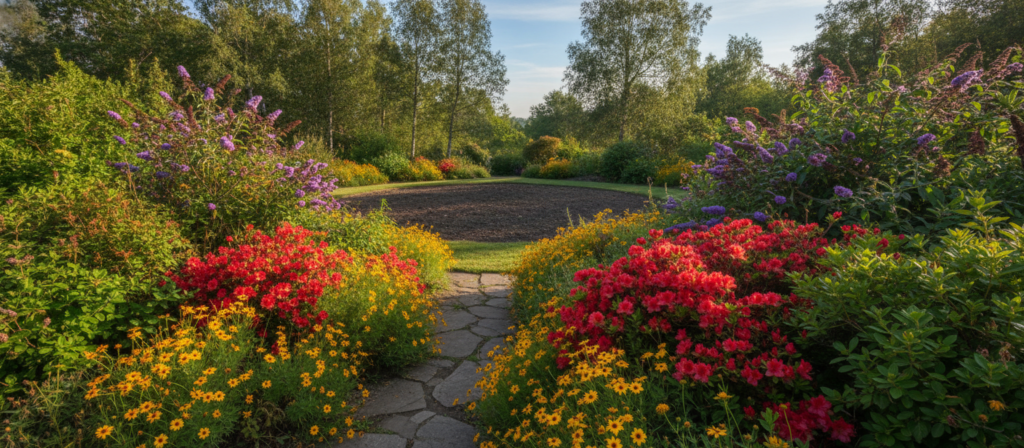
The key to a healthy plant is the soil. Dig a hole that’s twice as wide as the plant’s roots but not deeper than the pot. This lets the roots spread out easily.
Don’t dig too deep to avoid rot. The top of the roots should be level with or a bit above the soil. This keeps water from pooling around your beautiful blooming shrubs.
Positioning and Backfilling the Root Ball
When your hole is ready, take the shrub out of its pot. If the roots are tight, gently tease them apart to help them grow outward. Put the plant in the hole’s center so it stands straight.
Fill the hole with a mix of native soil and compost. Here are some tips:
- Firm the soil a bit with your hands to get rid of air pockets.
- Make sure the plant is at the same depth as it was in the nursery.
- Don’t pack the soil too hard, as it can block oxygen.
Initial Watering and Mulching Techniques
After filling, water your plant deeply to settle the soil. Keeping it moist is key for the first few weeks. Proper hydration helps prevent shock.
Then, add a two-inch layer of organic mulch around the plant. Keep it a few inches from the stem to avoid moisture buildup. This mulch keeps the soil moist and stops weeds, making your beautiful blooming shrubs look great all season.
Top Flowering Shrubs for Vibrant Spring Color
When it gets warmer, your garden comes alive with color and life. Picking the right plants for spring makes your garden a neighborhood gem. Flowering shrubs with colorful blooms make your garden pop with spring’s arrival.
Azaleas and Rhododendrons for Shade
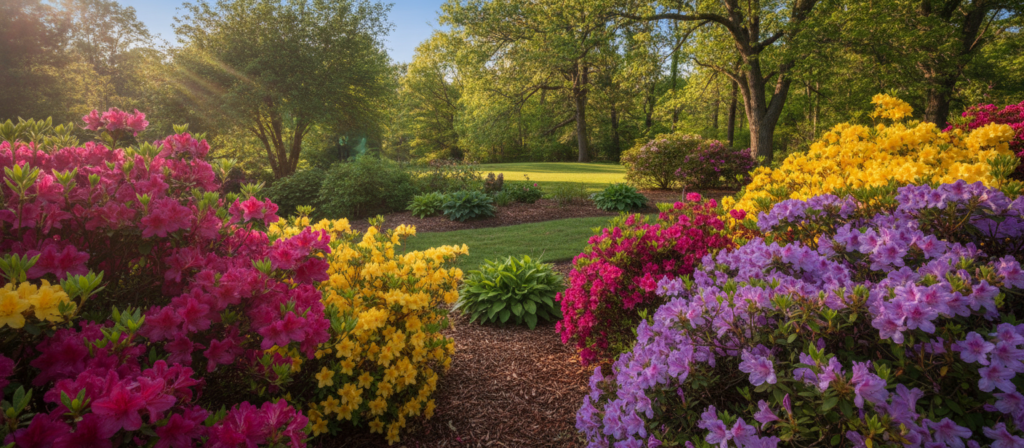
These plants love the shade or morning sun. They grow well in acidic, draining soil. They burst into color when other plants are still asleep.
They love cooler, shaded spots. So, they’re perfect for woodland gardens or north-facing borders.
Lilacs for Fragrance and Structure
Lilacs are famous for their sweet smell and tall growth. They add height and lush greenery to your garden. They make a stunning focal point in your landscape.
These top flowering shrubs are easy to care for once they’re settled. Adding fragrant varieties keeps your yard beautiful and inviting in spring. These flowering shrubs with colorful blooms bring joy for many seasons.
Summer Blooming Shrubs to Keep Your Garden Bright
Choosing the best flowering shrubs for summer is easy. These plants keep your garden colorful even when spring flowers fade. They thrive in warm weather, making your garden lush and colorful all summer.
Hydrangeas for Dramatic Floral Displays
Hydrangeas are top picks for a summer garden. They have big, showy flowers that last for weeks. You can pick from mophead or lacecap types for a fancy look.
Keep hydrangeas watered when it’s dry. They like some shade to protect their flowers from too much sun. With care, they’ll be the highlight of your garden.
Spirea for Low-Maintenance Color
Spirea is great for easy garden care. It blooms all summer with little work. It’s perfect for filling gaps or making low hedges that need little pruning.
Spirea grows well in many soils, making it ideal for busy gardeners. Its small, bright flowers draw in bees and butterflies. Here’s a quick guide to help you choose:
| Shrub Variety | Bloom Time | Sun Requirement | Maintenance Level |
|---|---|---|---|
| Hydrangea | Mid to Late Summer | Partial Shade | Moderate |
| Spirea | Early to Mid Summer | Full Sun | Low |
| Weigela | Late Spring to Summer | Full Sun | Low |
Autumn and Winter Interest with Colorful Shrubs
Keeping your garden interesting all year is key. Many focus on spring and summer, but top flowering shrubs bring beauty in autumn and winter. They add texture and depth when other plants are asleep.
Selecting Shrubs with Persistent Berries
Choosing shrubs with long-lasting berries is smart. These berries stay on the branches into winter, looking striking against the snow. They also feed local wildlife, making your yard lively in quiet months.
Winterberry and some Viburnum types are great choices. They keep their bright berries through cold weather. These flowering shrubs for landscaping decorate your garden beds beautifully.
Utilizing Shrubs with Vibrant Fall Foliage
Autumn offers a colorful show before winter. Pick shrubs for their stunning leaf changes. Many top flowering shrubs turn from green to vibrant colors like red, gold, and bronze.
Strategic placement of these plants makes a big impact. Combining colorful leaves with berries creates a rich look. This makes your outdoor space welcoming all year.
| Shrub Variety | Primary Feature | Winter Benefit |
|---|---|---|
| Winterberry | Bright Red Berries | Wildlife Food Source |
| Burning Bush | Fiery Red Foliage | High Visual Impact |
| Viburnum | Persistent Fruit | Structural Texture |
| Red Twig Dogwood | Bright Red Stems | Color Against Snow |
Essential Maintenance Practices for Healthy Blooms
Having a routine is key for your shrubs’ health and beauty. Regular care keeps your vibrant blooming shrubs strong against bad weather. They will keep showing off their beauty year after year.
Watering Strategies During the First Growing Season
The first year is very important for your plants’ roots. They need extra attention to grow well in your garden soil.
To help your popular colorful shrubs grow, follow these tips:
- Check soil moisture daily by inserting your finger an inch into the ground.
- Give them deep, slow waterings to help roots grow deep.
- Change your watering schedule with the weather, more often when it’s hot and dry.
- Make sure the roots stay moist but not too wet to avoid root rot.
Fertilizing for Maximum Flower Production
Good food is key for lots of flowers. But, it’s important to feed your plants at the right time. This avoids weak, tall growth.
For the best results, remember these essential tips:
- Use a balanced, slow-release fertilizer in early spring when new growth starts.
- Don’t fertilize late in the season to avoid damage from early frosts.
- Water the soil well after using granular fertilizer to help nutrients reach the roots.
- Follow the package instructions for your plant type to avoid too much fertilizer.
By being consistent with these care tips, you help your plants thrive. Healthy, well-fed shrubs fight off pests and diseases better. This means you get to enjoy a stunning garden with less work.
Pruning Techniques to Encourage More Flowers
Pruning is key to getting more flowers from your plants. It keeps your colorful shrubs for gardens healthy and looking good.
Timing Your Pruning Based on Bloom Cycles
Knowing when to prune is very important. Pruning at the wrong time can hurt your flowers.
Here’s how to keep your blooms safe:
- Spring-blooming shrubs: Prune them right after their flowers drop. This helps them grow new buds for next year.
- Summer-blooming shrubs: Prune these in late winter or early spring. Do it when they’re still asleep.
Removing Deadwood and Shaping for Airflow
Keeping your plants clean is also crucial. Get rid of dead or sick wood to stop diseases from spreading. This helps your plants grow strong.
Shaping your plants also helps. It lets air move through, keeping pests and diseases away. This is good for popular colorful shrubs.
Use sharp tools to make clean cuts. Cut just above a bud or branch. This keeps your plants healthy and pretty all season.
Managing Common Pests and Diseases
Being careful is key for gardeners to protect their top flowering shrubs. Watch your garden closely to catch small problems early. This way, your garden stays full of life all season.
Identifying Early Signs of Stress
Plants show their health in small ways. Look for yellow leaves, wilting, or slow growth in your beautiful blooming shrubs. These signs mean pests or diseases might be coming.
Look under leaves for tiny bugs or webs. Dark spots or powdery stuff on leaves mean fungus. Early detection stops these problems from getting worse.
Implementing Integrated Pest Management
Integrated Pest Management (IPM) is a smart way to deal with pests. It focuses on preventing problems instead of just treating them. Use good watering, space, and soil to keep your beautiful blooming shrubs strong.
When pests show up, try the least harmful methods first. You can remove bugs by hand or with water. For bigger problems, use safe products like neem oil.
Using these environmentally friendly methods keeps your garden healthy. Keep watching and caring for your top flowering shrubs to make them last a long time.
Conclusion
Creating a vibrant garden needs careful planning and care. Choosing the right flowering shrubs makes your yard beautiful.
You know how to pick the best shrubs for your area. Adding colorful shrubs brings beauty and structure for years.
Gardening is a rewarding journey. It grows with your plants. Your patience helps your garden thrive.
Start your dream landscape today. Your outdoor sanctuary is waiting for your creativity and dedication.