
Ever dreamed of a backyard full of colors? Starting a home garden is a truly rewarding hobby. It brings life and beauty to any outdoor space. This beginner guide to growing flowering plants will help you start with confidence.
Many people feel scared of gardening, but you don’t need a green thumb to succeed. Learning how to grow flowers is easy for anyone willing to follow simple steps. With the right steps, you can make your space a lush sanctuary.
We will share the basic steps for a fun and successful garden. Focus on soil, sunlight, and care. Your garden will grow and bloom right away. Let’s start this exciting adventure together.
Understanding Your Local Climate and Hardiness Zone
Starting your gardening for beginners journey means knowing your backyard’s climate. Each area has its own weather that affects which flowers grow well and which don’t make it through winter.
By watching your surroundings, you’re setting yourself up for success. Nature provides the blueprint. Your task is to pick the right plants for your area.
Identifying Your USDA Plant Hardiness Zone
The United States Department of Agriculture (USDA) has a map. It shows the country divided into plant hardiness zones. These zones are based on the coldest winter temperature in your area.
Knowing your zone is key. It tells you if a flower can handle your area’s cold. You can find your zone by typing your zip code into the USDA website.
After finding your zone, you can choose plants that fit your climate. This step helps avoid buying flowers that won’t do well in your area’s weather.
Assessing Sunlight Exposure in Your Garden
Temperature isn’t the only thing to consider. You also need to think about the sunlight requirements for plants. Not every part of your yard gets the same amount of sun.
To get the best results, watch how the sun moves in your garden for a day. You should divide your garden into areas based on sunlight:
- Full Sun: Places that get six to eight hours of direct sunlight a day.
- Partial Shade: Areas that get three to six hours of sun, often in the morning or late afternoon.
- Full Shade: Spots that get less than three hours of direct sunlight or only filtered light all day.
Tracking these patterns helps you place your flowers right. When you match your plants’ needs with the light they get, they’ll grow better and bloom more.
Selecting the Best Flowering Plants for Beginners
Choosing the right flowers is key to a garden that brings joy. When starting, it’s easy to get caught up in colors and shapes. But, focus on what your space needs for success.
Annuals Versus Perennials Explained
First, know the difference between annual vs perennial flowers. Annuals grow, bloom, and die in one season. They grow fast and bloom a lot.
Perennials come back year after year. They give lasting value to your garden. Many mix both for color all season.
«The best time to plant a tree was twenty years ago. The second best time is now.»
Choosing Low-Maintenance Varieties for Instant Success
For easy gardening, pick low-maintenance garden plants. These need little care and are tough against weather and pests. They make your garden beautiful without much work.
Here are some good plants for beginners:
- Coneflowers: These perennials are tough and attract pollinators.
- Marigolds: Easy to grow from seeds, they’re classic annuals.
- Sedum: A low-care succulent that loves sun.
- Zinnias: Bright and cheerful, they bloom with little effort.
Even tough plants need some care at first. But soon, your garden will be a peaceful spot. Start simple to build your gardening confidence.
Preparing Your Soil for Optimal Growth
Your garden’s success starts deep down. Healthy soil gives your plants the nutrients and water they need. Good soil preparation for flowers means a strong start for a long, colorful season.
Testing Your Soil pH and Nutrient Levels
Know your soil’s chemistry before planting. A simple soil pH testing shows if your soil is acidic, neutral, or alkaline. This affects how plants get the nutrients they need.
You can buy a basic test kit at a garden center. These kits tell you how to take samples. Knowing your pH helps choose the right flowers for your garden.
Amending Soil with Organic Matter and Compost
After testing, improve your soil’s structure. Adding compost is the best way to make it fertile. It makes the soil loose and airy, helping roots grow well and preventing waterlogging.
Compost also helps sandy soil keep moisture better. For clay soils, it breaks up the dense parts. Your flowers will grow stronger and bloom more.
| Soil Type | Key Characteristic | Recommended Amendment |
|---|---|---|
| Sandy Soil | Drains too quickly | Add rich compost |
| Clay Soil | Holds too much water | Add organic mulch |
| Loamy Soil | Ideal balance | Maintain with leaf mold |
Essential Tools for Every New Gardener
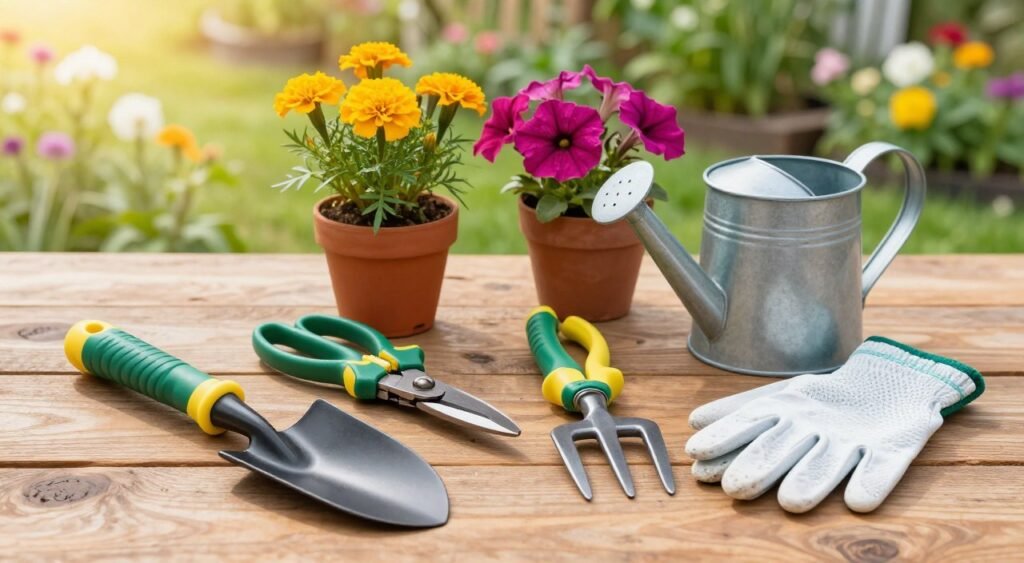
Getting the right essential gardening tools is key to a great garden. The right tools make every job easier and less hard on your body. Good tools feel like an extra hand, helping you care for your plants better.
Must-Have Hand Tools for Planting and Maintenance
A strong trowel is very important. You’ll use it to dig holes, move plants, and pull weeds. Choose one that feels good in your hand to avoid getting tired.
Bypass pruners are a must for keeping your garden tidy. They cut like scissors, making clean cuts that heal fast. Keeping them sharp helps your plants stay healthy.
«To plant a garden is to believe in tomorrow.»
Choosing the Right Watering Equipment
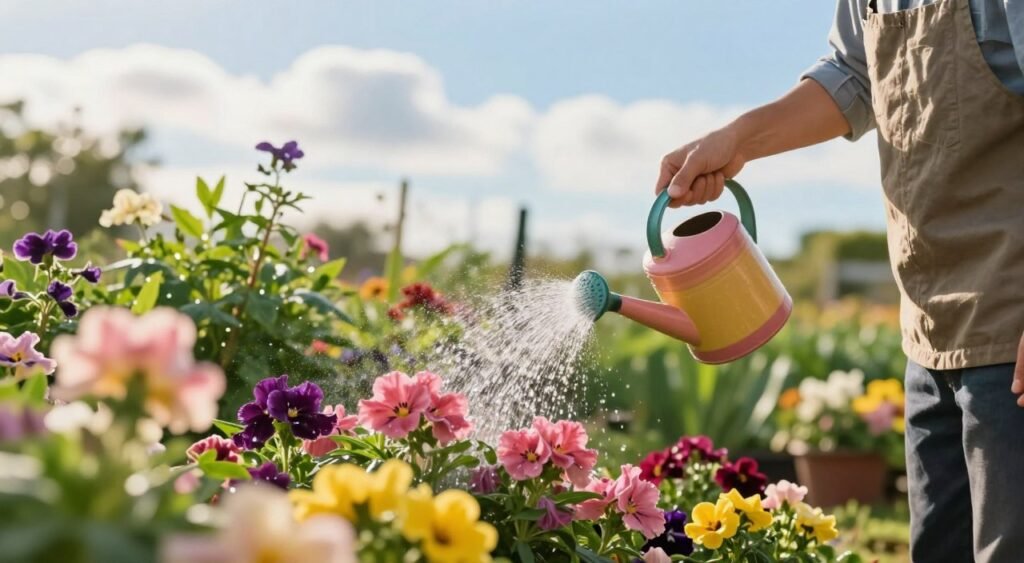
Water is life for your plants. So, picking the right watering tools is crucial. A good hose is great for big areas. For tiny plants, a watering can with a special nozzle is perfect.
When picking essential gardening tools, think about what you need. Here’s a quick guide to help you choose:
| Tool Type | Primary Use | Key Benefit |
|---|---|---|
| Hand Trowel | Digging and Planting | Precision work |
| Bypass Pruners | Trimming Stems | Clean, healthy cuts |
| Watering Can | Targeted Hydration | Gentle water flow |
| Garden Hose | General Irrigation | Covers large areas |
Remember, taking care of your tools is as important as buying them. Clean them after each use and keep them dry to avoid rust. By doing this, your essential gardening tools will last for many seasons.
The Beginner Guide to Growing Flowering Plants Successfully
Turning a patch of dirt into a colorful display starts with planting right. Learning how to grow flowers ensures each seedling gets the space and nutrients it needs. This beginner guide to growing flowering plants teaches you how to avoid overcrowding and ensure healthy air.
Step-by-Step Planting Techniques for Seeds
Starting with seeds is a cheap way to fill your garden. First, check the seed packet for the right planting depth. Always space your seeds as the packet says to give each plant room to grow.
After planting, cover the seeds lightly with soil and pat it down gently. Keep the soil moist with a spray bottle. Patience is key as different seeds take different times to sprout.
«To plant a garden is to believe in tomorrow.»
Transplanting Nursery-Grown Flowers into Your Garden
Transplanting nursery-grown flowers gives you instant results. Before digging, place the plants around the garden bed to plan the layout. This helps you adjust the spacing before digging.
When ready, dig a hole twice as wide as the pot but not deeper than the roots. Loosen tight roots, then place the plant in the hole. Fill the gaps with soil and press down to remove air pockets. This ensures your plants grow well in their new home.
| Feature | Seed Planting | Nursery Transplant |
|---|---|---|
| Cost | Very Low | Moderate |
| Growth Speed | Slow | Fast |
| Effort Level | High | Low |
| Success Rate | Variable | High |
By following this beginner guide to growing flowering plants, you avoid common mistakes. A strong start leads to a season of beautiful blooms.
Mastering the Art of Watering
Watering garden flowers is more than just a task. It’s an art. Many start with a strict schedule. But, plants need vary with weather and soil.
Learning your garden’s signs is key. This way, your flowers will bloom all season.
Determining When Your Plants Need Water
Don’t guess when to water. Use the finger test. Stick your finger into the soil, two inches deep. If it’s dry, it’s time to water.
If it’s damp or cool, wait a day. This method helps avoid preventing root rot.
Remember these tips for success:
- Check soil moisture in the morning to avoid losing water.
- Water at the base, not the leaves.
- Watch for wilting, a sign of thirst.
Avoiding Common Watering Mistakes That Lead to Root Rot
Too much water is as bad as too little. Roots need air, not waterlogged soil. Proper drainage stops preventing root rot.
Make your soil drain well with compost. Check containers for holes at the bottom. With these tips, watering will become easier and your flowers will thrive.
Feeding Your Flowers for Vibrant Blooms
Your flowers need more than water and sunlight for beautiful blooms. They need the right nutrients at the right time. This flower fertilizer guide will teach you about plant nutrition.
Understanding NPK Ratios in Fertilizers
Every bag of plant food has three numbers. These are the NPK ratio for plants. Nitrogen, phosphorus, and potassium are important for your garden.
Nitrogen helps leaves grow green. Phosphorus is key for strong roots and vibrant flower production. Potassium keeps plants healthy and strong against stress. Knowing these ratios helps you pick the right fertilizer for your flowers.
| Nutrient | Primary Benefit | Best For |
|---|---|---|
| Nitrogen (N) | Leafy Growth | Foliage plants |
| Phosphorus (P) | Root & Bloom | Flowering varieties |
| Potassium (K) | Overall Health | Disease resistance |
Applying Fertilizer Safely Without Burning Roots
Using too much fertilizer can harm your plants. Always follow the instructions on the fertilizer package. It’s safer to under-fertilize than to overdo it.
For best results, use liquid fertilizer on moist soil. This way, nutrients soak in evenly and don’t harm roots. Consistency is key for happy, blooming plants all season.
Managing Common Garden Pests and Diseases
A thriving flower bed often attracts more than just admiring glances from your neighbors. While you want your garden to be a sanctuary, it can also become a target for hungry insects and persistent plant diseases. By staying observant, you can protect your hard work and ensure your flowers remain vibrant throughout the season.
Identifying Early Signs of Infestation
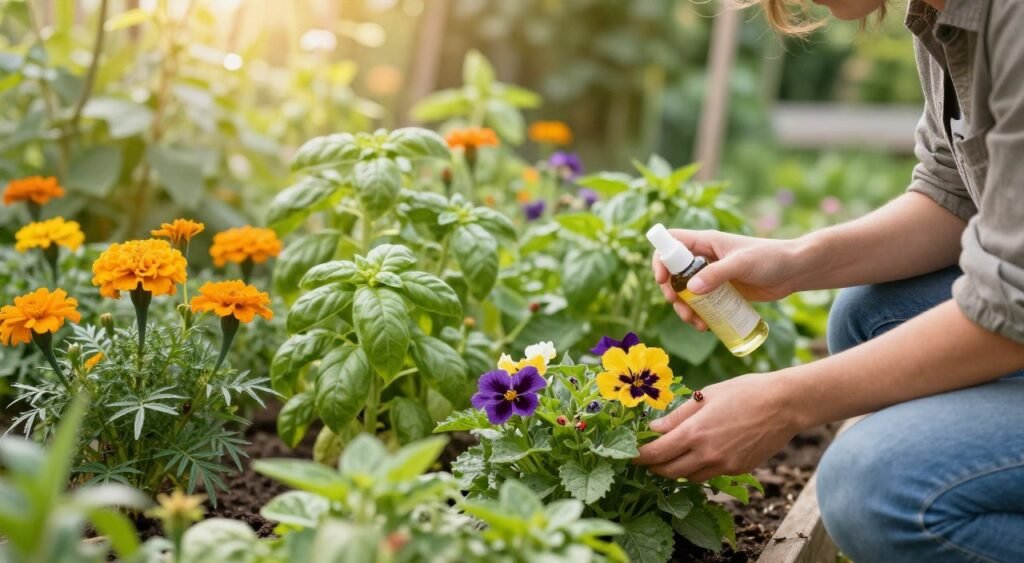
The secret to a healthy garden is catching problems before they spread. You should inspect your plants at least once a week, looking closely at both the tops and undersides of leaves. Early detection is your best defense against widespread damage.
Look for common warning signs such as irregular holes in foliage, sticky residue on stems, or yellowing spots. If you notice wilting despite regular watering, check the roots or soil for signs of fungal issues. Taking immediate action when you spot these symptoms prevents minor issues from becoming major headaches.
Natural and Chemical-Free Solutions for Pest Control
You do not need harsh chemicals to keep your garden safe. Embracing organic pest control methods allows you to maintain a balanced ecosystem where beneficial insects can thrive alongside your flowers. These natural strategies are often safer for your family, pets, and the local environment.
«The best fertilizer is the gardener’s shadow.»
Consider using neem oil for common fungal issues or introducing ladybugs to manage aphid populations. Keeping your garden clean by removing dead plant debris also reduces the hiding spots for unwanted pests. The following table provides a quick reference for managing common garden intruders using gentle, effective methods.
| Pest Type | Common Symptom | Organic Solution |
|---|---|---|
| Aphids | Curled, sticky leaves | Neem oil or water spray |
| Slugs | Large holes in leaves | Copper tape or beer traps |
| Spider Mites | Fine webbing on stems | Insecticidal soap |
| Powdery Mildew | White dusty spots | Baking soda solution |
By consistently applying these organic pest control techniques, you create a resilient landscape. Your commitment to natural care will reward you with healthier, more beautiful blooms year after year.
Pruning and Deadheading for Continuous Color
Make your garden bloom all season with two key steps. Spend a few minutes each week to keep your plants vigorous and visually appealing.
Why Deadheading Encourages New Growth
Deadheading flowers tells your plants to bloom more. They stop growing once they make seeds.
By cutting off spent blooms, you save energy. Your plants then make fresh buds. This means more blooms for you to see.
Proper Pruning Techniques for Healthier Plants
Pruning flowering shrubs is key for gardeners. It keeps plants looking good and removes bad wood.
Use sharp, clean tools for cuts. A clean cut heals fast. This stops bad stuff from getting in your plants. Cut at an angle above a leaf node for healthy growth.
Regular care keeps your garden healthy and full of blooms. These easy steps will make a big difference in your garden’s look and life.
Creating Seasonal Interest in Your Landscape
You can make your outdoor space amazing with seasonal garden planning. A good landscape looks great all season, not just for a few weeks. By picking the right plants, your yard will be colorful and welcoming all year.
Planning for Spring, Summer, and Fall Blooms
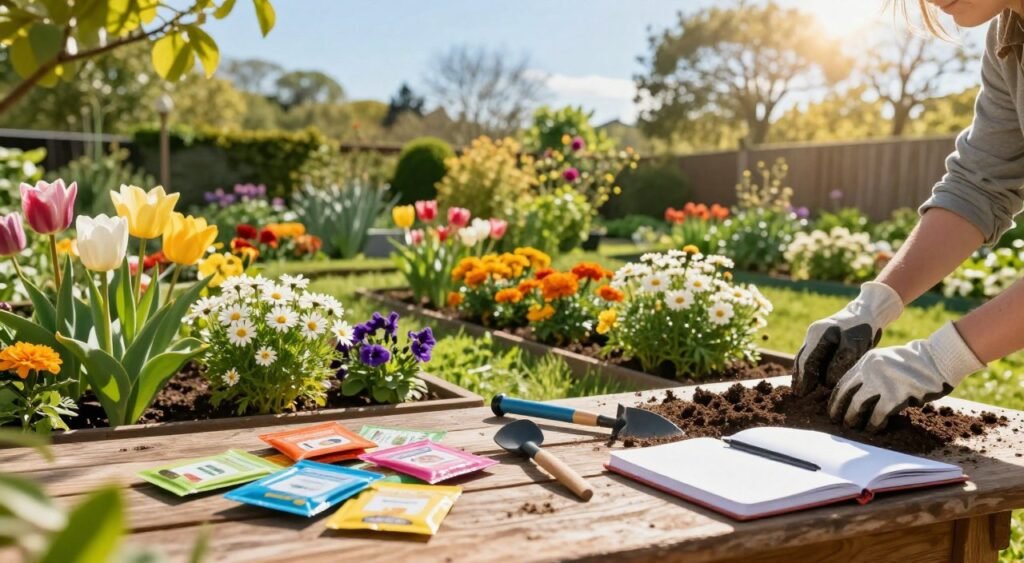
Choose plants that bloom at different times for a long-lasting display. Start with early bloomers like tulips or daffodils in spring. Then, switch to summer favorites like coneflowers or black-eyed Susans.
Don’t forget plants that bloom late, like asters or sedum, for fall. This strategic approach keeps your garden colorful and lively all season. Planning your planting schedule makes your garden feel fresh and alive.
Layering Plants for Visual Depth and Texture
Layering plants adds a professional touch. Put tall shrubs or grasses in the back. Use medium-sized perennials in the middle, and low-growing plants at the front.
This layering creates visual depth that makes your garden interesting. Mixing different textures, like feathery ferns with broad-leafed hostas, adds beauty. Good seasonal garden planning makes your space feel lush and full.
| Season | Primary Bloomers | Foliage Highlight |
|---|---|---|
| Spring | Tulips, Pansies | Fresh Green Ferns |
| Summer | Daylilies, Zinnias | Variegated Hostas |
| Fall | Asters, Chrysanthemums | Deep Purple Sedum |
Troubleshooting Common Growing Challenges
When your plants look unhappy, it’s time to solve the mystery. Even experienced gardeners face problems. But knowing how to fix them makes you a pro.
Diagnosing Yellowing Leaves and Wilting
Yellow leaves mean your plant is not getting the nutrients it needs. If the veins are still green, your soil might be missing iron or magnesium. Always check your soil drainage first, because wet roots can’t absorb nutrients.
Wilting plants often need less water, not more. Overwatering can cause root rot. If the soil feels wet, wait before watering and make sure containers drain well.
Adjusting Care Based on Environmental Stress
Plants show stress through signs like scorched or brittle leaves. Too much sun can be a problem. Moving your plant a few feet can help.
Watching how plants react to temperature changes is key. In hot weather, add shade or mulch to keep roots cool. Use this guide to fix common problems fast.
| Symptom | Likely Cause | Recommended Action |
|---|---|---|
| Yellowing Leaves | Nutrient Deficiency | Apply balanced fertilizer |
| Drooping/Wilting | Improper Watering | Check soil moisture levels |
| Brown Leaf Edges | Low Humidity/Heat | Increase shade or misting |
| Stunted Growth | Poor Soil Quality | Amend with organic compost |
Being careful and quick can fix most plant problems. Remember, regular care stops these issues before they start.
Conclusion
Growing flowers makes your outdoor space colorful and lively. You now know how to take care of your garden well.
Every garden is a special learning journey. Be patient as your garden grows into something beautiful. Your hard work makes a garden that shows who you are.
Brands like Burpee and Miracle-Gro help a lot. They give you tools to get better at gardening as your plants grow.
Share your garden with others to get new ideas. Your love for nature grows with each new flower. Enjoy the calm of your garden.