
Ever wanted to make your small porch or balcony look like a lush oasis? You don’t need a big backyard to enjoy growing plants. This hobby is easy and lets you add beauty to any space with little effort.
Starting your own container garden is easy to brighten your home. It’s perfect for beginners or anyone wanting to add color. By picking the right flower types, you can make a beautiful display that lasts all season. Let’s go through the steps to help you start your own garden today.
Getting Started with Container Flower Gardening for Beginners
If you dream of a lush garden but don’t have a big backyard, container flower gardening for beginners is perfect. You can grow beautiful flowers on a porch, patio, or even a small windowsill. Starting small helps you grow a thriving display without the stress of a big garden.
Understanding the Benefits of Potted Plants
One big plus is portability. You can move your pots to get the best weather or to make your home look better. This makes it a top container gardening tip for renters or those with small outdoor spaces.
You also get to pick the soil. Unlike regular gardens, you can choose the best potting mix for your flowers. Learning these container gardening basics helps your plants grow well all season.
Assessing Your Available Space and Sunlight
Before buying soil, check your space. Look for balcony gardening ideas to use your vertical space well, like hanging baskets. Measure your area to know how many pots you can handle.
It’s also key to know your container gardening sunlight. Most flowers need at least six hours of direct light. Watch your space at different times to make sure it’s right for your flowers.
Selecting the Right Containers for Your Blooms
Choosing the right pot is important for your plants’ health. When picking flower pots, think about how they handle water and heat. Your pot is your plant’s home, and its quality affects how long they live.
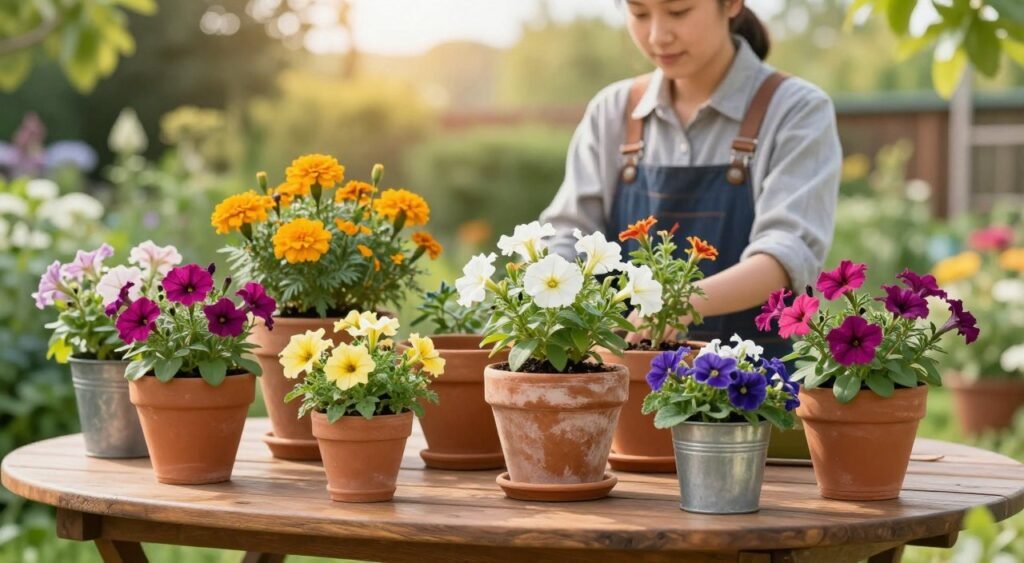
Material Options: Plastic, Terra Cotta, and Ceramic
Each material has its own good points for balcony gardening ideas. Plastic pots are light, cheap, and keep water well. But, they can break down in strong sunlight.
Terra cotta pots let roots breathe and prevent wet soil. But, they dry out fast, so you need to water them often. Ceramic pots are sturdy and look nice, but they can crack in cold weather.
«The container is the silent partner in every successful garden, providing the structure that allows nature to flourish.»
The Importance of Proper Drainage Holes
Drainage holes are key, no matter the pot material. Without them, water can cause roots to rot and kill the plant. Make sure your pot has holes for water to drain.
If a pot doesn’t have holes, you can drill them yourself. Good flower pot drainage keeps soil healthy and your plants happy. Focus on these details for a beautiful garden.
Choosing the Best Potting Mix and Fertilizers
Choosing the right foundation for your flowers is key to a great display. Learning container gardening basics shows that the potting mix is as important as the plant. Good potting soil for containers lets your flowers grow well.
Why Garden Soil Is Not Suitable for Containers
Don’t use dirt from your backyard. Garden soil is too dense for pots. It lacks air for roots and can cause root rot.
Garden soil also has pests, weed seeds, and diseases. These can harm your plants in a small pot. Use potting mix ingredients like peat moss and perlite. They make the soil light and keep it moist but drain excess water well.
Selecting Slow-Release vs. Liquid Fertilizers
After planting, fertilizing potted flowers is next. Containers lose nutrients fast. You need to add more to keep your flowers bright.
Think about your lifestyle when picking flower pots and fertilizers. Slow-release granules are great for busy people. They feed plants slowly over months. Liquid fertilizers give a quick boost, perfect for plants that grow fast.
| Fertilizer Type | Application Frequency | Best Use Case |
|---|---|---|
| Slow-Release | Every 3 to 6 months | Low-maintenance displays |
| Liquid Feed | Every 1 to 2 weeks | Rapidly growing annuals |
| Water-Soluble | During every watering | High-bloom intensity pots |
Picking Flowers That Thrive in Pots
Choosing the best flowers for pots is a mix of what you like and what plants need. Pick plants that fit your space well. This way, your plants will look great and stay healthy all season. Success starts with understanding what your plants need to flourish in a confined space.
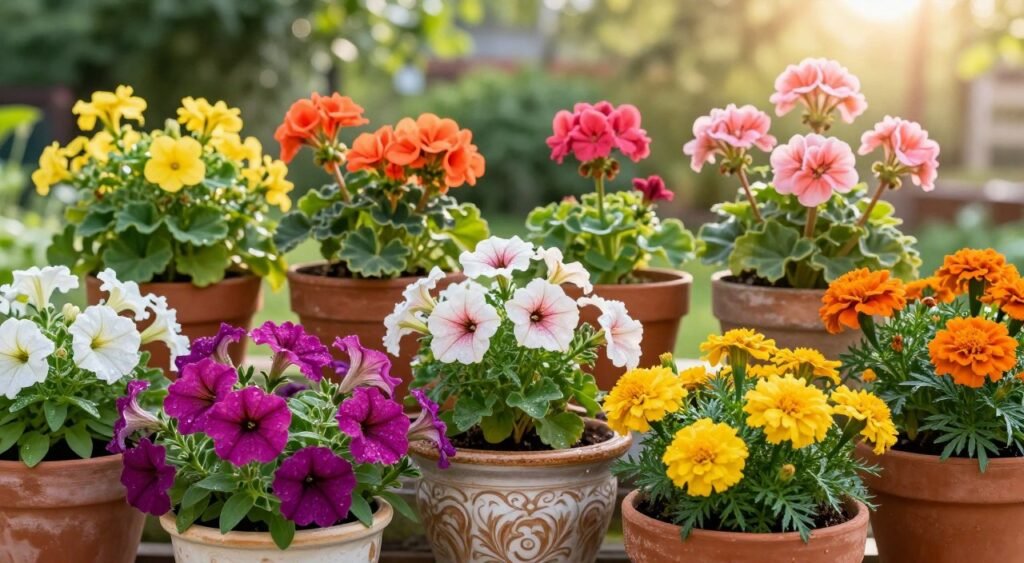
Annuals vs. Perennials for Container Displays
Knowing the difference between annuals vs perennials is key. Annuals grow, bloom, and die in one season. They give a lot of color and are great for changing your garden often.
Perennials come back year after year. They bloom for a shorter time but are worth it for their long-term beauty. Mixing both in one pot can be a good idea.
| Plant Type | Bloom Duration | Longevity | Best Use |
|---|---|---|---|
| Annuals | Continuous | One Season | Instant Color |
| Perennials | Seasonal | Multiple Years | Structural Base |
| Tropicals | Long-lasting | Tender/Perennial | Exotic Accents |
Matching Plant Needs to Your Local Climate
Before buying plants, know your local climate. Container gardening sunlight needs change a lot. Watch your spot to see how much sun it gets.
Some plants love the sun, while others need shade. Always check the plant tags for light and temperature needs. This way, your plants will do well in your area.
Step One: Preparing Your Containers for Planting
A good container garden starts with clean pots. Make sure your pots are free from dirt and bad stuff. These steps will greatly improve the health of your plants.
Cleaning and Sanitizing Used Pots
Old pots might have pests or fungus. First, clean them with a stiff brush and warm, soapy water. This gets rid of old dirt and salt.
For a deeper clean, soak them in a bleach solution. Always rinse them well after. When they’re dry, they’re ready for new plants.
Adding Drainage Layers and Potting Medium
Good flower pot drainage stops root rot. If your pot doesn’t have holes, drill some. Use mesh or a coffee filter to keep soil in.
Choose good potting mix ingredients for air and water. Don’t use heavy garden soil. Fill your pot almost to the top, leaving room for water.
Step Two: Planting Your Flowers Like a Pro
Turning a simple pot into a stunning display takes some planning. Learning how to plant flowers in pots well lets you make beautiful arrangements. These arrangements will look great all season.
By using a container garden design, your hard work will pay off. You’ll get a lush, healthy display.
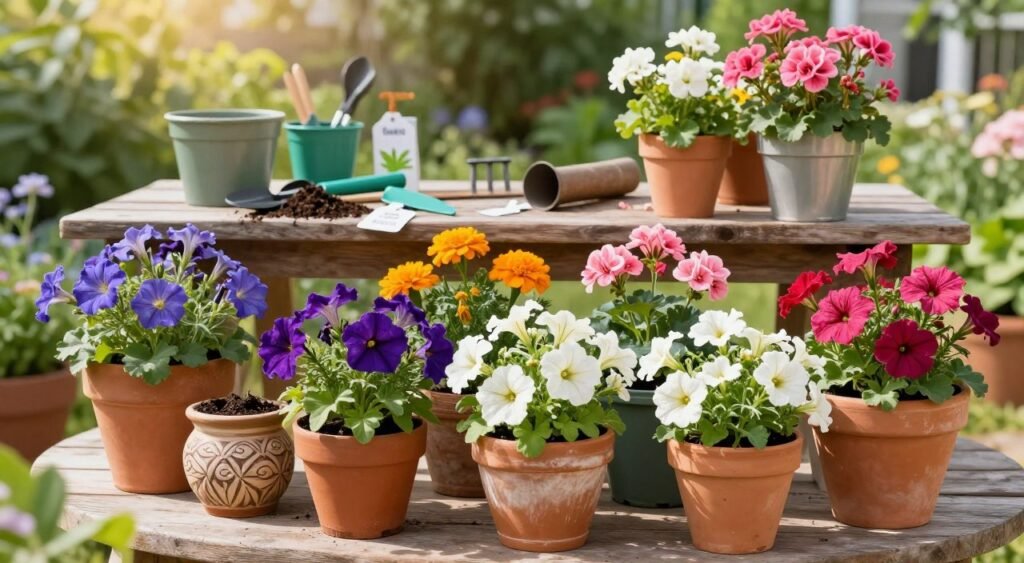
The Thriller, Filler, and Spiller Design Technique
The «thriller, filler, and spiller» method is the best for a balanced look. Start with a «thriller,» a tall plant that grabs attention. Then, add «filler» plants around it for volume and color.
Lastly, put «spiller» plants near the edge. They will cascade over the sides beautifully. This three-dimensional approach makes your display look professional and inviting.
As a wise gardener once said:
«A well-designed container is like a living sculpture; it needs height, body, and movement to truly come alive.»
Spacing Plants for Optimal Growth
When picking best flowers for pots, think about their size when they’re fully grown. Knowing the difference between annuals vs perennials helps. Some plants grow faster than others.
Don’t pack your pots too tight. It can cause plants to fight for space, water, and sunlight. Instead, give each plant enough room to grow well.
This way, your display will stay vibrant all summer. Healthy growth needs space for roots and leaves to breathe.
Step Three: Mastering Watering Techniques
Containers dry out fast, so watering is key. You might know how to plant flowers in pots right. But keeping them alive needs a steady water supply. Proper moisture management keeps your flowers bright all summer.
How to Check Soil Moisture Levels
Don’t water by schedule alone. Weather changes every day. Use the finger test by sticking your finger into the soil about two inches deep. If it’s dry, it’s time to water well.
For exactness, a moisture meter is great. It shows soil dampness quickly. This way, you water based on real needs, not guesses.
Avoiding Common Overwatering Mistakes
Too much water harms plants, causing root rot. Make sure your pots have holes for water to drain. Standing water kills roots.
Also, plant spacing in pots matters. Close plants need more water. Adjust your watering based on wind, temperature, and plant type to keep your garden alive.
Step Four: Essential Maintenance and Deadheading
Take care of your plants to keep them healthy and growing. Container gardening maintenance is key to beautiful potted flowers all year. Spend a few minutes each week on container plant care to make your garden look amazing.
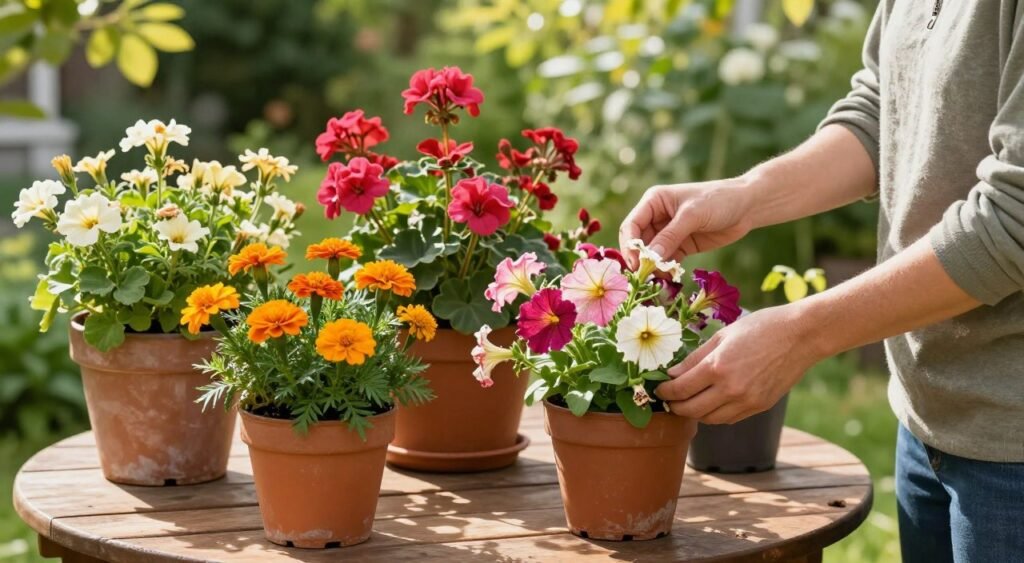
The Benefits of Regular Deadheading
Deadheading flowers helps your garden grow strong. It means taking off old or wilted blooms before they make seeds. This stops the plant from wasting energy on seeds.
By removing old flowers, the plant focuses on making new buds and leaves. You’ll see more flowers all season. Here’s how to do it right:
- Find flowers that are turning brown or wilted.
- Use clean garden shears or your fingers to pinch the stem just below the flower head.
- Make sure to take off the whole bloom, including where seeds grow.
Pruning for Bushier and Healthier Growth
Pruning is also important for your plants. It helps them grow fuller and healthier. If your flowers look leggy or sparse, a trim can help.
Pruning makes plants grow outwards, not just up. This creates a fuller plant with more leaves and flowers. Don’t forget to fertilizing potted flowers often. They need nutrients to grow new stems.
«Regular pruning is not just about looks; it makes plants stronger and more able to handle stress.»
By doing these maintenance tasks, your containers will stay bright and full. Your hard work will make your garden beautiful for months.
Troubleshooting Common Pests and Diseases
Keeping your garden bright means watching out for problems. Regular container gardening maintenance helps you catch issues early. Good container plant care keeps pests away.
Identifying Aphids and Spider Mites
Aphids are tiny bugs that stick together on leaves or near buds. They make plants look weak and leave a sticky stuff called honeydew. Catching them early is key to stopping them.
Spider mites are tiny and hard to see. They leave fine webs or yellow spots on leaves. If you find them, keep the plant away from others to stop the problem.
Natural Remedies for Fungal Issues
Fungal problems show up as white spots or dark patches on leaves. They like damp, still air. Better air and less water can help.
Try a mix of baking soda, water, and dish soap for a green fix. Spray it on the spots to fight fungi. Also, deadheading flowers often keeps pests and spores away.
Staying alert is key to a great garden. Regular checks keep your flowers looking good all season. A bit of care keeps your garden happy and healthy.
Conclusion
Your journey to a vibrant garden starts with the right basics. Choose good pots and soil rich in nutrients. These steps help your plants grow well all season.
Learning to water your plants right keeps them cool in summer. You know how to keep them moist but not too wet. This care is key to your garden’s success.
Creating a unique garden design lets you show off your style. Try new textures and colors to keep things interesting. You can change your garden with the seasons.
Keeping pests away from your flowers is important. Regular checks keep your garden looking great. Now, you can enjoy a beautiful garden every day.