
Make your yard a lush paradise easily. Use vertical space to turn a simple fence into a colorful wall. This makes your home look better right away.
Many people forget about the vertical part of their garden. But, beautiful climbing plants for outdoor spaces can change that. They add texture, color, and height to your yard.
These plants act as natural screens. They soften hard edges and create a green backdrop for your favorite spots.
Whether you’re new to gardening or have lots of experience, this guide helps you. You’ll learn how to pick the best plants for your area. Get ready to make your yard look amazing with these stunning natural accents.
Assessing Your Garden Space and Structure
Before picking the best climbing plants for fences, check your garden’s details. Look at your yard to make sure your plants will grow well. Proper preparation is key for a healthy garden.
Evaluating Sunlight Exposure
Sunlight is vital for your vines. Watch how much direct light your fence gets each day. Most vines need at least six hours of sun for bright flowers.
If your fence is shady, pick plants that like shade. But, if it’s sunny, choose plants that don’t need much water. It’s important to match your plants with the right amount of light.
Checking Soil Quality and Drainage
Good roots need rich soil that drains well. Dig a small hole to see if water stays or goes away fast. If your soil is heavy clay, add organic matter to help it breathe.
Bad drainage can cause root rot, which is deadly for vines. Make sure your soil drains well to keep your plants healthy. This is crucial for your garden’s success.
Selecting the Right Support Structure
Not all fences can hold heavy vines. Check if your fence is strong enough for your plants. Some vines, like wisteria, are very heavy and need strong supports.
Think about your fence’s material when planning. Wood is good for vines, but metal or vinyl might need extra support. The right support keeps your best climbing plants for fences safe in the wind.
| Plant Type | Sun Requirement | Soil Preference | Support Strength |
|---|---|---|---|
| Clematis | Full Sun | Moist, Well-Drained | Moderate |
| Wisteria | Full Sun | Rich, Loamy | Very High |
| Ivy | Partial Shade | Versatile | Low |
| Morning Glory | Full Sun | Average | Light |
Top Climbing Flowers for Fences and Trellises
You can make your garden look better by picking the best climbing flowers for fences and trellises. It’s important to choose plants that grow well and look good all season. Knowing how different plants grow helps you make a beautiful vertical garden.
Perennial Vines for Long-Term Coverage
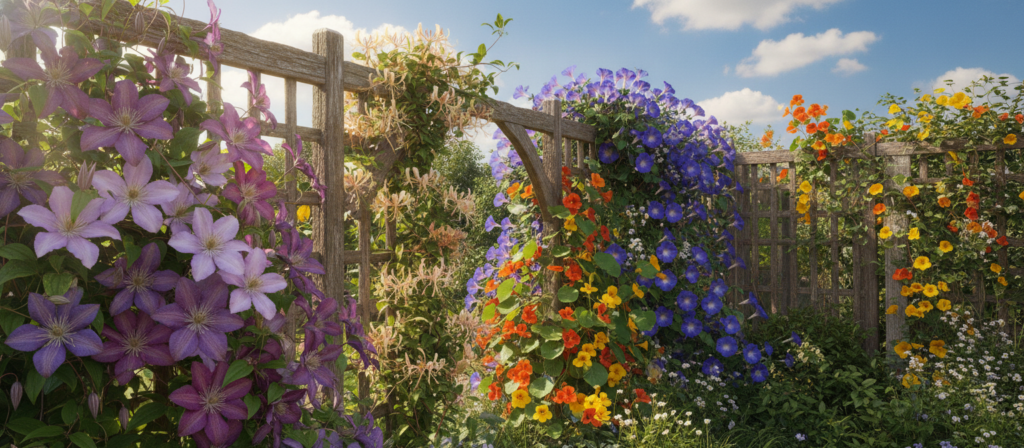
Perennial vines for fences are great for a lasting garden. They come back every year and grow strong roots. They are the best climbing plants for fences because they add structure and privacy.
- Clematis: Known for its spectacular, large blooms and wide variety of colors.
- Wisteria: A vigorous grower that produces stunning, fragrant hanging flower clusters.
- Honeysuckle: A hardy option that attracts pollinators and offers a sweet, pleasant scent.
Annual Flowering Vines for Seasonal Color
Fast growing climbing flowers add color quickly in summer. These colorful vine plants for trellises are great for changing up your garden’s look. They grow fast from seed, making your space look new in weeks.
| Variety | Growth Speed | Best Use |
|---|---|---|
| Morning Glory | Very Fast | Flowering vines for vertical gardens |
| Sweet Peas | Moderate | Fragrant privacy screens |
| Hyacinth Bean | Fast | Decorative foliage and pods |
Choosing the right combination of plants gives you both lasting beauty and new colors. Your vertical garden will be a vibrant focal point in your yard.
Preparing the Soil for Optimal Growth
Healthy soil is key for your vertical garden. It gives plants the nutrients they need to grow tall. Proper preparation helps roots grow strong before they start climbing.
Testing and Amending Your Soil
First, test your soil pH. Most climbing flowers like a pH between 6.0 and 7.0. You can buy a simple test kit at a garden center.
After testing, adjust the soil if needed. Add lime for acidic soil or sulfur or peat moss for alkaline soil. This makes the soil favorable for your vines.
Clearing Weeds and Debris
Remove weeds and debris before planting. Weeds compete with your plants for water and nutrients. This lets your plants grow better.
«To plant a garden is to believe in tomorrow, but to prepare the soil is to ensure that tomorrow actually blooms.»
Rake the area well to remove rocks and sticks. A clean garden bed helps plants stay healthy. It’s not just about looks; it’s crucial for plant health.
Adding Organic Matter
Adding organic matter improves soil. Compost, aged manure, or leaf mold help sandy soil hold moisture. They also help clay soils drain better. This makes the soil rich in nutrients for your plants.
| Amendment Type | Primary Benefit | Best Use Case |
|---|---|---|
| Compost | Nutrient boost | All soil types |
| Peat Moss | pH reduction | Alkaline soil |
| Garden Lime | pH increase | Acidic soil |
| Perlite | Improved drainage | Heavy clay soil |
Mix these materials into the top six to eight inches of soil. This creates a nutrient-dense zone for roots. It helps your vines grow strong and healthy.
Planting Your Climbing Flowers
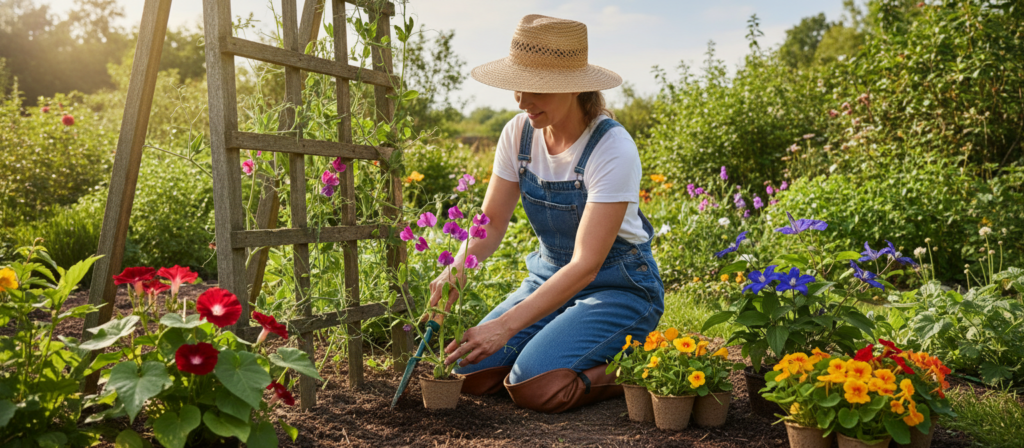
Planting your climbing flowers right is key to a beautiful display. Timing and where you place them are important. This helps them grow strong and healthy.
Determining the Best Planting Time
The best time to plant depends on your area and the vine type. In most of the US, spring is best after frost danger passes. This lets roots grow before summer heat.
In warmer places, fall planting works too. It lets roots grow strong in cooler months. Make sure your plant has time to grow before bad weather comes.
Spacing Requirements for Healthy Airflow
Spacing is key to stop diseases and help plants get nutrients. Too close and moisture stays, causing mildew. Here’s how to space right:
- Small vines: Keep them 18 to 24 inches apart for growth.
- Vigorous climbers: Give 3 to 5 feet space for big leaves.
- Air circulation: Make sure air can move between plant and fence.
Techniques for Proper Root Placement
When planting, dig a hole twice as wide as the root ball. Loosen roots if they’re tight. This helps them spread.
Put the plant 6 to 12 inches from the support. This keeps roots from fighting for water. Fill the hole with soil and organic matter, then water well.
Guide the stems to the trellis to start climbing. This helps them know where to go.
Training Vines to Climb Effectively
Vines need a gentle hand to grow just right. They want to reach up, but sometimes they need help. The right support helps them grow up without hurting their stems.
Using Ties and Supports
Choosing the right materials is key when training plants. Use soft, flexible materials that won’t hurt the stems. Garden twine, velcro, or soft ties are great for holding vines to trellises or fences.
- Avoid using thin wire, which can slice through tender new growth.
- Check your ties periodically to ensure they are not becoming too tight.
- Use loose loops to allow for natural stem thickening over time.
Guiding Growth Patterns
Helping your plants grow in the right direction is easy. For fast growing climbing flowers, check the stems often. Guide the tips through your trellis or fence to help them spread.
If a vine goes off course, gently steer it back. This keeps your garden looking neat. With a little care, your fast growing climbing flowers will create a beautiful screen.
Managing Tendrils and Twining Stems
Each plant has its own way of climbing. Knowing how your plant climbs makes supporting it easier. Observing how your specific variety climbs helps you support it best.
Most climbing plants fall into one of these categories:
- Twining stems: These plants wrap their entire main stem around a support, so they require thin, vertical poles or wires.
- Tendrils: These thin, curly appendages reach out to grab onto mesh or thin lattice, making them perfect for wire fencing.
- Adhesive pads: Some varieties use small suction-like discs to cling directly to flat surfaces, requiring little to no extra guidance.
Watering and Fertilizing Strategies
You can make your garden lush by improving how you water and fertilize. Keeping a regular care plan is key to a thriving vertical garden. With the right care, your easy-care vine plants will grow strong and look beautiful.
Establishing a Consistent Watering Schedule
It’s important to keep your climbing vines moist but not too wet. Too much water can harm the roots. Check the soil moisture daily by feeling it with your finger. If it’s dry, it’s time to water.
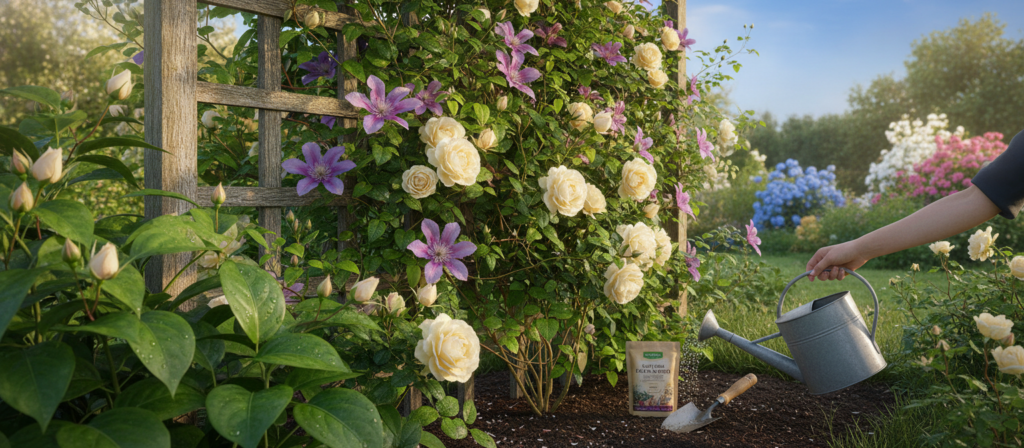
In summer, your easy-care vine plants might need more water to stay cool. Water at the base of the plant to help the roots. This also keeps the leaves dry, which helps avoid diseases.
Choosing the Right Fertilizer for Blooms
Choosing the right fertilizer is key for lots of flowers. Look for a fertilizer that’s high in phosphorus for vibrant flower production. A slow-release granular fertilizer in spring gives nutrients for months.
Avoiding Common Nutrient Deficiencies
Knowing how to spot nutrient deficiencies is important. Yellow leaves or slow growth mean your plants need more nutrients. Organic compost or a liquid feed can fix these problems quickly.
Watching your garden closely is the best way to keep it looking great. If problems persist, test your soil. This helps your vertical garden stay a highlight in your yard.
Pruning and Maintenance for Vertical Gardens
Proper pruning is key to your flowering vines for vertical gardens success. Regular care keeps your garden looking neat. It also helps plants focus on growing flowers, not leaves.
When to Prune for Maximum Flowering
Timing is crucial for your plants. Most plants do well with a light trim after they finish blooming.
Pruning too soon can harm new buds. Always research your specific species. This tells you when to prune for the best blooms.
Removing Dead or Diseased Growth
Regular checks are important for your flowering vines for vertical gardens. Remove any brown, brittle, or spotted stems right away.
This stops diseases from spreading. A clean garden lets air flow better, reducing fungal infections.
Managing Invasive Growth Habits
Some climbers grow too fast if not controlled. Keep stems on your trellis or fence by trimming them.
Use sharp, sterilized shears for clean cuts. Small trims often are better than trying to fix a big mess later.
Managing Pests and Common Diseases
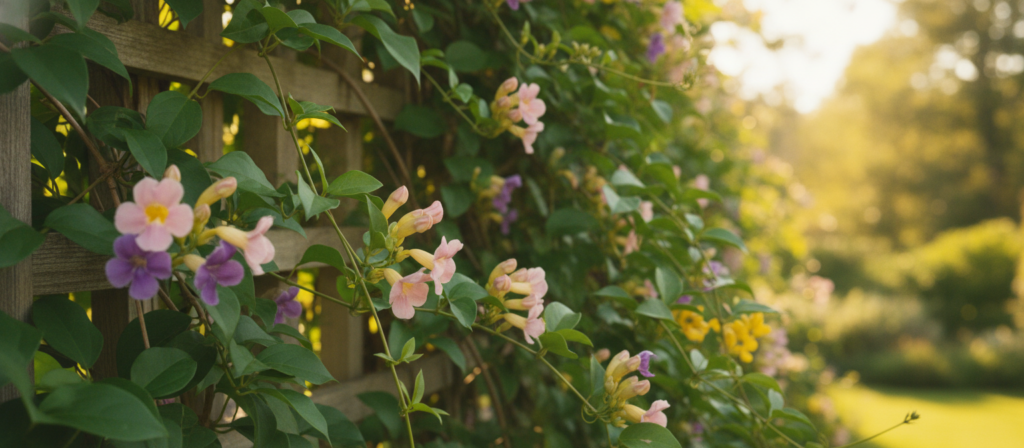
To keep your vertical garden healthy, you must watch for pests and diseases. Even easy-care vine plants can get sick if you don’t act fast. Check your garden often to keep it looking great all season.
Identifying Common Garden Pests
Look at the undersides of leaves and new growth weekly. Aphids and spider mites hide there and can harm your plants. Watch for sticky spots, yellow leaves, or webs to spot pests early.
Spotting pests early helps you fight them off. If leaves curl or plants grow slow, act fast. This stops pests from taking over your garden.
Natural Remedies for Disease Prevention
Preventing disease is better than treating it. Keep plants apart to help air circulate and prevent mold. Also, clean up leaves and debris from your plants often.
Healthy soil and enough water help plants fight off diseases. Simple cultural practices like watering at the base help too. This keeps plants strong against sickness.
When to Use Organic Treatments
Even with care, pests or diseases can come back. At this point, organic treatments are key. Use neem oil or insecticidal soaps to fight pests without harming bees or ladybugs.
Apply these treatments when it’s cooler to avoid burning leaves. Always follow the directions to use the right amount. This keeps your garden healthy and green.
Creating Privacy Screens with Flowering Vines
Creating a living wall of flowers is a great way to add beauty and privacy to your yard. Many gardeners use vertical plantings to block out street traffic or neighbors. By picking the right climbing flowers for privacy screens, you can make your yard a quiet, private place.
Choosing Dense Foliage Varieties
To get a solid wall of green, choose plants with thick leaves. English Ivy or some Honeysuckle types grow fast and stay dense. These colorful vine plants for trellises act like a curtain, blocking views and adding color.
Look for plants with lots of leaves, not thin stems. A thick base keeps your screen solid, even when plants are growing fast. Picking the right beautiful climbing plants for outdoor spaces is key to a private garden.
Layering Plants for Full Coverage
For a lush look, use more than one vine type. Mix fast-growing annuals with sturdy perennials for quick and lasting coverage. This way, your screen stays full and interesting.
This method stops the «see-through» problem of single-species screens. By mixing plants with different bloom times, your screen stays lively all year. Strategic placement of these plants creates a dense, living wall that blocks views.
Maintaining Privacy Throughout the Seasons
Keep your screen effective by pruning vines regularly. This encourages them to spread out and fill gaps. Pruning keeps your climbing flowers for privacy screens healthy and full.
Here’s a table to help pick the best plants for your privacy needs:
| Plant Variety | Growth Speed | Privacy Level | Bloom Season |
|---|---|---|---|
| Star Jasmine | Moderate | High | Spring/Summer |
| Clematis | Fast | Medium | Summer |
| English Ivy | Very Fast | Very High | N/A (Foliage) |
| Trumpet Vine | Fast | High | Summer/Fall |
By following these tips, your beautiful climbing plants for outdoor spaces will keep your yard private. Proper care, like fertilizing and watering, will help them thrive for years.
Conclusion
Turning your fences and trellises into vibrant vertical gardens makes a big difference. It adds beauty and increases your home’s value.
You know how to pick the right plants and care for them. This keeps your garden looking great all year.
Success in gardening comes from planning and hard work. Taking care of your soil and training plants will make your garden amazing.
Start your garden today. Share your journey with gardening friends or post pictures online. Your garden is waiting for your touch.