
Creating a balanced landscape is all about mixing soft textures and bright colors. By picking the right friends for your ornamental grasses, you can make your outdoor area look amazing. It will stay beautiful all year round.
Finding the best flowers that pair well with ornamental grasses is key for a simple garden. These pairs add beauty and make your garden easy to care for.
Choosing the right plants makes your garden look great. Strategic plant pairing keeps your yard looking beautiful from spring to late autumn. Use this guide to improve your garden design and make your home look better today.
The Aesthetic Benefits of Combining Grasses and Flowers
When you mix grasses and flowers, your garden gets a new look. Learning garden design tips helps you create art in your yard. You can make your outdoor space look intentional and stylish.
Creating Visual Contrast in the Landscape
Great aesthetic garden layouts use different shapes. You can put tall grasses next to round flowers. This makes your garden look interesting and not boring.
«The garden is a mirror of the soul, reflecting the balance between the wild and the structured.»
Putting big flowers with thin grasses shows off each plant’s beauty. This makes your garden look bigger and more planned.
Enhancing Garden Movement and Sound
Adding sound to your garden is special. The wind through grasses makes a soft sound. This makes your garden feel alive and changing all day.
Using different textures makes your garden feel different with the seasons. Mixing grasses and flowers creates a peaceful yet lively place. Your yard becomes a living, breathing sanctuary.
Understanding the Growth Habits of Ornamental Grasses
To make a beautiful landscape, you need to know how ornamental grasses grow. Good ornamental grass care starts with knowing that different grasses grow at different times. By spotting these patterns early, your garden will stay lively all year.
Distinguishing Between Cool-Season and Warm-Season Grasses
Cool-season grasses start growing early in spring and do best in mild weather. They look their best in spring and fall. But, they might slow down or stop growing in the hottest summer months.
Warm-season grasses wait for the soil to warm up before they grow. They are great drought-tolerant plants that do well in the hottest summer days. Knowing this helps you pick flowers that like the same weather.
Managing Spreading Habits and Clump-Forming Varieties
Think about how your grasses spread in your garden beds. Clump-forming grasses are well-behaved and stay in one place. They are perfect for gardeners who like a neat look without a lot of work.
But, spreading grasses can grow too much and need to be kept in check. If you pick these, watch their roots closely. Choosing the right type keeps your garden balanced and healthy, where no one plant takes over.
Selecting Flowers That Pair Well with Ornamental Grasses
Adding the right flowers to your ornamental grasses makes your garden pop. It’s all about picking flowers that bloom at the same time as your grass. This way, your garden stays colorful from spring to autumn.
Choosing Perennials with Complementary Bloom Times
Perennials are the heart of your garden, offering long-term structure and beauty. When picking perennial garden ideas, choose plants that bloom at different times. For example, early-spring bulbs and mid-summer coneflowers keep your garden lively.
It’s important to pick plants that like the same weather. When choosing flowers that pair well with ornamental grasses, match their height and spread. This makes your garden look balanced and healthy.
Selecting Annuals for Instant Color Impact
Annuals add instant gratification with their bright colors. They’re great for filling gaps when your perennials are not in bloom. Adding annuals to your perennial garden ideas lets you try new colors and textures without a long-term commitment.
Annuals can also show off your grasses’ unique shapes. By picking flowers that pair well with ornamental grasses, you create a layered look. Whether you like bold zinnias or soft cosmos, they keep your garden colorful all summer.
Matching Light and Soil Requirements for Success
Creating beautiful landscape plant combinations is more than just picking colors and textures. You need to make sure all plants like the same things to grow well together.
Matching the needs of your plants means less work and fewer failures. This is the key to a garden that looks great and stays healthy all year.
Assessing Sun Exposure for Your Garden Bed
Watch how light moves in your yard for a whole day before buying plants. Many sun-loving flowers need at least six to eight hours of direct light to bloom well.
Putting these flowers near tall grasses can shade them out as the seasons change. Always check the mature height of your grasses to make sure they won’t block the light your shorter plants need.
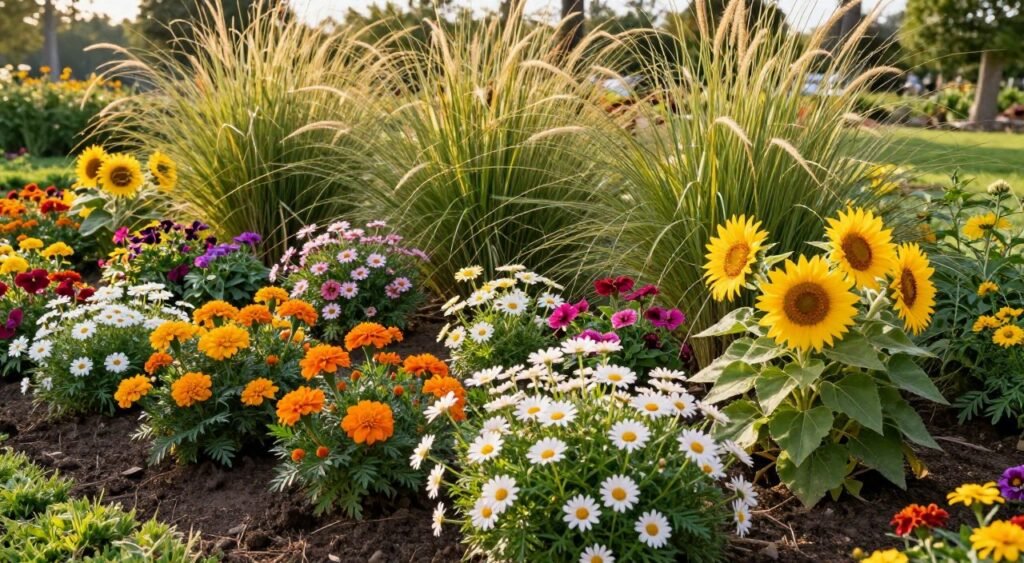
Knowing your garden’s light patterns helps you place plants where they’ll do best. Grouping plants with the same light needs creates a stable home for them to thrive.
Ensuring Proper Drainage for Diverse Plant Needs
Good soil preparation for gardens is as important as light, even when mixing different plants. Most ornamental grasses don’t like wet feet, which can be a problem in cold winter months.
Standing water can cause root rot in these grasses, ruining your garden. Test your soil by digging a small hole and filling it with water. See how fast it drains.
If water stays, you might need to add organic matter or make raised beds for better air. Healthy soil structure lets roots breathe, keeping your plants lively and strong for years.
Creating Seasonal Interest with Color Palettes
You can make your landscape look like a living painting with seasonal color palettes. A good plan makes your garden look professional all year. By using garden texture and color, your outdoor space stays interesting all year.
Designing for Spring and Summer Vibrancy
In warmer months, your garden should be full of life. Use bright flowers and fresh green grasses for a lively look. Perennial garden ideas suggest using cool grasses with early bulbs for a strong color base.
As summer goes on, add bold, warm flowers to your garden. Strategic placement of these plants makes your garden look full and planned. This keeps your garden interesting as blooms change.
Extending Interest into Autumn and Winter
Autumn is a great time to show off golden grasses. Plant late flowers in deep colors to match these warm tones. This creates a beautiful garden texture and color that feels cozy and elegant.
Don’t forget about winter in your perennial garden ideas. Choose plants that keep their shape to keep your garden looking good all winter. These plants add seasonal garden interest, making your garden beautiful even in snow.
Designing for Texture and Movement
When you mix ornamental grasses with broad-leafed flowers, you get a beautiful scene. This mix of shapes adds depth to your garden. It helps guide your eye through the landscape.
Balancing Fine-Textured Grasses with Bold Foliage
To get a balanced look, pair grasses with big, wide leaves. This mix stops your garden from looking flat. Strategic placement of big leaves grounds the grasses.
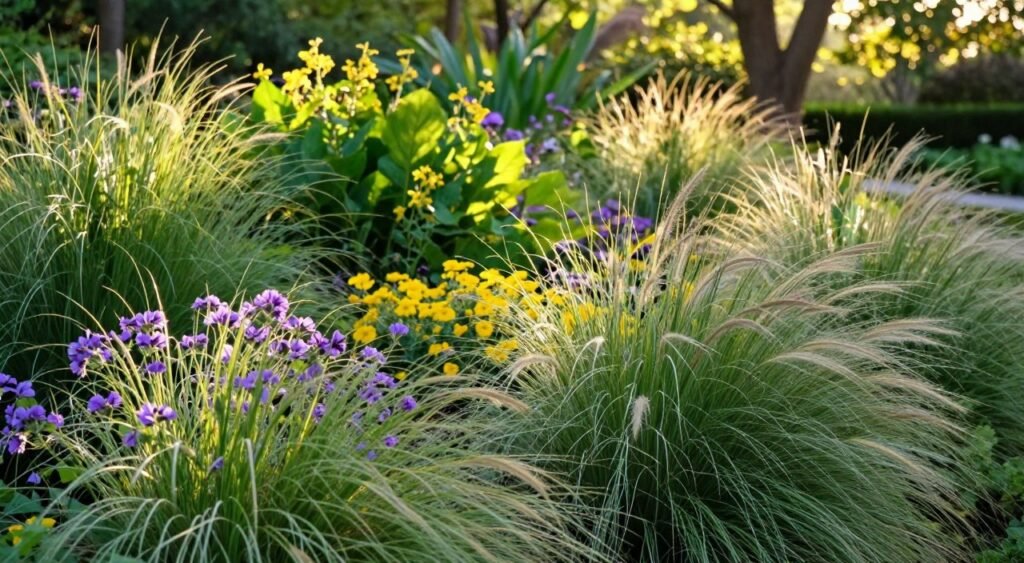
When planning your aesthetic garden layouts, think about plant sizes. A big hosta or coneflower next to a wispy grass makes a cool, layered look. This adds depth and makes your garden feel more thought-out.
Using Flowers to Soften Rigid Grass Structures
Ornamental grasses can feel too stiff. Flowers can soften these lines and add a natural feel. Flowing blooms over grasses mix structure with wild beauty.
Adding soft flowers to grass stems makes your garden feel welcoming. This is key for aesthetic garden layouts that are inviting. Learning these design tricks keeps your garden interesting all year.
Step-by-Step Guide to Planting Your Garden Bed
Follow a structured approach to make your landscape thrive. This planting guide for beginners helps your garden bed grow well. It focuses on the basics for a strong environment.
Preparing the Soil and Planning the Layout
Good soil preparation for gardens is key. Start by removing weeds and debris. Add compost or aged manure to the top six inches of soil.
Before digging, arrange plants in their containers. This helps you plan the design. Adjust spacing for each plant’s mature size. This prevents overcrowding and ensures sunlight and air for each plant.
Proper Planting Techniques for Grasses and Flowers
When planting, dig a hole twice as wide as the root ball. Make sure it’s not deeper than the container. Place the plant so the root ball is level with the soil.
Loosen circling roots to help them grow outward. Backfill with native soil and compost. Water each plant right after to settle the soil.
| Feature | Ornamental Grasses | Flowering Perennials |
|---|---|---|
| Planting Depth | Level with soil surface | Level with soil surface |
| Spacing | 18-36 inches apart | 12-24 inches apart |
| Soil Needs | Well-draining, lean soil | Rich, nutrient-dense soil |
Establishing a Watering Schedule for New Transplants
Keep the soil moist for the first season. Check the soil daily for the first two weeks. Water deeply if it’s dry.
«The secret to a thriving garden is not just what you plant, but how you nurture the roots during their first few months in the ground.»
As plants grow, water them less often. Water deeply once or twice a week. Good soil preparation for gardens and regular watering lead to success.
Maintenance Tips for Mixed Plantings
Learning to care for your garden makes it a lively place. By using garden maintenance techniques regularly, your garden stays healthy and pretty all year.
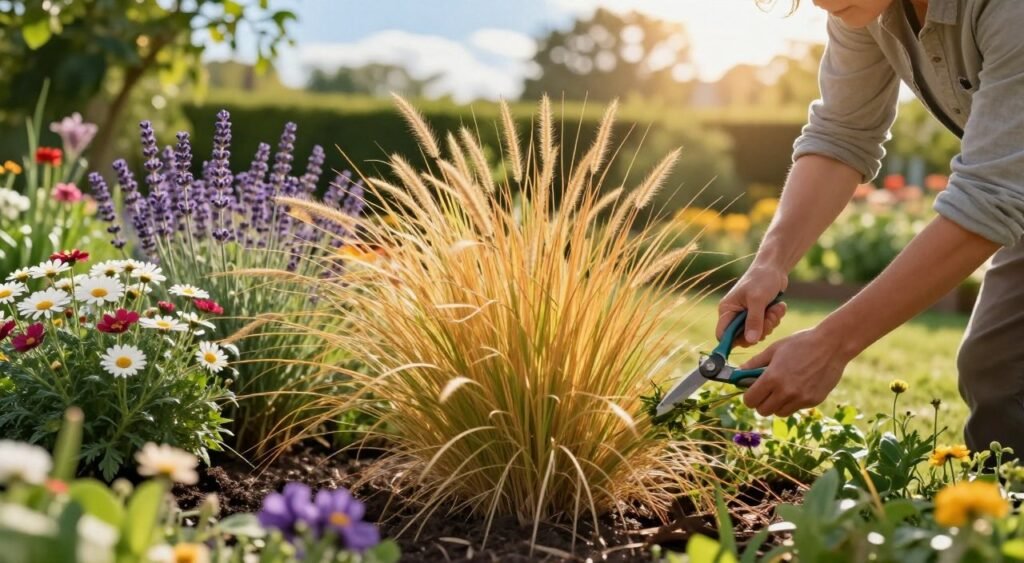
Pruning Grasses and Deadheading Flowers
Knowing when to cut back your grass is key. For most, trim down to a few inches in late winter or early spring. This keeps the center of the clump healthy.
Also, deadhead your flowers often to get more blooms. This stops the plant from making seeds and helps it grow roots instead.
Managing Competition for Nutrients and Water
Every plant needs care to grow well. Watch the soil moisture to make sure all plants get what they need.
Using drought-tolerant plants helps save water. If flowers wilt but grasses are fine, adjust your watering or add nutrients.
| Task | Frequency | Primary Benefit |
|---|---|---|
| Deadheading Flowers | Weekly | Prolongs bloom time |
| Grass Pruning | Annually | Prevents woody centers |
| Soil Fertilization | Bi-annually | Supports vigorous growth |
| Mulch Refreshing | Once per year | Retains soil moisture |
Keeping your garden balanced lets drought-tolerant plants and grasses live together. Regular care makes your garden look great for years.
Common Mistakes to Avoid When Pairing Plants
Your dream garden can turn into a chore if you ignore basic spacing rules. It’s tempting to fill every inch of soil right away. But, strategic planning is key for successful landscape plant combinations. Avoiding common mistakes keeps your garden healthy and stress-free for years.
Overcrowding Your Garden Beds
Many gardeners plant too densely to get a lush look fast. But, this leads to poor air circulation. This creates a place for fungal diseases and pests to thrive.
When plants are too close, they fight for sunlight, water, and nutrients. This weakens them and makes them more stressed. Instead of a lush garden, you might get stunted growth and yellow leaves. Proper spacing is a basic planting guide for beginners that prevents these problems.
Ignoring Mature Plant Sizes
Many forget to think about how big plants will get. A small grass or perennial will grow a lot over time. If you don’t leave enough space, your garden will get too crowded and hard to manage.
Grasses grow fast and can take over smaller flowers. Always check how wide each plant will get. This way, you can make sure they have enough room to grow well. Using these garden maintenance techniques early on will save you from a lot of trouble later.
| Common Mistake | Negative Impact | Recommended Solution |
|---|---|---|
| Planting too close | Poor air circulation | Follow spacing labels |
| Ignoring growth rate | Overwhelmed flowers | Group by size potential |
| Neglecting mature width | Crowded, messy beds | Plan for 5-year growth |
Best Plant Combinations for Different Garden Styles
Do you like a neat garden or a wild meadow? The right plants make a big difference. Garden design tips help turn your yard into a place that shows off your style. Choosing plants that go well together keeps your garden looking good all year.
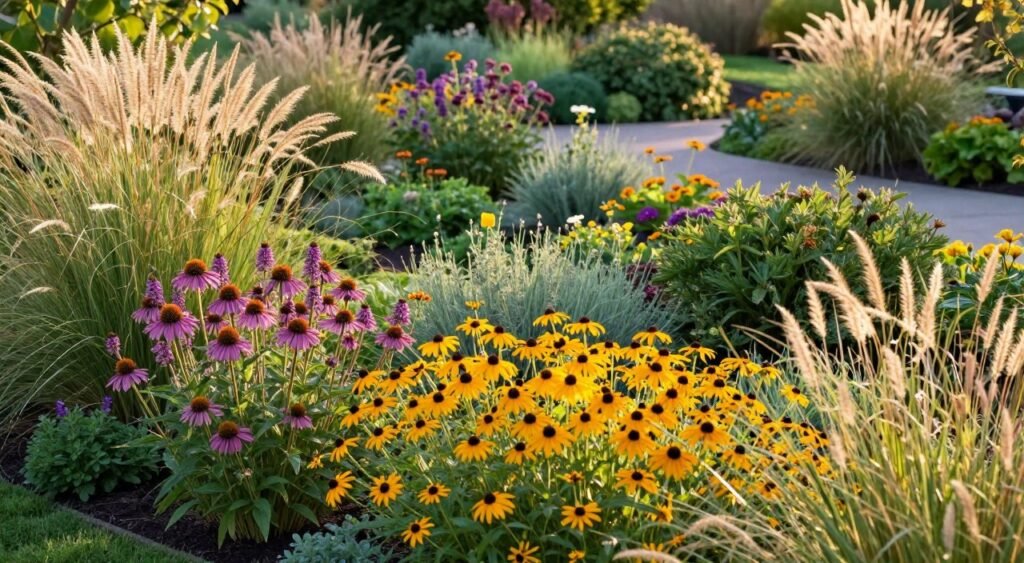
Modern Minimalist Garden Pairings
Modern gardens are simple and calm. Use a few colors and the same shapes to keep it clean. Tall grasses and big plants make a neat, empty look.
For a clean look, use a plant spacing guide. Don’t crowd plants to show off each one. This makes your garden easy to care for and looks planned.
Cottage Garden Style Combinations
Do you love a cozy, full garden? Cottage gardens are perfect for that. They have lots of sun-loving flowers and soft grasses. Mix plants like Coneflowers with grasses for a lively look.
The secret to cottage gardens is lots of plants and variety. Let plants spill over for a full look. Choose plants of different heights and times to bloom for a lively garden all summer.
Native Meadow and Prairie Inspired Designs
Native plants are great for gardens. They help local animals and look beautiful. Use grasses and wildflowers for a natural look.
This style shows off the seasons. It’s good for the environment and needs less care. Your garden will be a home for birds and butterflies, adding beauty and value.
| Garden Style | Key Grasses | Flower Companions | Spacing Strategy |
|---|---|---|---|
| Modern Minimalist | Feather Reed Grass | Sedum or Allium | Uniform, grid-like |
| Cottage Style | Fountain Grass | Coneflowers, Phlox | Clustered, overlapping |
| Native Meadow | Switchgrass | Milkweed, Asters | Naturalistic, random |
Conclusion
Creating a landscape with different textures and colors makes a big difference. Pairing flowers with ornamental grasses makes your garden strong. It looks good all year round.
Gardening is all about watching and changing things. You can try new things in your garden. Even small changes can make a big difference.
Using native plants is good for your garden and local animals. It saves water and chemicals. Your garden becomes a beautiful and useful place.
With planning and care, your garden can become a lively place. This guide is a great start for your project. Start planting today and watch your garden grow and change for years.