
Nature often hides its most breathtaking secrets in plain sight. When you step into your garden or explore a local trail, you might see plants that look unlike anything else. Learning to identify strange flowers helps you connect with nature more deeply.
Getting good at this makes every walk exciting. You’ll feel sure about what you see, even if it looks weird. You’ll see how amazing the plants are in your own backyard.
This guide will teach you to spot unusual flowers with strange shapes. It’s for anyone who loves plants or wants to learn more. You’ll learn to see the beauty in rare plants and grow your knowledge.
Understanding the Anatomy of Bizarre Blooms
To truly appreciate the beauty of bizarre blooms, you must first understand the biological blueprint that shapes them. By breaking down the complex features of a plant, you gain the skills necessary for accurate botanical identification. This process relies heavily on your ability to observe the subtle details that distinguish one species from another.
Analyzing Floral Symmetry and Structure
The first step in examining any specimen involves looking at its floral anatomy. Symmetry acts as a primary indicator of how a plant has evolved to attract specific pollinators. You will often find that unusual shapes are not random but are highly specialized adaptations.
Understanding plant morphology allows you to categorize flowers based on their geometric patterns. Whether a bloom is radial or bilateral, these structural traits provide essential clues. Careful observation of these patterns is the foundation of your success in the field.
Identifying Specialized Reproductive Parts
Many exotic plants feature strange, alien-like structures that serve as specialized reproductive organs. These parts often deviate from the standard petal and stamen arrangement found in common garden flowers. Recognizing these modifications is a key aspect of mastering plant morphology.
When you look closely, you may notice unique appendages designed to trap insects or guide them toward pollen. These floral anatomy features are often the most striking parts of the plant. By focusing on these specific components, you improve your botanical identification skills and deepen your connection to the natural world.
Tools and Resources for Botanical Identification
Now, you don’t need to be a botanist to figure out strange flowers. You can use your phone or visit the library to learn about them.
Utilizing Digital Identification Apps
Plant identification apps have changed how we explore nature. They use special software to match your photos with a huge database.
- iNaturalist: Great for getting data checked by others and for science.
- PictureThis: Quick and good for identifying plants on the go.
- PlantSnap: Snap a photo and find thousands of plant species.
These apps are super handy. But, they work best with clear, bright photos of the plant. Always observe the plant closely and use your own eyes too.
Consulting Specialized Field Guides
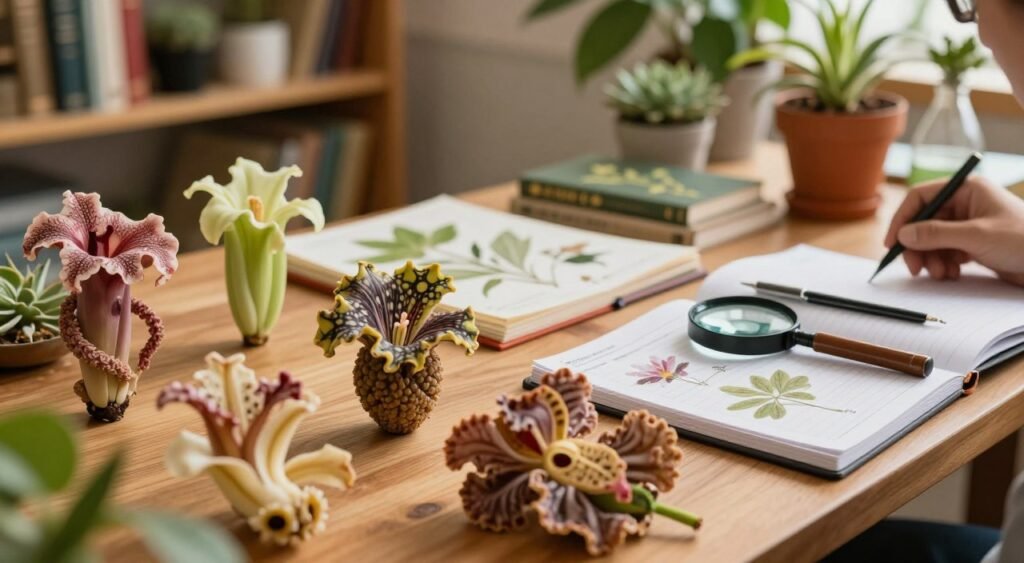
Field guides are still very important for botanical identification. They give you deep info on rare plants and their history.
When you’re trying to figure out strange flowers, find guides for your area. Good guides have detailed drawings that show important parts of the plant.
Selecting Reliable Botanical Databases
For accurate info, use peer-reviewed botanical databases. They’re great for both hobbyists and serious researchers.
| Resource Type | Primary Benefit | Best For |
|---|---|---|
| Mobile Apps | Speed and convenience | Quick field checks |
| Field Guides | In-depth botanical context | Detailed study |
| Online Databases | Peer-reviewed accuracy | Scientific verification |
Choose databases from universities or botanical gardens. They offer the most reliable info for your botanical identification journey. This way, your findings will be backed by science.
Step One: Observing the Overall Growth Habit
Starting to find unique garden blooms means watching how the plant grows. Look at the plant’s big picture before you check the small details. This first step helps you focus your search.
Distinguishing Between Epiphytes and Terrestrial Plants
It’s key to know if a plant grows in the ground or on other things. Plants that grow in the ground have roots that soak up water and nutrients. But, identifying epiphytes means finding plants that grow on other things like trees or rocks without harming them.
Here’s how to tell them apart:
- Terrestrial: Look for roots in the soil or potting mix.
- Epiphytic: See if the roots are hanging in the air or stuck to a surface.
- Adaptation: Check for special parts like water-storing pseudobulbs, seen in many orchids.
Noting Leaf Arrangement and Stem Characteristics
After figuring out the plant’s growth type, look at its leaves and stem. How leaves attach to the stem is very important. It helps tell different plants apart. Note if leaves are arranged in a certain way.
Stems also give clues. Strong stems might mean a shrub. Soft stems suggest a plant that likes dry places. By noting these details, you make identifying the plant easier.
Step Two: Examining the Floral Geometry
You can unlock the secrets of mysterious plants by analyzing their flower geometry. This layout shows how a plant works with its pollinators. By looking at these patterns, you learn how plants have evolved to survive.
Recognizing Zygomorphic Versus Actinomorphic Flowers
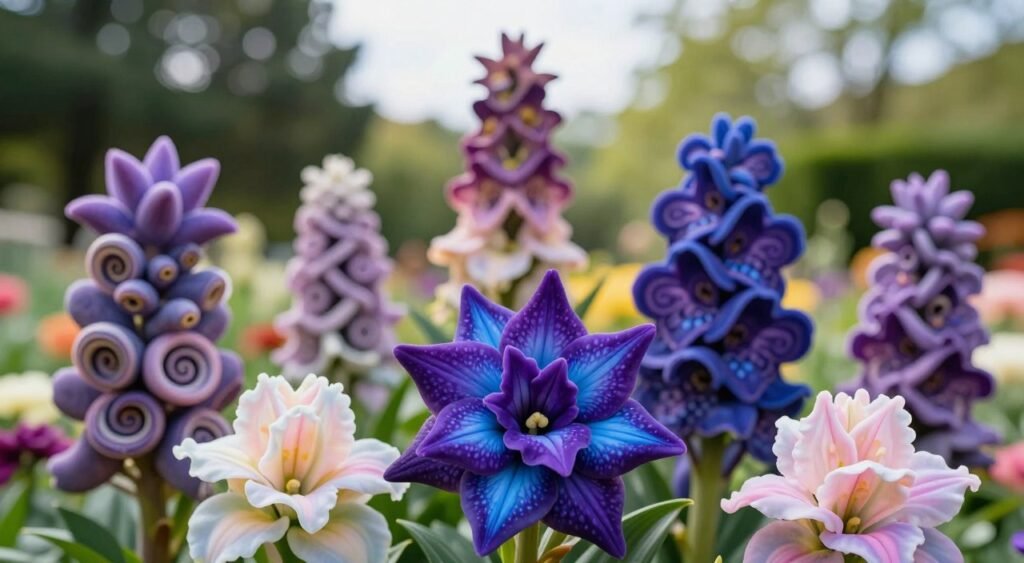
The first step is to see if the bloom is symmetrical. Actinomorphic flowers are round or star-shaped. They are easy for many insects to get to.
Zygomorphic flowers are different. They are shaped like a mirror and need pollinators to come in just the right way. This helps pollen move better.
| Feature | Actinomorphic | Zygomorphic |
|---|---|---|
| Symmetry Type | Radial | Bilateral |
| Pollinator Access | Generalist | Specialized |
| Visual Pattern | Circular/Star | Complex/Irregular |
Identifying Unusual Petal Modifications
Many plants have exotic flower characteristics. You might see petals that are different. These changes help plants attract certain visitors.
Spotting Traps and Specialized Nectaries
Some plants have traps to hold pollinators. These traps help pollen move. Look for special nectaries too. They give out sweet treats in secret spots.
These special parts need a careful look to spot. By finding these, you can guess what plant it is. Check if the nectar is easy to find or hidden.
Step Three: Documenting Color Patterns and Textures
When you look at a flower, you see more than beauty. You see signals that help the plant survive. By noting these details, you learn about the plant’s home in nature.
The Role of Color in Pollinator Attraction
Flower color patterns guide visitors to the plant’s food. Bees, butterflies, and birds follow colors to find nectar and pollen. Some flowers have special lines or spots for insects to land.
These colors are key for attracting pollinators. While we see colors, pollinators see ultraviolet light too. This means flowers have secret patterns we can’t see.
Analyzing Surface Textures and Pubescence
The feel of a flower’s petals or stem is important. A flower texture analysis helps tell species apart. You might find the surface smooth, waxy, or hairy.
These hairs, called pubescence, do many things. They keep moisture, keep pests away, or control temperature. When you study flower texture analysis, look at the hair’s thickness and length.
Noting these small details helps us understand the plant’s past. Every texture is a response to its environment. These details are key to confirming your findings and seeing the beauty of pollinator attraction and plant biology.
Step Four: Assessing Environmental Context
The secret to finding a strange bloom is in the soil and light. By watching where a plant grows, you learn a lot. This tells you if it’s a native or an exotic plant.
Evaluating Soil and Light Requirements
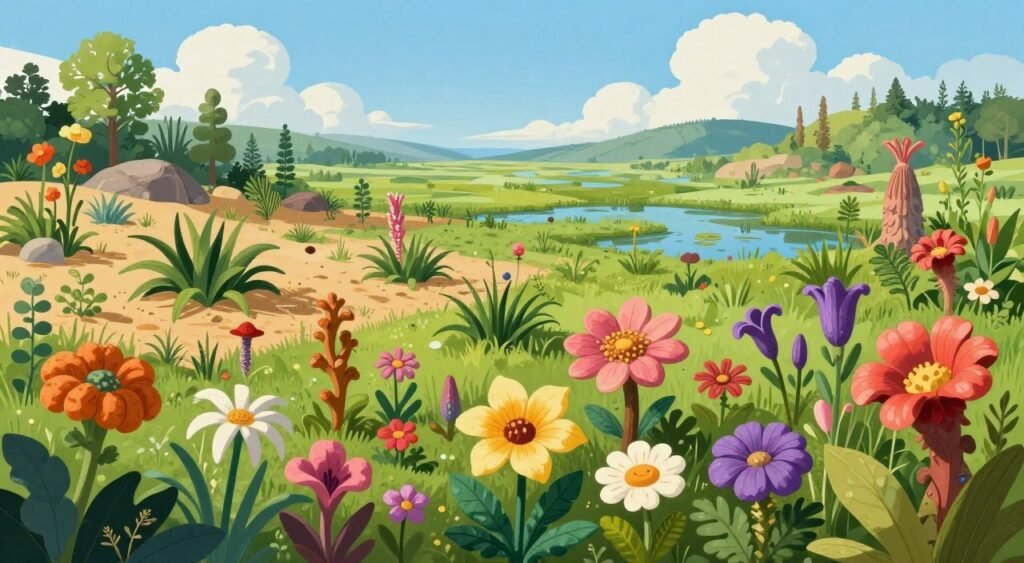
Every plant needs certain things to live. Look at the soil to see if it’s sandy, clay, or rich. Some plants need acidic bogs, while others like rocky slopes.
Light is also key for plant identification. Think about these things:
- Direct sunlight versus deep shade.
- Does it like wet or dry air?
- Does it need a certain soil pH?
Knowing these needs helps you guess what plant it might be. If it loves water, it’s not a desert plant, no matter its look.
Considering Geographic Range and Hardiness Zones
After looking at the soil, think about the bigger picture. The USDA’s hardiness zones help figure out if a plant fits your area. These zones are based on winter temperatures.
If you see a tropical plant in the north, it’s probably not native. Checking hardiness zones helps by showing which plants can handle your winters.
«The plant is a product of its environment, and by studying the soil and climate, you unlock the history of its evolution.»
Match your location with the plant’s known range. Many rare plants only grow in certain places. If your plant doesn’t fit, it might be a hybrid or an invasive.
Step Five: Cross-Referencing with Botanical Families
Many weird flowers come from special plant families. These families have changed over millions of years. By grouping your finds into rare plant families, you can find what they are. This helps you see how these plants look so different.
Common Families Known for Strange Shapes
Nature likes to use the same designs in certain families. If you see a weird flower, it might be from a family known for odd shapes. These families often have special ways to make babies, which makes them look so different.
The Orchidaceae family is known for its weird flowers. These plants are true masters of mimicry. They look like insects to attract pollinators. To know an orchid, look for the labellum, a special petal for insects.
Aristolochiaceae: The Pipevine Family
The Aristolochiaceae family is also interesting. They have distinctive, tubular flowers that look like Dutch pipes. Their flowers trap pollinators to help make babies.
Step Six: Verifying Your Findings Through Expert Networks
Even the most dedicated plant lovers can get stuck sometimes. If you can’t figure out a weird plant, it’s time to ask for help. Connecting with others can help you confirm your plant’s identity.
Engaging with Online Gardening Communities
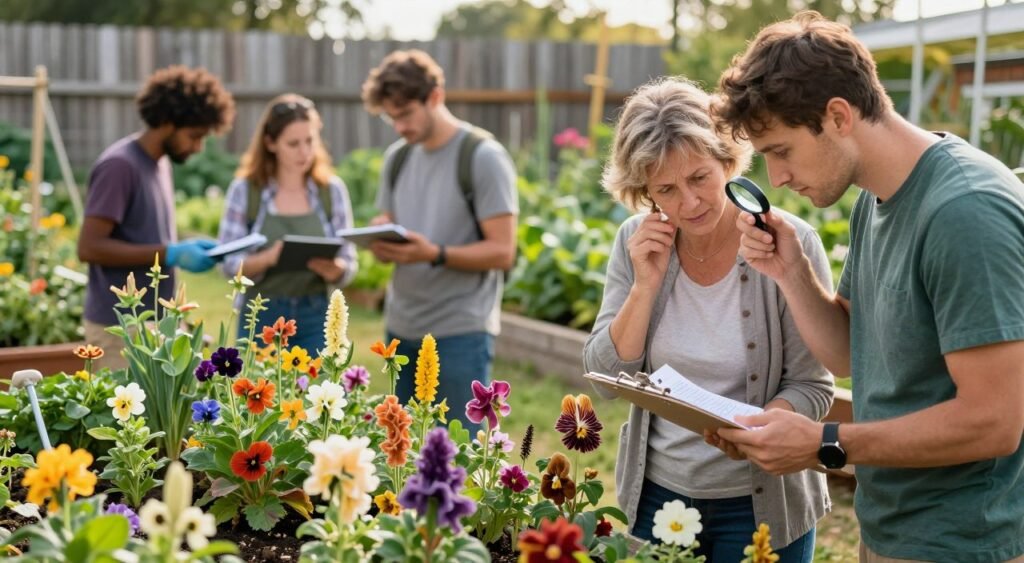
The internet has changed how we share plant knowledge. Joining online forums or groups can connect you with experts worldwide. By asking for gardening community advice, you can get feedback on your plant.
When you share your plant, add lots of details. Include clear photos of the plant and where you found it. This helps others give you better advice.
- Join dedicated plant identification groups on social media.
- Participate in forums focused on rare or exotic species.
- Always provide high-quality photos to ensure better gardening community advice.
Working with Local Botanical Gardens and Herbaria
For really tricky plants, getting help from experts is best. Local botanical gardens and university herbaria have experts on local plants. They can give insights beyond what field guides offer.
If you think you’ve found a rare or endangered plant, contact a local herbarium. They might want to study your find for research. Professional collaboration ensures your discovery is handled right.
«The study of plants is a lifelong journey that thrives on the exchange of knowledge between amateurs and professionals alike.»
How to Identify Unusual Flowers with Strange Shapes in Your Own Garden
Bringing your skills to your garden lets you collect unique garden blooms. You can turn your outdoor space into a botanical wonderland.
This isn’t just about looks. It’s about knowing the life cycles of unusual flowers with strange shapes. Watching them closely makes you appreciate nature more.
Documenting Your Findings for Future Reference
Botanical documentation is key for serious gardeners. Recording your plants’ traits helps you solve problems and predict blooms.
Track these important points to keep your records useful:
- Date of first bloom: Note when it starts.
- Pollinator activity: See which insects visit.
- Environmental shifts: Record soil and light changes.
- Growth rate: Measure how fast it grows.
Creating a Personal Botanical Journal
A journal is the best way to keep botanical documentation. Choose digital or paper, but keep it consistent and detailed.
Organize your journal to show off your unique garden blooms. Use this table to structure your notes:
| Plant Name | Bloom Shape | Peak Season | Care Notes |
|---|---|---|---|
| Aristolochia | Pipe-like | Mid-Summer | Requires shade |
| Orchidaceae | Asymmetrical | Spring | High humidity |
| Passiflora | Complex radial | Late Summer | Needs support |
Keeping these records makes a valuable resource. It helps you care for your plants better with each season.
Conclusion
Learning about unusual flowers is very rewarding. It helps you connect more with nature. Now, you can spot and understand even the most odd-looking flowers in your area.
Each strange flower has its own story. They have special traits to live in different places and to attract bees and butterflies. Knowing this makes walks more fun and educational.
Keep exploring your garden with wonder. Use a journal to note down what you see and learn. Share your discoveries with groups like the American Horticultural Society to learn more.
Nature is full of surprises for those who look closely. Keep getting better at noticing new plants. Your hard work will make every odd flower a friend you know well.