
Growing flowers in the mountains is a truly rewarding experience. You can turn rough, rocky places into beautiful gardens.
The mountain climate can be tough. But, picking the right flowers makes a big difference. You’ll learn how thin air and short seasons affect your garden all year.
Learning the basics of growing flowers in mountains is key. By choosing the right flowers for mountain regions, you start strong. Knowing these tips helps you have a beautiful garden, no matter the height.
Understanding the Unique Challenges of High-Altitude Gardening
High-altitude gardening is different from gardening in the lowlands. The rules don’t apply the same way here. Success depends on your ability to adapt to these extreme conditions.
Managing Short Growing Seasons and Frost Risks
The biggest challenge is the short growing season. In mountains, the time between spring and fall frost is very short. You need to pick the right plants and know when to plant them.
- Monitor local frost dates closely to avoid losing young seedlings.
- Use cold frames or row covers to extend your season by a few weeks.
- Choose varieties that mature quickly to bloom before the cold.
Adapting to Intense Solar Radiation and Thin Air
Gardening in thin air is tough for flowers. At high elevations, more UV radiation reaches your garden. This can burn petals and dry out plants fast.
The air pressure is lower, affecting how plants breathe and handle water. When gardening in thin air, protect plants from intense sun. Use light shade or reflective mulches to help.
Dealing with Rocky, Nutrient-Poor Soil Conditions
Mountain soil is often rocky, shallow, and poor in nutrients. Sloped areas lose topsoil, leaving behind coarse materials. These struggle to hold water or minerals.
To fix this, start by improving your soil. Add lots of organic matter like compost or aged manure. This makes your soil better for high-altitude gardening all season long.
Selecting Flowers That Thrive in Mountain Regions
Finding the right flowers for mountain gardens is key. The harsh environment means picking the right plants is crucial. By choosing flowers that thrive in mountain regions, your garden can be vibrant and strong.
Identifying Native Alpine Species for Resilience
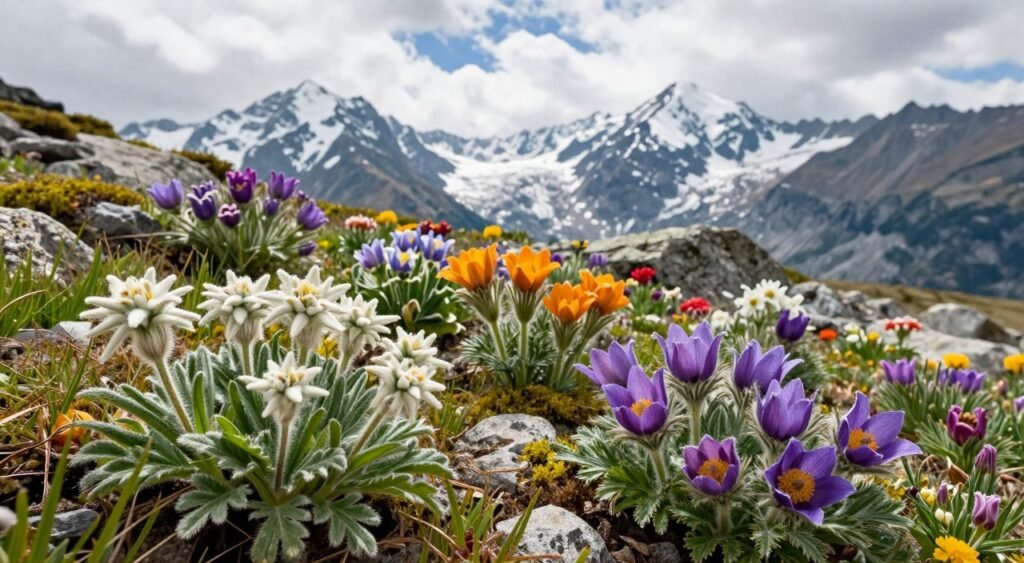
Native plants are great for high-elevation gardens. They’ve learned to handle thin air, strong UV light, and rocky ground. Using alpine plant selection helps you garden with nature’s help.
Many native plants are frost-resistant flowers. They have strong roots and grow low to the ground. This keeps them safe from drying winds. Adding these plants makes your garden steady, even when the weather changes.
Choosing Perennials That Withstand Heavy Snowpack
Perennials are vital for mountain gardens. They must be strong to last through long winters. Look for cold-hardy perennials that sleep deep during cold months.
Plants like columbine and some penstemon types are good choices. They bloom when the ground thaws, adding color year-round. The right picks keep your garden beds healthy all winter.
Selecting Annuals for Rapid Growth in Cool Summers
Mountain summers are short, so plants must grow fast. You need annuals that bloom quickly in cooler weather. These mountain climate flowers are made for cooler temperatures.
Choose plants that bloom early and keep going in cool nights. Snapdragons and pansies do well here. Fast-growing annuals bring color to the short but lovely mountain season.
Preparing Your Mountain Garden Soil for Success
Turning rocky ground into a garden needs careful planning. High places often have thin soil. You must prepare your soil well before planting.
Testing Soil pH and Nutrient Levels
First, find out what your soil lacks. Mountain soils can be too acidic or alkaline. This stops plants from getting the nutrients they need.
You can buy a testing kit or send a sample to a lab. This will tell you what your soil needs.
Look for these important signs:
- pH levels: Most flowers like a slightly acidic to neutral soil.
- Nitrogen, Phosphorus, and Potassium: These nutrients help plants grow and bloom.
- Organic matter percentage: This shows how well your soil holds water.
Amending Soil with Organic Matter and Compost
After knowing your soil’s needs, add organic matter. Compost helps your soil hold water and gives nutrients slowly. Mix in several inches of compost or manure.
Adding organic matter makes your soil better. It turns hard soil into a good growing medium. This helps plants grow well in cold places. Add these materials to the top six to eight inches of your garden every spring.
Improving Drainage in Sloped Mountain Landscapes
Good mountain soil drainage is key, even more so on slopes. Heavy snowmelt can make soil too wet. Use raised beds or stone trenches to keep water away.
For bad mountain soil drainage, try these:
- Terracing: Build walls to make flat areas and stop erosion.
- Raised Beds: These let you control soil and keep water away from roots.
- French Drains: Channels filled with gravel move water from low spots.
Planning Your Garden Layout for Microclimate Optimization
Every mountain property has special warm spots for gardening. By watching how sunlight and air move, you can find mountain microclimates perfect for your flowers.
These small temperature and exposure changes can make your growing season longer. It’s key to map these areas before planting for high-altitude gardening success.
Utilizing South-Facing Slopes for Maximum Sun Exposure
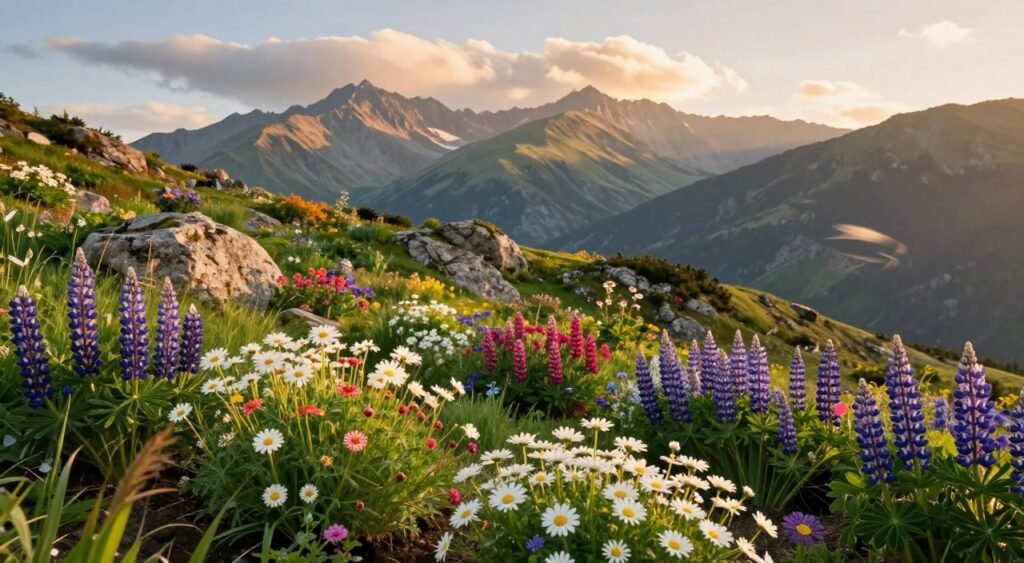
South-facing slopes are the best spots in your landscape. They get the most sunlight, warming the soil early in spring.
Planting sun-loving flowers here gives them the heat they need to grow well. This way, your plants get the maximum solar energy for quick growth in short seasons.
Creating Windbreaks to Protect Delicate Blooms
High places often have strong, drying winds that harm plants. You can stop this by making natural or fake windbreaks around your flowers.
Placing shrubs, trellises, or decorative fences can block harsh winds. This keeps your plants healthy and stops moisture loss in mountain microclimates.
Leveraging Thermal Mass from Rocks and Walls
Rocks and stone walls soak up sun during the day and release it at night. Adding these to your garden gives a stable temperature buffer for your flowers.
Putting heat-sensitive plants near these spots helps them stay warm on cold mountain nights. This is a key part of high-altitude gardening, keeping the area warmer than the air around it.
Step-by-Step Planting Guide for Mountain Climates
Getting your flowers into the ground at the right moment is key. The growing season is short, so every day matters. Preparing well helps your plants grow strong before the cold comes.
Timing Your Planting Based on the Last Frost Date
Find the last frost date for your area. It can change a lot even in a few miles. Planting too early can kill your plants. Always check your local extension office data for the best time to move plants outside.
Hardening Off Seedlings Before Permanent Placement
Don’t move plants from a warm place to the cold mountains too fast. Use these high-elevation planting tips to slowly get them ready. Start by giving them a little sun and wind each day.
- Start by placing seedlings in a sheltered, shaded spot for a few hours each day.
- Gradually increase their time in the sun to help them adjust to intense radiation.
- Bring them indoors at night until they are strong enough to handle cooler temperatures.
Proper Planting Techniques for Rocky Terrain
Digging in mountain garden soil can be tough. You need to clear a big area for the roots. Add organic compost to the hole to help your frost-resistant flowers.
Make sure the crown is level with the ground. This stops water from pooling. Firm the soil gently to keep the roots moist. These high-elevation planting tips will help your garden thrive.
Watering Strategies for High-Elevation Environments
Learning to manage water is key when gardening in thin air. The sun and wind dry out plants fast. You need to keep your flowers watered well.
Managing Moisture in Dry, Windy Conditions
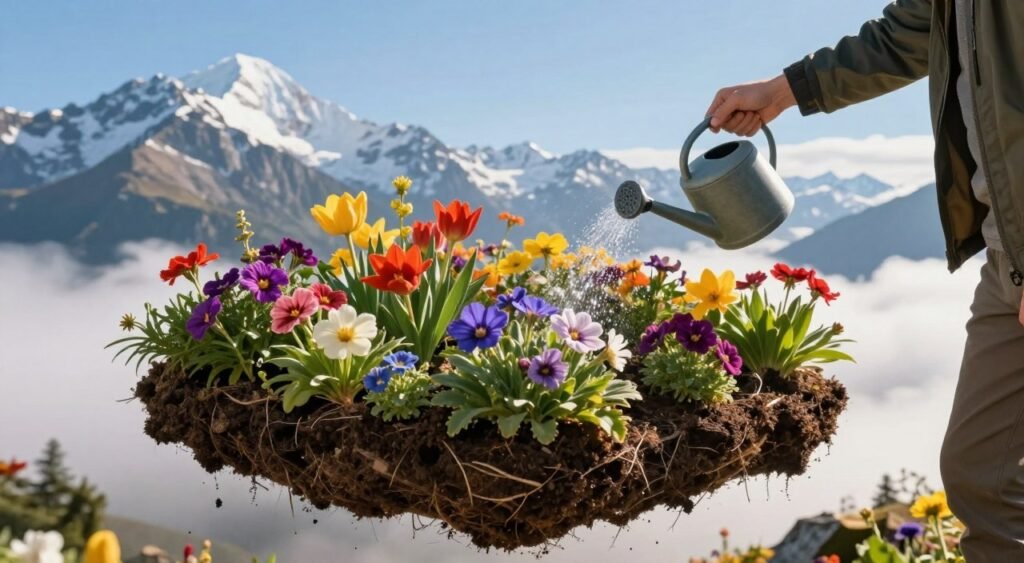
Wind dries out plants and soil quickly. To fight this, make small changes in your mountain microclimates. Place plants behind walls to block the wind.
Using a lot of mulch helps too. It keeps the soil cool and moist by blocking sun and wind.
Implementing Drip Irrigation for Consistent Hydration
Drip irrigation is the best way to water plants. It sends water straight to the roots, saving water. This method keeps plants watered without wasting it.
Set up a timer for your drip system. This keeps the water coming at the same time every day. It’s very important for plants in changing weather.
Preventing Root Rot in Poorly Draining Soils
Water is good, but so is drainage. Heavy clay or rocky soil can hold too much water. This can hurt your plants.
Check if your soil drains well before planting. If water stays for too long, add sand or compost to help it drain better.
| Irrigation Method | Efficiency | Best Use Case |
|---|---|---|
| Drip System | High | Consistent root hydration |
| Soaker Hoses | Medium | Dense flower beds |
| Hand Watering | Low | Small, container gardens |
| Sprinklers | Very Low | Large, open landscapes |
Protecting Your Flowers from Mountain Wildlife
Your beautiful blooms might attract more than just pollinators in the mountains. Local wildlife sees your garden as a buffet. This makes protecting mountain plants very important for mountain gardeners. Without care, these visitors can ruin your garden in one night.
Installing Fencing to Deter Deer and Elk
Deer and elk are common in mountains and can jump over regular fences. You need sturdy, high-tensile fencing that’s at least eight feet tall. This is the best way to keep them out.
«The best defense against a hungry herd is a barrier they cannot breach, paired with a landscape they find unappealing.»
Using Natural Repellents for Small Mammals
Small pests like rabbits and voles can also harm your garden. Use natural repellents like garlic sprays or predator urine granules. Consistency is key because mountain weather can wash them away fast.
- Apply scent-based repellents around the perimeter of your beds.
- Use hardware cloth buried underground to stop burrowing rodents.
- Refresh your repellent applications after every heavy rain or snow event.
Selecting Deer-Resistant Flower Varieties
Choosing the right plants is your last defense against wildlife. Pick varieties deer and elk don’t like. Many fragrant herbs and fuzzy-leaved perennials are not appealing to them.
Choose plants with strong scents or bitter tastes. This makes your garden less inviting to foragers. With the right plants and fences, your garden can thrive despite wildlife.
Maintenance and Care Throughout the Growing Season
Keeping your garden healthy in high places needs regular care. By focusing on mountain garden maintenance, your plants stay bright and healthy. Small steps now stop big problems later in the mountains.
Deadheading to Encourage Continuous Blooming
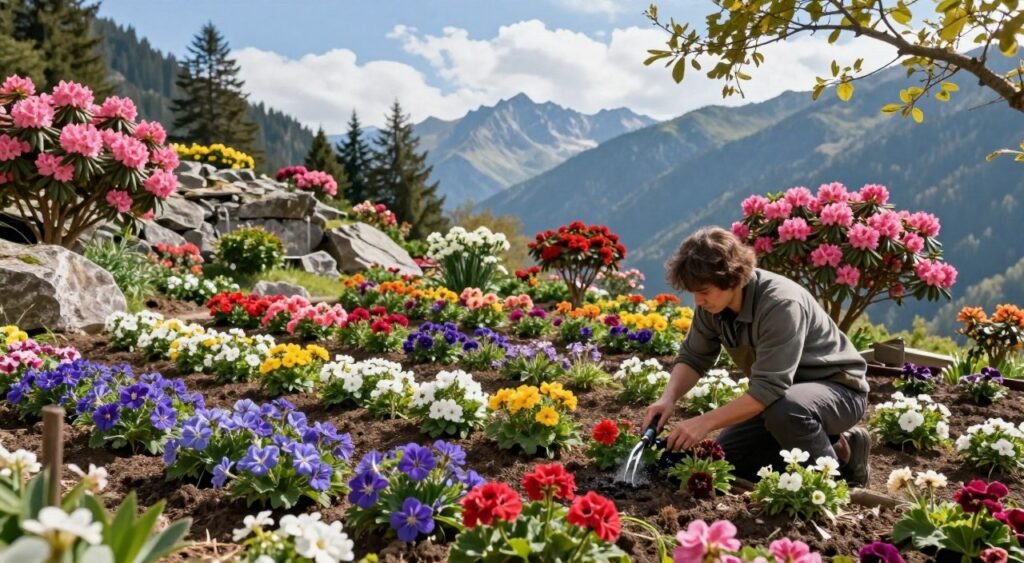
Removing old flowers is key for high-elevation planting tips. It stops plants from making seeds. Instead, they make more flowers.
This trick keeps your mountain climate flowers colorful. Just cut off old blooms above a leaf. You’ll see more colors all summer.
Applying Mulch to Retain Moisture and Regulate Temperature
Mountain weather changes fast and can dry out quickly. Mulch is vital for high-elevation planting tips. It keeps soil cool in the day and warm at night.
- Keeps soil moist when it’s dry.
- Keeps weeds away from your plants.
- Protects roots from extreme temperatures.
Monitoring for Pests Common in High Altitudes
Pests can sneak into your garden, even in the mountains. Check your plants weekly for damage. Look under leaves and on stems.
Aphids and beetles love the cool mountain air. Catching pests early helps you use natural ways to fix the problem. This keeps your mountain climate flowers safe.
Preparing Your Mountain Garden for Winter Dormancy
Getting your high-altitude garden ready for winter helps your plants stay healthy. It’s important to prepare well for your mountain garden layout. This way, your garden can handle the cold weather.
Cutting Back Perennials and Cleaning Up Debris
After the first hard frost, clean up your garden. Cut cold-hardy perennials to three inches above the soil. This stops diseases and pests.
Get rid of dead plants and leaves. This stops fungal problems in the spring. Don’t put sick plants in your compost.
Applying Winter Mulch to Protect Crowns from Heaving
Freeze-thaw cycles can harm roots in mountain areas. Use organic mulch like straw or pine needles. It keeps the soil warm.
Wait until the ground is frozen to mulch. This keeps rodents away. Use two to four inches of mulch for best protection.
Storing Tender Bulbs and Containers Indoors
Some plants can’t handle cold mountain weather. Dig up bulbs like dahlias before it gets too cold. Clean them and store them in a cool, dark place.
Move outdoor containers to a garage or shed. This keeps them from cracking. Proper storage saves you time and money next year.
Conclusion
Turning a rough area into a colorful garden takes time and a clear plan. Growing flowers in mountains lets you work with nature’s beauty.
By preparing the soil well and choosing the right plants, you lay a strong base. You know how to handle thin air and strong sunlight. This makes hard places into beautiful spots.
Keeping your mountain garden healthy is key. Watch your plants and change your care as needed. This keeps your garden alive all year.
Be proud of your mountain garden. Share your story with gardening groups or friends. Your garden shows your hard work and love for the land.