
Walking through a meadow is more than fresh air. It’s a chance to connect with nature deeply. By noticing petals and leaves, you become a knowledgeable nature enthusiast.
Learning about fascinating facts about wildflowers is rewarding. It makes you appreciate local ecosystems more. With patience and curiosity, you’ll see details you never noticed before.
This guide helps you explore the world of plants. You’ll learn to identify native species and their roles. With these skills, you’ll uncover secrets in your backyard. Get ready to see the world with new clarity and excitement.
Preparing for Your Wildflower Exploration
Getting ready for a day outdoors is key. It sets the stage for a great time. Knowing how to spot wildflowers makes your trip even better.
Researching Local Ecosystems and Bloom Times
Knowing when flowers bloom is crucial. Each area has its own schedule. Look at local botanical calendars to stay on track.
Park websites often share bloom reports. They tell you which native plant species are blooming. Here’s how to get the most from your research:
- Check official park websites for seasonal bloom updates.
- Review historical data from local botanical gardens to predict peak growth.
- Monitor weather patterns, as early springs or late frosts can shift bloom times by several weeks.
Selecting the Best Locations for Observation
Picking the right spot is as important as timing. Not all trails have the same flowers. Look for places with different landscapes, like meadows and woodlands.
Choose areas with varied landscapes for more variety. Protected spots are best for seeing many native plant species. This way, your wildflower identification will be fun and successful.
Essential Tools for Identifying Wildflowers
Success in finding wildflowers depends on the tools you bring. The right tools help you see, write down, and check your finds. Good gear makes a simple walk into a fun wildflower identification adventure.
Choosing the Right Field Guides
Picking a good reference book is key. Choose guides for your area to match local plants. Use photos and descriptions of leaves and petals to help.
Books with dichotomous keys are great. They ask simple questions to narrow down species. This helps avoid confusion between similar plants.
Using Magnifying Glasses and Hand Lenses
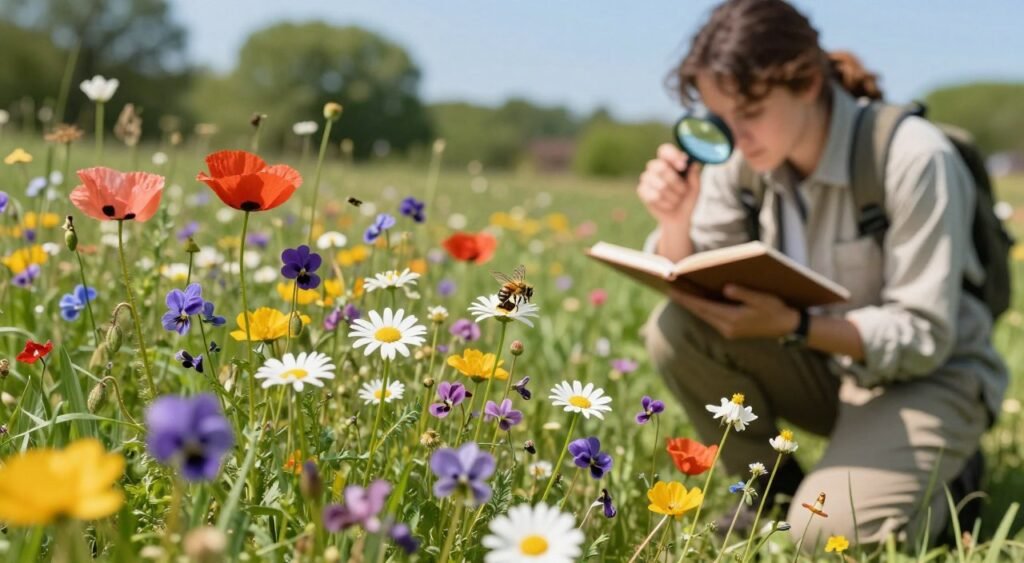
Many plants have tiny details hard to see without help. A good hand lens lets you see flower parts up close. This is crucial for wildflower identification.
Hold the lens close and move the flower toward it. You’ll see amazing details and patterns.
Carrying a Notebook for Field Observations
A nature journal is a permanent record of your plant finds. Sketch leaves and note where you found the plant. Writing down your thoughts while you see the plant helps you remember later.
| Tool | Primary Purpose | Benefit |
|---|---|---|
| Field Guide | Species verification | Provides reliable data |
| Hand Lens | Macro inspection | Reveals hidden details |
| Notebook | Data recording | Improves memory retention |
Learning to use field guide usage and tools well boosts your skills. Regular use of these tools will make your wildflower hunts more fun.
How to Discover Fascinating Facts About Wildflowers in the Field
Going for a walk can turn into a fun science lesson. It starts with learning the secret language of flowers. When you’re outside, being good at botanical observation helps you find out what flowers are.
Observing Petal Structure and Leaf Arrangement
Start by looking at the plant anatomy closely. Count the petals and see if they are the same on both sides. How the petals connect at the base can tell you a lot.
Then, check the leaves. See if they grow in a certain pattern on the stem. Noticing these small things will help you use field guides better.
Identifying Pollinator Relationships
Wildflowers have friends in the insect world. Watch which insects visit certain flowers. You might see bees, butterflies, or beetles.
Writing down these visits helps you understand the plant’s role in nature. If a moth visits a flower at night, you’ve found a special connection. This makes your field study even more interesting.
Noting Habitat Preferences and Soil Conditions
Where a plant grows is as important as what it looks like. Notice the area around the plant. Is it a wet meadow, a rocky slope, or a shaded forest?
Also, check the soil. Some plants like sandy soil, while others prefer rich soil. By paying attention to these things, you’ll know where to find certain flowers.
Utilizing Digital Resources and Mobile Applications
Your smartphone is a key to understanding wildflowers. It has tools to help you learn about plants on hikes. Using these tools makes every walk a meaningful learning experience.
Leveraging Plant Identification Apps
Digital plant apps are great for anyone who loves plants. They use special software to identify plants from photos. You get answers on what the plant is and more.
Apps like iNaturalist or PictureThis let you keep a digital plant journal. These digital plant apps help you learn more while you’re in nature.
Accessing Online Botanical Databases
After finding a plant, check it online. Websites with plant info help you learn more. They show you the plant’s details and where it grows.
University and government sites have authoritative data on plants. They help you learn about plant biology and improve your skills.
Participating in Citizen Science Projects
You can help big research projects with citizen science. Many groups need your help to study plants and climate change. Your data helps scientists understand nature.
Joining citizen science is easy and fun. By sharing your plant finds, you help protect nature. Your discoveries help everyone work together to save our planet.
Engaging with Local Botanical Societies and Experts
Learning about native plants is better with friends who love plants too. Joining botanical societies opens doors to knowledge you can’t find in books. These groups help you go from curious to expert.
Joining Guided Nature Walks
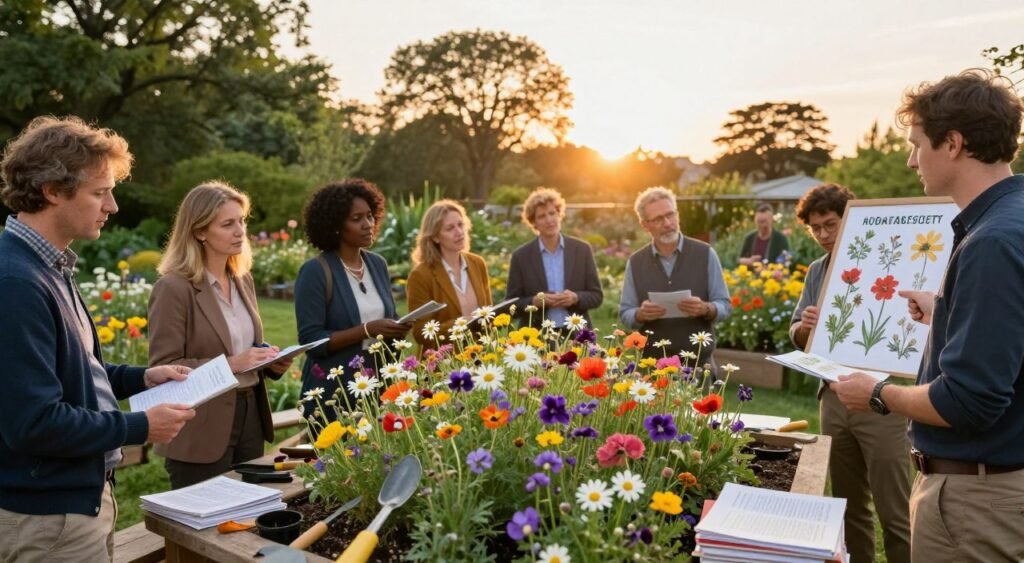
Guided walks are a great way to learn. Led by experts, they show you wildflowers in their home. You get real-time tips to tell plants apart.
Connecting with Local Master Gardeners
Master Gardeners are great for growing native plants. They share tips on growing and caring for plants. They help with questions about soil and when plants bloom.
Attending Workshops on Native Plant Biology
Workshops teach you more than just seeing plants. They cover how plants grow and who visits them. Joining botanical societies for these workshops improves your skills.
| Learning Method | Primary Benefit | Skill Level |
|---|---|---|
| Guided Walks | Field Identification | Beginner |
| Master Gardeners | Practical Cultivation | Intermediate |
| Biology Workshops | Scientific Understanding | Advanced |
Documenting Your Findings Through Photography and Journaling
Recording your plant finds makes a simple walk special. It turns into a real science project. By taking pictures of plants, you create a personal book for learning.
Capturing Macro Details for Accurate Identification
Nature photography helps show a flower’s special features. Look closely at the parts that help identify it. Clear, high-resolution images let you see tiny details later.
Take pictures in the early morning or late afternoon. This avoids harsh shadows. Use a macro setting to capture even the smallest details. These photos are a reliable reference when you compare them to field guides.
Maintaining a Detailed Nature Journal
Plant journaling adds context to your photos. Keep a notebook for your observations. Sketch the leaf arrangement and note the soil conditions.
Write down the date, time, and weather. Press leaves or flowers to keep them with your notes. This way, you connect more with nature and remember plants better.
Organizing Your Digital Collection
It’s important to keep your photos and notes organized. Use folders on your computer or cloud storage. Consistent file naming makes it easier to find photos later.
Use digital tags for colors, bloom times, or habitats. A tidy digital collection makes your hobby valuable for years. It shows your growth as a naturalist.
Understanding the Ecological Role of Native Flora
Native flora plays a big role in our environment. They are not just pretty to look at. They are the base of healthy landscapes in the United States.
By understanding their role, we respect nature more. These plants do more than just sit there. They help keep life going.
The Relationship Between Wildflowers and Local Wildlife
Wildflowers are key to life. They give food and shelter to many animals. Bees, butterflies, and moths need their nectar and pollen to live.
Birds also get a lot from wildflowers. They eat seeds and insects from these plants. This helps their babies and keeps them going all year.
How Wildflowers Support Soil Health
Wildflowers are also good for the soil. Their roots hold the soil in place. This stops erosion when it rains a lot or when it’s windy.
They also help with nutrients in the soil. When they grow and die, they add good stuff to the soil. This makes the soil better for plants to grow in the future.
The Importance of Native Plants in Biodiversity
Native plants are very important for our landscapes. They keep the ecosystem strong. A mix of plants helps it handle tough times, like drought or sickness.
When we protect these plants, we help keep nature balanced. This variety of life is what makes our wild places healthy. It lets many different kinds of life thrive.
Ethical Guidelines for Wildflower Enthusiasts
Your journey into wildflowers is a big responsibility. It affects the environment. By caring for wildflowers, we help future generations enjoy them too.
Practicing Leave No Trace Principles
The Leave No Trace philosophy is key. It helps you not harm the plants and soil. Stay on trails to avoid damaging the plants’ roots.
Always take out the trash you brought. This keeps the area clean. Your visit should be temporary and invisible to animals.
Respecting Protected Areas and Private Property
Check if the land is open before you go. Some places have rules to protect plants. It’s important to follow these rules.
If you see private property signs, don’t go in without permission. Trespassing hurts plants and makes people upset. Always try to access places in a way that’s good for everyone.
Avoiding the Disturbance of Rare Species
Some wildflowers are very rare. You must be very careful around them. Never pick or move them for a photo.
By focusing on wildflower conservation, you help protect these plants. Keep their locations secret to avoid too many visitors. This helps keep our nature healthy.
| Action | Ethical Approach | Unethical Approach |
|---|---|---|
| Trail Usage | Stay on marked paths | Trampling off-trail |
| Plant Interaction | Observe from a distance | Picking or digging up |
| Waste Management | Pack out all trash | Leaving litter behind |
| Rare Species | Protect and report | Disturbing for photos |
Conclusion
Your journey into native plants makes you a key protector of nature. You learn by watching and using digital tools. This helps you understand the balance in our world.
Being kind to these plants means they’ll be here for others to see and learn from. Every photo and note you make helps us know more about our world’s plants.
Share what you find with local plant groups or on iNaturalist. This encourages others to care for our wild spaces. Keep exploring to see how plants change with the seasons.
Your hard work today helps our planet stay healthy. Your love for plants makes a big difference in keeping our world natural.