
Imagine stepping into your backyard as the sun dips below the horizon. You see a hidden world where luminous petals start to open under the moon’s silver light. These special flowers that open only at night make your garden magical and fragrant.
Taking care of these flowers is different from daytime plants. Learning nocturnal garden care keeps your evening garden bright and healthy all season. You need to know their special light, water, and soil needs to help them grow well.
Gardening in the dark is a peaceful break from today’s fast life. By following these key tips, you’ll make a calm place that shines at night. Let’s learn how to care for your moonlit flowers and enjoy your midnight garden.
Understanding the Biology of Nocturnal Blooms
The mystery of flowers that open only at night is fascinating. These plants have special ways to survive. They bloom at night to avoid the heat and save water.
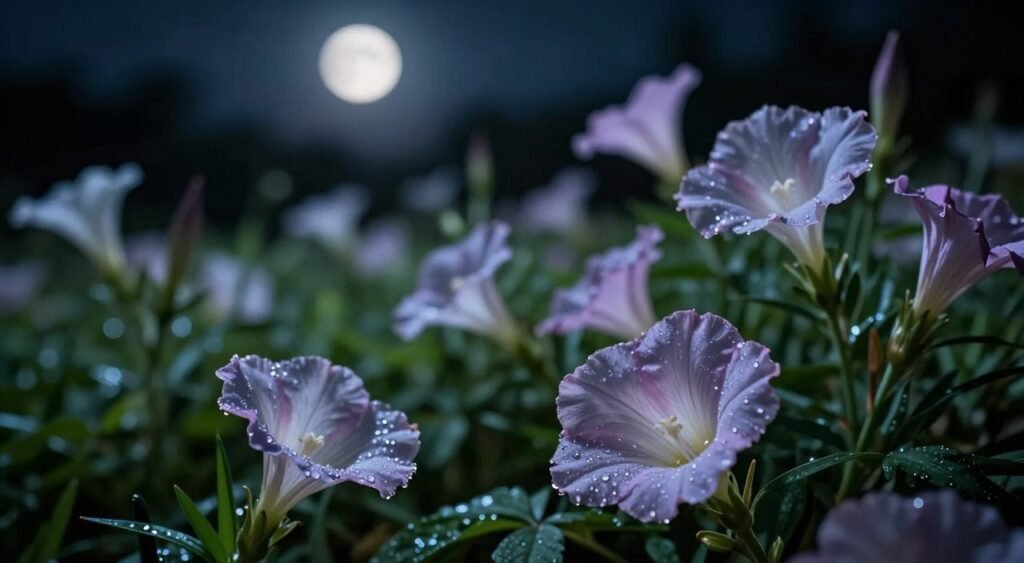
Why Flowers Evolve to Open at Night
Many plants compete for pollinators during the day. By blooming at night, they get a chance to be seen. This way, they can reproduce without competition.
«The night is a world of its own, where the most delicate scents and subtle colors come alive to dance in the moonlight.»
Also, the cool night air helps keep their petals safe. This is important for plants in dry places. These specialized adaptations help them thrive in your garden.
The Role of Pollinators in Nocturnal Cycles
For nocturnal pollination to work, plants and pollinators must work together. Moths, bats, and beetles help by visiting these plants. They are drawn to the plants’ strong smells and soft colors.
| Feature | Diurnal Flowers | Nocturnal Flowers |
|---|---|---|
| Primary Color | Bright/Vibrant | White/Pale |
| Scent Intensity | Mild/Moderate | Strong/Heavy |
| Pollinator Type | Bees/Butterflies | Moths/Bats |
Knowing how these plants work is key for gardeners. By creating the right space, you help these plants grow. By honoring their nocturnal rhythms, your garden stays alive and vibrant at night.
Selecting the Best Flowers That Open Only at Night for Your Garden
Make your backyard a magical place at night. Pick the right night-blooming plants for a stunning display. Choose plants that grow well in your area for a beautiful garden.
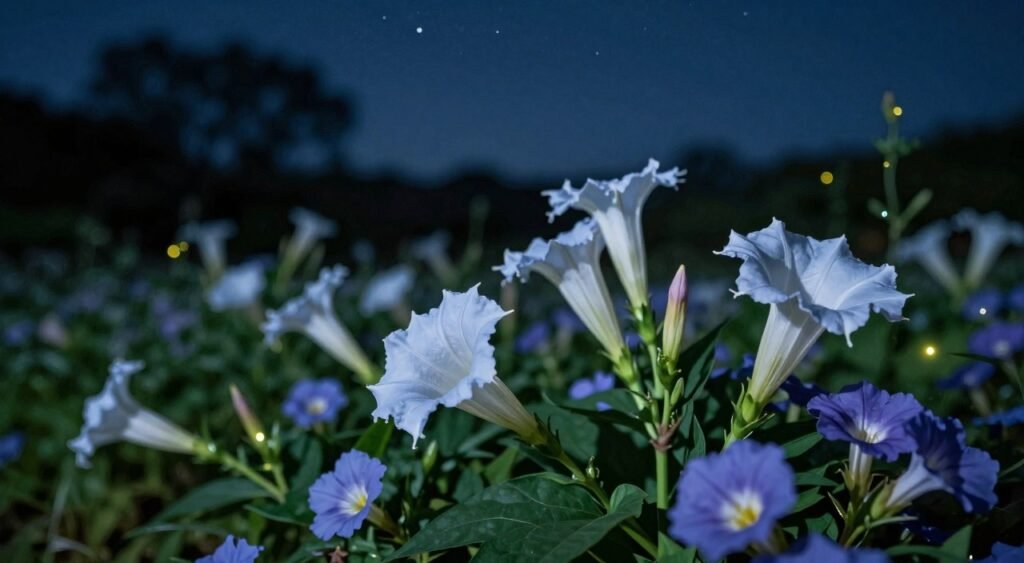
Popular Varieties for American Climates
Many beautiful plants are perfect for gardens in the United States. They add beauty and smell to your yard at night.
Moonflower (Ipomoea alba)
The Moonflower has big, white flowers that open at dusk. It needs sun and a trellis to climb. Its scent is sweet and strong.
Evening Primrose (Oenothera biennis)
The Evening Primrose has bright yellow flowers that shine at night. It needs good soil and room to grow. It attracts moths to your garden.
Night-Blooming Jasmine (Cestrum nocturnum)
This shrub smells amazing at night. Keep it warm and in a sheltered spot. It’s great for patios or balconies.
Assessing Your Hardiness Zone
Know your USDA Hardiness Zone before buying plants. This tells you if a plant can survive your winters. Always check the plant label to match your climate.
- Zone 3-6: Choose annuals or plants that can go inside during winter.
- Zone 7-9: Many night-blooming perennials will grow outside all year.
- Zone 10-11: You can grow many tropical plants here.
Researching your zone helps your garden succeed. A well-planned garden is a long-lasting source of beauty that shines every night.
Preparing the Ideal Soil and Planting Environment
Starting a nocturnal garden needs a good base. Your plants need the right spot to bloom at night. Make sure the ground is right to keep your garden bright all season.
Testing and Amending Soil pH
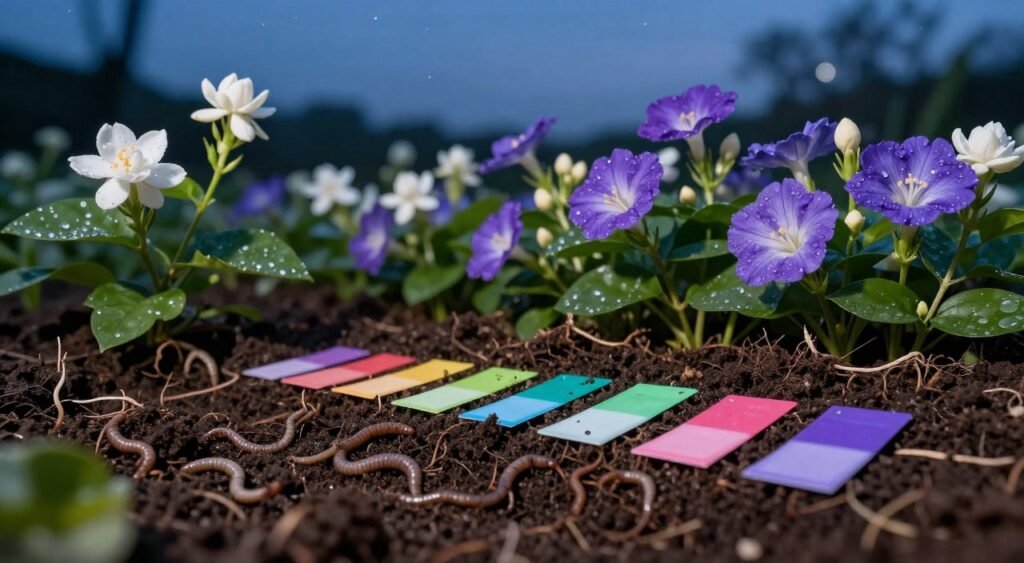
First, check your garden bed’s condition. Knowing the soil pH for flowers is key. Most night flowers like slightly acidic to neutral soil.
You can buy a simple test kit at your local garden store. If your soil is too alkaline, add peat moss or pine needles. Consistency is key when changing soil levels to avoid harming your plants.
Ensuring Proper Drainage for Root Health
Nocturnal plants don’t like wet roots. Bad drainage can cause root rot, stopping growth and blooms. Your soil must let water drain well from the roots.
If your soil is heavy clay, mix in compost or sand. Raised garden beds also help with drainage. They let you control moisture levels.
Choosing the Right Location for Night-Blooming Success
Finding the right spot is as important as the soil. For moonflower planting, choose a sunny spot but protect from strong winds. These plants need sun to bloom at night.
Keep the area dark at night to avoid confusing the plants. Place your flowers where they get enough sun and darkness. This creates the ideal sanctuary for your garden to grow well. Good placement helps your plants grow strong and healthy.
Mastering Watering Techniques for Night-Blooming Species
Evening primrose plants need steady moisture. When it gets dark, they use stored water to bloom. Giving them the right water at the right time keeps your garden bright at night.
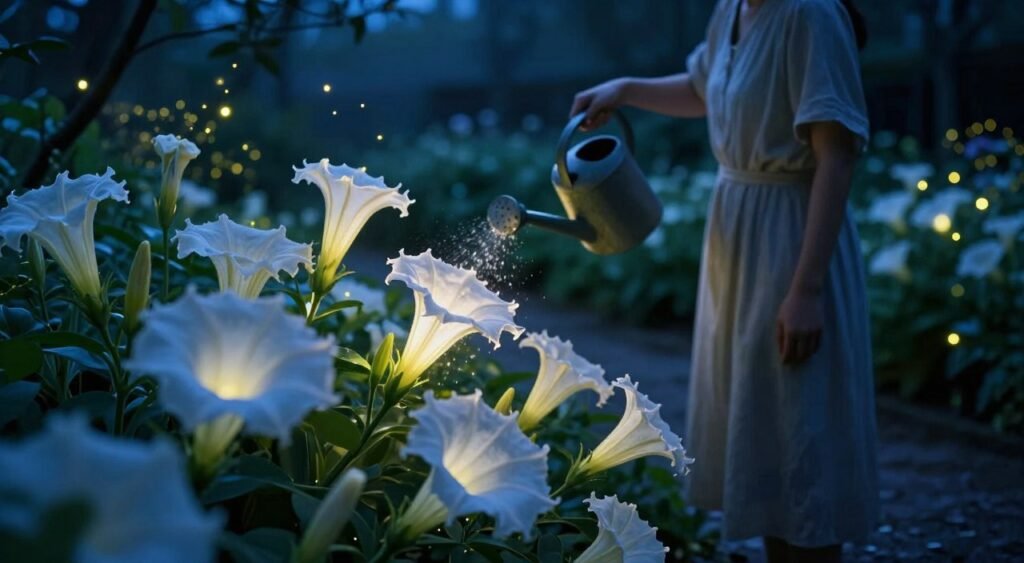
Establishing a Consistent Watering Schedule
Water your plants in the morning. This lets the soil soak up water before it gets hot. Consistency is key for plants that bloom at night.
«Water is the driving force of all nature.» — Leonardo da Vinci
Check the soil with your finger before watering. If it’s damp, wait a day. This routine helps your plants bloom well all season.
Avoiding Common Overwatering Pitfalls
Too much water can harm your plants. It can cause root rot and fungal infections. Make sure your garden drains well to avoid waterlogged soil.
Yellow leaves or mushy stems mean you’re watering too much. Always focus on proper drainage to keep your plants healthy. Watch your plants to avoid these mistakes.
Adjusting Hydration Based on Seasonal Changes
Change your watering as the seasons change. In summer, plants need more water because it’s hot and dry. In autumn, they need less water because it’s cooler and wetter.
Watch the weather to adjust your evening primrose care. This keeps your garden healthy and blooming all season. Proper watering nocturnal blooms makes your garden beautiful and fragrant.
Managing Light Exposure and Artificial Illumination
People think night-blooming plants only need darkness. But they also need sunlight during the day. This sunlight helps them make the beautiful flowers you see at night.
Balancing Natural Sunlight Requirements
Most night-blooming flowers need at least six hours of sunlight a day. Proper energy storage is key for their blooms. If your plants are too tall or don’t bloom, they might need more sunlight.
When using night-blooming jasmine tips, think about where you plant them. They should get morning sun but not too much afternoon sun. This keeps them healthy and looking good.
Using Supplemental Lighting to Enhance Viewing
At night, you can use special lights to make your garden look magical. Use low-voltage LED lights or soft spotlights. Subtle illumination lets you see the details of your flowers without disturbing them.
Don’t put bright lights on your plants. It can mess with their natural timing. Instead, light up nearby areas. This way, you can enjoy your garden while watering nocturnal blooms or just relaxing outside.
Protecting Blooms from Light Pollution
Too much garden light pollution can harm your plants. Streetlights and other bright lights can stop them from blooming. Try to keep your garden dark where you can.
If your garden is near a bright street, use screens or tall plants to block the light. This helps your plants bloom naturally. Here’s a table to help you manage light:
| Light Source | Impact on Blooms | Recommended Action |
|---|---|---|
| Direct Sunlight | High (Energy Storage) | Provide 6+ hours daily |
| Security Floodlights | Negative (Disruption) | Use motion sensors only |
| Soft LED Path Lights | Neutral (Aesthetic) | Keep away from foliage |
| Street Lighting | High (Cycle Interference) | Install privacy screens |
Fertilization and Nutrient Requirements
Your night-blooming plants need special food to bloom in the evening. They use a lot of energy to make beautiful flowers after dark. Fertilizing night flowers is very important for gardeners.
Giving the right food at the right time helps your plants stay strong all season.
Selecting the Right Fertilizer for Flowering Plants
Choose a fertilizer that helps plants bloom a lot. Look for one with more phosphorus, the middle number. This helps flowers grow.
Also, check the soil pH for flowers. Your plants need the right soil to get nutrients.
Nocturnal plants like slightly acidic to neutral soil. If your soil is too far off, your plants might not get the nutrients they need. Always test your soil before using synthetic fertilizers.
Timing Your Feeding Cycles
Being consistent is key in gardening. Start feeding in early spring when plants wake up. A slow-release fertilizer at the beginning of the season gives nutrients for months.
In summer, you might need a liquid fertilizer for extra help. But don’t fertilize too late in the season. It can cause damage from frost. Proper timing prevents stress and keeps your garden healthy.
Organic Alternatives for Soil Enrichment
For a green approach, try organic garden fertilizer. Compost, aged manure, and bone meal are great. They give nutrients slowly and help soil life.
Organic matter makes soil hold water and nutrients better. This creates a thriving ecosystem for your plants. Organic gardening keeps your garden healthy and eco-friendly for a long time.
Pruning and Maintenance for Healthy Growth
Your nocturnal garden needs special care to look great at night. Nocturnal garden care keeps your plants looking good all season. By taking care of them, you make sure they bloom beautifully under the moon.
Deadheading Spent Blooms
It’s important to remove old flowers. This stops plants from using energy on seeds. Cutting off old blooms helps your plants grow more flowers.
While deadheading, don’t forget to fertilize night flowers too. A little fertilizer after they bloom helps them grow back fast. Make sure the soil is moist before you feed them.
Managing Growth Patterns and Support Structures
Some plants, like moonflowers, need help to grow. Pruning night-blooming plants helps them grow right. Use sharp shears to cut off any bad parts.
For climbing plants, use trellises or stakes. Tie them up gently to keep them straight. This helps them get enough light and makes them easy to see at night.
Winterizing Your Nocturnal Garden
When it gets cold, you need to get your garden ready for winter. Remove dead leaves to keep pests away. Put organic mulch around your plants to keep their roots warm.
For plants that can’t handle cold, move them inside or to a greenhouse. If it’s very cold where you live, plan carefully to protect your garden. This way, your garden will come back strong in spring.
Protecting Your Plants from Pests and Environmental Stress
Keeping your garden bright at night means fighting pests and stress. Your garden is a home for night creatures. But, it can also get pests that harm your plants. Stay ahead to keep your plants strong all season.
Identifying Common Nocturnal Garden Pests
Many pests are active at night. Slugs and snails leave slime and holes in leaves. Cutworms and moth larvae eat buds.
Look for pests at night with a dim light. Early detection stops problems. Healthy plants fight pests better.
Implementing Natural Pest Control Methods
Choose natural ways to fight pests. Avoid harsh chemicals that harm pollinators. Use organic stuff like neem oil in the evening.
Plant herbs like mint to keep pests away. This makes your garden smell good. Good organic garden fertilizer makes plants strong against pests.
Mitigating Damage from Extreme Weather
Weather like heavy rain or wind can hurt your plants. Use stakes or covers to protect them. Prune plants to make them stronger.
Too much light can confuse insects. This makes your plants less attractive to pollinators. Balance your lights and protect plants in bad weather. This helps your flowers grow well.
Conclusion
Creating a vibrant space that comes alive at night is special. It lets you see nature in a new way. You notice the soft scents and light colors of these plants.
Gardening in the dark needs careful watching. Regular checks help you catch problems early. This keeps your flowers looking great.
Keeping pests away is key. Watching your garden closely helps your Moonflowers and Evening Primrose grow well. This keeps them safe from pests.
Good soil and water make a big difference. When the stars come out, your plants bloom beautifully. You create a peaceful place for the evening.
Share your gardening journey with others. It helps you learn and grow. Your work in night-blooming plants makes your backyard beautiful.