
Turning a tough spot into a colorful garden is fun. You can make a thriving botanical display that’s a beautiful part of your yard.
Choosing the right flowers for rock gardens lets you enjoy your yard’s natural look. These plants love well-drained soil. They add beauty with their colors and textures.
Planning your garden well makes it look great and last long. You can pick big, bright flowers or soft, green plants. Your choices make your yard special. Let’s find the best plants for your area and soil.
Understanding the Unique Environment of Rock Gardens
Starting a beautiful rocky garden is exciting. First, learn about the special conditions of these areas. Watch how nature handles water and sunlight to make your garden real and green. Picking the best plants for rocky landscapes means thinking like a mountain gardener.
Defining the Alpine Aesthetic
The alpine look comes from high places where plants grow on rocks. These spots have dramatic textures, small leaves, and look forever young. To get this look, choose plants that look good all year.
Make your garden mix hard stones with soft plants. This mix makes your garden look amazing. Picking the right plants keeps your garden bright, even in tough spots.
Why Microclimates Matter in Your Garden
Every yard has different spots with their own weather. Finding these spots is key to growing the best plants for rocky landscapes. A sunny spot is great for plants that love heat, while a shady area is perfect for cool plants.
Watch your garden at different times to find these spots. By picking plants that fit these spots, you won’t need to water and care for them as much. Here’s how different spots affect your garden.
| Microclimate Type | Light Exposure | Moisture Level | Ideal Plant Strategy |
|---|---|---|---|
| Sunny Slope | Full Sun | Low | Drought-tolerant succulents |
| Shaded Crevice | Partial Shade | Moderate | Cool-loving alpine mosses |
| Flat Rocky Bed | Variable | Well-drained | Hardy, low-growing perennials |
Essential Soil Preparation for Rocky Landscapes
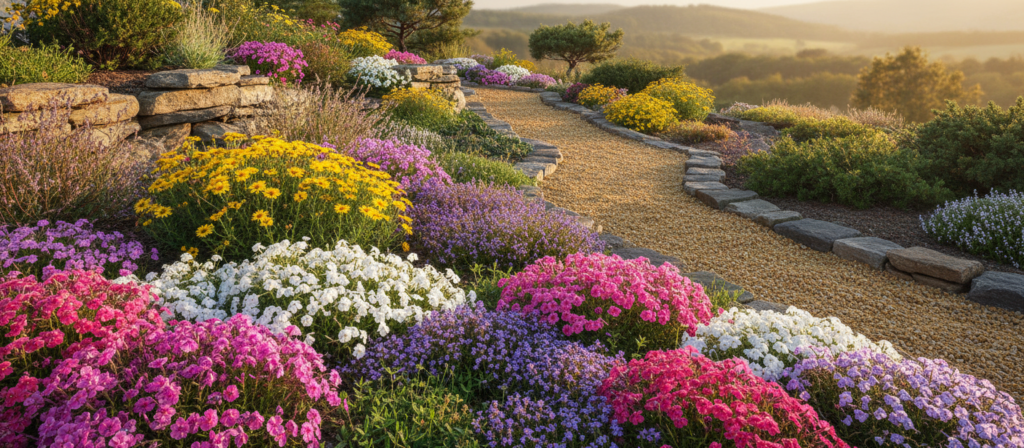
To grow the best flowers for rocky soil, start with the basics. Alpine plants love harsh, high places where water flows fast. By making your soil like this, you help your plants grow strong.
Achieving Optimal Drainage for Success
Drainage is key to a healthy garden. Without it, roots rot and plants die. You want soil that lets water flow right through.
Use lots of sand, gravel, and stone in your soil. Coarse sand, pea gravel, and crushed stone keep it loose. This helps your plants grow deep roots.
«The secret to a thriving rock garden lies not in the plants themselves, but in the gritty, well-draining soil that supports their survival.»
Amending Soil for Nutrient-Poor Conditions
Don’t overdo it with compost or fertilizer. Alpine plants like poor soil. Too many nutrients make them weak.
Make a soil mix that’s lean and slow-growing. Here’s a simple recipe:
- Coarse Grit: Use 40% to 50% crushed granite or sharp sand.
- Organic Matter: Limit compost to no more than 10% of the total volume.
- Native Soil: Use the remaining portion to provide structure and stability.
Keep your soil simple. This way, your plants stay strong and healthy. They’ll look great for a long time.
Selecting Flowers Suitable for Rock Gardens
Starting a stunning rock garden is easy. First, pick plants that fit your local weather. Choose flowers suitable for rock gardens that grow well in your area. This way, your garden will look great all year and need little care.
Matching Plant Hardiness to Your Zone
Before buying plants, check your USDA hardiness zone. This map shows which plants can handle your winter. Choose plants native or well-suited to your area to avoid problems.
Plants that are too soft won’t do well in rocky areas. On the other hand, plants too hardy might not grow well in summer. Finding the right balance is key for colorful flowers for rocky areas that come back every year.
Considering Bloom Times for Year-Round Interest
A good garden has plants that bloom at different times. This way, your garden stays colorful from spring to fall. Mixing plants with different bloom times keeps your garden looking full all year.
Early Spring Bloomers
Spring is when your garden comes alive. Choose low-growing perennials for early color. These plants feed pollinators when they wake up from winter.
Late Summer Color Contributors
Summer’s heat means you need plants that can handle it. Late bloomers keep your garden bright even when it’s hot. These colorful flowers for rocky areas add beauty and texture in summer.
| Plant Category | Bloom Season | Hardiness Focus | Visual Impact |
|---|---|---|---|
| Early Spring | March – May | Frost Tolerance | High Contrast |
| Mid-Summer | June – August | Heat Resistance | Vibrant Hues |
| Late Summer | August – October | Drought Tolerance | Textural Depth |
Plan carefully to have flowers suitable for rock gardens that change with the seasons. This way, your garden will be a beautiful spot all year.
Top Perennials for Long-Lasting Color
Perennials are key to a beautiful rocky garden. They need little replanting and bring lasting beauty. These plants love the tight, poor soil of stone gardens.
Creeping Phlox for Ground Coverage
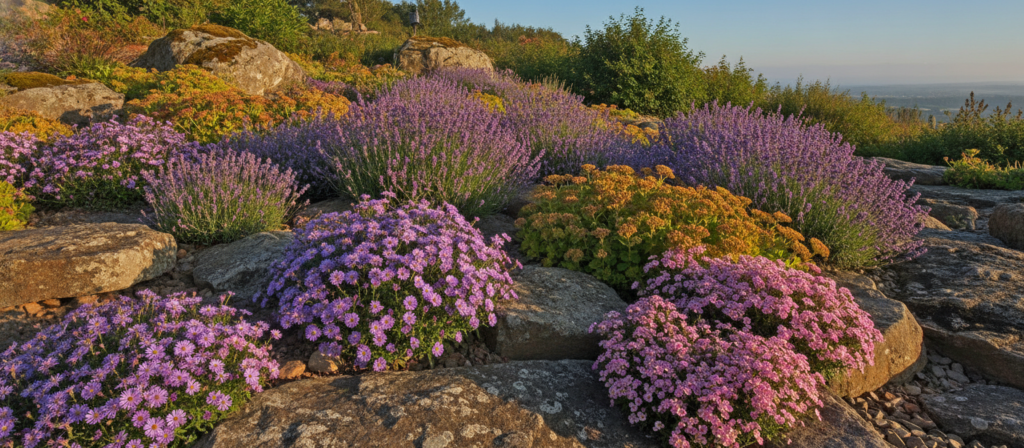
Phlox subulata, or Creeping Phlox, adds bright color to rocky areas. It grows thick, like moss, and stops weeds. It’s great for a spring flower carpet.
Sedum Varieties for Texture and Resilience
Sedum, or stonecrop, is very tough. It keeps water in its leaves, making it great for dry spots. Different Sedum types add cool textures all season.
Dianthus for Fragrance and Hardiness
Dianthus smells great and is very hardy. It has grass-like leaves and frilly flowers. It blooms well in sunny, dry places.
«The beauty of a rock garden lies in the quiet endurance of its plants, which bloom with grace despite the rugged terrain they call home.»
| Plant Name | Primary Benefit | Sun Requirement | Growth Habit |
|---|---|---|---|
| Creeping Phlox | Spring Color | Full Sun | Spreading Mat |
| Sedum | Drought Resistance | Full Sun | Succulent Clump |
| Dianthus | Fragrance | Full Sun | Mounded Foliage |
Choosing these rock garden perennials makes a garden that needs little care. Pick these reliable plants for a vibrant, healthy garden with little work.
Drought-Resistant Varieties for Sunny Slopes
If you have a steep, sun-drenched area in your yard, you can make it vibrant. Sunny slopes can be hard because of fast water runoff and hot heat. But, they’re great for drought-tolerant plants that don’t need much water. You can keep colorful flowers for rocky areas bright all summer.
Thyme as a Fragrant Groundcover
Creeping thyme is perfect for spaces between stones on a sunny slope. It grows low and fills in gaps, keeping weeds away. Its aromatic foliage smells nice when you touch it, making your garden path special.
Lavender for Mediterranean-Style Rock Gardens
Lavender adds a classic, elegant touch to your garden with little care. These drought-resistant flowers for rocks love the sun and dry soil of a slope. ‘Munstead’ or ‘Hidcote’ lavender gives a beautiful purple look that draws in pollinators all summer.
Yarrow for Structural Beauty
Yarrow adds height and interesting shape to your garden. Its fern-like leaves and flat-topped flowers look great with jagged stones. Yarrow is incredibly hardy, so you’ll see colorful flowers for rocky areas even when it’s hot.
Alpine Beauties for Cooler Microclimates
You can make your rock garden a special place for rare plants. Focus on cooler spots that are protected. These areas are perfect for delicate plants that can’t handle hot weather.
By picking the right rock garden plants, you’ll have a beautiful landscape. It will do well even in tough spots.
Saxifraga for Crevice Planting
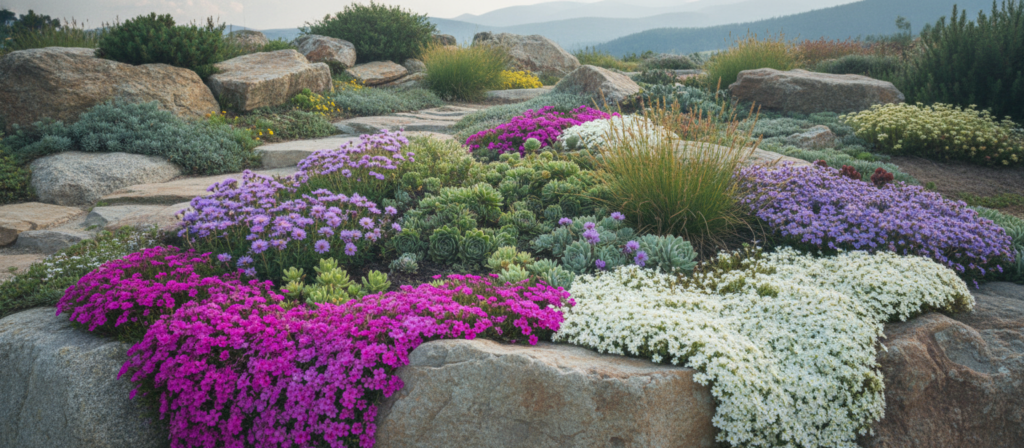
Saxifraga is great for filling tight spaces. These plants love to grow in mountain crevices. They’re perfect for vertical rock walls or narrow paths.
They grow into tight, moss-like cushions. These cushions bloom with stunning flowers for alpine gardens in early spring.
Gentiana for Vibrant Blue Hues
Gentiana adds intense color to your garden. These plants have deep, trumpet-shaped flowers. They look amazing against grey stone.
They like cool, moist places. This makes them perfect for the north side of your rock garden.
Sempervivum for Unique Foliage Patterns
Sempervivum, or «hens and chicks,» has cool leaf patterns. These plants are tough and can grow in little soil. They store water in their leaves, making them easy to care for.
| Plant Name | Primary Feature | Ideal Placement | Water Needs |
|---|---|---|---|
| Saxifraga | Mossy cushions | Tight crevices | Moderate |
| Gentiana | Vibrant blue blooms | Cool, shaded slopes | Consistent |
| Sempervivum | Geometric rosettes | Rocky pockets | Low |
Step-by-Step Planting Guide for Rock Garden Success
Starting a rock garden is fun. First, pick the right plants for rocky soil. Then, how you plant them is key to their health.
Preparing the Planting Pocket
Clear out dirt from between stones first. Make sure each pocket is deep enough for the plant’s roots. Proper drainage is very important.
If the soil feels too tight, add some grit or coarse sand. This helps water drain and prevents roots from rotting. Soil structure is more important than richness here.
Positioning Your Plants for Growth
When planting, gently loosen the roots. Put the plant so the crown is a bit above the soil. This keeps the roots dry and the leaves wet.
Make sure plants have enough space. This lets air move and keeps your garden looking good. Strategic placement makes it look like a real mountain slope.
Applying Mulch and Top Dressing
Finish by adding a stone top dressing. It keeps the soil cool and weeds away. Small stones or gravel around the plants protect them from too much water.
This also makes your garden look neat and clean. Consistent maintenance keeps it looking great for years. It’s like having a natural scree slope in your garden.
Maintenance Tips for Low-Care Rocky Displays
Even the toughest gardens need a little care now and then. You picked low maintenance flowers for rock gardens to save time. But, these plants still need some basic care to stay healthy and bright.
Pruning and Deadheading Techniques
Deadheading means cutting off old flowers to make new ones grow. This stops the plant from using energy on seeds. It often makes the plant bloom again.
Pruning keeps your plants looking neat. Use sharp shears to trim long stems after they stop blooming. This keeps them from getting too big and taking over.
Managing Invasive Growth in Tight Spaces
Rock gardens can get crowded fast. Check these spots often to stop plants from taking over. If a plant is getting too big, trim it to keep things balanced.
It’s also important to pull out weeds early. Weeds can grow quickly in the spaces between rocks. Pulling them out by hand stops them from getting too big to pull later.
Seasonal Cleanup Requirements
Getting your garden ready for the weather is key. In the fall, clean up dead leaves and plants. This stops moisture from causing rot in the wet winter.
In the spring, rake away old mulch and leaves. This lets the soil warm up and helps new growth start. These steps keep your low maintenance flowers for rock gardens looking great.
| Task | Frequency | Primary Benefit |
|---|---|---|
| Deadheading | Weekly during bloom | Encourages new flowers |
| Light Pruning | Post-flowering | Maintains plant shape |
| Weeding | Bi-weekly | Prevents competition |
| Debris Removal | Seasonal | Reduces disease risk |
Managing Water and Drainage in Rocky Soil
Managing water in rocky soil is all about timing and technique. Proper hydration keeps your low maintenance flowers for rock gardens healthy. Knowing how water moves in your landscape is key to success.
Establishing an Irrigation Schedule
Being consistent with watering is crucial. Most drought-resistant flowers for rocks like deep, less frequent water. This helps their roots grow deep, making them stronger during dry times.
Check the soil moisture a few inches down. If it’s dry, it’s time to water well. In summer, you might need to water more often because of evaporation.
Preventing Root Rot in Compacted Areas
Water pooling around plants is bad news. It can cause root rot and other problems. Your soil needs to drain well to keep plants healthy.
If water stays, add coarse grit or gravel to improve drainage. This helps your low maintenance flowers for rock gardens stay dry. With these steps, you can grow beautiful drought-resistant flowers for rocks easily.
Troubleshooting Common Rock Garden Challenges
Even the best gardens can face problems. Your rock garden perennials might look stressed. This could be because of the weather or pests.
Dealing with Pests in Rocky Environments
Pests like to hide in stone crevices. Check your plants every week to find them early.
Aphids, slugs, and spider mites are common pests. To keep your rock garden perennials safe, try these tips:
- Hand-picking: Catch slugs or snails in the morning or evening.
- Neem Oil: Use organic neem oil to keep aphids and mites away.
- Natural Barriers: Put crushed eggshells or diatomaceous earth around plants to stop pests.
Addressing Nutrient Deficiencies
Rocky soils are good for many plants. But sometimes, they need extra nutrients.
Check your soil before adding fertilizers. Most rock garden perennials don’t like too much fertilizer.
Use these gentle ways to help your plants:
- Compost Tea: Give them a light, liquid nutrient boost.
- Bone Meal: Add a little to help roots grow strong.
- Top Dressing: Put a thin layer of compost around plants to feed them slowly.
By watching your garden and using gentle, organic ways, it will stay beautiful for a long time.
Conclusion
Building a rock garden makes a simple spot into a colorful, living art piece. You now know how to make a space that grows strong and looks natural.
Choosing the right plants brings your dream to life. You can find beautiful flowers for alpine gardens that fit your area and soil. These plants make your outdoor spot a source of pride all year.
By focusing on drainage and placement, you create a good home for all plants. Seeing your garden grow brings joy as colors and textures mix on the stones. You can keep this balance easily.
Visit local nurseries to find special plants that match your style. Adding stunning flowers for alpine gardens lets you play with height, smell, and when they bloom. Your rocky haven will get more stunning every year.
Share your garden’s growth with gardening friends to spark new ideas. Your rock gardening journey leaves a lasting mark of beauty and care for nature. Enjoy watching your landscape grow and thrive under your care.