
Your home’s outside is the first thing visitors see. Picking the best flowers for front yard landscaping can make your home look better. It also makes it feel welcoming.
Before digging, plan your garden well. Good front yard landscaping ideas mix seasonal flowers with green plants. This keeps your garden looking good all year.
A beautiful garden shows off your style. It makes your house look special in the neighborhood. Planning carefully helps your garden stay healthy and pretty with little work.
Key Takeaways:
- Make your home look better with the right plants.
- Make your home more valuable with a nice garden.
- Plan well to keep your garden growing and looking good.
Assessing Your Front Yard Environment
Starting a garden is more than just digging. It’s about knowing your yard first. By looking at your space, you pick plants that will grow well. Thoughtful preparation makes your garden look good all year.
Evaluating Sunlight Exposure Patterns
Sunlight is key for your flowers. Watch how light changes in your yard. This helps you know where to plant.
- Full Sun: Areas that get lots of sunlight all day.
- Partial Shade: Places that get some light, but not too much.
- Deep Shade: Areas that don’t get much sun, like under trees.
Understanding Your Local Hardiness Zone
Your area’s climate affects which plants can make it through winter. The USDA has a hardiness zone map for this. Knowing your zone helps pick plants that won’t die in the cold.
Find your zone by typing in your zip code online. Always choose plants that fit your zone. This means they’ll come back every year without extra care.
Analyzing Soil Composition and Drainage
Soil is crucial for your garden’s health. It affects how plants get nutrients and water. Check if your soil is sandy, clay, or rich in organic matter.
Drainage is also key. It stops water from drowning your plants. If water stays too long, it can hurt your plants. If you see water after rain, you might need to change your soil or pick plants that like wetter places.
Selecting the Best Flowers for Front Yard Landscaping
Start by picking the right flowers for your front yard. The best flowers for front yard landscaping match your local weather and look great. Knowing the different types of plants helps create a beautiful yard all year.
Choosing Perennials for Year-After-Year Color
Planting perennial flowers is a smart choice for a lasting garden. These plants come back every spring, saving you time and money. They grow strong and colorful as they get older.
Choose plants like coneflowers, daylilies, and hostas for reliable blooms. They keep your garden looking welcoming all year.
Incorporating Annuals for Instant Vibrancy
Annuals add quick color to your front yard. They bloom all season, offering vibrant colors. To keep them blooming, water and deadhead them regularly.
Use annuals to fill gaps or add color in containers. They let you try new colors each year without a long-term commitment.
Selecting Native Plants for Low-Maintenance Beauty
Native plant gardening is popular for its low care. These plants fit your local weather and soil. They need less water and fertilizer, making your garden eco-friendly.
| Plant Type | Longevity | Maintenance Level | Primary Benefit |
|---|---|---|---|
| Perennials | Multi-year | Moderate | Long-term structure |
| Annuals | One season | High | Instant color |
| Native Plants | Multi-year | Low | Eco-friendly |
Planning Your Garden Layout and Color Palette
Creating a beautiful front yard is more than planting flowers. It needs a smart plan for layout and color. A well-planned garden makes your yard look professional. Follow these curb appeal tips to make your space welcoming and show your style.
Creating Focal Points with Height and Texture
Every good front yard garden design has a main point to catch your eye. Use plants of different heights and textures for interest. Tall, architectural plants near the door anchor your design.
Mix fine leaves with big ones to avoid a dull look. This mix adds class and shows you care about your garden.
Using Color Theory to Enhance Curb Appeal
Color theory is key when picking colors for your garden. Choose complementary colors like purple and yellow for energy. Or, use different shades of one color for calm elegance.
Think about your home’s colors before picking plants. When flowers match your home, your curb appeal tips and value go up.
Layering Plants for Depth and Dimension
Layering is key in front yard landscaping ideas. Put tall plants in the back and short ones in the front. This makes your garden look deep.
Layering hides stems of tall shrubs with lower plants. This makes your garden look full and professional. Don’t forget to leave space for air and growth.
Preparing the Soil for Optimal Growth
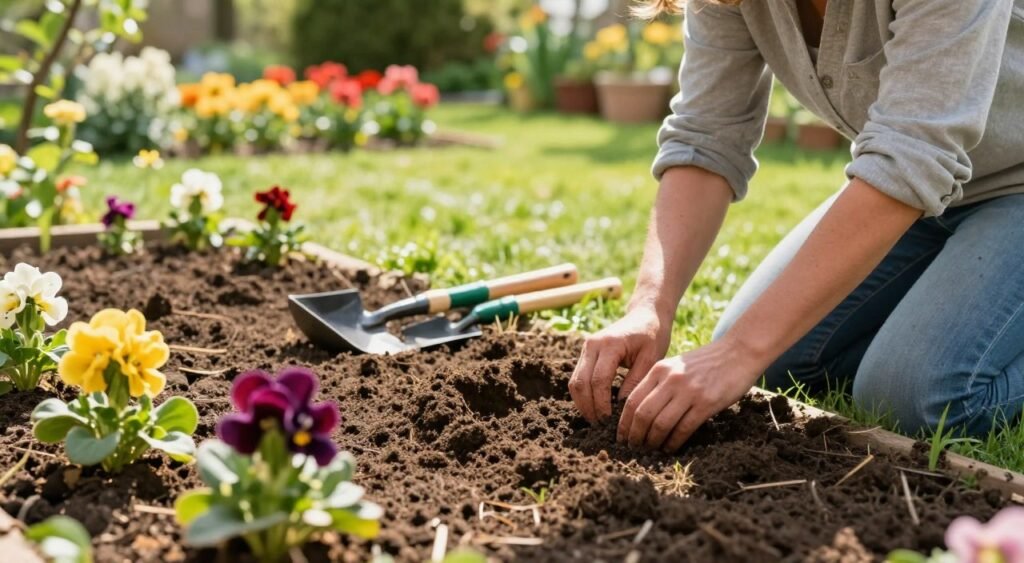
Success in your front yard starts with the earth beneath your feet. While it’s tempting to focus on flower colors, the real secret to a thriving landscape is underground. Healthy soil gives plants the nutrients and structure they need to grow well.
Testing Your Soil pH Levels
Before planting, you need to know your garden’s chemical balance. Garden soil testing shows if your soil is acidic, neutral, or alkaline. Most flowers do best in slightly acidic to neutral soil.
You can buy a home testing kit at a local nursery or garden center. These kits tell you how to take samples from your yard. Early garden soil testing helps avoid planting problems.
Amending Soil with Organic Matter
Knowing your soil’s profile lets you improve it. Adding organic matter makes the soil rich and loamy. This helps sandy soil hold water and clay soil drain better.
Think about adding these to your garden:
- Compost: Adds nutrients and microbes.
- Aged Manure: Makes soil structure better and adds fertility.
- Leaf Mold: Helps with water and air in the soil.
Mix these into the top six to eight inches of soil. This gives roots easy access to nutrients. Regular soil preparation for flowers helps plants grow strong and bloom well.
Clearing Weeds and Debris Before Planting
A clean start is key for your new plants. Weeds compete with flowers for water, sunlight, and nutrients. Remove all weeds, including roots, to stop them from coming back.
Get rid of rocks, sticks, and old plant parts. A clean bed is easier to plant in. It looks good and helps your flowers grow well.
Planting Techniques for Long-Term Success
Learning how to plant well makes your garden grow year after year. When you plant perennial flowers right, they grow strong roots fast. This helps them avoid growing poorly or dying early.
Determining Proper Spacing for Mature Growth
It’s easy to plant flowers close for a full look. But think about how big they’ll get. This way, they won’t get too crowded.
Check the plant tag for spacing tips. When planting many, measure from plant center to center. This lets them grow well together.
Digging the Ideal Planting Hole
The hole size is key, just like where you plant it. Make the hole twice as wide as the plant’s roots. This lets the roots spread out.
The hole should be as deep as the plant’s roots. Digging too deep can harm the plant.
Setting Plants at the Correct Depth
Planting at the right depth for flowers is crucial. The soil level should match the plant’s root ball top. Burying the crown can hurt the roots.
Handling Root-Bound Nursery Containers
Many plants from nurseries have circling roots. Planting them as is can harm them. Gently spread the roots or make cuts to help them grow.
| Plant Type | Spacing Requirement | Ideal Depth | Root Handling |
|---|---|---|---|
| Small Perennials | 8-12 inches | Level with soil | Lightly loosen |
| Large Shrubs | 3-5 feet | Level with soil | Tease outward |
| Spring Bulbs | 4-6 inches | 3x bulb height | None required |
| Ground Covers | 6-10 inches | Level with soil | Gently spread |
Essential Watering and Irrigation Strategies
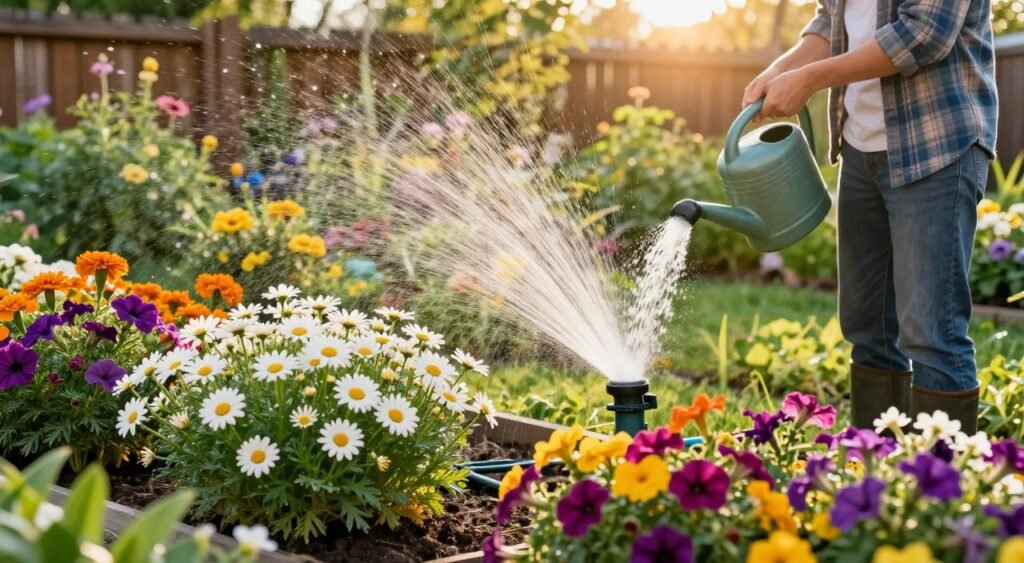
Learning how to water your garden is key to keeping it alive and colorful. It’s important to water your plants right, garden watering techniques are crucial. This is true, most, during the time when they are just starting to grow.
Establishing a Consistent Watering Schedule
Keep the soil moist but not too wet. Check if the soil is dry by sticking your finger in it. If it’s dry, it’s time to water.
The planting depth for flowers also matters. Plants with deeper roots need less water but more often. Always change your watering plan based on how much rain you get.
Utilizing Drip Irrigation for Efficiency
Drip irrigation is a smart way to water your garden. It sends water straight to the roots, saving water compared to sprinklers.
With drip irrigation, your flowers get just the right amount of water. This keeps the leaves dry, which helps prevent diseases.
Avoiding Common Watering Mistakes
Don’t water your plants from above, as this can cause leaf diseases. Water at the base of the plant instead.
Don’t water when it’s very hot. Watering in the early morning is best. This way, plants can soak up the water before it evaporates.
| Plant Type | Watering Frequency | Moisture Preference |
|---|---|---|
| Drought-Tolerant | Weekly | Dry to Moderate |
| Annual Flowers | Daily/Every Other Day | Consistently Moist |
| Perennial Blooms | Twice Weekly | Moderate |
| Newly Planted | Daily | High Moisture |
Fertilization and Nutrient Management
Healthy soil is key for a great garden. Soil preparation for flowers is a good start. But, your plants need more to stay strong all season.
Give them the right food at the right time. This keeps your garden looking great.
Choosing the Right Fertilizer for Your Flowers
When you start fertilizing garden flowers, you’ll see many choices. Most have three numbers for Nitrogen, Phosphorus, and Potassium. Nitrogen helps leaves grow, and Phosphorus makes flowers bloom.
Before you start, test your soil. This tells you what your garden needs. It helps avoid harming your garden or the environment. Pick a balanced fertilizer unless your test shows you need something else.
Applying Slow-Release Granular Fertilizers
Slow-release granular fertilizers are great for those who are busy. They give nutrients slowly over weeks or months. This is better than liquid fertilizers that can wash away.
Don’t over-fertilize. Too much can make plants grow too much and not bloom. Follow the package instructions. Consistency is the key to a healthy garden.
Recognizing Signs of Nutrient Deficiency
Your plants will show you if they need something. Yellow leaves or slow growth mean they might be missing important nutrients. Fixing this early helps your plants stay healthy.
| Deficiency Sign | Potential Cause | Recommended Action |
|---|---|---|
| Yellowing lower leaves | Nitrogen shortage | Apply balanced fertilizer |
| Purple-tinted foliage | Phosphorus deficiency | Use bloom-booster feed |
| Brown leaf edges | Potassium imbalance | Check soil pH levels |
Pruning and Deadheading for Continuous Blooms
Keeping your flower beds colorful all season is easy. Just give them regular care. This keeps your plants healthy and pretty all season.
The Importance of Deadheading Spent Flowers
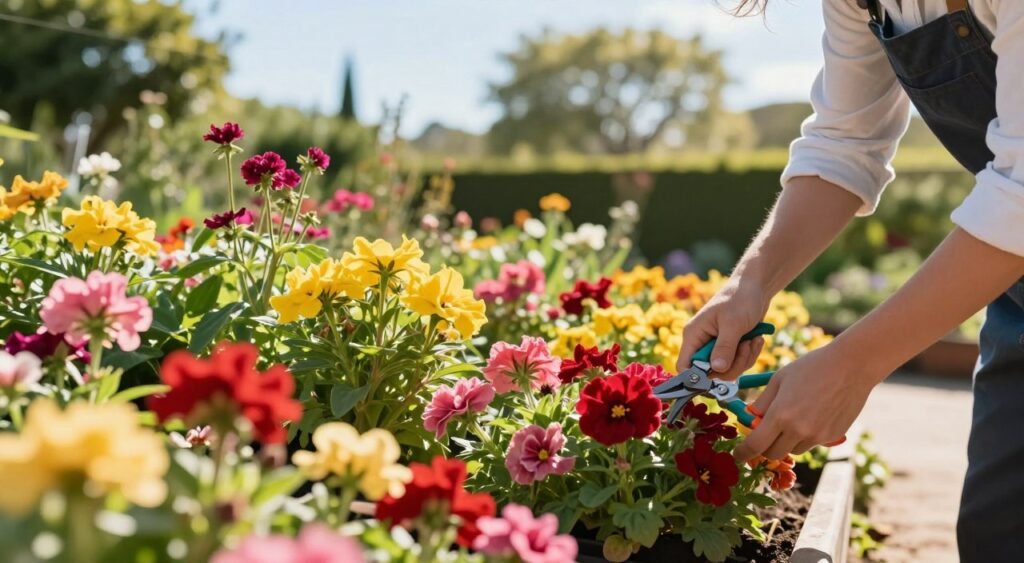
Deadheading means taking off old flowers. It stops plants from making seeds. Instead, they make new buds and leaves.
This keeps your garden looking good and blooming longer. Most annuals bloom again in just a few days after deadheading.
Techniques for Proper Pruning
Pruning is key for plant health. Use sharp blades for precise cuts above a leaf node. This makes plants fuller and healthier.
Check your plants for dead or damaged parts. Cutting these off stops disease. It helps plants grow strong and healthy.
Tools You Need for Maintenance
Good tools make gardening easier and fun. You don’t need a lot, just a few important ones.
- Bypass pruners: Great for clean cuts on stems.
- Gardening gloves: Keep your hands safe from thorns and sap.
- Hand rake: Good for cleaning up after pruning.
After pruning and deadheading, think about fertilizing garden flowers. It gives them a nutrient boost. This helps them grow strong and colorful again.
Managing Common Pests and Diseases
Being watchful is key to keeping your front yard safe. By acting fast, you can stop problems before they ruin your garden’s look.
Identifying Early Signs of Infestation
Check your plants every week for signs of trouble. Look for discolored leaves, sticky stuff, or tiny holes. These signs mean insects are eating your plants.
Aphids hide on the underside of leaves. Powdery mildew looks like white dust. Catching these early stops them from getting worse.
Implementing Integrated Pest Management
Integrated Pest Management (IPM) means planning your garden to avoid pests. Choosing native plant gardening makes your garden stronger against pests.
This method uses natural ways to keep pests away. It lets good bugs like ladybugs help control pests for you.
Using Organic Solutions for Garden Health
When you need to act, use safe, organic ways to fight pests. Good pest control for flowers includes using neem oil or insecticidal soaps.
These methods kill bad bugs but are kind to bees and butterflies. Use them when it’s cooler to keep your flowers looking great.
Seasonal Maintenance and Winter Protection
Changing your gardening routine with the seasons is key to a healthy landscape. Your outdoor space needs different care as the weather changes. This keeps your plants healthy and your garden looking great.
Preparing Your Garden for Summer Heat
High temperatures cause plants to lose a lot of water. Using good garden watering techniques is crucial to keep them cool and moist. A thick layer of organic mulch helps keep the soil moist and cool.
Even easy-care plants need this protection in hot weather. Mulch keeps the roots cool. It also means you water less and your plants grow stronger roots.
Protecting Tender Plants During Frost
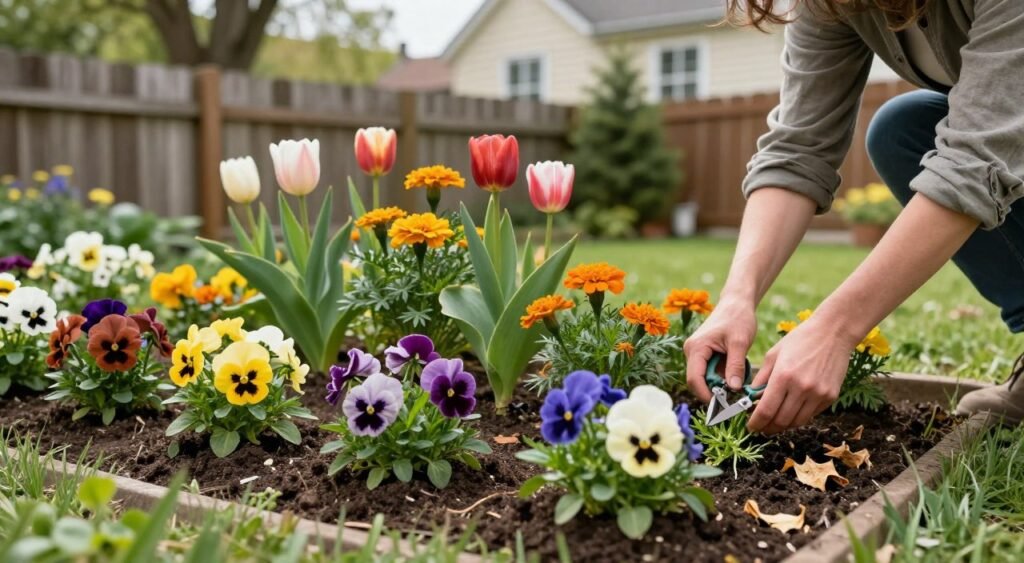
Cold snaps can hurt delicate plants. When frost is forecast, act fast to protect them. Frost cloths or burlap covers keep them warm.
Make sure the covers go all the way to the ground. This traps soil heat. Take off the covers when the sun comes out and it’s not cold anymore. This proactive approach stops frost damage and keeps your garden beautiful.
Cleaning Up Beds for the Next Season
Cleaning your flower beds at the end of the season is important. It keeps your garden clean and healthy. This way, your garden is ready for spring.
Get rid of dead plants and leaves to stop pests and diseases. This simple step helps control pests. A clean garden means your plants can grow well every year.
Enhancing Curb Appeal with Decorative Accents
Decorative accents are the last touch for a beautiful front yard garden design. They connect nature with your home’s look, making everything look planned. Adding these details helps your home look great from the street.
Integrating Garden Borders and Edging
Garden borders are like frames for your garden. They keep grass out and make your plants stand out. Well-defined edges make your garden look neat and professional.
You can pick from stone, brick, or metal to fit your home. These borders keep your garden looking neat all season. This simple step makes your garden look much better.
Using Mulch for a Polished Look
Mulch is a great way to finish your garden beds. It looks good and keeps weeds away. A dark layer of mulch makes your flowers look even brighter.
Use two to three inches of mulch for the best look. This keeps weeds down and keeps the soil moist. Consistency is key when spreading mulch to keep your garden looking neat.
Adding Decorative Containers and Planters
Decorative containers add height and interest to your porch or entryway. They’re great for showing off special plants or adding color. Picking the right pots makes your home look welcoming.
Here are some materials to consider for your decorative accents:
| Material Type | Best Use Case | Durability |
|---|---|---|
| Natural Stone | Permanent Borders | Very High |
| Cedar Wood | Raised Planters | Moderate |
| Recycled Plastic | Lightweight Pots | High |
| Cast Concrete | Entryway Urns | High |
Conclusion
Creating a beautiful front yard is a fun and rewarding job. It mixes careful planning with regular care. Your landscape shows off your style and hard work in home improvement.
Start by looking at your yard and picking the right plants. Keep your beds looking good all year. Gardening is a journey where you learn something new every season.
Don’t be afraid to try new plants or layouts. Look for hardy varieties at places like Burpee or Proven Winners. They can help you pick the best plants for your area.
You know how to make a beautiful yard that you’ll be proud of for years. Show off your work to neighbors or join a gardening club. Your yard will be a highlight in your community.