
Many people think their yard must be quiet when it gets cold. But, you can keep your outdoor space vibrant even when it’s frosty. By picking the right plants, your yard can stay beautiful all year.
Choosing strong plants is key. These plants love the cold and add color when everything else is gray. You don’t have to see a dull yard.
Knowing how to care for your plants all year is important. You’ll learn how to keep your plants safe and your soil healthy. With these tips, you can make a beautiful space that beats the cold. Your home will be a green oasis, showing that nature can thrive anywhere.
Understanding Winter Gardening Basics
Starting a vibrant winter garden is easy. First, learn about your local climate zones. Success comes from picking the right winter garden plants for your area. This keeps your garden healthy, even when it’s cold.
Defining Cold Hardiness in Your Region
The USDA has a map for the US, showing hardiness zones. These zones tell you the coldest temperature in your area. Knowing your zone helps pick plants that can handle the cold.
Choosing plants for your zone is key. It helps them grow and survive the winter. This winter garden landscaping trick is vital for a healthy garden.
The Benefits of Maintaining a Winter Landscape
A good garden is valuable in winter. It looks nice all year, helps animals, and makes soil better. You create a strong, pretty garden, even when it’s cold.
Good winter garden landscaping stops soil from washing away. It keeps your garden useful all year. Start with these basics for a garden that’s beautiful in every season.
Here’s a simple guide to help you plan:
| Climate Zone | Temperature Range | Planting Strategy |
|---|---|---|
| Zones 3-5 | -40°F to -10°F | Focus on hardy evergreens |
| Zones 6-7 | -10°F to 10°F | Use frost-resistant perennials |
| Zones 8-10 | 10°F to 40°F | Incorporate winter-blooming annuals |
Selecting the Best Cold Hardy Flowering Plants for Winter Gardens
You can make your garden colorful even in cold weather. Choose plants that do well in the cold. This makes your garden beautiful all year.
Top Perennials for Winter Color
Perennials are key for a colorful winter garden. They come back every year. They store energy in their roots to bloom in the cold.
Look for perennial flowers for winter garden success. Here are some good choices:
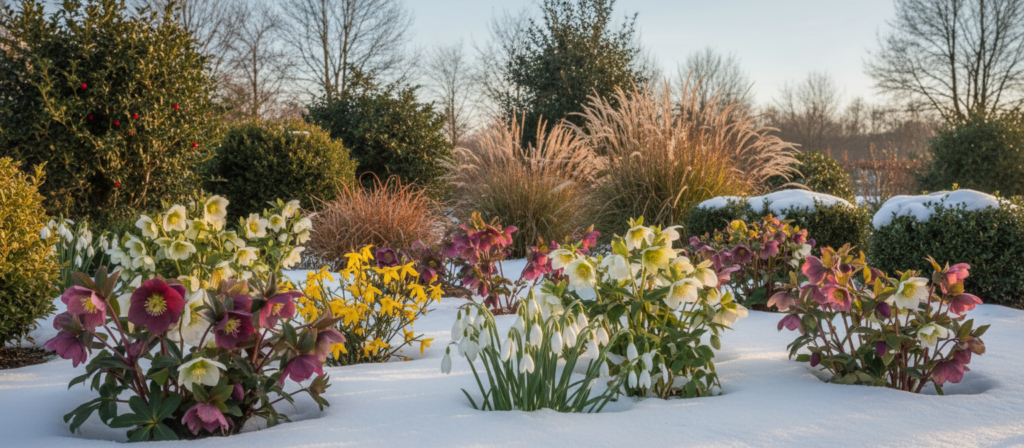
- Hellebores (Lenten Roses): They bloom in late winter, even under snow.
- Heuchera (Coral Bells): They have beautiful leaves that look good in winter.
- Winter Jasmine: It has bright yellow flowers that brighten up the winter.
Choosing Frost Resistant Annuals
Annuals add color quickly to your garden. They don’t come back next year. But, they can handle some frost.
Pansies and violas are great for winter. They can handle freezing and keep blooming. They’re perfect for containers or borders.
Matching Plants to Your USDA Hardiness Zone
Knowing your local climate is key for winter gardening. The USDA Hardiness Zone map helps you choose the right plants. Always check the zone on plant tags before buying.
Choosing the wrong plants can harm them. Always pick native or locally adapted species. This ensures your garden thrives in the winter.
Preparing Your Soil for Winter Planting
Winter gardening starts with the soil. Before it freezes, make a good home for your winter garden plants. This helps them grow strong roots.
Testing Soil pH and Nutrient Levels
First, test your soil. You can buy a kit at a garden store. It checks pH and nutrients. Balanced soil is key because plants absorb less when it’s cold.
If your soil is off, fix it with lime or sulfur. This keeps your plants strong during winter. Good soil means a healthy garden.
Improving Drainage for Winter Survival
Too much water harms your winter garden plants. Water can freeze and damage roots. Make sure your garden drains well.
Add compost or aged bark to clay soils. It helps water drain and keeps roots safe. Proper drainage stops winter damage.
Applying Mulch to Regulate Soil Temperature
Mulch keeps your garden warm. Use two to three inches of organic mulch. It stops soil from freezing too fast.
Mulch also stops weeds and keeps moisture in. Use straw, leaves, or wood chips. It keeps your winter garden plants cozy until spring.
Step-by-Step Planting Guide for Frost Resistant Blooms
Planting your winter blooms at the right time is key. Choosing frost resistant flowering plants makes your garden strong in cold months. Plant them early so they grow well before the ground gets hard.
Timing Your Planting Schedule
Timing is crucial for winter-hardy plants. Plant them when the soil is still soft but cooling down. Early autumn is best, letting roots grow before it gets too cold.
Don’t plant when the ground is frozen or wet. Waiting too long can hurt your cold climate flowering plants. They might not grow well in changing temperatures.
Digging and Spacing Requirements
Make the planting hole the right size. Dig it twice as wide as the root ball to help roots grow. Adequate spacing stops plants from fighting for food and water in winter.
Plant at the same depth as in the nursery. Planting too deep can cause stem rot. Too shallow exposes roots to dry winds. Consistency in spacing keeps your garden looking good.
Ensuring Proper Root Establishment Before the First Freeze
Your main goal is to help plants grow strong roots. Water them well after planting to get rid of air pockets. This deep watering helps keep them moist all winter.
Use organic mulch to keep soil warm and moist. By doing these steps, your plants will be ready for cold weather. Patience now means a beautiful winter garden later.
Essential Watering Techniques During Cold Months
Your garden still needs water even when it’s very cold. Dry winds can make the soil dry and hurt your cold weather blooming plants. Taking good care of your garden keeps it strong until spring.
Monitoring Soil Moisture Levels
It’s important to check if the soil is moist. Stick your finger into the soil about two inches deep. If it feels dry, it’s time to water your plants gently.
Don’t just look at the surface. The soil below might be dry even if it looks wet. Checking often keeps your cold weather blooming plants healthy all season.
Avoiding Root Rot in Cold Conditions
Watering is key, but don’t overdo it. Cold soil holds water longer, which can cause root rot. This is a big problem in winter.
Make sure your garden drains well. If the ground stays wet for days, wait to water until it’s dry again.
Best Times of Day to Water
Watering at the right time is crucial in winter. Water in the middle of the day when it’s warmest. This lets the water soak in before it gets cold again.
Watering in the morning or afternoon helps protect your plants from freezing. Avoid watering late at night to prevent ice from forming.
Protecting Your Plants from Extreme Freezes
Even the toughest plants need help when it gets very cold. Your hardy winter flowers can handle some cold, but extreme freezes can still hurt them. Taking steps to protect your garden keeps it looking great all season.
Using Frost Cloths and Protective Covers
Frost cloths are like a warm blanket for your garden. They are light, let air through, and keep the soil’s heat in. This helps stop frost from hurting your plants’ leaves.
Make sure the cover touches the ground to keep the warmth in. Don’t use plastic right on the leaves, as it can make them rot. Instead, use wire hoops to make a tent that keeps the cover off your hardy winter flowers.
Creating Microclimates in Your Garden
You can make warmer spots in your garden by using things like stone walls and evergreen hedges. These block cold winds and keep the sun’s heat in. They get warm during the day and stay warm at night.
«A garden is a sanctuary that requires our stewardship, even when it’s cold and windy.»
Put your plants near these warm spots to protect them from sudden cold. This is great for plants that can’t handle the open air.
Utilizing Cold Frames and Cloches
Cold frames and cloches help plants grow longer into winter. A cold frame is like a small greenhouse for your plants. Cloches cover single plants to keep them warm on very cold nights.
These tools let you keep hardy winter flowers even when it’s freezing outside. Make sure to let air in on sunny days to keep the plants from getting too hot.
| Method | Primary Benefit | Best Use Case |
|---|---|---|
| Frost Cloths | Thermal insulation | Large garden beds |
| Cold Frames | Temperature control | Seedlings and small plants |
| Cloches | Targeted protection | Individual specimen plants |
| Windbreaks | Reduces wind chill | Perennial borders |
Managing Pests and Diseases in Winter
Keeping your hardy winter flowers safe is key. Cold weather doesn’t stop all problems. Watch your plants closely to keep them bright.
Identifying Common Winter Pests
Some pests don’t mind the cold. Aphids and slugs can hide in your garden. Rodents like voles might chew on shrubs when food is hard to find.
Look for pests often. Check leaves and stems of your hardy winter flowers for damage. Catching problems early stops them from getting worse.
Preventing Fungal Issues in Damp Conditions
Winter’s humidity is perfect for fungi. Diseases like powdery mildew grow in damp air. Make sure your garden drains well and has air flow.
Don’t water plants in the late afternoon. Water in the morning instead. This helps plants dry before night, keeping them healthy.
Natural Remedies for Winter Garden Health
Use natural ways to fight pests. Soaps and neem oil work well without harming your hardy winter flowers. Follow the label for safe use.
Removing pests by hand is also good. Keep soil healthy and don’t over-fertilize in winter. The table below shows how to fight pests naturally.
| Threat Type | Common Sign | Natural Solution | Prevention Method |
|---|---|---|---|
| Aphids | Curled leaves | Horticultural soap | Regular inspection |
| Slugs | Holes in foliage | Manual removal | Clear garden debris |
| Powdery Mildew | White dusty spots | Neem oil spray | Improve air circulation |
| Voles | Chewed bark | Protective wire mesh | Remove mulch near stems |
Incorporating Winter Flowering Perennials into Your Landscape
You can make your home look better by adding winter flowering perennials to your yard. These plants turn a quiet yard into a beautiful piece of art. It’s time to think differently about gardens in winter.
Designing for Year-Round Visual Interest
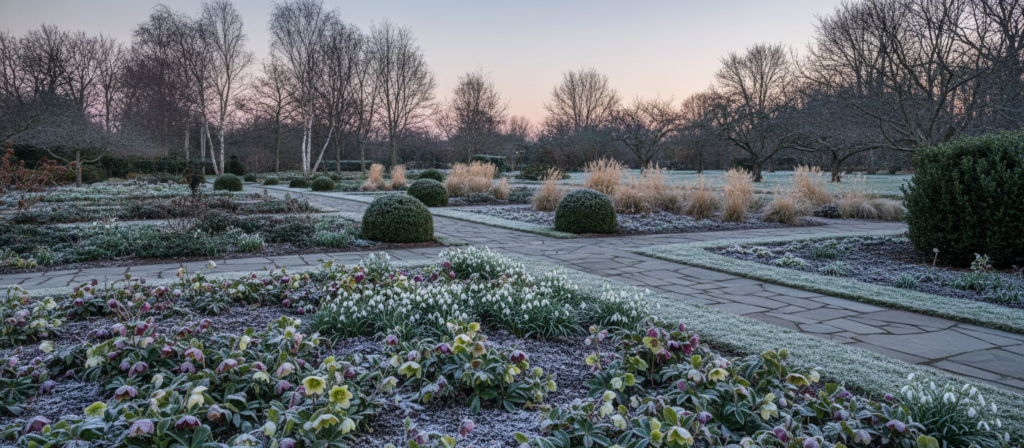
To keep your yard looking good all year, mix seasonal plants with permanent ones. Evergreen shrubs are great for winter, adding green that makes colors stand out. Here’s how to make your yard look good all the time:
- Add things like stone paths or benches.
- Choose ornamental grasses that stay pretty even in cold.
- Pick plants that bloom at different times for color all season.
Layering Plants for Texture and Color
Winter garden landscaping works best with layers. Put tall plants in the back and short ones in the front. This makes your garden look deep and interesting in winter.
Play with different textures to keep your garden lively. Mix the fine leaves of hellebores with the thick leaves of shrubs. This dynamic contrast makes your garden look heavy and interesting.
Strategic Placement for Maximum Visibility
Put your best winter flowering perennials where you can see them. Place them near your front door or windows. This way, you can enjoy your garden from inside.
Think of your winter garden landscaping as a picture. Group your brightest plants in busy spots. This makes your garden a warm welcome every time you go outside. Thoughtful placement makes your garden a highlight all winter.
Fertilization Strategies for Dormant Seasons
Many gardeners think plants don’t need nutrients when it’s cold. But, cold weather blooming plants still need some help to stay strong during the cold nights.
Understanding Nutrient Needs in Cold Weather
In winter, plants grow slower and rest. Their roots don’t work as hard. This means they can’t handle too many nutrients well.
Overloading the soil can hurt the roots instead of helping them.
Choosing the Right Slow-Release Fertilizers
When you do fertilize, choose slow-release options. They give nutrients slowly, matching the plant’s needs. For cold climate flowering plants, organic compost or aged manure is best. They make the soil better and feed the plants gently.
Avoiding Over-Fertilization During Dormancy
The biggest risk in winter is making plants grow too much. High-nitrogen fertilizers can make them grow leaves that get damaged by frost. This new growth can die, stressing the plant.
Watch how your garden reacts to fertilizers. Keep fertilizing gentle. This way, your cold weather blooming plants will stay healthy and bloom well when spring comes.
Pruning and Maintenance for Long-Term Health
Keeping your garden healthy is key when it’s cold outside. By taking care of your winter flowering perennials regularly, you keep them strong. This stops small problems from getting bigger.
Removing Dead or Damaged Foliage
Dead leaves and broken stems attract pests and diseases. Check your garden often to remove them. This keeps your perennial flowers for winter garden healthy and disease-free.
«A garden is a living canvas that requires constant care to maintain its beauty and resilience through the changing seasons.»
Sanitizing Tools to Prevent Disease Spread
Dirty pruning shears can spread diseases. Clean your tools with rubbing alcohol or bleach between uses. This critical step stops diseases from spreading to your plants.
When to Prune Winter Bloomers
Pruning at the right time is important. Avoid heavy pruning when it’s very cold. Wait for warmer days to do bigger cuts on your plants.
| Task | Frequency | Goal |
|---|---|---|
| Foliage Inspection | Weekly | Pest Control |
| Tool Sanitization | Every Use | Disease Prevention |
| Light Pruning | As Needed | Plant Vigor |
By following these tips, your garden stays beautiful. Your hard work will make your garden strong and ready for spring.
Troubleshooting Common Winter Gardening Issues
Winter gardening is fun, but you need to fix problems when it gets cold. Even with good planning, cold weather can hurt your frost resistant flowering plants. Watch your garden closely to fix issues early.
Addressing Heaving Soil Problems
Soil heaving is when the ground freezes and thaws a lot. This can push plants up, exposing their roots to cold air. If you see roots sticking out, press the soil back down around the plant.
Adding mulch after fixing the plant helps keep the soil stable. This keeps the roots warm and safe from cold. Watch your garden closely to keep it safe all season.
Dealing with Unexpected Late-Season Frosts
Late-season frosts can surprise gardeners, even when it starts to get warmer. These sudden cold snaps can hurt your frost resistant flowering plants if they start to bud. Keep frost covers or cloths ready to use fast.
When a frost warning comes, put covers on your plants in the late afternoon. Make sure the fabric touches the ground to trap heat. Take off the covers when the sun comes out and it gets warmer to let air in.
Reviving Stressed Plants After a Cold Snap
After a cold snap, plants might look wilted or change color. Don’t worry, many frost resistant flowering plants can get better. First, check if the soil is dry because cold winds can dry out plants.
Wait until it’s safe from frost before cutting off damaged leaves. Cutting off dead leaves too soon can hurt healthy parts. Be patient, as new growth will come from the base when the soil warms up.
Conclusion
To make a winter garden bright, you need to plan well and pay attention. You know how to pick strong plants, get your soil ready, and keep your plants safe from cold.
By doing these things, your outdoor area stays beautiful even when it’s cold. Every step you take helps your garden grow stronger.
Watch the weather change closely. Small changes in how you water or mulch can make a big difference. Your garden will get better as you learn more.
Tell others about your garden. Your stories can help them keep their yards colorful in winter. It’s fun to see your garden grow with your care.