
Bringing fresh blooms into your home adds warmth and beauty. You might think you need expensive additives or expert help. But, there are many natural ways to keep flowers healthy using simple kitchen items.
Learning how to make flowers last longer is easy and fun. It makes your space beautiful with little effort. By trimming stems and changing water often, your flowers stay fresh longer.
You don’t need complicated solutions for fresh flowers. With these easy tips, you can make your flowers look great for longer. Let’s start today to keep your favorite flowers looking bright and lively.
Understanding the Basics of Floral Vitality
Did you know your flowers are alive? They react to their surroundings. By knowing how they work, you can use effective floral care tips to keep them fresh longer. Working with nature helps your flowers stay healthy.
Why Natural Care Matters for Your Blooms
Many use harsh chemicals to keep flowers alive. But these can harm the plant. Gentle care is better for your flowers.
Choosing natural care has many benefits:
- Reduced chemical exposure for your family and pets.
- Longer-lasting flowers by supporting their natural defenses.
- A greener way to decorate your home that respects plants.
The Science of Flower Hydration and Nutrition
To really get flower hydration science, learn about stem water transport. Flowers have tiny tubes called xylem to move water and nutrients. This keeps them standing tall and bright.
But, air bubbles or bacteria can stop this flow. This makes flowers wilt fast. By using the right floral care tips, you keep these paths open. Knowing this flower hydration science helps you care for your flowers better every day.
Preparing Your Vases and Containers for Longevity
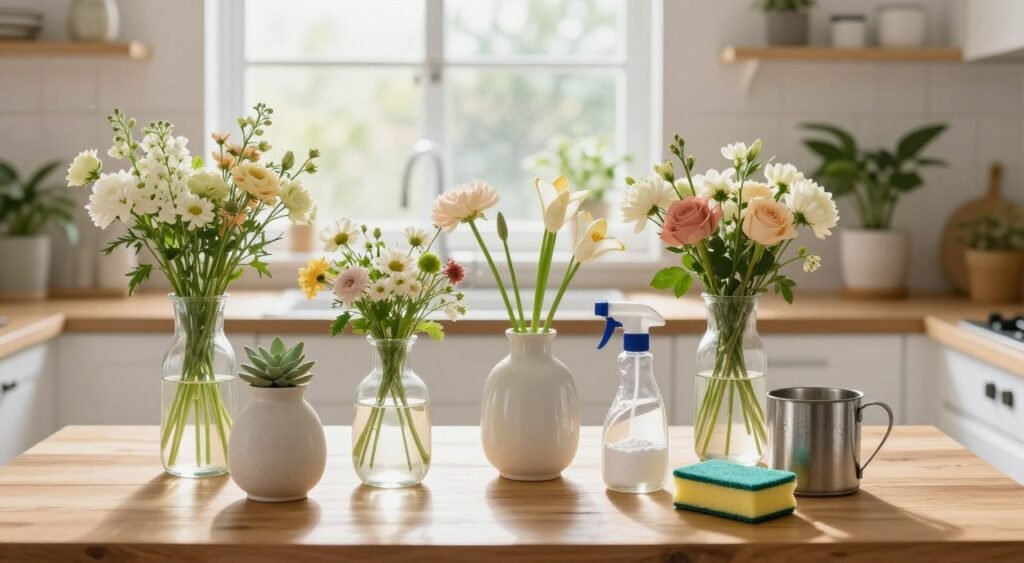
Did you know the secret to keeping flowers fresh starts before you even cut them? Many people forget to clean their containers. A dirty vase can make flowers wilt fast. By keeping your containers clean, you help your flowers stay fresh.
Sanitizing Vessels to Prevent Bacterial Growth
Bacteria love still water and can hurt your flowers. It’s key to clean your vases often. Use hot, soapy water and a bit of bleach to kill germs.
After cleaning, rinse the vase well. This removes any leftover chemicals that could harm your flowers. A clean vase means your flowers will stay fresh longer.
Choosing the Right Material for Your Flower Arrangements
The type of vase you use matters a lot. Plastic vases can be hard to clean because they’re porous. But, glass or ceramic vases are better because they don’t hold onto bacteria.
These materials don’t trap dirt, making them great for keeping flowers fresh. Choose a smooth, non-porous vase to keep your flowers healthy. See the table below for more info on vase materials.
| Material Type | Ease of Cleaning | Bacterial Resistance | Best Use |
|---|---|---|---|
| Glass | Excellent | High | Daily bouquets |
| Ceramic | Good | High | Decorative displays |
| Plastic | Fair | Low | Temporary storage |
| Metal | Moderate | Medium | Rustic arrangements |
Mastering the Art of Proper Stem Trimming
Proper stem trimming keeps your flowers fresh and healthy. It helps them drink water well. This stops them from wilting too soon and makes your flowers last longer.
Tools You Need for Clean Cuts
For the best results, use sharp tools. Choose sharp, clean floral shears or a sharp knife. Dull tools can hurt the stem and block water flow.
Don’t use regular scissors. They can pinch the stem. A clean cut keeps the stem’s «straws» open. Also, clean tools prevent bacteria in your vase.
| Tool Type | Effectiveness | Best Use |
|---|---|---|
| Floral Shears | High | Woody and thick stems |
| Sharp Knife | Excellent | Soft, delicate stems |
| Kitchen Scissors | Low | Not recommended |
Techniques for Cutting Stems at the Correct Angle
Get your tools ready and focus on the cut angle. Aim for a clean 45-degree angle. This secret tip makes a big difference for your flowers.
Why Angled Cuts Improve Water Absorption
An angled cut gives more surface area for water absorption. Cutting straight can block water flow. An angled cut lets water reach the stem even if it touches the vase floor.
The Importance of Removing Submerged Foliage
Always remove leaves below the water line. These leaves rot and cause bacteria. Keeping the water clean helps your flowers stay healthy and fresh.
Natural Ways to Keep Flowers Healthy Using Kitchen Staples
Learn how kitchen items can help your flowers last longer. You don’t need to buy special packets. Instead, use natural ways to keep flowers healthy with things you have at home.
Using Sugar as a Natural Energy Source
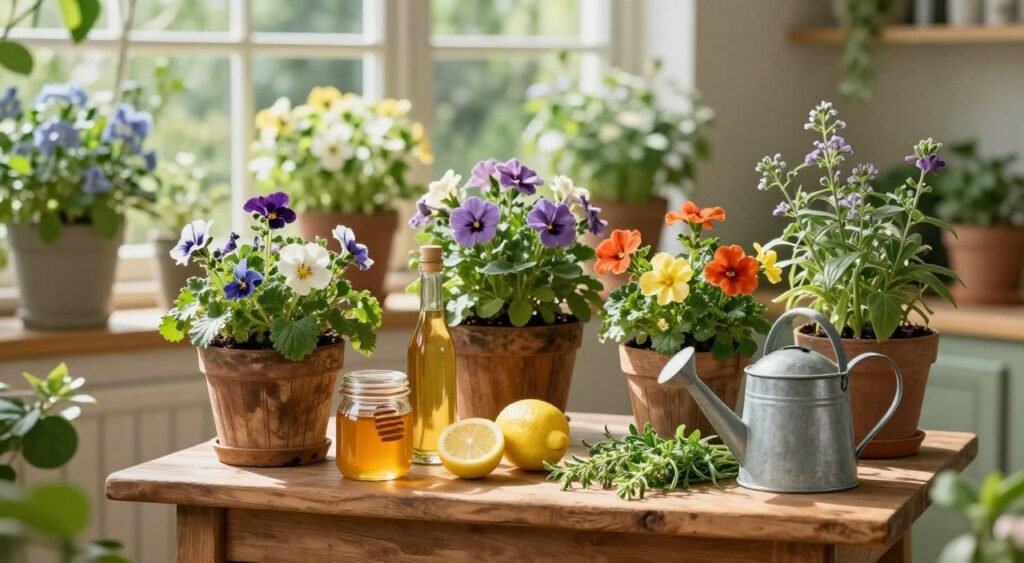
Flowers struggle after being cut because they lose their food source. Adding a bit of sugar to the water helps. It gives them the essential energy to stay bright.
But don’t add too much sugar. It can make bacteria grow. Just a teaspoon per quart of water is enough to help your flowers.
The Role of Acidic Additives Like Lemon Juice
Water quality is key for your flowers to stay hydrated. Lemon juice makes the water more acidic. This helps the stems absorb moisture better and prevents them from wilting too soon.
This trick is like what florists use. It keeps your flowers fresh and standing tall for longer.
Why a Splash of Vinegar Helps Prevent Bacteria
Bacteria can harm your flowers, making the water cloudy and smelly. A little white vinegar in the vase fights bacteria. These flower longevity hacks keep the water clear and the stems healthy.
Using these kitchen items together makes a great environment for your flowers. They will stay fresh and beautiful for longer than in plain water.
Optimizing Water Quality for Longer Lasting Blooms
The secret to a vibrant bouquet often hides in the very water you pour into the vase. While many people focus solely on plant food, the water quality for flowers is a critical factor. It determines how quickly your petals fade. By paying attention to what comes out of your tap, you can significantly extend the life of your arrangements.
The Benefits of Using Filtered or Distilled Water
Tap water often contains chlorine, fluoride, and various minerals. These additives can be harsh on delicate stems. Using filtered or distilled water removes these impurities. It provides a clean environment that helps your flowers thrive.
When you use purified water, you reduce the risk of stem blockage. This simple change is one of the most effective ways to learn how to make flowers last longer in your home. Your blooms will appreciate the lack of chemical interference. They will stay hydrated and upright for days.
Managing Water Temperature for Different Flower Varieties
Temperature plays a vital role in how quickly a flower drinks. Most spring bulbs, such as tulips and daffodils, prefer cool water. This mimics their natural growing environment. On the other hand, tropical flowers often perform better in room-temperature water. This prevents shock to their systems.
Always check the specific needs of your bouquet before filling your vase. Providing the right temperature ensures that the vascular system of the plant remains open and active. This small adjustment is a key step in how to make flowers last longer throughout the week.
How Often to Change Water to Maintain Freshness
Stagnant water is a breeding ground for bacteria. This can quickly clog stems and cause premature wilting. You should aim to change the water in your vase every two to three days. This practice keeps the water quality for flowers high and prevents the buildup of harmful microorganisms.
When you refresh the water, take a moment to rinse the stems and trim them slightly. This routine maintenance ensures that your flowers continue to receive a steady supply of clean hydration. Consistent care is the best way to enjoy your floral displays for as long as possible.
| Water Type | Best For | Key Benefit |
|---|---|---|
| Distilled | Delicate Blooms | Zero mineral buildup |
| Filtered | General Arrangements | Removes harsh chlorine |
| Room Temp | Tropical Flowers | Prevents thermal shock |
| Cool Water | Spring Bulbs | Mimics natural habitat |
Strategic Placement for Maximum Flower Health
Did you know where you put your vase can affect your flowers’ life? Getting flower placement advice from experts can make your blooms last longer. The right spot helps your flowers avoid stress.
Avoiding Direct Sunlight and Heat Sources
Flowers look great in sunny spots, but sunlight can make them wilt fast. The water in your vase gets too warm, which makes bacteria grow. Keep your flowers in a cool, shaded area.
Don’t put your vase near heaters or warm devices. Flowers need cool, steady temperatures to stay fresh. This simple tip helps your flowers stay beautiful longer.
Keeping Arrangements Away from Ripening Fruit
It’s tempting to put your bouquet near fruit, but it’s a bad idea. Fruit releases a gas called ethylene that makes flowers wilt. Keep your flowers and fruit bowls far apart.
This small change is key for keeping your flowers fresh. It’s a crucial part of flower placement advice for gardeners. By keeping them apart, your flowers will stay beautiful longer.
The Impact of Airflow and Humidity on Petal Health
Air movement is important for your flowers’ health. A gentle breeze is good, but strong drafts can dry them out. Find a spot with stable air conditions.
Humidity keeps petals moist, which is crucial in dry places. If your home is dry, mist your flowers or use a humidifier. This creates the best environment for your flowers to thrive.
Natural Pest Control Methods for Garden Flowers
Keeping your garden flower health safe is easy with natural methods. You don’t need harsh chemicals to keep your plants looking great. Choosing organic pest control for flowers makes your garden safer for everyone.
Using Neem Oil for Organic Protection
Neem oil comes from the neem tree. It stops many garden pests from eating and breeding. Spray it on your plants to keep them safe.
Mix neem oil with water and a bit of soap. Spray it on leaves, making sure to get both sides. Doing this often keeps your garden pest-free.
Implementing Companion Planting to Deter Pests
Companion planting uses plants to fight pests. For example, marigolds near roses keep aphids away. It’s a smart way to keep your garden healthy.
This method also brings in good bugs like ladybugs. They eat pests, making your garden safe. It’s a great way to make your garden better and safer.
Creating Homemade Soap Sprays for Aphids
For aphids, a homemade soap spray works well. Mix one teaspoon of soap with a quart of water. It gently removes pests without harming your flowers.
Test the spray on a small area first. Then, spray it in the morning or evening to protect leaves. This simple, cost-effective technique is great for organic gardening.
Feeding Your Flowers with Organic Soil Amendments
You can make your garden soil better with simple organic stuff. Giving your flowers the right flower food ingredients helps them grow strong and colorful. Natural choices help your soil stay healthy and keep your garden safe and alive.
Compost Tea as a Nutrient-Rich Fertilizer
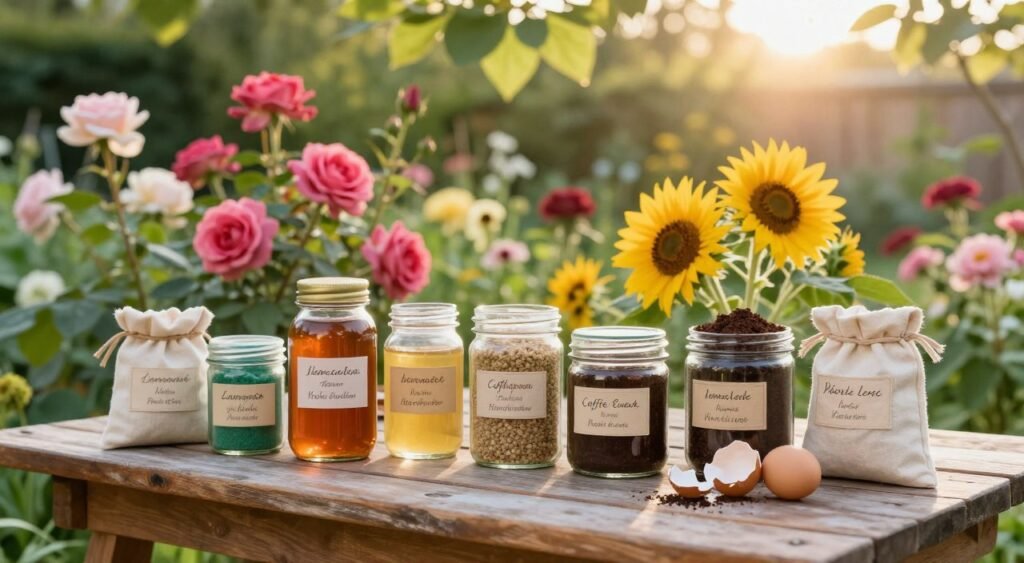
Compost tea is like liquid gold for your flowers. It’s made by soaking compost in water. This tea gives your plants a quick, easy-to-absorb boost.
«Healthy soil is the foundation of a vibrant garden, and organic amendments are the best way to nourish that life from the ground up.»
Using Eggshells for Calcium Boosts
Eggshells are a great source of calcium. Calcium helps flowers grow strong and healthy. Here’s how to use them:
- Rinse your eggshells well to get rid of any yucky stuff.
- Let them dry in the sun.
- Crush them into a fine powder with a mortar or blender.
- Spread the powder around your plants.
Applying Coffee Grounds for Acid-Loving Plants
Used coffee grounds are great for acid-loving plants like hydrangeas or azaleas. They give a little nitrogen and make the soil a bit more acidic. But don’t forget to use organic pest control for flowers to keep pests away.
These green methods save money and cut down on waste. By using kitchen scraps, you make your garden better. Your flowers will thank you with brilliant, long-lasting blooms all season.
Seasonal Care Tips for Year-Round Floral Beauty
Learning to care for your flowers in every season is key. With seasonal flower maintenance, your garden stays bright all year. These floral care tips will help you deal with extreme weather and keep your plants healthy.
Protecting Blooms During Extreme Summer Heat
In the summer, plants face a lot of stress from the sun. Move sensitive plants to shady spots during the hottest times. Keeping them watered is also crucial, as the sun makes water evaporate fast.
Adding organic mulch around your flowers helps keep the soil moist. This simple trick keeps the soil cool and protects your plants from the heat. Your flowers will thank you for this extra care.
Preparing Perennials for Winter Dormancy
When it gets colder, your perennials start to sleep. Clean up dead leaves and add compost to the soil. This homemade flower fertilizer feeds your plants’ roots during winter.
Insulate the roots with straw or shredded leaves to protect them from cold. Doing this now keeps your plants strong and ready for spring. Caring for your garden in the quiet months is the secret to a thriving garden.
Troubleshooting Common Floral Health Issues
Keeping your flowers bright needs a watchful eye. Even with great care, problems can still happen. Spotting these early helps fix them before it’s too late.
Identifying Signs of Dehydration and Wilting
Knowing about flower hydration science helps a lot. If petals curl or stems get soft, your flowers need water. Look for droopy leaves or yellow tips, which mean water can’t move.
«Nature does not hurry, yet everything is accomplished.» — Lao Tzu
Seeing these signs? Check the water right away. Not enough water or poor absorption are common reasons. Make sure stems aren’t in dirty water.
Addressing Fungal Infections Naturally
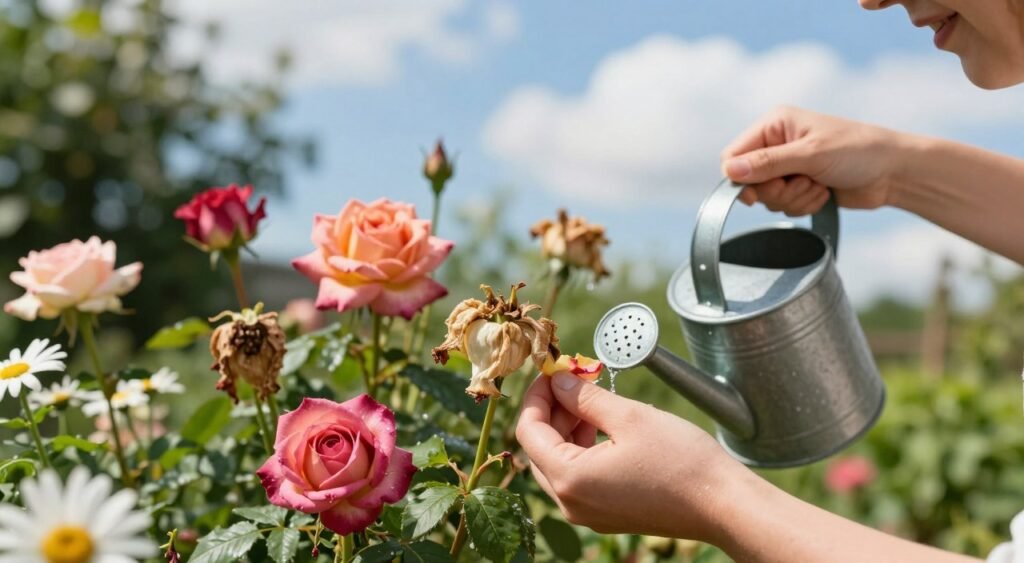
Fungi show up as white spots or slimy stems. This is often from bacteria in the water. Clean your vase well to keep it clean. Use vinegar to kill spores.
Spotting infection early? Cut off bad stems fast. Add a bit of lemon juice to the water. This makes it hard for fungi to grow.
Reviving Drooping Stems with Quick Fixes
To revive wilted flowers, trim stems right. Cut an inch off at a 45-degree angle. This helps them drink better, with good water quality for flowers.
Try these steps to fix your flowers:
- Recut stems under running water to avoid air bubbles.
- Put flowers in a cool, dark place for a few hours.
- Make sure water is at room temperature to avoid shocking stems.
Learning these tricks helps you deal with flower problems. Consistency keeps your home full of fresh flowers all year.
Conclusion
Learning about flower care changes how you see nature. Taking care of your plants makes your home better.
Keeping up with seasonal flower care keeps your arrangements looking great. You know how to handle flowers now.
Small steps can make a big difference in your garden. These steps help your flowers and plants grow well.
Even when flowers wilt, you can fix them. Just give them water and trim them right.
Share your beautiful flower arrangements with others. This spreads happiness and makes your space nicer for everyone.