
Do you dream of a lush, vibrant yard? But do you dread the endless hours of weeding and pruning? Many homeowners struggle to balance a busy schedule with a beautiful outdoor retreat.
The secret to a stress-free yard is choosing the right plants. These plants thrive on their own.
By selecting low maintenance perennial flowers, your garden will bloom year after year. These hardy varieties make your landscape stunning with little effort from you.
Adopting a strategy for smart, sustainable growth is key. Low maintenance landscaping lets you enjoy nature without heavy chores. Picking plants that fit your local climate creates a self-sustaining ecosystem.
This approach saves time and water. It keeps your property looking great all year.
Assessing Your Garden Environment
Starting a garden is more than just buying plants. First, observe your landscape. This helps your easy care plants grow strong and bloom well every year.
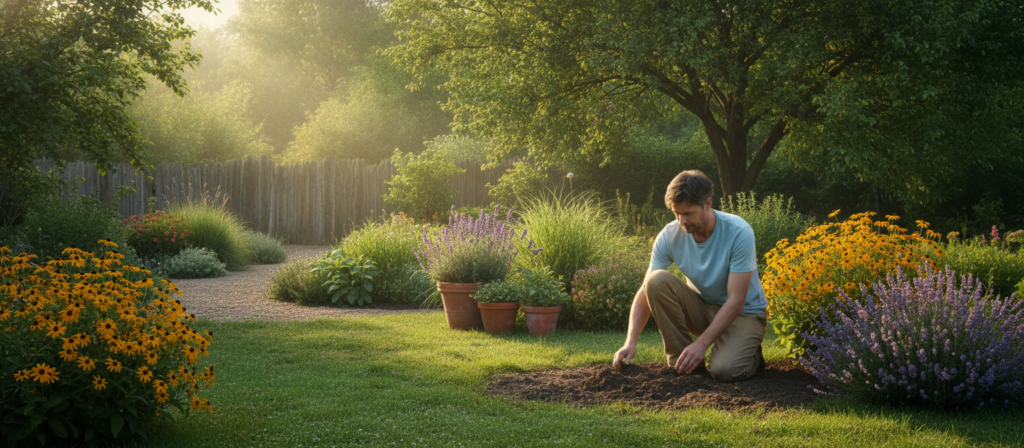
Evaluating Sunlight Exposure
Sunlight is key for your garden perennials. Watch how shadows move to see if it’s full sun, partial shade, or deep shade.
Most plants need at least six hours of sun to bloom brightly. If it’s less sunny, pick plants that like cooler, shaded spots.
Understanding Your Hardiness Zone
The USDA Plant Hardiness Zone Map is very helpful. It shows zones by average winter temperature.
Knowing your zone helps pick plants that can handle your winters. Always check the plant tag to make sure it’s right for your zone.
Analyzing Soil Drainage and Composition
Soil is crucial for all easy care plants. A simple test is to dig a hole, fill it with water, and see how fast it drains. If it drains quickly, your soil is good.
If water stays for a day, your soil might be too heavy. Adding organic matter can help your soil breathe better and prevent root rot.
| Environmental Factor | Ideal Condition | Impact on Growth |
|---|---|---|
| Sunlight | 6+ Hours Daily | Promotes heavy blooming |
| Soil Drainage | Moderate/Fast | Prevents root diseases |
| Hardiness Zone | Matches Local Climate | Ensures winter survival |
| Soil Texture | Loamy/Friable | Supports root expansion |
Selecting the Best Low Maintenance Perennial Flowers
Starting a stress-free garden is easy. Just pick perennial flower varieties that are tough and reliable. Make sure they match your garden’s light and water needs. This way, your garden will thrive with little help from you.
Choosing the right low maintenance perennial flowers means you can enjoy a beautiful garden. You won’t have to spend all weekend weeding or watering.
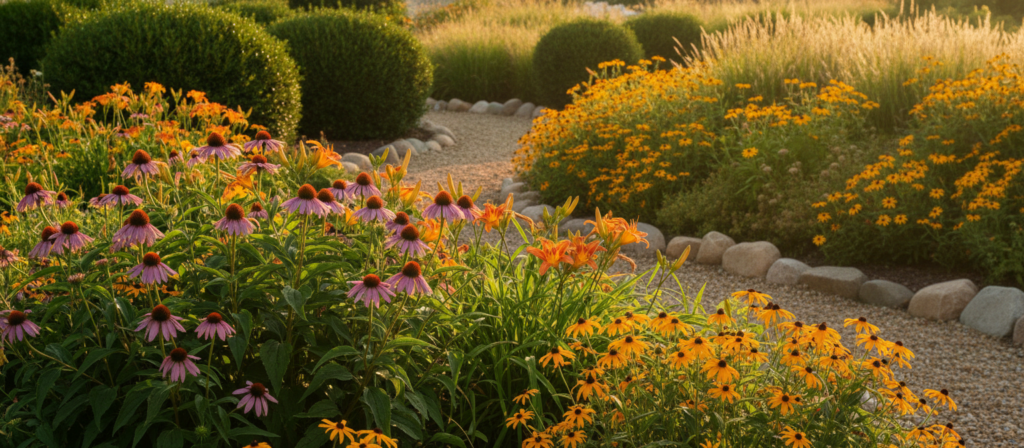
Top Picks for Sunny Borders
Sunny spots are perfect for plants that love lots of light. These plants grow strong and handle summer heat well.
- Purple Coneflower (Echinacea): A classic choice that attracts pollinators and handles heat with ease.
- Black-eyed Susan (Rudbeckia): These bright, cheerful blooms offer long-lasting color throughout the season.
- Sedum ‘Autumn Joy’: A reliable succulent that provides structural interest and late-season flowers.
Shade-Loving Varieties for Low Effort
Even in shady spots, you can have a lush garden. Many perennial flower varieties love cooler temperatures. They need less water and add beautiful textures.
- Hostas: Available in a wide range of sizes and leaf colors, they are the gold standard for shade gardens.
- Astilbe: These plants produce feathery, plume-like flowers that brighten up dark corners.
- Heuchera (Coral Bells): Known for their stunning, colorful foliage that stays attractive from spring through fall.
Drought Tolerant Perennials for Water Conservation
Adding drought tolerant perennials to your garden saves water. Once they grow, they have deep roots to survive dry spells. They’re great for anyone wanting to help the environment.
«The most successful gardens are those that work in harmony with the local climate, requiring little more than a watchful eye and occasional care.»
Adding these hardy plants to your garden keeps it strong during dry months. These drought tolerant perennials are not only practical. They also add beauty and variety to your garden.
Preparing Your Soil for Long-Term Success
A thriving perennial garden design starts with good soil. Before digging, know what’s under your feet. This helps your plants grow well for years.
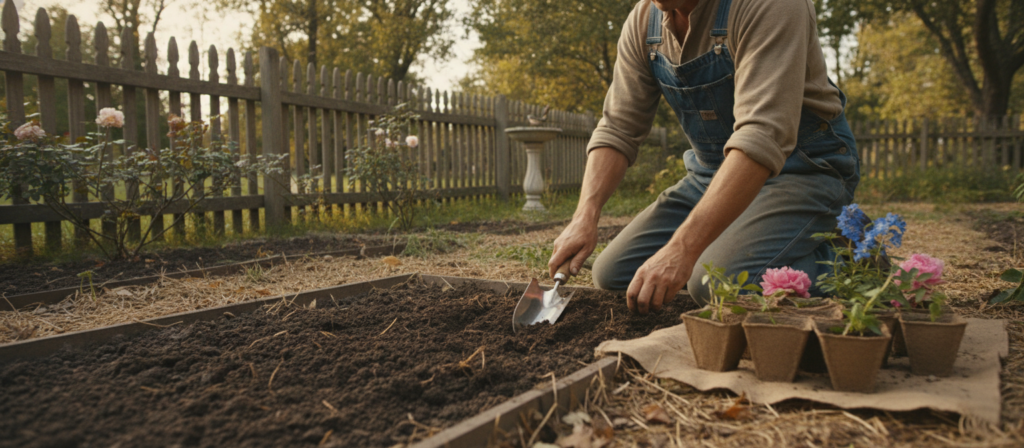
Testing Your Soil pH
Garden perennials like a slightly acidic to neutral soil pH. You can buy a simple test kit at a local nursery to check your soil.
If your soil is too acidic or alkaline, plants may not grow well. Fixing the pH before planting is easier than after your perennial garden design is set up.
Amending Soil with Organic Matter
Adding organic matter improves soil a lot. Compost or aged manure helps sandy soil hold moisture. It also lets heavy clay soil drain better.
This makes your garden perennials get the nutrients they need. Rich soil means strong roots and beautiful flowers.
Creating Ideal Bed Conditions
Make sure your beds are loose and well-aerated. Don’t work the soil when it’s wet. This can cause it to become compacted and drain poorly.
| Amendment Type | Primary Benefit | Best Use Case |
|---|---|---|
| Compost | Nutrient density | General soil health |
| Peat Moss | Moisture retention | Sandy soil types |
| Perlite | Improved aeration | Heavy clay soils |
By following these steps, your perennial garden design stays easy to care for and looks great. Good preparation means a landscape that lasts with little upkeep.
Planting Techniques for Hardy Perennial Plants
Starting hardy perennial plants is all about how you plant them. Using the right methods helps your garden grow well with little work later. It makes sure your plants grow strong roots fast.
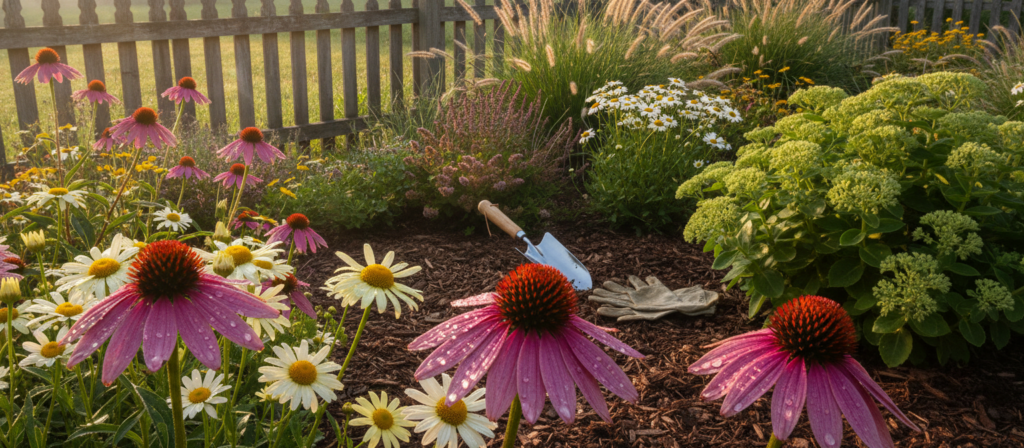
Step One: Digging the Proper Hole
The hole size is key for your plants to do well. Make the hole twice as wide as the plant’s root ball. But, don’t make it too deep.
- Make the hole sides a bit rough to help roots grow.
- Don’t dig too deep to avoid the plant sinking later.
- Loosen the soil at the hole’s bottom for better water flow.
Step Two: Proper Root Placement
Putting the plant at the right depth is crucial. The top of the root ball should be even with the soil. Burying it too deep can harm the plant.
Before placing the plant, loosen any circling roots. This helps them spread out into the soil. It’s a key step for easy care plants to grow fast.
Step Three: Backfilling and Initial Watering
After placing the plant, fill the hole with the soil you took out. Firm the soil gently around the base. But don’t press too hard, as roots need air.
Then, water the soil well to settle it. This first watering helps the plant adjust. By following these steps, you give your perennials a great start.
Establishing a Watering Routine for Drought Tolerant Perennials
Drought tolerant perennials need care when they’re young. They need water to grow strong roots. This helps them survive the hot summer.
Determining Watering Frequency
How often to water depends on your area and soil. Sandy soil drains fast, so water more often. Always check the soil moisture by inserting your finger about two inches deep before adding more water.
Water deeply once or twice a week in the first year. This helps roots grow down. As plants get older, water less often.
Using Drip Irrigation Systems
Drip irrigation is great for perennial garden design. It waters plants at the base, saving water and preventing disease. It’s easy to use with a timer.
This hands-off approach saves time. It keeps your garden looking good without a lot of work.
Avoiding Common Overwatering Mistakes
Too much water can harm plants. It can cause root rot. Watch for yellow leaves or wilting.
Make sure your garden drains well. Add organic matter if the soil stays wet. The right balance is key to a healthy garden.
| Soil Type | Drainage Speed | Watering Frequency |
|---|---|---|
| Sandy Soil | Fast | Frequent, light soaks |
| Loamy Soil | Moderate | Balanced, weekly deep soak |
| Clay Soil | Slow | Infrequent, thorough soak |
Mulching and Weed Control Strategies
You can make your outdoor space look great with low maintenance landscaping. Mulching is key. It protects your garden from bad weather and keeps plants healthy.
Good ground cover saves you time. It’s a smart way to keep your garden looking good with little effort.
Choosing the Right Mulch Material
Picking the right mulch is important for your soil. Organic mulches like shredded bark or pine needles are good. They gradually decompose and feed your soil.
Don’t use dyed wood chips or rubber mulch. They don’t help your soil like organic mulch does. Organic mulch helps soil microbes, which is key for low maintenance landscaping.
Applying Mulch for Moisture Retention
How you apply mulch matters a lot. Use two to three inches to keep moisture in and soil temperature right.
Don’t pile mulch against plant stems. It can cause rot. Consistent moisture retention helps plants survive dry times with less watering.
Preventing Weeds Without Chemicals
Mulching stops weeds by blocking sunlight. This means no harsh chemicals for you. It’s safer for pets and animals.
For tough weeds, use cardboard under your mulch. It’s a durable weed-suppression layer that also feeds your soil. These steps keep your garden looking great all season.
Seasonal Maintenance and Pruning Tips
Keeping your flower beds beautiful all year is important. By caring for your hardy perennial plants regularly, they stay healthy and bloom well. This care stops problems and keeps your garden looking great.
Spring Cleanup Procedures
When the snow melts, your garden needs a clean start. Remove dead leaves, broken stems, and old debris. This step keeps pests and diseases away from your garden.
After clearing, trim off old leaves but don’t hurt new shoots. This lets your plants grow strong and healthy in the spring.
Deadheading for Continuous Blooms
Deadheading means cutting off old flowers before they make seeds. It’s key for long lasting blooms all season. By removing old flowers, your plant makes more buds.
Use sharp shears to cut just above healthy leaves. This keeps your garden neat and encourages more flowers. Regular care keeps your garden colorful until fall.
Preparing Perennials for Winter Dormancy
When it gets cold, focus on protecting your plants. Wait until leaves turn brown or yellow before cutting them back. This helps the plant store nutrients in the roots for winter.
Adding organic mulch around your hardy perennial plants is also important. It keeps roots safe from cold damage. Good preparation means your garden will be strong when spring comes.
Troubleshooting Common Garden Issues
Keeping your plants healthy means watching for problems early. Even tough perennial flower varieties can get sick or attacked by pests. Regular checks help catch these issues before they get worse.
Identifying Pests Early
Walk through your garden weekly to find trouble signs. Check the undersides of leaves and stems for insects. Early detection stops small problems from getting big.
Look for holes in leaves, sticky spots, or weird growth. Use barriers or pick off pests by hand first. These steps help your perennial flower varieties without harsh chemicals.
Managing Fungal Diseases
Fungi love damp, crowded spots with bad air. Space plants right and water at the base to avoid this. Proper airflow fights off powdery mildew and leaf spot.
Remove sick leaves to stop disease spread. Use organic fungicides or neem oil for ongoing problems. Clean your tools well to avoid spreading spores.
Addressing Nutrient Deficiencies
Yellow or stunted plants might need more nutrients. A soil test shows what your garden needs.
Fix most issues with organic compost or natural fertilizers. Regular care keeps your perennial flower varieties looking great. See the table below for quick fixes for common garden problems.
| Issue | Common Symptom | Recommended Action |
|---|---|---|
| Aphids | Sticky leaves | Use insecticidal soap |
| Powdery Mildew | White dusty spots | Improve air circulation |
| Nitrogen Deficiency | Yellowing older leaves | Apply organic compost |
| Root Rot | Wilting and mushy stems | Improve soil drainage |
Conclusion
Building a strong garden takes time and smart planning. You now know how to pick plants that do well in your area. These plants will bloom for a long time and come back every year with little care.
By taking care of your soil and watering it right, you lay a solid base for growth. You’ll have more time to enjoy the colors in your yard. A well-thought-out garden adds beauty and fits into your busy life.
Brands like Proven Winners make it easy to find great plants. You can handle pests and changes in the seasons well. This way, your garden stays a peaceful spot all season.
Take a moment to look at your garden as it grows. Share your progress with gardening groups or neighbors. Your hard work will make gardening a joy for many seasons.