
When the air gets cold and your garden sleeps, you might wonder how to keep it alive. Getting your garden ready now is the best way to ensure a vibrant display when the sun comes back. A few simple steps can protect your plants from the cold.
Learning winter protection tips for flowering plants helps you face the cold season with confidence. Knowing what your soil and roots need is key to their health. Your garden will thank you with stronger growth and more beautiful blooms in spring.
Preparing Your Garden for the First Frost
When the air gets crisp, it’s time to get ready for the first frost. Start your garden frost preparation to protect your plants. This way, your garden stays healthy and ready for winter.
Assessing Plant Hardiness Zones
First, find out your plant hardiness zones. These zones tell you which plants can handle the cold. Knowing your zone helps you focus on the right plants.
If you don’t know your zone, check the USDA map. This saves time and effort. It helps you focus on the plants that need the most help.
Cleaning Up Debris and Diseased Foliage
A clean garden is a healthy garden in winter. Remove dead leaves and diseased plants. These can spread diseases in the cold, wet weather.
By cleaning up, you lower the chance of diseases. Consistency is key for a clean garden. This helps your garden stay healthy when spring comes.
Final Watering Before the Ground Freezes
Don’t forget that plants still need water as it gets colder. Give them a deep watering before the ground freezes. This keeps their roots strong against winter winds.
Watered roots are better at fighting frost than dry ones. Soak the ground well, but avoid standing water. Knowing your plant hardiness zones helps you water right before the freeze.
Essential Winter Protection Tips for Flowering Plants
Learning about winter garden care is key. Knowing how plants handle cold is crucial. By acting early, your plants can make it through winter and bloom again.
Using the right winter protection tips for flowering plants keeps your garden safe. It’s a smart move for your landscape.
Understanding the Dormancy Cycle
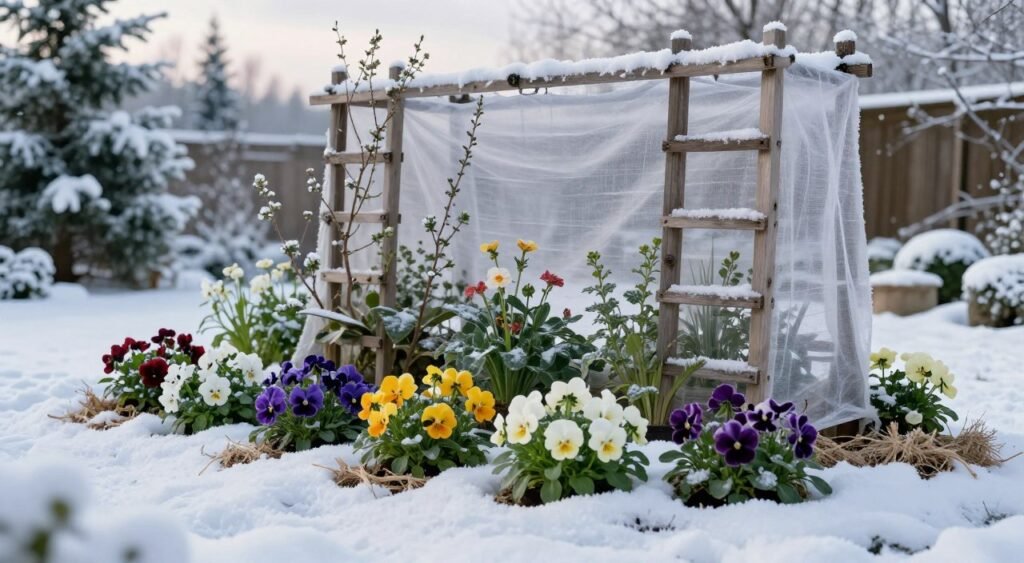
In winter, plants go into winter plant dormancy. It’s a way for them to save energy. Think of it as a long sleep that helps them survive the cold.
Don’t try to make plants grow during this time. It can be very bad if it gets too cold. Just make sure they stay safe until spring.
Identifying Vulnerable Species in Your Landscape
Not all plants can handle cold the same way. You need to know which ones are hardy and which need help. Vulnerable species are often plants that aren’t from your area or are on the edge of their zone.
- Check plant tags for hardiness zone ratings.
- Observe which plants wilted early during the first autumn frost.
- Group sensitive plants together to make monitoring easier.
Timing Your Protection Efforts Based on Local Weather
When it comes to frost protection for flowers, timing is everything. Watch the weather forecast closely. You don’t want to cover too early or too late.
Here’s a table to help you figure out when to protect your plants:
| Plant Category | Cold Tolerance | Protection Level |
|---|---|---|
| Native Perennials | High | Minimal |
| Hardy Shrubs | Moderate | Low |
| Exotic/Tropical Flowers | Low | High |
| Potted Annuals | None | Maximum |
Selecting the Right Mulching Materials
Choosing the right organic mulch for plants can help your plants survive the cold. It keeps the soil warm around the roots. This is very important during the coldest months.
Benefits of Organic Mulch Options
Using the right materials is key for a healthy garden. Organic mulch for plants, like shredded bark or pine needles, is better than synthetic ones.
These materials slowly break down. They make the soil better and add nutrients. They also protect the soil from freezing and thawing damage.
Applying Mulch Without Damaging Stems
How you apply mulch is just as important as what you use. Spread it two to three inches thick around the roots.
Make sure not to pile mulch against the stems. Never pile mulch against the stems. This can cause rot and attract rodents.
When to Remove Mulch in Early Spring
Spring cleanup is all about timing. Wait until the soil starts to warm up before removing the mulch.
Removing it too early can harm new growth. Leaving it on too long can slow down soil warming. This can delay when your perennials grow.
| Material Type | Best Use | Decomposition Rate |
|---|---|---|
| Shredded Bark | General Perennials | Slow |
| Compost | Soil Enrichment | Fast |
| Pine Needles | Acid-Loving Plants | Moderate |
| Straw | Vegetable/Annuals | Fast |
Techniques for Insulating Delicate Root Systems
When it gets cold, the roots of your plants need protection. Insulating plant roots helps keep them safe from cold damage. It keeps the soil warm, so the roots don’t get hurt.
Using Burlap Wraps for Sensitive Shrubs
If you have protecting garden shrubs that get hurt by cold, use burlap. It’s a natural material that keeps the wind out but lets air in.
Put the burlap around the leaves but not too tight. Use twine to hold it in place. This keeps your shrubs safe until spring.
Creating Mounds for Rose Bushes
Rose bushes need extra care in the cold. Make a mound of soil or compost around them. This keeps them warm.
Make the mound 8 to 10 inches high. Then, add mulch on top. This helps even more.
Utilizing Pine Needles and Straw for Insulation
When overwintering perennials, pick the right material. Pine needles and straw are good because they don’t pack down.
Here’s why they’re good:
- Pine Needles: They let water drain fast, so plants don’t rot.
- Straw: It’s thick and keeps heat in well.
- Ease of Use: They’re light and easy to spread.
Always put these materials on after the first frost. This keeps rodents out of the warm mulch.
Building Protective Structures for Perennials
You can protect your favorite perennials from harsh weather. Build simple structures to create a stable microclimate. This keeps your garden safe until spring.
Constructing Simple Cold Frames
Building a cold frame is great for overwintering perennials. Use recycled materials like old windows or scrap wood. These frames trap solar heat, keeping soil warm.
Put your cold frame over bulbs to protect them from frost. Open the lid on sunny days to avoid overheating. This keeps your plants safe from wind and snow.
Installing Cloches for Small Flowering Plants
Cloches are perfect for plants that need extra care. They create a warm zone around your plants. Use glass jars or plastic jugs to make these covers.
Secure the cloche in the soil to prevent it from blowing away. Ventilation is key. Lift the covers on mild days to prevent moisture buildup.
Using Frost Blankets and Horticultural Fleece
Frost blankets and horticultural fleece are great for a lightweight option. They trap heat while letting sunlight and moisture through. They are incredibly versatile and can cover rows or individual plants.
The fabric keeps your plants dry and warm. Use stones or staples to keep it in place. This helps keep your plants healthy all winter.
Managing Moisture Levels During Dormancy
Your garden might seem asleep, but watering plants in winter is key. The soil can dry out fast because of cold winds and low air moisture. Keeping plants hydrated is crucial for winter garden care.
Checking Soil Hydration in Dry Winters
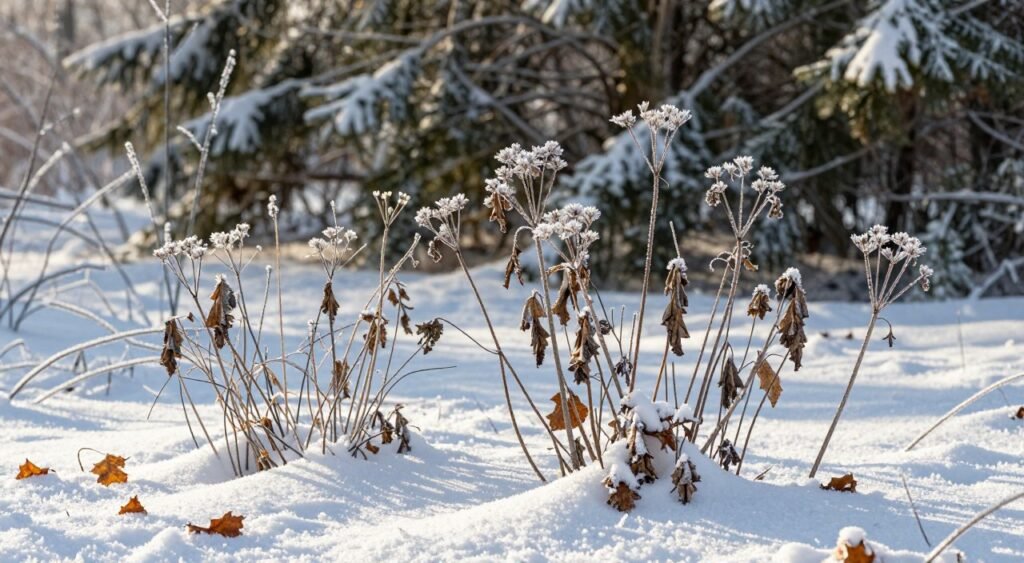
In the coldest months, frozen ground stops roots from getting water. Check soil moisture often, more so when there’s no snow. If the ground isn’t frozen, feel the soil with your finger. It should not feel dry or hard.
If the soil is dry, water your plants deeply on a warmer day. This keeps their roots wet during winter plant dormancy. Consistent moisture stops plants from drying out before spring.
Preventing Waterlogging and Root Rot
It’s also important not to overwater. Too much water can cause root rot, which is deadly for many plants. Make sure your garden beds drain well to handle snowmelt or heavy rains.
If you see water pooling, add organic matter to improve soil. Good drainage lets roots breathe, which is vital for plant health. Always prioritize soil aeration to keep plants strong until spring.
Adjusting Watering Schedules for Potted Plants
Container plants need special care because their roots feel temperature changes more. They dry out quicker than soil, so watch them closely. Check moisture at least once a week when it’s dry.
When watering, make sure water drains well from the pot. Avoid letting pots sit in water to prevent fungal problems. Change your watering schedule with the weather to keep potted flowers healthy for spring.
Pruning Strategies Before the Deep Freeze
Pruning your plants before winter is key to keeping them alive. It stops damage from snow and ice. This helps your garden stay safe and healthy.
Identifying Which Plants to Prune in Autumn
Not all plants need pruning in autumn. Cut out dead, damaged, or diseased branches. These can attract pests in cold weather.
But, don’t prune healthy plants yet. Many plants are better pruned in spring. This way, they avoid extra stress. Follow these pruning tips for winter to keep your garden healthy.
«The art of pruning is not just about cutting; it is about understanding the rhythm of the plant’s life cycle to ensure future blooms.»
Tools Needed for Clean Winter Cuts
Sharp, clean tools are crucial for quick healing cuts. This stops diseases from spreading. Make sure your tools are sharp and clean.
Here’s what you need for your tasks:
- Bypass pruners for small stems and twigs.
- Loppers for thicker branches that require more leverage.
- Rubbing alcohol to disinfect blades between different plants.
Avoiding Pruning Mistakes That Encourage New Growth
Pruning too late can cause new growth. This growth is weak and can get damaged by frost. It’s bad for the plant.
Prune your plants early to avoid this. Follow these pruning tips for winter to protect your garden. This way, your plants stay safe until spring.
Protecting Container-Grown Flowering Plants
Winter care for your container garden is different from in-ground beds. Protecting potted plants is harder because their roots are in a pot. They don’t have the earth’s natural insulation.
Moving Pots to Sheltered Locations
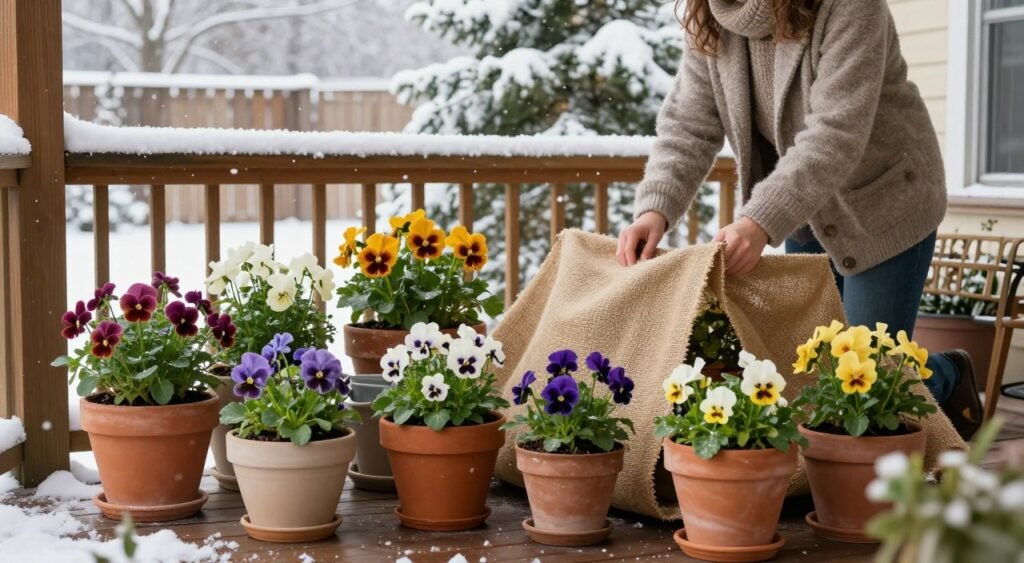
Relocating your pots before the first hard freeze is key. Move them to an unheated garage, shed, or a protected porch. This keeps them safe from cold winds and snow.
These spots act as a buffer. They prevent the roots from freezing, which is deadly for many plants.
Insulating Containers Against Freezing Temperatures
If moving pots is not possible, insulate them instead. Use bubble wrap, burlap, or frost blankets to keep roots warm. This is a crucial step for container plant winter care.
| Material | Insulation Level | Best Use Case |
|---|---|---|
| Bubble Wrap | High | Small ceramic or plastic pots |
| Burlap | Medium | Large wooden or stone planters |
| Straw/Mulch | Moderate | Top-dressing for root protection |
Grouping Pots to Retain Microclimate Heat
Grouping pots together is another smart move. When pots are close, they share warmth. This creates a small, safe area.
This group helps protect your plants from cold air. It keeps them safe all winter.
Monitoring Your Garden During Thaw Cycles
Keeping your outdoor space safe during thaw cycles is key to a good garden winterizing. Even though you might want a calm season, changing temperatures can sneak up on your plants.
Watching for Premature Bud Break
Warm days in winter can fool your plants. They might think it’s spring too soon.
Seeing buds swell or green shoots grow means your plants are at risk. Check these areas often when it’s warmer than usual.
Managing Heaving Soil Around Roots
Freezing and thawing make the ground move. This can lift plant roots out of the soil.
Walk through your garden beds often. Look at the base of your perennials. If roots are showing, gently press the earth back into place to keep them safe.
Re-applying Protective Coverings After Warm Spells
When cold weather comes back after a warm spell, act fast. Put mulch or burlap back on to protect your plants.
Being quick helps your plants make it through the cold again. Watching your garden closely keeps it healthy until spring really comes.
| Condition | Action Required | Risk Level |
|---|---|---|
| Soil Heaving | Press soil down | High |
| Premature Buds | Add extra mulch | Critical |
| Stable Freeze | Monitor moisture | Low |
Dealing with Pests and Rodents in Winter
Start winter garden pest control early, before snow falls. Animals look for food in your garden when it’s cold. Act early to protect your plants from damage.
Protecting Bark from Voles and Rabbits
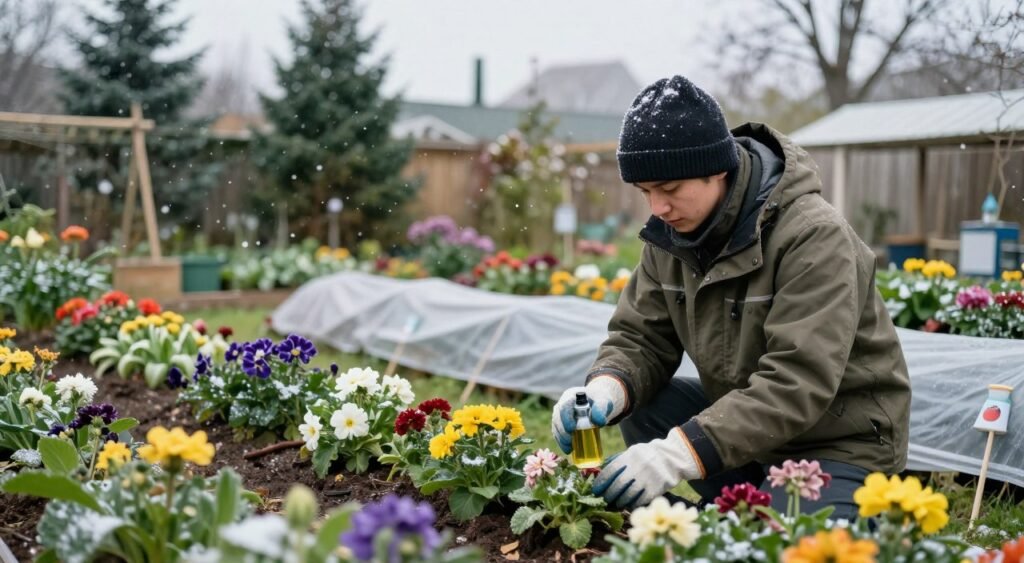
Voles and rabbits eat young tree bark. This can harm your plants. Protect garden shrubs with a barrier they can’t chew.
Use hardware cloth or plastic guards around plants. Make sure they’re high enough for snow. Secure guards in the ground to stop voles.
Using Physical Barriers and Repellents
Try repellents to keep animals away. Commercial sprays have smells animals dislike. Reapply after rain or snow.
Wire mesh fencing works well for rabbits. Be consistent to keep pests out.
Inspecting Plants for Overwintering Insects
Winter is a good time to find pests. Look for eggs on stems and leaves. Check plants carefully to find problems early.
Remove any infested parts right away. This keeps your garden healthy. Stay alert to help your plants grow well.
Transitioning Plants Back to Spring Growth
As days get longer, your garden starts to wake up from winter. You need to help your flowers grow well after being cold. Move slowly to let plants adjust without stress.
Gradually Removing Winter Coverings
Take off winter mulch and wraps slowly. This gradual approach helps plants avoid shock from temperature changes. If you remove everything too fast, a late frost can hurt new shoots.
Begin by loosening the covers on warmer days. This lets air move better. After the danger of frost is over, you can remove all the debris. This careful step is key for a healthy spring garden transition.
Acclimatizing Plants to Increasing Sunlight
Plants need time to get used to direct sunlight. Too much sun can burn their leaves. Move plants or remove shade cloths in the cooler morning.
Slowly increase their sun time to help them grow. Watch for signs of stress like wilting. If they look stressed, give them some shade until they adjust.
Initial Fertilization and Soil Preparation
When the soil thaws and frost danger is over, feed your garden. Add organic compost for nutrients. This is the best time to refresh your beds and get ready for the season.
Don’t till too much, as it can hurt new roots. Instead, mix compost into the top soil gently. Your flowers will thank you with a beautiful show all season.
Conclusion
Your hard work in winter plant care makes your outdoor space thrive. You protect your favorite plants from bad weather. This gets your garden ready for spring.
Watching your plants closely is key. Making small changes in cold months helps them stay healthy. Your garden will be strong and ready for new growth.
Be proud of your garden work. Your careful planning means your flowers will grow strong when it’s warmer. You’ll feel happy knowing your plants are safe and ready for spring.
Share your garden journey with others. Your stories help them keep their gardens beautiful all year. Keep watching your plants as the seasons change. This way, every flower can bloom fully.