
Many homeowners dream of a backyard full of color. Learning how to grow flowers in raised garden beds is a simple way to make that dream come true.
This method lets you control the soil and water. It’s why more Americans are using it to make their yards look great.
With a clear plan, you can avoid the uncertainty of regular planting. Success is well within your reach when you use these structures for your flowers.
Whether you’re new to gardening or have been doing it for years, this guide will help you. You’ll find that growing flowers in raised beds is a fulfilling experience that adds beauty to your home.
Benefits of Using Raised Beds for Your Floral Displays
Growing flowers in raised beds has many benefits. It’s better than planting in the ground. You can control the growing space better.
This method helps your flowers grow well. It also makes gardening easier.
Improved Soil Drainage and Aeration
One big plus is better water control. Raised bed drainage stops water from harming roots. This is key for flowers that don’t like wet soil.
The soil stays loose and full of air. This excellent aeration helps roots grow deep. Your flowers get the oxygen they need for bright, healthy petals.
Reduced Weed Pressure and Easier Maintenance
Raised beds mean less time on weed control. You start with clean, quality soil. This soil is less likely to have weeds than regular garden soil.
These beds also make gardening easier on your body. You won’t have to bend and kneel as much. Follow these raised bed gardening tips for a beautiful garden without hurting your back or knees.
Extended Growing Seasons in Your Region
Raised beds warm up faster in spring. This thermal advantage lets you plant earlier. Your flowers get a head start.
These raised bed gardening tips also help protect plants from frost. The soil and raised bed drainage keep your garden going even when the weather changes.
Choosing the Best Location for Your Raised Bed
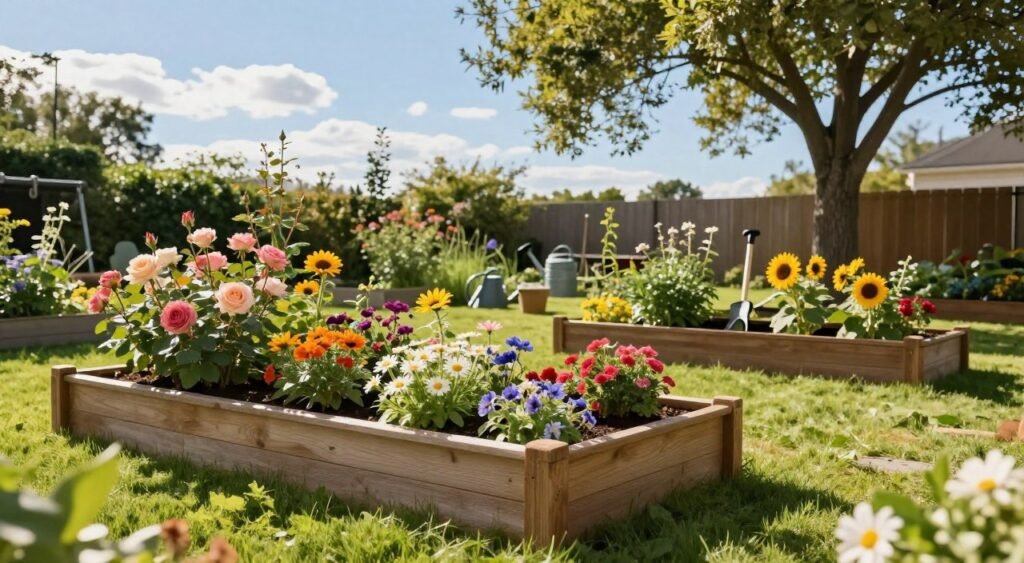
A good garden starts with the right spot for your bed. Picking the best raised bed location helps your flowers grow well. Watching your yard carefully will make your garden bright and healthy.
Assessing Sunlight Requirements for Flowering Plants
Most flowers love the sun and need lots of it to bloom. Make sure your spot gets at least six to eight hours of sun a day.
Big trees or tall things can cast shadows. Consistent light is key for photosynthesis and growing buds.
Ensuring Access to Water Sources
Having your bed near water makes caring for it easy. This keeps your plants from getting too dry in summer.
«The best fertilizer for any garden is the gardener’s shadow.»
Carrying a heavy hose can be a hassle. Keeping water close makes it easy to keep your plants moist.
Considering Wind Protection and Garden Accessibility
Think about wind too. It can damage tall flowers. A spot near a fence or hedge can protect them.
Also, think about moving around your garden. Make sure your raised bed location is easy to get to. This way, you can enjoy your garden every day and take care of it easily.
Selecting Materials and Building Your Raised Bed
Building your own garden starts with picking the right materials. When you focus on raised bed construction, your plants stay healthy and bright. Choosing the right parts is key to a great project.
Comparing Cedar, Redwood, and Composite Materials
Choosing the right material for your DIY raised garden beds depends on your budget and style. Cedar and redwood are popular because they resist rot and bugs. They also look good, turning gray over time if not treated.
Composite materials are a modern choice that needs little care. They handle bad weather well without warping or splintering. Here’s a comparison to help you choose.
| Material | Durability | Maintenance | Cost |
|---|---|---|---|
| Cedar | High | Low | Moderate |
| Redwood | Very High | Low | High |
| Composite | Excellent | Very Low | High |
Determining the Ideal Height and Width for Your Space
The size of your garden beds is as important as the materials. A width of four feet is good for most DIY raised garden beds. It lets you reach the middle without stepping on the soil.
Height matters for your comfort. Beds 12 to 18 inches tall are perfect for most plants. If you don’t like bending, make them taller to save your back.
Step-by-Step Assembly Tips for Sturdy Construction
Building your raised bed right needs careful assembly. Use high-quality screws to avoid rust and keep the frame tight. Pre-drill holes to avoid splitting the wood, which is common with cedar and redwood.
Make sure your corners are square before tightening everything. Adding corner posts makes your bed more stable. These steps help build a strong base for your flowers.
How to Grow Flowers in Raised Garden Beds: Soil Preparation
Starting to grow flowers in raised garden beds is all about the soil. Your plants need this soil to get the nutrients and support they need to grow well.
Creating the Perfect Potting Mix Blend
To get the best soil for raised beds, mix well. Use equal parts of compost, peat moss, and vermiculite or perlite.
This mix helps roots breathe and stay wet. Good air for roots is key to stop rot and help plants grow strong.
Incorporating Organic Matter and Compost
For organic flower gardening, feed your soil naturally. Add aged compost or well-rotted manure to bring in good microbes.
«The soil is the great connector of lives, the source and destination of all.»
These natural helpers give plants energy slowly. They also make your soil better over time, unlike chemical fertilizers.
Testing and Adjusting Soil pH Levels
Checking the soil pH for flowers is important. Most plants like a slightly acidic to neutral soil to get minerals.
Use a simple kit from a garden center to test your soil. If it’s not right, add lime to raise it or sulfur to lower it. This keeps your garden vibrant and healthy.
Planning Your Floral Layout and Design
Turning your raised bed into a beautiful flower garden needs planning. Think of your garden like an artist’s canvas. This way, you can make a space that shows your style and helps your plants grow well. Looking at flower garden design ideas can help you create a garden that looks great and feels special to you.
Understanding Height Tiers for Visual Interest
Adding depth to your garden is easy with height tiers. Put your tallest plants in the back or middle. This strategic placement lets smaller flowers in the front get sunlight and be seen.
Grouping Plants by Water and Light Needs
Group plants by what they need. Sun-loving plants go together, and shade plants have their own spot. This way, every plant gets what it needs and grows well.
Incorporating Color Theory into Your Garden Bed
Color theory is key in your garden’s feel. Use annual flowers for color to make a changing display. Choose colors that you like, like blues and purples or reds and yellows. These flowers keep your garden lively and new.
Experimenting with colors lets you find what you love. Using annual flowers for color is a safe way to try new things every year. With these ideas, your raised bed will be the best part of your yard.
Selecting the Right Flower Varieties for Your Climate
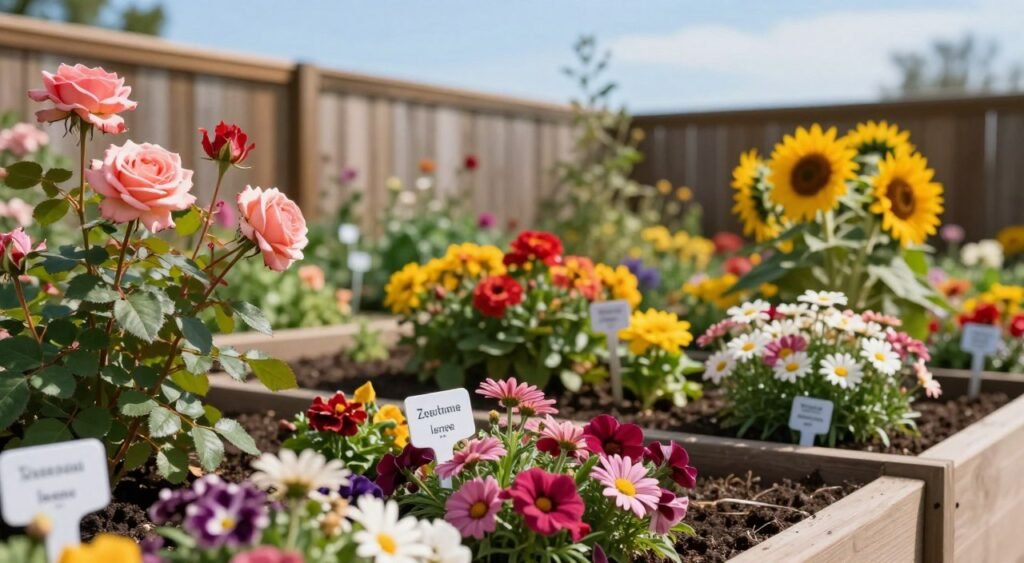
Creating a beautiful garden needs the right plants for your area. Pick varieties that grow well in your region. This way, your garden stays colorful and healthy with less work.
These flower garden design ideas mix beauty with lasting garden health.
Choosing Annuals for Instant Seasonal Color
Annual flowers for color are great for quick changes. They grow, bloom, and die in one season. This lets you change them out for new looks every year.
Selecting Perennials for Long-Term Garden Structure
Perennial flowers for raised beds are key for lasting beauty. They come back year after year, giving your garden a strong base. You can add annuals around them for changing colors.
Incorporating Native Plants to Support Local Pollinators
Using sustainable gardening practices means choosing native plants. They need less care because they fit your local climate and soil. Plus, they help bees, butterflies, and other insects.
| Plant Type | Primary Benefit | Maintenance Level | Longevity |
|---|---|---|---|
| Annuals | Instant Color | Moderate | One Season |
| Perennials | Garden Structure | Low to Moderate | Multiple Years |
| Native Plants | Pollinator Support | Very Low | Long-Term |
Planting Your Flowers: A Step-by-Step Guide
When your soil is ready, it’s time to put your flowers in their new spot. After building your raised bed, you need to be careful. This helps your plants grow well in their new home.
Preparing Your Seedlings and Transplants
Before putting your plants outside, they need to get used to the sun and wind. This is called hardening off. It takes a few days to do this.
Begin by putting your trays in a shaded area for a few hours a day. Gradually move them to more sun until they can handle it all. This helps them avoid shock and grow strong.
Proper Spacing Techniques for Healthy Growth
It’s important to give your plants enough room. This stops them from getting too crowded. Crowding can make plants sick and stop them from growing.
With enough space, plants can breathe better. This lowers the chance of diseases and pests. Make sure to check how much space each plant needs to grow well.
Applying Mulch to Retain Moisture and Suppress Weeds
After planting, adding mulch is a good idea. Mulch keeps the soil cool and stops moisture from evaporating too fast.
It also keeps weeds away, which compete for food. This helps your perennial flowers for raised beds grow strong roots. A mulched bed looks nice and needs less care all season.
Essential Watering and Irrigation Techniques
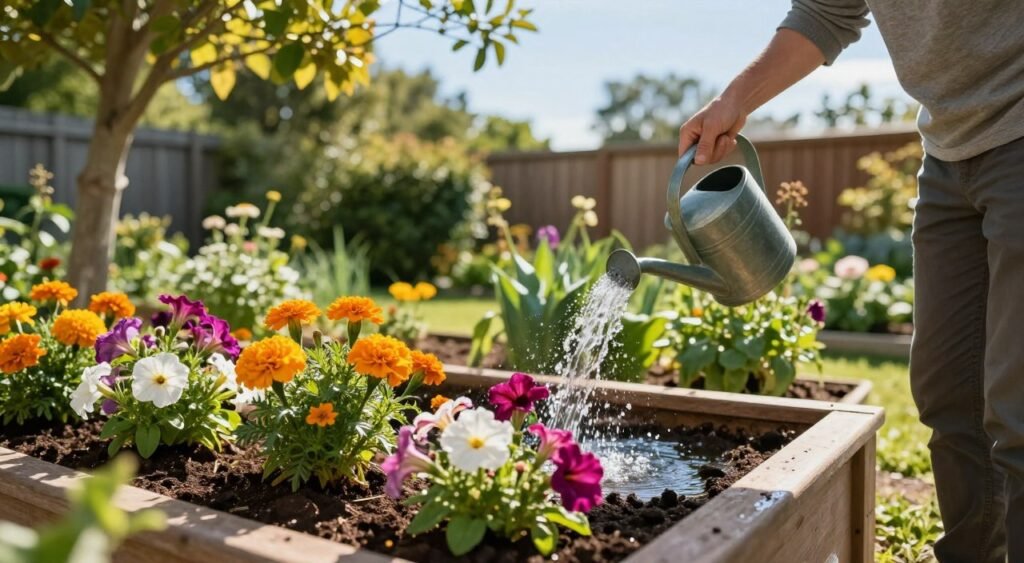
Water is key for every flower to grow. When watering raised garden beds, watch your plants closely. Soil in raised beds dries out quickly.
Determining When Your Flowers Need Water
The finger test is the best way to check soil moisture. Stick your finger into the soil about two inches deep. If it’s dry, it’s time to water.
Don’t water on a set schedule. Weather like wind and heat changes your garden’s needs every day.
Plants show signs of thirst before they wilt. Look for droopy leaves or color changes. These signs mean the plant needs water.
Benefits of Drip Irrigation Systems
Drip irrigation is great for your flowers. It waters the roots directly, saving water and preventing diseases. This keeps your garden healthy and saves time.
Installing a drip line keeps your plants moist all day. This helps them grow strong and bloom more. It’s a smart choice for a lush garden.
Avoiding Common Watering Mistakes
Don’t use overhead sprinklers. They can cause mold and mildew. Water at the base of the plants instead.
Good raised bed drainage is crucial to avoid root rot. Make sure your bed has holes for water to drain. If water stays on top, your soil might be too dense.
| Method | Efficiency | Foliage Health | Best Use |
|---|---|---|---|
| Drip Irrigation | High | Excellent | Daily Maintenance |
| Soaker Hoses | Medium | Good | Large Beds |
| Hand Watering | Low | Variable | Spot Treatment |
Fertilizing and Maintaining Soil Health
Learn to care for your soil to make your flowers bloom more. Keeping your soil healthy gives your plants the power to bloom all season. By choosing organic flower gardening, you help your plants grow strong and healthy.
Understanding NPK Ratios for Flower Production
Fertilizer labels show three numbers: Nitrogen, Phosphorus, and Potassium. Nitrogen makes leaves green. Phosphorus makes flowers bright and colorful. Potassium keeps plants healthy and fights off diseases.
For more flowers, pick a fertilizer with a high middle number. This helps plants focus on growing flowers, not just leaves. Always check the soil pH for flowers to help plants absorb nutrients.
Applying Slow-Release vs. Liquid Fertilizers
Choosing between slow-release and liquid fertilizers depends on your schedule. Slow-release fertilizers feed plants for months, perfect for busy gardeners. Liquid fertilizers give plants a quick boost when they need it.
| Fertilizer Type | Application Frequency | Nutrient Release | Best Use Case |
|---|---|---|---|
| Slow-Release | Once per season | Gradual | Long-term maintenance |
| Liquid Feed | Every 2 weeks | Immediate | Rapid growth spurts |
| Organic Compost | Twice per year | Slow/Steady | Soil structure health |
Refreshing Soil Nutrients Between Seasons
To keep your best soil for raised beds healthy, work on it between seasons. After removing old plants, add compost to refresh the soil. This step brings back the good bugs that make your garden thrive.
Regularly amending your soil stops it from getting too hard and keeps water flowing. Treating your soil like a living thing means your flowers will bloom better every year. Your hard work will pay off with stronger, more beautiful flowers.
Managing Pests and Common Garden Diseases
Keeping your flowers safe from pests and diseases is fun. Watch your plants closely to catch small problems early. Consistent monitoring helps your garden stay colorful and healthy.
Identifying Common Floral Pests
Check your plants every week for pests. Look at the undersides of leaves and stems for aphids, spider mites, or Japanese beetles. These pests can make your leaves sticky or leave small holes.
Finding pests early is key to controlling them. If you see wilting or discolored leaves, check right away. This way, you can fix the problem quickly.
Implementing Integrated Pest Management Strategies
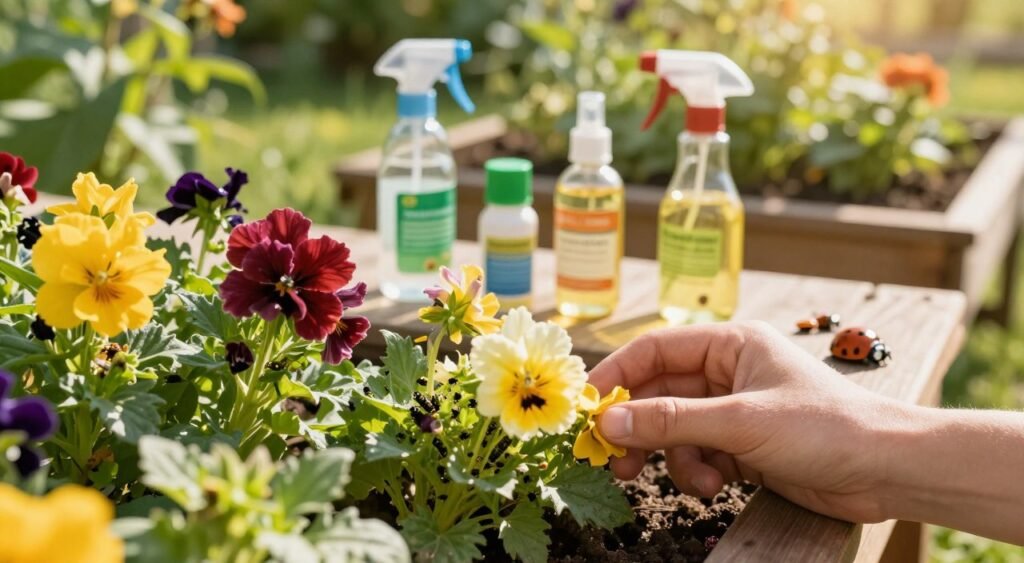
Use integrated pest management instead of harsh chemicals. This method uses natural ways to keep your garden safe. Ladybugs can help control aphids in your garden.
These sustainable gardening practices help your soil and plants stay healthy. Use physical barriers or organic soaps to protect your flowers. Healthy plants fight off pests better.
Preventing Fungal Issues Through Proper Airflow
Fungal diseases love damp, still places. Make sure your plants have room to breathe. Plant them far enough apart to start with.
If you see powdery mildew or leaf spots, cut off the bad parts. This helps air move better. Keeping your garden tidy and well-spaced keeps your flowers looking great all season.
Conclusion
Growing flowers in raised garden beds makes your backyard a special place. It’s a mix of creativity and practical skills that leads to beautiful results.
You know how to pick the best spot, make the soil rich, and keep things growing well. By doing these things, you help your plants grow big and strong.
Brands like Burpee and Miracle-Gro have great tools to help you. Use these to get better at gardening as you learn more.
Your garden is like a canvas that shows off your style. Seeing your flowers grow and bloom makes your home and yard even more beautiful.
Don’t be shy to share your gardening journey with others. Your success will encourage them to start their own gardens and add beauty to their spaces.
Enjoy watching your plants grow from tiny seeds into beautiful flowers. Every flower you pick shows your hard work in making the world greener and more colorful.