
Your home’s exterior is the first thing visitors see. By picking the best flowering plants for entryways, you boost your curb appeal. A well-chosen selection of plants makes your porch lively and welcoming.
Creating a welcoming home entrance is easy. With the right entryway design tips, you can match your garden with your home’s look. This guide helps you choose plants that grow well in your area and show off your style. You’ll learn how to make a beautiful display, no matter the weather.
Assessing Your Entryway Environment
Good entryway landscaping starts with knowing your outdoor space well. Before buying plants, understand your porch’s limits for lasting success. Watching your area helps your plants grow well.
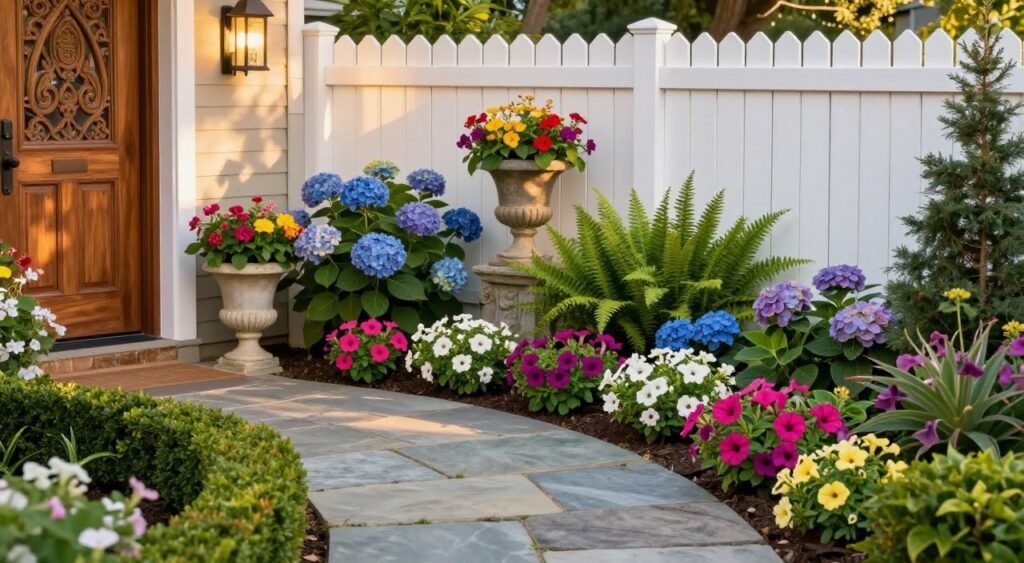
Evaluating Available Space and Traffic Flow
First, measure your porch to know how much space you have. You want a nice look without blocking the door. Clear paths are key for safety and ease when friends come over.
Make sure pots don’t block the way or get in the door’s path. Aim for at least thirty-six inches of space for a good path. Planning your space helps avoid messy entryways.
Determining Container Sizes and Material Needs
Picking the right pots is crucial for container gardening. Choose pots that give roots room to grow and fit your home’s style. Small pots dry out plants fast and limit growth.
Think about the container material based on your area’s weather and upkeep:
- Terra Cotta: Classic, breathable, but heavy and breaks in cold.
- Resin: Light, strong, keeps moisture in hot, dry places.
- Ceramic: Looks polished, but heavy and chips easily.
Choosing the right materials keeps your container gardening looking great all year. Always have drainage holes to avoid root rot, no matter the material.
Understanding Light Requirements for Your Porch
Watching the sun is key to keeping your plants happy and bright. Before getting new plants, see how light changes in your home. This helps you pick the best porch plant ideas for your area.
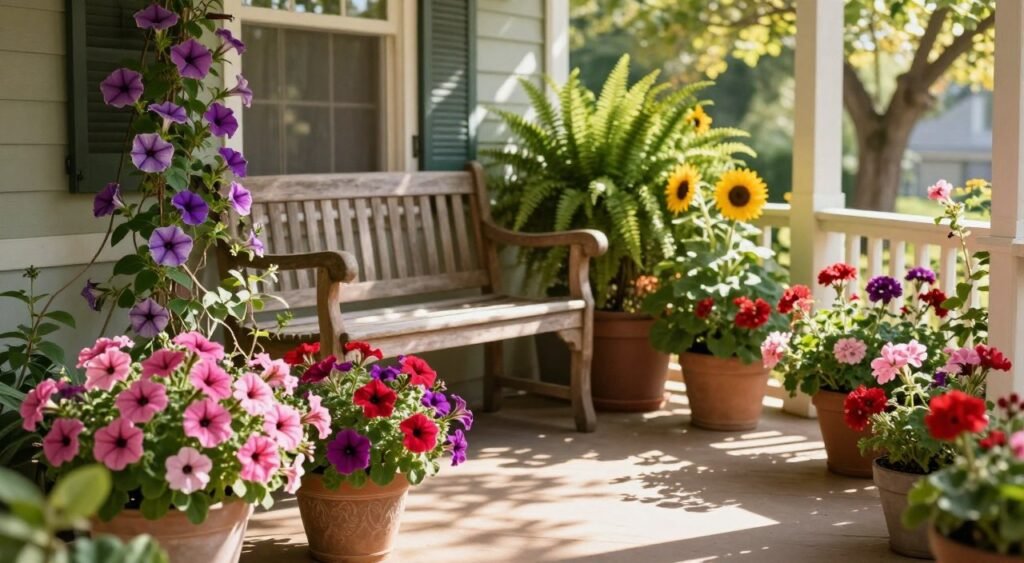
«Light is the architect of the garden; it defines the space and dictates the life that can flourish within it.»
Identifying Full Sun Exposure Patterns
Full sun spots get at least six hours of direct sunlight. These are great for plants that love the sun. If your porch faces south or west, it’s perfect for warm-loving plants.
Choose porch plant ideas that love bright light. Make sure they get enough water, as they dry out fast in the sun.
Managing Partial Shade and Dappled Light
Partial shade gets three to six hours of sunlight. This is common on east-facing porches or those with trees nearby. Dappled light also falls here.
Many plants do well in this light. You can try different colors and textures. Watch your plants in the hottest part of the day to avoid heat stress.
Adapting to Deep Shade Entryways
Deep shade spots get less than three hours of sunlight. These are often on north-facing porches or covered areas. They’re great for plants with lots of leaves and delicate blooms.
For deep shade, pick plants that love the shade. Make sure they don’t get waterlogged to avoid root rot. This way, your porch will be green and healthy all year.
Selecting the Best Flowering Plants for Entryways Based on Climate
You can make your porch look amazing by picking plants that match your weather. Knowing your local climate helps you find the best flowering plants for entryways. This way, your plants stay bright all season long.
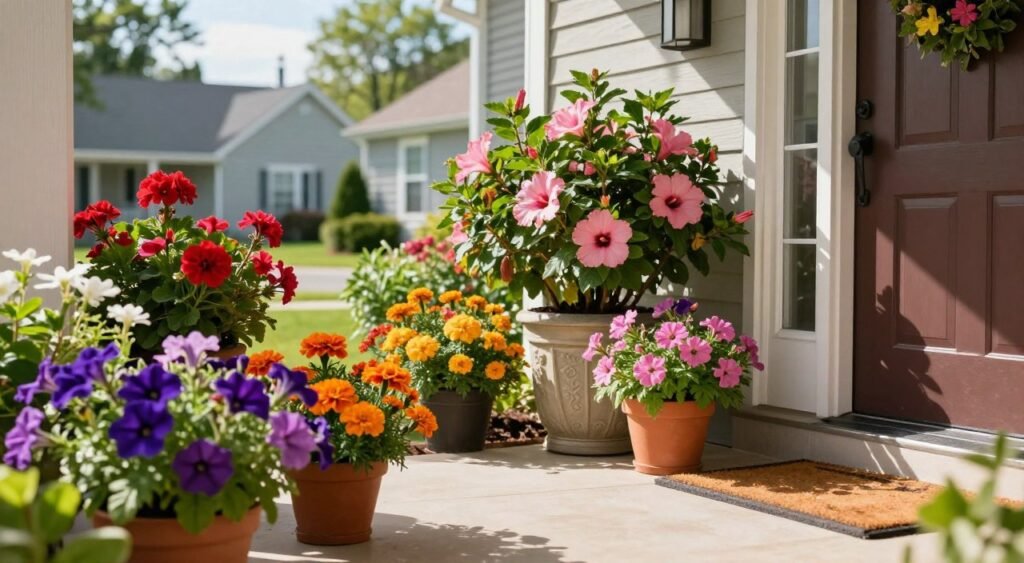
Choosing Heat-Tolerant Varieties for Southern Climates
In hot summers, you need plants that can handle the sun. Resilient heat-tolerant flowers keep your containers looking good. Lantana, Pentas, and Bougainvillea are great for southern porches because they love the heat.
These plants need less water once they’re settled. They’re perfect for people who are always busy. Make sure your pots have holes to avoid root rot in summer storms.
Selecting Cold-Hardy Blooms for Northern Regions
In northern areas, pick cold-hardy plants that can handle sudden cold. Pansies, Violas, and Hellebores are great for color in spring and fall. They make your entryway look good for longer.
Choose plants that add structure, not just pretty petals. This keeps your entryway looking neat, even in cooler seasons.
Considering Humidity and Wind Resistance
High humidity and strong winds can harm plants. Plants that breathe well are best in humid areas. For windy spots, choose short, sturdy plants instead of tall ones.
| Climate Type | Recommended Plant | Key Benefit |
|---|---|---|
| Hot & Dry | Lantana | Drought Tolerance |
| Cool & Humid | Hellebore | Frost Resistance |
| Windy Exposure | Ornamental Grasses | Structural Stability |
| Partial Shade | Begonias | Consistent Color |
Matching Plant Growth Habits to Your Space
The secret to great entryway landscaping is the thriller filler spiller design. This method makes your containers look full and balanced. It adds depth to your home’s look.
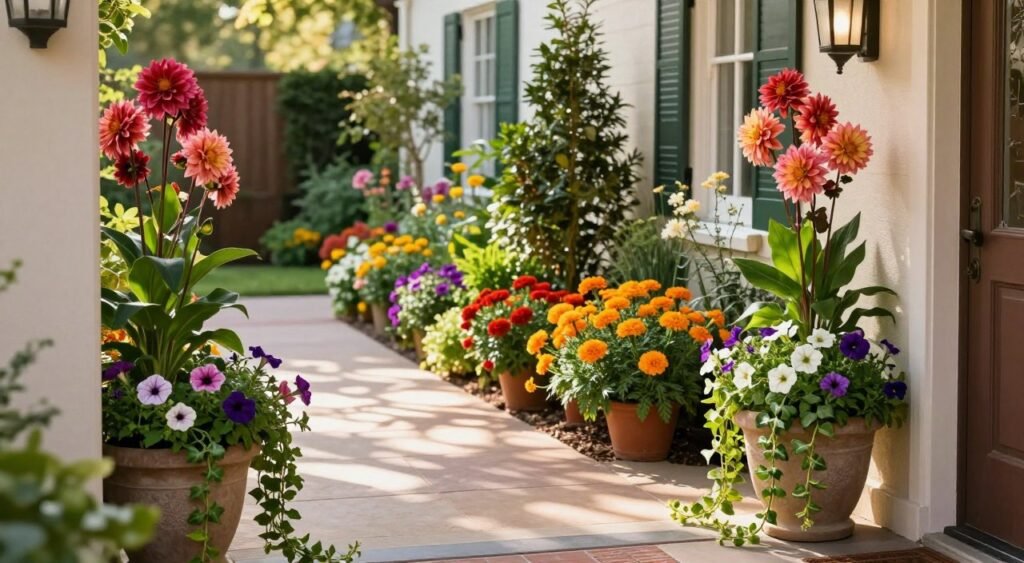
Utilizing Thriller Plants for Vertical Interest
Thriller plants are the focal point of your design. They are tall and draw your eye up. Place them in the center or back of your container.
Use plants like ornamental grasses or tall flowers for this. They give your design structure.
Selecting Filler Plants for Lush Volume
After your vertical plant, add filler plants. They are rounded and fill the space. They hide the soil and make your display look healthy.
Pick plants that match your thriller’s colors but don’t steal the show. Petunias, begonias, or coleus are good choices. They add color and foliage to your entryway landscaping.
Incorporating Spiller Plants for Soft Edges
Spiller plants cascade over the edges. They soften your pots and make your arrangement look natural. They connect your container to the ground.
Trailing vines like ivy or sweet potato vine are great for this. The thriller filler spiller method makes your containers balanced.
| Plant Role | Primary Function | Placement Strategy |
|---|---|---|
| Thriller | Vertical height | Center or back |
| Filler | Volume and density | Surrounding the center |
| Spiller | Softening edges | Along the container rim |
Coordinating Colors with Your Home Exterior
Boosting your home’s curb appeal starts with picking the right flower colors. These colors should match your home’s look. This makes your entryway blend smoothly with your home’s design.
Complementing Siding and Trim Colors
Good exterior color coordination starts with knowing your siding and trim’s colors. If your home is cool gray, choose flowers in blue, purple, or white. This keeps your look modern and clean.
For homes with warm colors like beige or tan, pick flowers in orange, yellow, or red. Matching the intensity of your plant colors to your trim makes your containers look like a part of your design.
Creating Monochromatic Sophistication
Going for a monochromatic color scheme can make your home look fancy. Pick flowers in different shades of one color, like light pink, magenta, and burgundy in one pot.
This makes your space feel calm and elegant. It’s great for homes with neutral colors, adding depth without being too much.
Using Contrasting Hues for High Impact
For a bold look, use colors that are opposite each other on the color wheel. For example, yellow flowers with a navy blue door. This creates high-impact visual interest.
This is perfect for those who want to make their curb appeal pop with bright colors. Just make sure the design is balanced to avoid looking too busy.
Essential Maintenance Tips for Entryway Containers
Learning to care for plants keeps your porch containers looking great all year. Good care is key to successful container gardening. It keeps your plants healthy and bright. Follow this plant maintenance guide to protect your investment and welcome guests.
Selecting the Right Potting Mix for Drainage
The secret to happy plants is in the soil. Don’t use garden soil in pots. It gets too heavy. Instead, pick a light, special potting mix for containers.
These mixes have peat moss, perlite, or vermiculite for better air. Good drainage stops water from pooling. Without it, roots can rot and plants fail.
Establishing a Consistent Watering Schedule
Plants need the right amount of water. Containers dry out fast because they have less soil. Adjust your watering based on pot size and weather.
On hot, windy days, water your container gardening every day. Check soil moisture by feeling it with your finger. If it’s dry, water until water flows out of the holes.
Applying Fertilizers for Continuous Blooming
Regular feeding helps plants grow strong and bloom often. Since watering washes out nutrients, you need to add them back. Use a balanced, water-soluble fertilizer every two weeks when plants are growing fast.
Slow-release granules are great for those who are busy. They give nutrients slowly over months. This keeps plants blooming all season without constant care.
Seasonal Rotation Strategies for Year-Round Appeal
Make your front porch look great all year. Plan ahead to keep your entryway inviting. A seasonal plant rotation lets you show off the best plants for each season.
Transitioning from Spring Bulbs to Summer Annuals
When it’s not too cold, start with colorful spring bulbs like tulips. Then, switch to summer plants that love the sun. These porch plant ideas bring bright colors and long-lasting flowers.
- Swap old bulbs for petunias or geraniums for more color.
- Add plants like sweet potato vine for greenery.
- Make sure your pots have fresh soil for new plants.
Preparing for Autumnal Textures and Colors
As it gets cooler, choose plants that celebrate fall. Use colors like orange, red, and yellow to make your porch cozy. This part of seasonal plant rotation adds texture.
«The garden is a mirror of the soul, reflecting the beauty of change as the seasons turn from the warmth of summer to the quiet reflection of autumn.»
Add plants like ornamental grasses, kale, or pansies to your pots. They look good in cold weather. Mix them with pumpkins or dried corn for a festive look.
Winterizing Your Entryway with Evergreens and Berries
Your porch can still look great in winter. Choose cold-hardy plants for a stylish look. Evergreens keep your design green all winter.
Decorate with branches or bright berries for color. These porch plant ideas make your entrance festive. Use cold-hardy plants like boxwood or winterberry to keep your home looking good all winter.
Troubleshooting Common Pests and Watering Issues
Keeping your porch beautiful means watching for plant problems. Even heat-tolerant flowers can get sick if things change too fast. A good plant maintenance guide helps you fix issues before they ruin your display.
Identifying Early Signs of Plant Stress
Check your plants twice a week for signs of trouble. Look for yellow leaves, which mean too much water or not enough food. If stems droop in the morning, your plants are stressed.
Brown, crispy leaves mean your plants are too hot or don’t have enough water. Catching these signs early helps you fix the problem. This keeps your porch looking great all season.
Managing Common Pests Without Harsh Chemicals
You don’t need harsh chemicals for plant pest control. Many pests can be stopped with simple, safe methods. Watching your plants closely is the best way to keep them pest-free.
Natural Remedies for Aphids and Spider Mites
Aphids and spider mites love container gardens. Spray aphids off with water from your hose. For tough cases, mix mild dish soap with water for a safe solution.
Neem oil is great for mites and other pests. Use it in the morning or evening to avoid harming leaves. Always test a small area first to make sure it works well.
Preventing Root Rot Through Proper Drainage
Root rot is a big problem from bad potting soil drainage. Roots need air, not water, to stay healthy. Make sure your containers have big holes at the bottom for water to drain.
Use a good potting mix that drains well. Adding perlite or coarse sand helps air get to the roots. Good potting soil drainage keeps your plants healthy, even when it rains a lot.
| Issue | Primary Symptom | Recommended Action |
|---|---|---|
| Aphids | Sticky residue on leaves | Use insecticidal soap |
| Root Rot | Foul odor from soil | Improve drainage holes |
| Heat Stress | Wilting during the day | Increase watering frequency |
| Spider Mites | Fine webbing on stems | Apply neem oil spray |
Conclusion
Your home’s exterior is the first thing visitors see. By using these tips, you can make your doorway stand out.
A welcoming entrance needs color, texture, and light. Now, you know how to pick plants that fit your climate and home style.
Keeping things consistent is key. Regular watering and care keep your plants looking good all year. Don’t be afraid to try new plants to find the best ones for your space.
Even small changes can make a big difference. Start your garden project today. A beautiful garden at your door will make your whole property look better.