
Do you feel like your outdoor area is too cramped to enjoy? Many homeowners struggle with limited square footage. But, you can easily make a tight yard feel lush and inviting.
By choosing the right plants, you can make your space look bigger. This trick uses color and layers to make your garden seem vast.
Strategic planting is the secret to success. When you pick the right flowers that make small gardens look bigger, you make your space feel bigger. This trick uses color and layers to draw your eye outward.
Mastering Spatial Perception Through Floral Design
Learning spatial perception in landscaping can make a small patio feel like a big retreat. By knowing how our eyes see distance, we can make small garden design ideas seem bigger. You don’t need a lot of land to make a space feel huge.
Understanding the Psychology of Garden Depth
Our brains use certain visual clues to figure out distance. By changing these clues, we can make garden depth perception better. Putting big, bold plants up front and small, detailed ones in the back creates a deep look.
«The garden is a place where the mind can wander, and the eye can find rest in the beauty of carefully arranged space.»
This trick makes us think the garden is bigger than it is. Consistency in your design is important to keep this illusion. Too many things to look at can make a small area feel too busy.
The Role of Color Theory in Expanding Small Spaces
Color affects how we see the size of outdoor areas. Cool colors like blues and purples make things seem farther away. Warm colors like reds and oranges make things seem closer.
Using cool colors can make your garden feel bigger. This makes the edges of your garden seem to disappear. Here’s how different colors affect what we see:
| Color Category | Visual Effect | Best Placement |
|---|---|---|
| Cool Tones | Receding | Perimeter/Back |
| Warm Tones | Advancing | Foreground/Center |
| Neutral Tones | Neutralizing | Transitions |
By using colors in layers, you control how deep your garden looks. Remember, simplicity is your greatest tool in small spaces. Aim for a flow that guides the eye through your garden.
Selecting Flowers That Make Small Gardens Look Bigger
Choosing the right plants is key to making your outdoor space look bigger. You don’t need a big change to do this. Just pick plants that make your garden look deeper and wider.
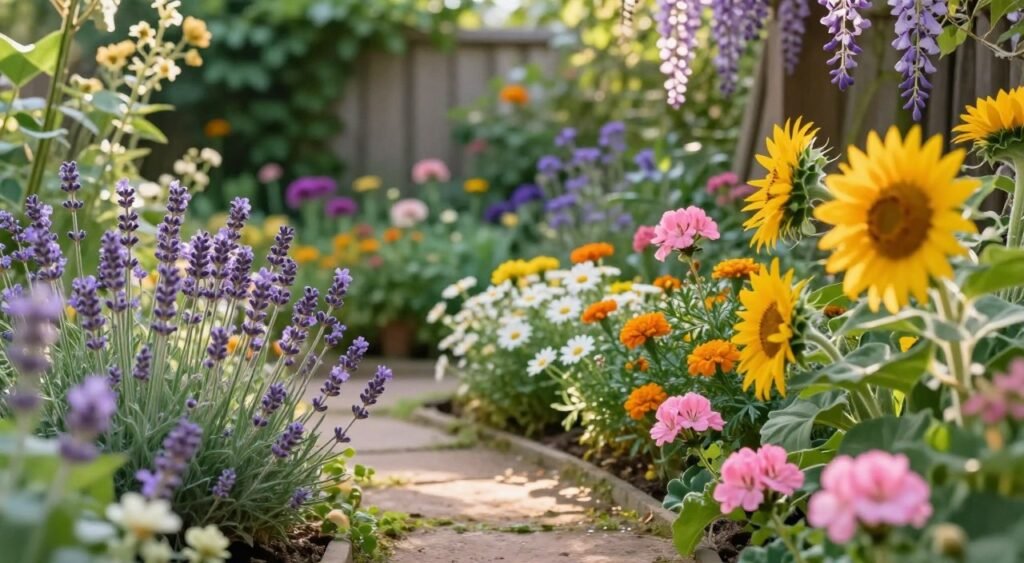
Choosing Cool-Toned Blooms for Distance
Using cool-toned flowers is a smart trick. Blue, violet, and soft lavender flowers seem to go away from you. Planting these at the garden’s edge makes your space look bigger.
Choose plants like lavender, delphiniums, or blue salvia for this effect. These colors don’t come forward like warm colors do. By strategically placing these cool hues, you make your garden seem deeper.
Utilizing Airy and Delicate Flower Varieties
The look of your plants matters too. Using airy garden plants keeps your garden feeling open. Plants with fine leaves and small flowers let light through, making your garden feel airy.
Think about adding plants like baby’s breath, gaura, or ornamental grasses. They add visual softness and make your garden feel bigger. Avoid dense plants to keep your garden feeling open and peaceful.
Strategic Placement of Floral Borders
Using garden border design makes small areas look bigger. By picking the right spots for plants, you can change how your garden looks. This trick makes your garden seem bigger than it is.
Blurring Boundaries with Soft Edges
Hard edges like fences or brick walls make yards look small. Planting vines or bushy plants against them softens these lines. This makes your garden blend smoothly with the outside world.
Here are some tips to soften your edges:
- Use cascading flowers to spill over walls.
- Plant tall grasses to add interest to fences.
- Choose shrubs with soft shapes to hide corners.
Layering Heights to Create a Sense of Scale
Layering adds depth to small spaces. Place short plants in front and tall ones in back. This makes your garden look bigger.
Here’s a table to help pick plants for your borders:
| Layer Position | Plant Type | Visual Effect |
|---|---|---|
| Front Border | Low-growing groundcovers | Creates a soft, inviting entrance |
| Middle Border | Mid-sized perennials | Adds texture and color density |
| Back Border | Tall, vertical shrubs | Draws the eye toward the horizon |
Creating a good garden border design takes time and thought. As you work on it, remember to make it mysterious. Hiding where your garden ends lets people imagine it’s bigger.
Implementing Vertical Gardening Techniques
When you don’t have much ground space, look up to grow more. Vertical gardening makes your garden seem bigger. It lets you plant more without taking up too much room.
Selecting Climbing Flowers for Vertical Expansion
Picking the right climbing plants for small spaces is key. Look for plants with light leaves and bright flowers. Clematis and Sweet Peas are great because they grow tall but don’t need a lot of room.
These plants make your garden look taller. They make your space feel bigger. Choose plants that bloom all season to keep your garden colorful.
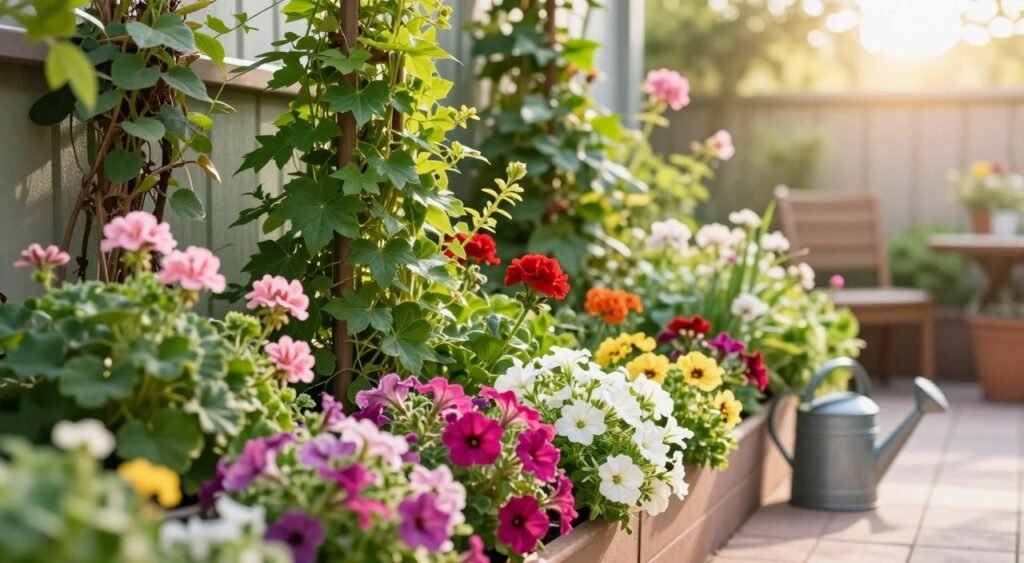
Installing Trellises and Arbors for Depth
Structures like trellises and arbors are important for vertical gardening tips. They support your vines and add beauty. These structures make your garden interesting by adding layers.
Put these supports in places to frame views or hide ugly spots. Using these vertical gardening tips makes your garden feel endless. It turns your backyard into a secret, endless place.
Using Color Gradients to Extend Sightlines
You can make your outdoor area look bigger by using color gradients in landscaping. By picking the right plants, you can make it seem like there’s more depth. This trick is great for making your garden sightlines better without needing more space.
Applying the Rule of Atmospheric Perspective
The rule of atmospheric perspective says things look lighter and cooler when they’re far away. In nature, mountains far off look soft and blue-gray. You can do this in your garden by using cool-toned plants or flowers at the back.
By placing these cool colors at the edge, you make it seem like the garden is bigger. This makes your space feel more open and airy. It’s a simple trick to add mystery to your garden.
Transitioning from Bold to Pastel Hues
Start with bold, warm colors like deep reds or bright yellows up front. These colors grab your attention and seem closer. Then, move to softer, pastel colors like lavender or light blue towards the back.
This change in color makes your garden feel like one big, connected space. Color gradients in landscaping make your garden feel like a journey, not just a bunch of plants. With careful planning, even a small yard can become a cozy, inviting place.
Creating Focal Points to Draw the Eye
You can make your yard look bigger by adding eye-catching elements. Garden focal points help guide the viewer’s eyes. This makes small areas feel bigger.
Positioning Statement Flowers at the Garden Perimeter
Put bold, bright flowers at your yard’s edges. This makes the eye go to the farthest points. Big blooms or striking colors at the edges make your garden seem deeper.
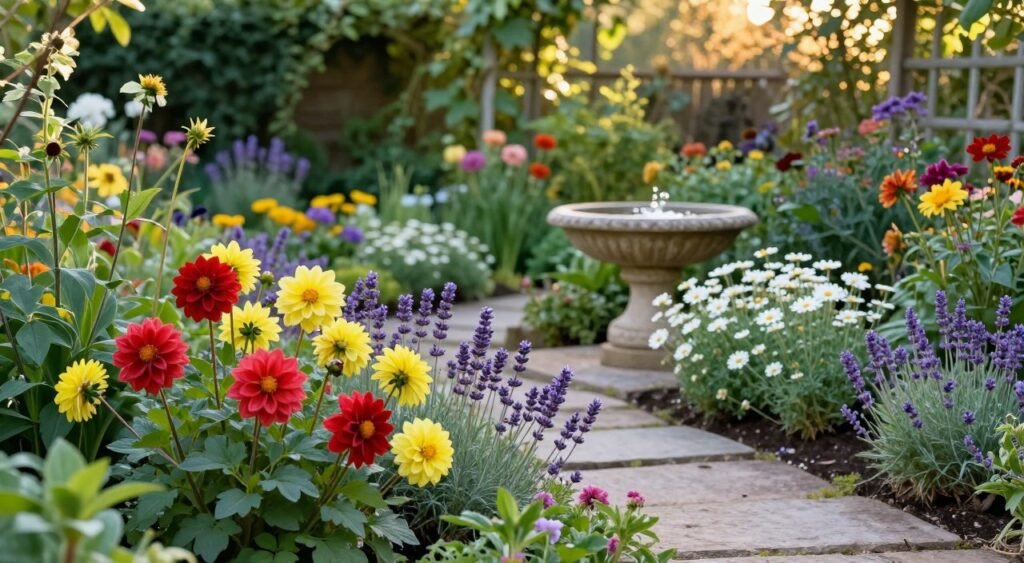
Use tall plants like Delphiniums or Foxgloves to draw attention. These garden focal points make your garden seem bigger. They add mystery and invite you to explore.
Using Containers to Direct Visual Flow
Container gardening for small spaces is great for guiding the eye. Arrange pots to lead visitors along a path. This makes your garden feel bigger and more planned.
Place containers at different heights for more interest. Container gardening for small spaces lets you change plants with the seasons. This way, you can try new looks and find the best fit for your space.
Managing Plant Density and Negative Space
Designing a small garden is like a dance. You balance plants and empty spaces. This makes the garden feel calm and open.
Balancing Lush Blooms with Open Pathways
You don’t need to cover every inch with plants. Clear paths let you move and give plants room to grow. These paths guide you through the garden, making it feel like a journey.
«The art of gardening is not just about what you add, but about the space you leave for the garden to breathe.»
Let’s look at how density changes how we see a garden:
| Design Element | Dense Layout | Open Layout |
|---|---|---|
| Visual Impact | Overwhelming | Balanced |
| Movement | Restricted | Fluid |
| Perceived Size | Smaller | Larger |
Avoiding Overcrowding for a Spacious Aesthetic
Too many plants make a small yard feel tight. Plants need space to grow well. This way, each one adds to the garden’s beauty without getting mixed up.
Negative space in gardening is key. It lets your favorite flowers stand out. By leaving some areas empty, your garden looks planned and elegant. It feels bigger than it is.
Incorporating Reflective Elements Among Flowers
Reflective elements help bounce light and make your garden look bigger. They change how we see distance and size. This trick makes small corners look big and open.
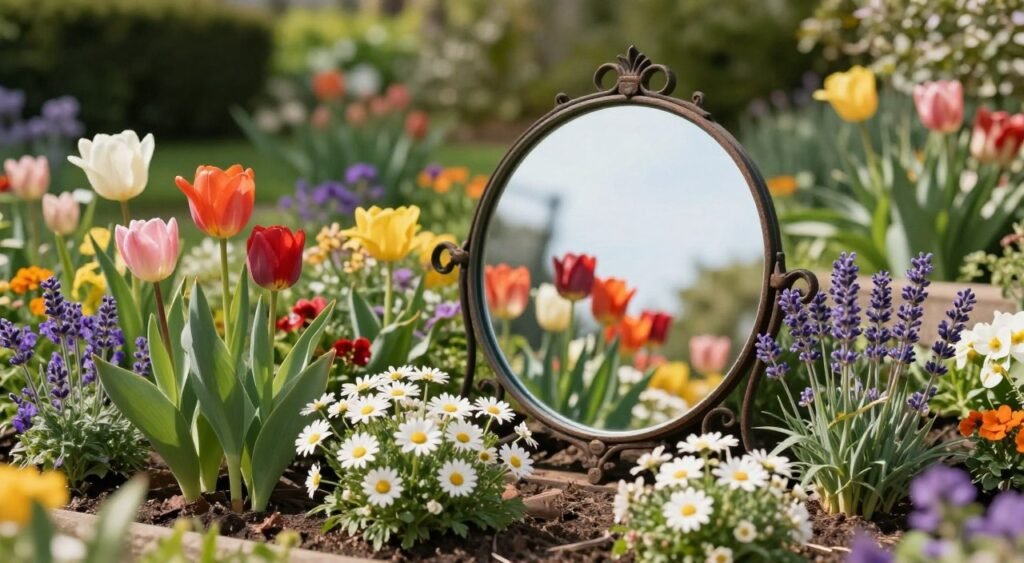
Pairing Flowers with Garden Mirrors
Putting a mirror right behind flowers is key. It doubles the beauty of your plants. This makes your garden seem to go on forever.
«The mirror is a window to a world that exists only in the reflection, turning a small patch of earth into an infinite landscape.»
Choose a spot where the mirror shows off your brightest flowers. Make sure the sun’s angle doesn’t cause glare. A mirror pulls your eye deeper into the garden.
Using Light-Reflecting Foliage and Petals
Nature has its own mirrors too. Plants with shiny leaves reflect light, making dark spots brighter. Silver, variegated, or glossy leaves work best.
These plants mirror the sun’s light. Add bright petals to them for a shimmering effect. This makes your garden feel alive and open.
| Plant Type | Reflective Quality | Best Use |
|---|---|---|
| Lamb’s Ear | Silver/Velvety | Border edges |
| Hostas (Variegated) | Glossy/Bright | Shady corners |
| Dusty Miller | High-sheen silver | Contrast filler |
Combining light-reflecting foliage with flowers makes your garden lively. It looks bigger and more welcoming all day. This choice makes every part of your garden special.
Seasonal Maintenance for Continued Expansion
Keeping your garden looking good all year is key. Seasonal garden maintenance helps keep your outdoor space open and fresh. By sticking to a regular schedule, your garden stays a peaceful place all year.
Deadheading to Maintain Visual Clarity
Deadheading makes your flowers look alive and colorful. It stops plants from making seeds, so they bloom again. This keeps your garden looking neat and inviting.
It also removes old, brown leaves that mess up the view. When your plants are clean, your garden feels bigger and more open. This enhances the perception of depth and makes it feel airy.
Pruning Techniques to Prevent Overgrowth
Learning to prune small gardens helps control plant size. Without trimming, plants can grow too big too fast. This ruins the look of your garden.
Take out branches that cross paths or lean into walkways. This intentional thinning keeps your garden from feeling too crowded. It keeps your garden balanced and open.
Regular care keeps your garden looking good for a long time. By doing these things often, you keep your garden beautiful and peaceful.
Common Mistakes to Avoid in Small Garden Design
Even the most passionate gardeners can fall into traps that make a small space feel cramped. When you are working with limited square footage, your choices carry significant weight. By identifying common garden design mistakes early, you can protect your landscape from feeling overwhelmed or disorganized.
Preventing Visual Clutter with Excessive Variety
One of the most frequent errors is the desire to include too many different plant species. While it is tempting to collect every beautiful flower you see, excessive variety often leads to visual chaos. A garden packed with too many textures and colors loses its sense of harmony.
Instead of a chaotic mix, focus on a cohesive palette. Using a limited selection of plants creates a sense of rhythm and flow. This approach is one of the most effective small garden design ideas for maintaining a clean, expansive look.
Avoiding Oversized Plants That Shrink the Space
Choosing plants based on their current size rather than their mature dimensions is a recipe for disaster. A shrub that looks perfect in a nursery pot might eventually swallow your entire patio. Always research the ultimate growth habit of every species before you dig.
Overgrown plants block sightlines and make pathways feel narrow. By selecting varieties that stay within your intended scale, you keep the garden feeling open and airy. Proper planning ensures your green space remains a sanctuary rather than a jungle.
| Design Element | Common Mistake | Recommended Strategy |
|---|---|---|
| Plant Selection | Too many species | Limited, cohesive palette |
| Growth Habit | Ignoring mature size | Researching plant height |
| Visual Impact | Cluttered borders | Strategic negative space |
| Overall Layout | Overcrowding | Prioritizing open paths |
Conclusion
Your small garden can be very beautiful. Use colors, vertical plants, and smart placement to make it big. This turns a small area into a big retreat.
You can change your garden in many ways. Use light and shadow to make it feel cozy yet open. Every flower you pick adds to the garden’s look.
Begin with one corner or a small pot. See how it changes your view of the whole yard. Try new things to make your garden even better.
Creating your own garden is fun. It brings happiness and peace to your life. Your garden will stay a lively and welcoming place for many years.