
Do you dream of a garden that blooms all year? A garden that stays colorful from spring to autumn is possible. By picking the right plants, you can make your garden a stunning visual masterpiece with little work.
Choosing the longest blooming flowers for gardens means your garden will always look beautiful. These plants are hardy and keep your garden interesting all season. With a little planning, you can have a garden that looks great with hardly any effort.
This guide will teach you how to create a beautiful garden. You’ll learn to pick plants that thrive in your area. Soon, you’ll have a garden that makes you happy all year.
Understanding the Lifecycle of Long-Blooming Varieties
The secret to a long-lasting display lies in the unique lifecycle of your chosen flowers. By grasping how different plants develop, you can better plan your garden beds for maximum visual impact throughout the growing season.
Annuals Versus Perennials for Continuous Color
To achieve continuous color, you must balance the distinct growth habits of annuals and perennials. Annuals complete their entire life cycle in a single season. They produce flowers rapidly and consistently until the first frost.
Perennials, on the other hand, return year after year but have shorter, more intense flowering windows. Strategic gardeners mix these two types. This way, when one plant finishes its show, another is ready to take its place.
The Role of Genetics in Bloom Duration
Beyond the basic classification of a plant, its internal genetic makeup plays a massive role in its overall performance. Breeders select specific traits to extend the flower bloom duration. They do this by overriding the plant’s natural tendency to stop flowering after seed production.
Some modern varieties are engineered to be sterile or to resist the hormonal signals that trigger seed set. When you choose these genetically superior cultivars, you gain a plant that remains focused on floral production. This keeps your garden looking fresh and vibrant for weeks longer than traditional heirloom varieties.
Selecting the Best Longest Blooming Flowers for Gardens
Choosing the right flowers is key to a colorful garden all year. Pick ones that bloom long to avoid replanting often. A good garden looks great and stays colorful.
Top Perennials for Extended Seasons
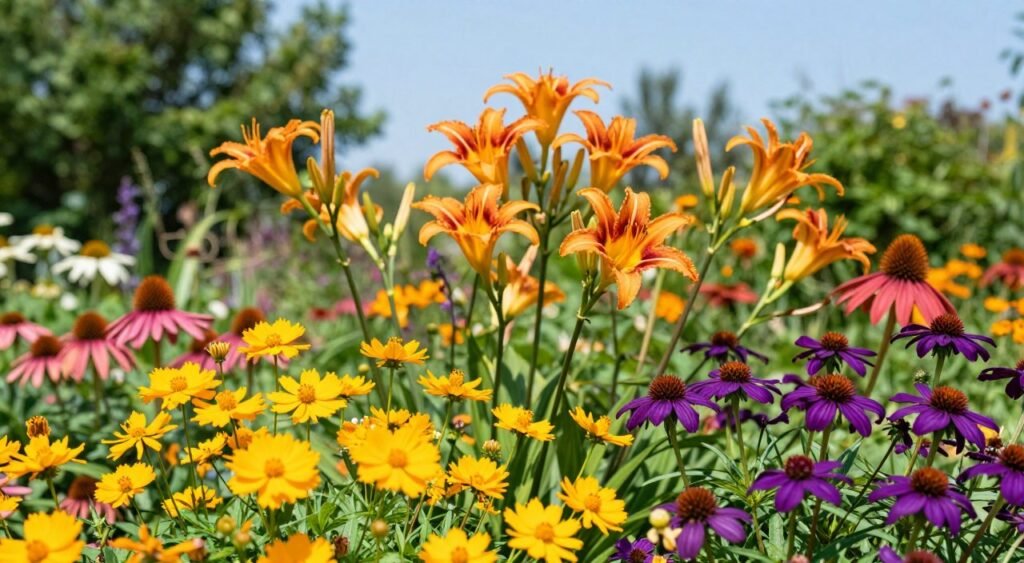
Perennials are great for a garden that needs little care. They bloom for years with the right care. Plants like Coneflowers and Black-eyed Susans bloom from summer to fall.
These plants need only occasional trimming to stay pretty. They also help pollinators by providing food.
Reliable Annuals That Bloom Until Frost
Annuals add constant color to your garden. They make caring for your garden fun. Petunias, Zinnias, and Lantana bloom until frost.
They love sunlight and food. This makes them colorful and bright for your garden.
Choosing Varieties Based on Your USDA Hardiness Zone
Knowing your climate is the first step in gardening. Check your USDA hardiness zone before buying plants. This keeps your plants alive through winter.
Look at plant tags or local guides for zone info. This helps your garden stay healthy and full of life.
| Plant Name | Type | Bloom Duration | Sun Requirement |
|---|---|---|---|
| Coneflower | Perennial | Summer to Fall | Full Sun |
| Zinnia | Annual | Late Spring to Frost | Full Sun |
| Daylily | Perennial | Early to Late Summer | Partial to Full Sun |
| Lantana | Annual | Summer to Frost | Full Sun |
Preparing Your Soil for Maximum Flower Production
Turning your backyard into a flower paradise starts with good soil preparation for flowers. Many gardeners focus on the plants. But, the earth’s quality is key for lasting blooms. A healthy soil base helps plants grow strong flowers all season.
Testing and Amending Soil pH
First, test your soil to find its pH level. Most flowers like a slightly acidic to neutral soil. You can buy a home testing kit at a local garden center.
If your soil is too acidic, add lime. For too alkaline soil, use sulfur. Balancing these levels helps your flowers grow well.
Incorporating Organic Matter for Nutrient Retention
Using organic gardening practices helps a lot. Mix compost, aged manure, or leaf mold into your soil. This gives plants the nutrients they need.
Adding organic matter also makes your soil better. It helps hold moisture and nutrients near the roots. This is good for your plants.
Ensuring Proper Drainage to Prevent Root Rot
Flowers need air around their roots, not water. Root rot can kill plants. To avoid this, add coarse sand or grit to clay soils.
Raised beds are also great for waterlogged soil. They let water drain away. This keeps your plants healthy and looking good.
| Amendment Type | Primary Benefit | Best Use Case |
|---|---|---|
| Compost | Nutrient density | General soil enrichment |
| Garden Lime | Raises pH | Acidic soil correction |
| Elemental Sulfur | Lowers pH | Alkaline soil correction |
| Coarse Sand | Improves drainage | Heavy clay soil |
Strategic Planting Techniques for Success
You can make your outdoor space amazing with a few key planting tricks. Planning your garden well lets flowers grow strong. This makes your beds colorful all season long.
Spacing Requirements for Airflow and Health
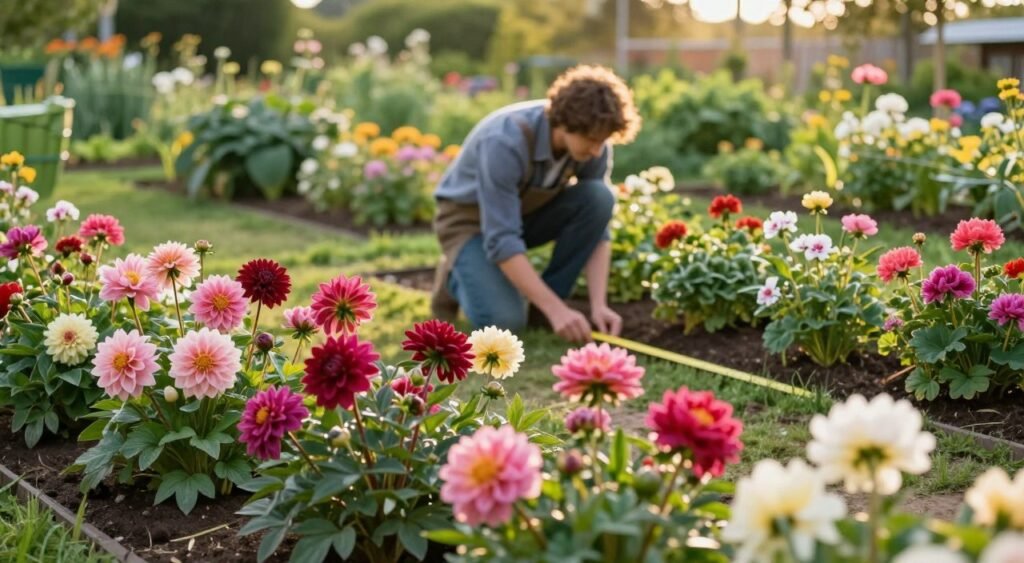
Getting the right plant spacing is key for a healthy garden. Too close together blocks air and invites disease. Plants need space to dry and get enough sun and food.
Space lets each plant grow strong and bloom more. Always check the plant tag for spacing tips. This keeps your garden beds from getting too crowded.
Timing Your Planting for Optimal Root Establishment
Planting at the right time helps your flowers settle. Plant in the cool morning or late afternoon. This helps roots grow strong before it gets hot.
In spring, wait till frost is gone for warm soil. Strong root development is crucial for lasting beauty. Well-rooted plants handle summer heat better.
Layering Plants for a Succession of Blooms
Layering plants by height and bloom time is smart. Place tall ones back and short ones front. This way, all flowers are seen and new ones bloom when old ones fade.
Layering keeps your garden colorful all season. As one blooms ends, another starts. This keeps your garden lively and interesting for months.
Mastering the Art of Deadheading
To keep your flowers blooming until the first frost, learn deadheading. It’s a simple task that keeps your garden looking great all season.
Why Removing Spent Blooms Encourages New Growth
When a flower fades, it starts making seeds. By removing these blooms, you trick the plant. It thinks it hasn’t finished growing yet.
This makes the plant focus on new buds and leaves. Your garden stays colorful, not dry and brown. Regular care keeps it looking fresh longer.
Techniques for Different Flower Types
Not all plants need the same care. Knowing your plants helps you choose the best deadheading methods.
Pinching Back Soft-Stemmed Flowers
For soft-stemmed flowers like marigolds, pinch off faded blooms with your fingers. Find the first healthy leaves below the old bloom. Then, snip the stem just above those leaves. This makes the plant bushier with more flowers.
Shearing Techniques for Mass Plantings
For big groups of small flowers, shearing is better. Cut the top few inches of the plant with sharp shears when the first blooms fade. This makes a new wave of growth across the bed, keeping it looking good.
Regular deadheading keeps your garden looking its best. A little effort with shears or fingers makes a big difference.
Optimizing Watering Schedules for Flowering Plants
Keeping your flowers hydrated is more than just using a hose. It’s about giving them steady water to bloom all season. Follow these garden irrigation tips to help your plants grow strong and bloom longer.
Drip Irrigation Versus Overhead Watering
Choosing the right way to water is key for your plants. Drip irrigation is best because it waters the roots directly. This method cuts down on evaporation and keeps leaves dry, fighting off diseases.
Overhead watering, like using a sprinkler, covers a lot of ground fast. But it can waste water and cause powdery mildew. Water early in the morning to dry leaves quickly.
Identifying Signs of Water Stress in Blooming Plants
Your plants will tell you when they need water. The most obvious sign is wilting in the afternoon heat. If they perk up by evening, they’re okay.
Look for yellow leaves, slow growth, or flowers falling off. Check soil moisture by sticking your finger in it. If it’s dry, it’s time for a deeper water soak.
Mulching to Retain Moisture and Suppress Weeds
Adding organic mulch is a big help for your flower bed. A two-to-three-inch layer of wood chips or straw keeps soil moist. It also keeps roots cool and hydrated.
Mulch also stops weeds by blocking sunlight. This saves you time and lets your flowers get all the nutrients and water they need.
Fertilization Strategies for Sustained Energy
Good food is like fuel for your flowers. It helps them bloom from spring to frost. A steady flower fertilization plan gives them the energy to keep blooming.
Choosing the Right N-P-K Ratio for Flowers
Fertilizer bags have three numbers: Nitrogen (N), Phosphorus (P), and Potassium (K). Nitrogen makes leaves green. Phosphorus helps roots grow and flowers bloom well.
For lots of flowers, pick a fertilizer with more Phosphorus. Here’s what to look for:
- High Phosphorus (Middle Number): Great for lots of flowers and strong roots.
- Balanced Ratios: Good for keeping your garden healthy all season.
- Low Nitrogen: Stops too much leaf growth and keeps flowers coming.
The Benefits of Slow-Release Granular Fertilizers
Slow-release granular fertilizers are great for steady energy. They give nutrients slowly, unlike quick liquid feeds.
They give your plants a steady flow of food. This is key for flower fertilization to keep going.
Avoiding Over-Fertilization and Foliage Burn
More fertilizer doesn’t always mean more flowers. Too much can harm your plants. It can make them grow weak and get sick.
Too many salts can also hurt your leaves. They can turn brown and crispy. Always use what the maker says. Remember, a little goes a long way for a beautiful garden.
Managing Pests and Diseases That Cut Blooms Short
Good pest control for gardens makes your flowers last longer. Watch for small problems early to avoid big damage. Even healthy plants need some extra care.
Identifying Common Garden Pests
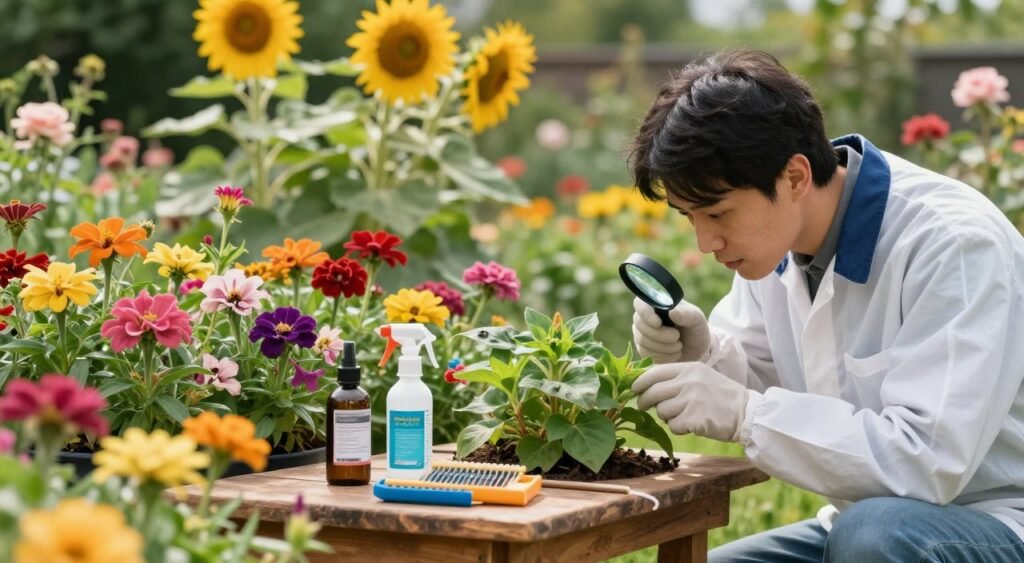
First, know which insects visit your flowers. Many pests eat sap or leaves, making plants weak. Look at the undersides of leaves and new growth for pests.
- Aphids: Tiny, soft-bodied insects that cluster on stems and suck vital nutrients.
- Spider Mites: These create fine webbing and cause leaves to look stippled or yellow.
- Japanese Beetles: Known for skeletonizing leaves and damaging flower petals during the summer.
Preventative Measures for Fungal Infections
Fungi love damp, still air. To fight powdery mildew or leaf spot, improve airflow. Plant leaves should dry fast after rain or watering.
Water plants at the base, not overhead. This keeps leaves dry and stops fungi. Mulch helps too, by keeping soil pathogens away from leaves.
Integrated Pest Management Practices
Integrated pest management (IPM) is a smart way to control pests. It focuses on preventing problems. Watch your plants often to catch pests early.
Help good bugs like ladybugs fight pests. If needed, use gentle chemicals first. This keeps your garden balanced and flowers healthy.
Seasonal Maintenance and Mid-Season Refreshing
To keep your flower beds looking fresh, you need to take care of them all season. As summer gets hotter, plants start to look tired. By doing these tasks, your garden will stay beautiful all season.
Cutting Back Leggy Growth in Mid-Summer
When plants get too tall and sparse, they don’t look good anymore. Trimming back long stems helps. This essential part of perennial garden care makes plants grow bushier.
Prune stems that have stopped blooming. Use sharp shears to cut just above a leaf node. This stops plants from making seeds and helps them bloom again.
Refreshing Containers and Hanging Baskets
Containers dry out fast, making plants look tired by mid-July. Start by removing dead leaves to keep pests away. Check soil moisture daily and use a light fertilizer to help your plants.
If a plant stops blooming, replace it. A new, late-blooming plant can make your display look great again. This keeps your outdoor space looking good until the first frost.
Preparing Plants for Late-Season Performance
As days get shorter, your garden needs extra care to stay strong. Watch for pests and diseases to keep your garden healthy. Remove spent blooms to keep plants from getting too tired.
Adding mulch helps keep soil moist in the last weeks of summer. By doing these things, your garden will stay lush and healthy into autumn. Your hard work will make your garden beautiful for a long time.
Environmental Factors and Microclimates
Every landscape has small areas with their own climate. These areas can help or hurt your plants. By finding these garden microclimates, you can put your flowers in the best spots.
These spots are affected by shadows, slope direction, and being close to hard surfaces.
Maximizing Sunlight Exposure
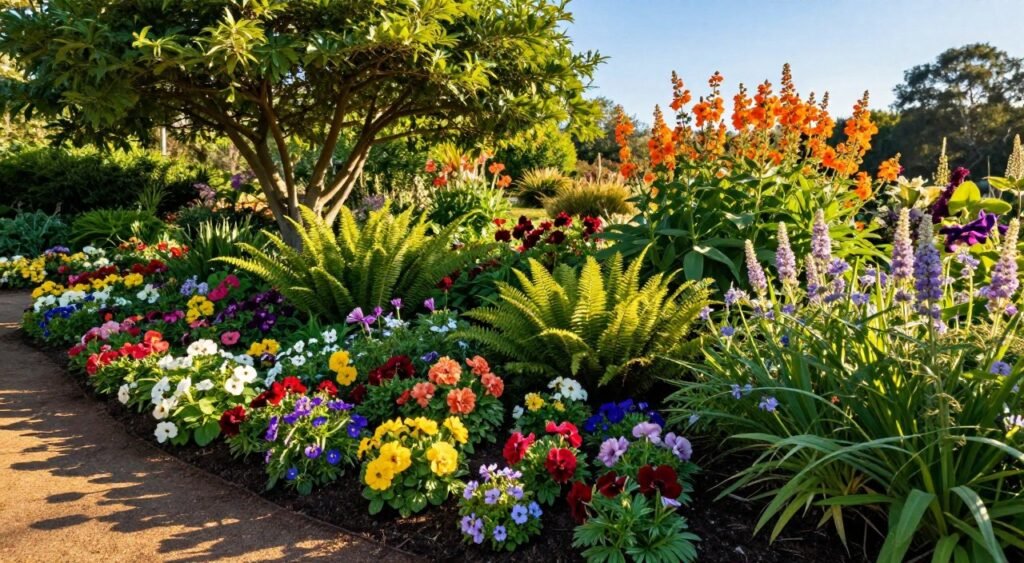
Most flowers need six to eight hours of sunlight to bloom well. Watch your yard to see where the sun shines. If some spots get little light, use reflective surfaces to send more sun to your plants.
Putting plants in the right place is key. Put sun-loving plants on south slopes or open areas. This helps them get the sun they need.
Protecting Flowers from Extreme Heat and Wind
High heat and strong winds can dry out flowers fast. Use windbreaks like fences or shrubs to protect them. These barriers make a calm spot for your plants.
In hot summer, use shade cloth or temporary shelters to shield your flowers. This keeps the soil moist and prevents scorching. By managing garden microclimates well, your garden stays bright even in bad weather.
Utilizing Garden Structures to Support Heavy Bloomers
Some flowers have heavy blooms that can fall over in rain or wind. Use strong supports early to keep stems from breaking. Trellises, stakes, or cages help plants grow up instead of out.
Choose the right support for your flower type. The right support keeps plants upright and shows off their blooms. Here’s a table with the best supports for different plants.
| Support Type | Best For | Primary Benefit |
|---|---|---|
| Garden Stakes | Tall, single-stem flowers | Provides vertical stability |
| Trellises | Vining or climbing varieties | Encourages upward growth |
| Plant Cages | Bushy, heavy-headed plants | Prevents sprawling and breakage |
| Hoop Supports | Clumping perennials | Keeps foliage off the ground |
Conclusion
Creating a colorful landscape from spring to frost needs patience and planning. You now know how to pick and care for the longest blooming flowers for your garden.
Success begins with good soil and regular care. These habits turn a simple yard into a colorful haven. Your hard work will make your home beautiful all season.
Try different plants to find what works best in your area. Share your findings with local gardeners. Your garden shows your hard work and love for gardening.
Begin by adding new plants to your garden. See how they change your outdoor space. Enjoy watching your garden grow and flourish.