
Exploring botany opens a new world. It shows us the hidden details of plants. Learning to spot flowers with unique pollination methods makes walks exciting.
This plant identification guide helps you see how plants and insects work together. You’ll love the smart ways plants survive. By following these steps, you can learn about the cool ways plants and insects meet.
These skills help you help science while having fun outside. Soon, you’ll see how plants and insects live together. Start your adventure today to discover the secrets of plants.
Key Takeaways:
- Learn to observe plant structures systematically.
- Understand the evolutionary benefits of specialized interactions.
- Gain confidence in identifying diverse botanical species.
Understanding the Basics of Floral Morphology
Looking at a flower’s structure shows how it makes babies. By studying floral morphology, you see more than colors. You learn how plants grow and survive.
First, learn about floral anatomy. This helps you understand how plants live. It’s key for those who want to know about plant reproduction.
Analyzing Petal Structure and Symmetry
Petal arrangement is often the most eye-catching part of a flower. You can tell what family a plant is from its symmetry. Flowers are either radial, like a wheel, or bilateral, with a left and right side.
Noticing these patterns helps you quickly figure out a plant’s identity. Petal structure also tells you who can visit the nectar. This skill lets you tell similar plants apart easily.
Identifying Reproductive Organs
To understand plant reproduction, find the key parts. The stamen is the male part, making pollen. The pistil is the female part, where pollen goes to make seeds.
Knowing where these parts are in floral anatomy shows how flowers work. Whether it’s a simple lily or a complex orchid, these parts are vital. Learning about floral morphology changes how you see nature.
Recognizing Flowers with Unique Pollination Methods
Learning how plants talk to pollinators is fun. Many plants use special ways to get the right visitors. This helps them make seeds.
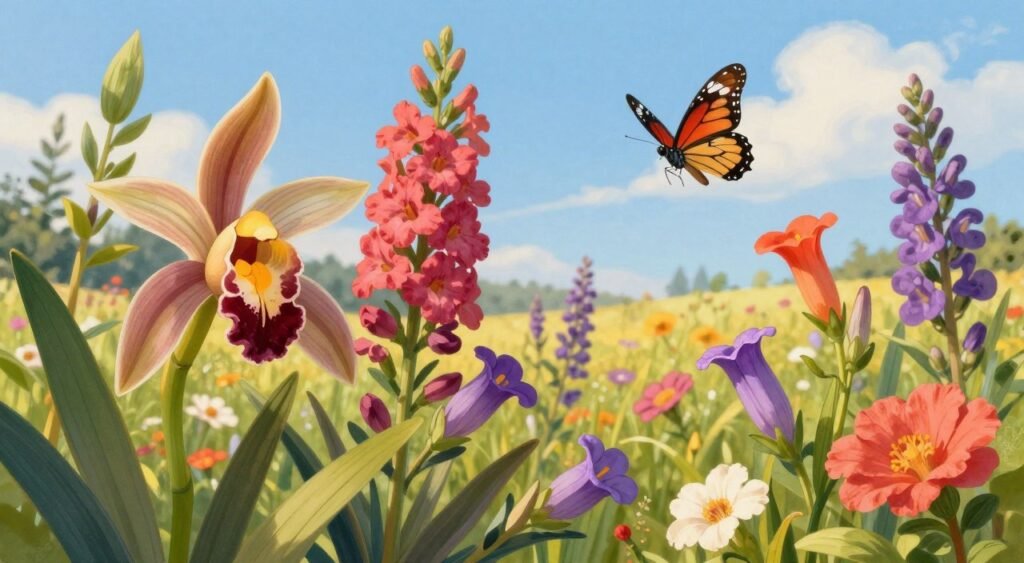
Visual Cues for Specialized Pollinators
Plants send out signals to attract specialized pollinators. Bees, butterflies, and moths look for certain shapes and sizes. Look for features that help visitors land.
These signs are key for plants to survive. Without them, plants might not get the pollen they need. Here are some common signs:
- Landing platforms: Wide, flat petals for heavy insects.
- Tubular shapes: Deep for long-tongued visitors like hummingbirds or moths.
- Contrast: Bright colors against green leaves.
The Role of Color and Pattern Recognition
Color is very important for plants. Flowers with unique pollination methods use colors to attract visitors. Bees like blue, purple, and yellow. Butterflies prefer reds and oranges.
Patterns on flowers also help. These patterns, or nectar guides, show visitors where to find food. They might look like lines or spots, more visible under UV light.
By noticing these patterns, you can guess which specialized pollinators will visit. This makes walking in the garden a chance to learn about nature. Remember, these signs come from millions of years of plants and animals working together.
Observing Pollinator-Specific Floral Shapes
Flowers have shapes that fit their main pollinators perfectly. By looking at these pollinator-specific floral shapes, you learn about plants’ history. This is cool when you see it in nature.
Nature made these shapes over millions of years. This helps pollen move from one plant to another. Knowing this helps guess who visits certain flowers.
Identifying Tubular Flowers for Hummingbirds
Hummingbirds need flowers with lots of nectar. These flowers are shaped like narrow tubes or funnels. This keeps other insects out.
These flowers don’t have a place for landing. Hummingbirds like to hover while eating. They love bright colors like red or orange.
Recognizing Landing Platforms for Bees
Insect-pollinated flowers have wide, strong petals. These petals are like landing pads for bees. Bees can land and get pollen and nectar easily.
These flowers are often not symmetrical. This shape helps bees touch the plant’s reproductive parts. This makes successful pollination happen.
Spotting Deep Corollas for Moths
Moths have long tongues to get nectar from deep flowers. Look for deep, elongated corollas that close during the day. These flowers are special for moths.
These flowers smell strong at night. They are pale or white. This makes them easy to see at night. By looking at these pollinator-specific floral shapes, we see how plants and pollinators work together.
Examining Scent Profiles as Identification Tools
Learning to understand scent profiles can reveal how plants reproduce. While we see plants, they also use smells to communicate. This helps us understand their secrets better.
Detecting Nocturnal Fragrances
Many plants bloom at night to attract insects. They release a strong floral scent that travels far in the evening. This is how nocturnal pollination works, with moths and bats helping plants.
Go to your garden or a field at twilight. You’ll see many white or pale flowers. These are night-blooming plants. If you smell a sweet, heavy scent, you’re near a plant that needs night pollinators.
Identifying Putrid Scents for Fly Pollination
Not all flowers smell good to us. Some smell like rotting meat or decaying matter. This smell attracts flies and beetles.
These plants look like raw flesh. They have dark, mottled colors. By smelling these strong odors, you can find plants that use flies for nocturnal pollination. These smells might be bad to us, but they help plants reproduce.
Utilizing Field Equipment for Close-Up Inspection
To truly master the art of field identification, you must look beyond what the naked eye can see. Many floral structures that dictate how a plant reproduces are microscopic or hidden deep within the bloom. By using the right tools, you can reveal these complex features with ease.
Choosing the Right Magnification Tools
A high-quality hand lens, often called a jeweler’s loupe, is an essential companion for any botanist. Look for a lens with 10x magnification to ensure you can clearly see the fine hairs, pollen grains, and anther positions. Clarity is vital when you are performing field identification in varying light conditions.
If you prefer digital documentation, a dedicated macro lens for your smartphone or camera is a game-changer. These lenses allow you to capture extreme close-ups of floral morphology without disturbing the plant. Stability is key, so consider using a small tripod or a steady hand to avoid blurry images.
Documenting Observations for Later Analysis
Recording your findings is just as important as the initial observation. Keep a waterproof field notebook to jot down details about the flower’s scent, color, and the specific insects you see visiting it. These notes provide context that a photograph alone might miss during your field identification process.
When taking photos, try to include a scale reference, such as a coin or a ruler, next to the flower. This helps you verify the size of specific structures when you review your data at home. Consistent documentation ensures that your records remain accurate and useful for future botanical research.
Identifying Trap-Pollination Mechanisms
Exploring the world of pollination strategies shows us some flowers trap their visitors. These trap-pollination mechanisms are complex and fascinating. They make sure pollen gets transferred well.
Recognizing Pitfall Traps in Arum Lilies
Arum lilies trick insects with special traps. When an insect goes in, it can’t get out easily. This is because of slippery surfaces or hairs pointing down.
- The insect is drawn in by a scent or look.
- Then, the slippery walls stop it from leaving right away.
- The plant lets the insect go only after pollination is done.
This trap isn’t to hurt the insect. It’s a strategic delay. It lets the plant cover the insect in pollen or get pollen from before.
Spotting Snap-Trap Mechanisms in Orchids
Some orchids use quick movement to catch insects. These snap-trap mechanisms work fast. They make sure the insect touches the right spot.
«Nature’s ingenuity is nowhere more apparent than in the precision of floral traps, where movement and timing converge to ensure the survival of the species.»
Look for special triggers near the labellum on these flowers. When an insect touches it, the flower snaps or moves. This effectively pins the insect for a moment. It makes sure the insect carries pollen to the next flower.
Distinguishing Wind-Pollinated Floral Features
Grasses, sedges, and many deciduous trees have special features. They use the wind to spread their seeds. This is different from plants that need bees or butterflies.
Identifying Reduced Petals and Exposed Anthers
These flowers often don’t have big, colorful petals. They don’t need to attract animals. So, their petals are small or missing.
The anthers are the most noticeable part. They stick out and catch the wind. This helps the pollen travel far.
Understanding the Absence of Nectar Guides
These plants don’t have nectar guides or special colors. They don’t need to attract animals. So, they save energy by not making nectar.
These flowers are easy to miss because they don’t have bright colors or smells. Knowing this helps scientists study plants.
Analyzing Nectar Guides and Ultraviolet Patterns
Some flowers have maps that we can’t see. These nectar guides help pollinators find food. While we see bright colors, insects see a different world of light.
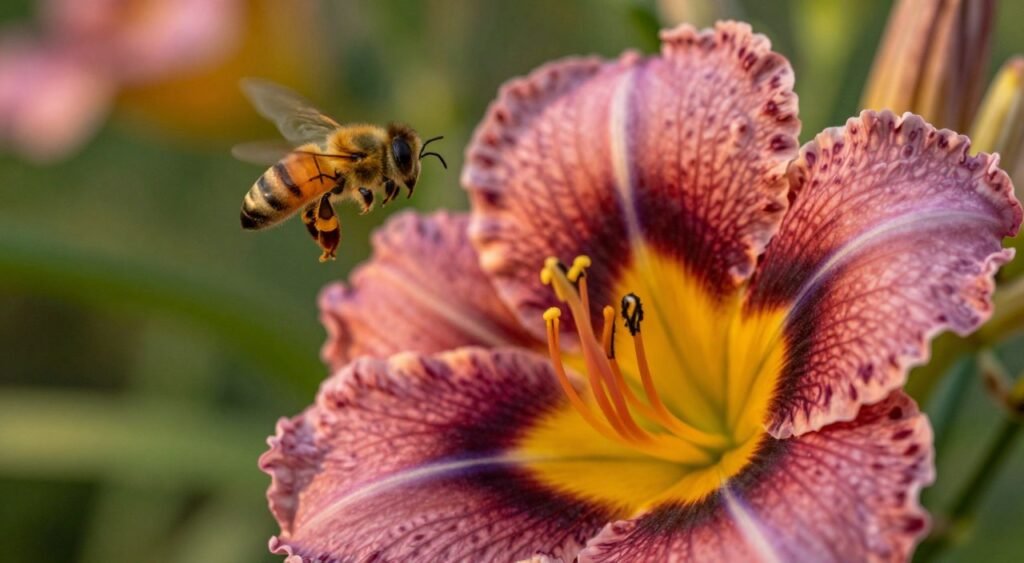
Using UV Filters to Reveal Hidden Markings
To see these secret signals, we need to look beyond what we can see. Flowers reflect ultraviolet patterns that bees and butterflies can see but we can’t. Using a UV filter on your camera lets you capture these hidden markings.
You need a camera that can see near-ultraviolet light. Adjusting your camera settings will show dark spots or lines on petals. These markings help with pollination.
Interpreting Bullseye Patterns for Insects
When you see these images, you’ll notice a bullseye pattern. This nectar guide helps pollinators land in the right spot for pollen transfer. Without these ultraviolet patterns, finding nectar would be hard for insects.
The table below shows how pollinators see these signals compared to us:
| Pollinator Type | Visual Range | Interaction with Patterns |
|---|---|---|
| Human | Visible Spectrum | Cannot see UV markings |
| Honey Bee | UV and Visible | Follows bullseye to nectar |
| Butterfly | UV and Visible | Uses patterns for orientation |
| Moth | Low Light/UV | Relies on contrast and scent |
Documenting Seasonal Timing and Pollinator Activity
Timing is key when watching plants and animals in your backyard. Knowing when plants bloom helps you see when pollinators are most active. This turns a simple walk into a scientific adventure.
Matching Bloom Times with Pollinator Emergence
Nature follows a strict schedule called phenology. Plants bloom when their pollinators wake up or return. Keep a seasonal log to track when wildflowers bloom.
When a plant starts to bud, look for insects that need its nectar. This timing is crucial for both plants and insects. Watching closely helps you see if weather changes affect this timing.
Recording Behavioral Interactions in the Field
In the field, your notes help understand the local ecosystem. Use a notebook or app to record time, temperature, and behaviors. Detailed documentation reveals patterns you might miss.
Watch how insects interact with flowers. Note where they land and how long they stay. These details show how well the environment supports pollinators. Sharing your findings helps us understand nature better.
Safety and Ethical Guidelines for Field Identification
When you go into the wild to find unique flowers, how you act matters a lot. It’s key to follow ethical plant observation to not harm the places you visit. Simple rules help you enjoy your search and protect the environment.
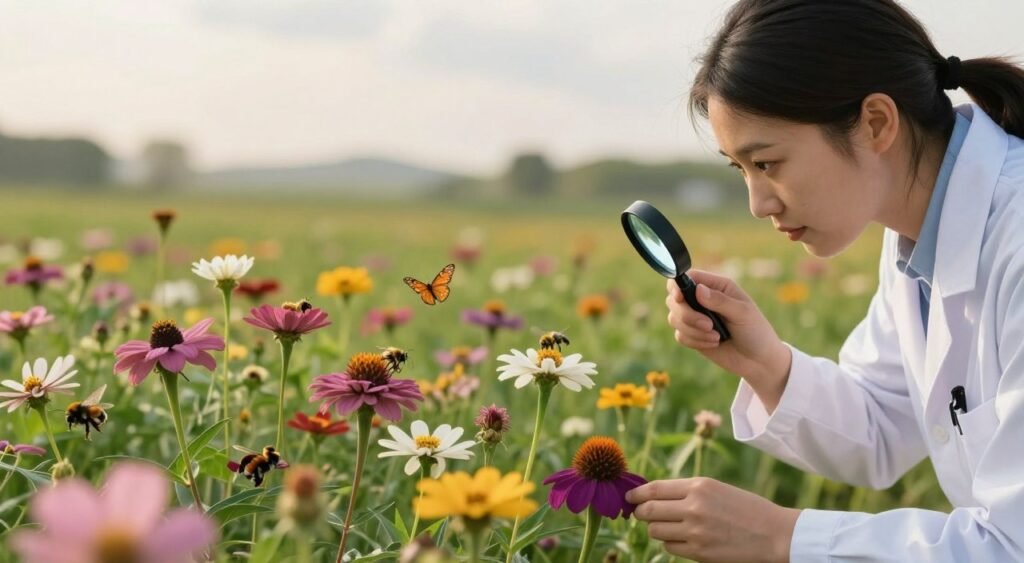
Minimizing Disturbance to Fragile Ecosystems
Staying on marked trails is the best way to protect nature. Going off the path can hurt tiny plants or mess up the soil. Always put the habitat’s health first, not just for photos.
Don’t touch plants or their soil unless you must. Some rare plants need special conditions that humans can mess up. By leaving things as you found them, you help others see the beauty too.
«In every walk with nature, one receives far more than he seeks.»
Protecting Yourself from Irritants and Allergens
While looking at plants, watch out for your own safety. Some plants have defenses like stinging hairs or toxic sap. Wearing long sleeves, sturdy pants, and gloves is a vital layer of protection.
Know what’s around you to avoid plants like poison ivy or stinging nettles. If you have allergies, carry antihistamines or protective gear. Keeping a safe distance helps you avoid getting hurt and keeps your focus on the flowers.
Conclusion
Learning about plant biology makes walks in the woods exciting. You can now understand the secret messages plants send. This knowledge helps us see how nature works together.
Knowing how to spot special plant features helps keep nature in balance. By sharing what you see, you help scientists and conservationists. Projects like those by the National Wildlife Federation need your help to understand our world.
Keep exploring the world of plants with wonder and patience. Tell others about what you find. Your discoveries help us all learn more about nature.