
Turning your backyard into a colorful haven is a great way to connect with nature. Seeing hummingbirds flit between plants is very joyful. Creating a reliable food source helps these tiny visitors come back all season.
Picking the right plants is key to a healthy garden. Choosing nectar-rich flowers gives hummingbirds the energy they need. Many gardeners find it easy to attract hummingbirds with the right flowers.
You don’t need a big garden to help hummingbirds. A few plants in containers can make your patio a busy spot. Follow these tips to create a garden that’s good for both hummingbirds and your yard. Your commitment to biodiversity begins with the first seed you plant.
Understanding Hummingbird Behavior and Needs
Hummingbirds are not just pretty visitors. They are fast athletes with special needs. To help them, we must think about their biology, not just looks.
Metabolic Requirements of Hummingbirds
The hummingbird metabolism is very fast. They flap their wings a lot, using a lot of energy. They need to eat a lot of nectar, almost half their body weight every day.
If they don’t get enough food, they might sleep a lot to save energy. Offering lots of nectar-rich flowers helps them a lot.
Territorial Instincts and Feeding Patterns
These birds are very protective of their food. Their hummingbird feeding habits show how much they care about their territory. They fight to keep their flowers safe from others.
When planning your garden, remember they like to see their food. Spacing out plants helps them avoid fights. This way, more birds can eat in your garden.
| Behavioral Trait | Impact on Garden | Gardener’s Goal |
|---|---|---|
| High Energy Burn | Constant nectar need | Plant high-sugar blooms |
| Territorial Defense | Aggressive guarding | Create multiple feeding zones |
| Visual Foraging | Active searching | Use bright, visible colors |
Selecting Flowers That Attract Hummingbirds Naturally
Creating a vibrant outdoor space is more than looks. It needs a smart plan for hummingbird plant selection. Not all flowers give hummingbirds the energy they need. By picking the right flowers that attract hummingbirds naturally, you help them keep coming back.
Identifying High-Nectar Producing Varieties
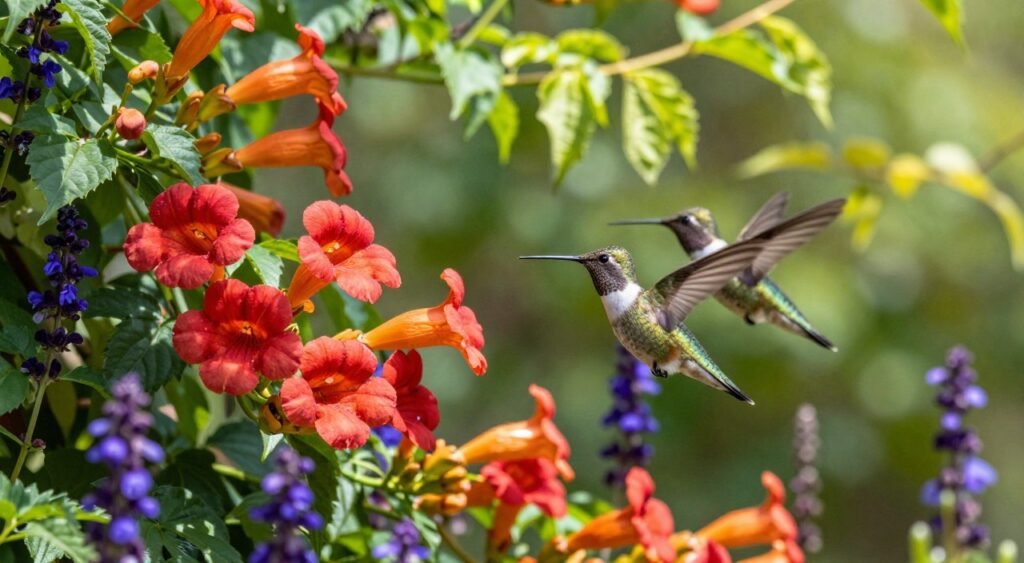
Hummingbirds are like high-performance athletes. They need constant energy. Choose nectar-rich flowers with lots of sugar in their nectar. Salvia, Bee Balm, and Penstemon are great because they give hummingbirds what they need.
By picking these plants, your garden becomes a reliable spot for hummingbirds. Quality over quantity is key. A few good plants are better than many that don’t offer much.
Evaluating Bloom Duration and Reliability
A good garden plan is consistent. You need to check how long your plants bloom. Reliable perennials that bloom for a long time are essential for hummingbirds.
Here’s a table to help you pick plants with lots of nectar and long blooms:
| Plant Variety | Nectar Quality | Bloom Season | Reliability |
|---|---|---|---|
| Salvia | High | Summer to Fall | Excellent |
| Bee Balm | High | Mid-Summer | Very Good |
| Penstemon | Medium-High | Late Spring | Good |
| Trumpet Vine | Very High | Summer | Excellent |
By picking plants that bloom at different times, you make sure food is always available. This makes your garden a favorite spot for hummingbirds. You’ll get to enjoy their visits for a long time.
Prioritizing Native Plant Species
Choosing native plants for hummingbirds makes your garden better. These plants grow well in your area’s weather and soil. They give the best food to local birds.
Benefits of Regional Adaptation
Regional native gardening is great because these plants are tough. They need less water and food than other plants. This makes your garden good for the planet and easy to care for.
Native plants and hummingbirds have grown together for years. This means the plants have the right nectar at the right time. Choosing native species gives birds the energy they need when they need it.
Sourcing Native Plants in Your Local Area
Finding the right plants is easy. Go to local nurseries that sell native plants for hummingbirds. They know which plants are best for your area.
Also, check out local groups or societies for native plants. They have plant sales with special plants. Helping your garden with regional native gardening helps your birds too.
Designing Your Garden for Optimal Hummingbird Access
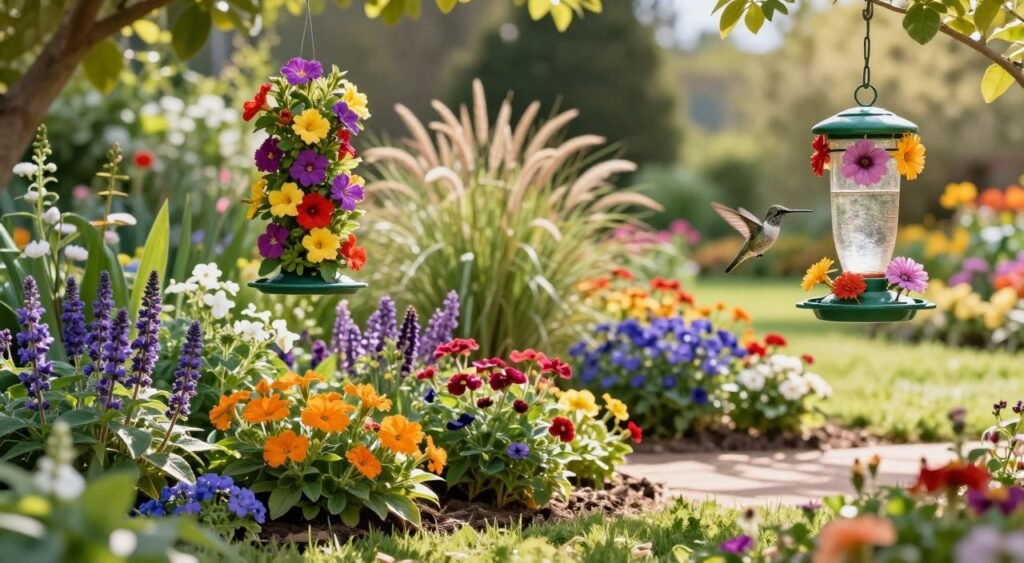
You can make your garden better for hummingbirds. Add vertical layers and open spaces they love. A good garden gives food and a safe place for them to eat.
Layering Plants for Vertical Interest
Plant your garden in layers like nature. Start with low plants, then add taller ones. This makes a safe place for hummingbirds to fly.
This vertical diversity helps birds stay safe. It also keeps food easy to find. This is good for them.
Creating Flight Paths and Perching Spots
A good hummingbird garden design has both plants and space. Hummingbirds fly fast but need clear paths. This lets them move quickly.
Don’t block the middle of your garden with too many plants. Leave paths for them to fly. This makes it easy for them to get around.
Hummingbirds also like to rest. Add spots for them to perch, like thin twigs. This lets you watch them rest and eat.
Planning for Continuous Blooms Throughout the Season
You can make your backyard a hummingbird haven. Plan for flowers all year. This keeps hummingbirds coming back.
Make sure there’s always nectar from spring to fall. Plant flowers at different times. This helps hummingbirds during their travels and when they nest.
Spring Flowering Bulbs and Perennials
Hummingbirds need food after migrating. Plant best plants for hummingbirds that bloom early. Bulbs like Fritillaria and Columbine give them the energy they need.
Consistency is key in your garden. Plant different flowers that bloom at different times. This keeps your garden full of food for hummingbirds.
Summer and Fall Blooming Powerhouses
Summer and fall are important for hummingbirds. They need strong plants that make lots of nectar. Use seasonal hummingbird plants like Bee Balm, Salvia, and Cardinal Flower.
«A garden designed for pollinators is a living clock, where every bloom marks a moment of sustenance for the creatures that visit.»
Here’s a table to help you plan your garden. It shows when to add plants for constant nectar all year.
| Season | Plant Type | Key Benefit |
|---|---|---|
| Early Spring | Bulbs & Columbine | Post-migration energy |
| Summer | Bee Balm & Salvia | High-volume nectar |
| Late Fall | Cardinal Flower | Migration fuel |
Choose best plants for hummingbirds for a great garden. Pick seasonal hummingbird plants that bloom at the right times. This makes your garden a welcoming place all year.
Essential Color and Shape Considerations
To attract hummingbirds, pick the right colors and shapes. This helps create a hummingbird garden color palette that draws them in.
These birds use colors to find their way. Choosing the right colors makes your garden a favorite spot for them.
Why Hummingbirds Prefer Red and Orange Hues
Hummingbirds see colors we can’t, including ultraviolet. They love bright, warm colors because they mean food.
Red and orange flowers are easy to spot. This helps hummingbirds find food while flying. Adding these colors to your garden makes it a hit with hummingbirds.
The Importance of Tubular Flower Structures
The shape of flowers matters too. Hummingbirds have long beaks and tongues for deep nectar.
These shapes keep bugs out. By picking tubular flowers for hummingbirds, you feed them well. It’s a win-win for your garden and the birds.
| Feature | Attraction Level | Primary Benefit |
|---|---|---|
| Red/Orange Hues | High | Visual signaling |
| Tubular Shape | High | Nectar accessibility |
| Broad/Flat Petals | Low | Limited nectar access |
| Blue/Purple Hues | Moderate | Secondary attraction |
Preparing Your Soil and Planting Environment
Creating a home for hummingbirds starts with the soil. Hummingbird garden soil health is key. Without good soil, even the prettiest plants can’t give hummingbirds the energy they need.
Testing and Amending Soil Quality
Start by testing your soil. You want it to be slightly acidic to neutral. This helps nectar-rich flowers grow well. You can buy a testing kit at a garden store.
If your soil is too sandy or clay-heavy, add organic matter. Compost, aged manure, or leaf mold help a lot. They make your soil better for plants to grow strong roots.
Sunlight Requirements for Nectar-Rich Plants
After fixing your soil, check how much sunlight your yard gets. Most plants need full sun, six to eight hours a day. Watch your garden to see where the sun shines best.
If some spots are shady, pick plants that like less sun. This keeps your nectar-rich flowers healthy and blooming. By choosing the right plants for your light, you make a resilient landscape for hummingbirds.
Implementing Natural Maintenance Practices
Looking after your garden well helps hummingbirds. By doing regular tasks, your plants stay bright and full of nectar. This makes your garden a favorite spot for hummingbirds.
Watering Strategies for Healthy Blooms
Plants need water to make lots of nectar. Use deep, less frequent watering. This helps roots grow strong.
Water in the morning to avoid losing water. Drip irrigation or soaker hoses are great. They water the roots without wetting the leaves.
Deadheading Techniques to Encourage Re-blooming
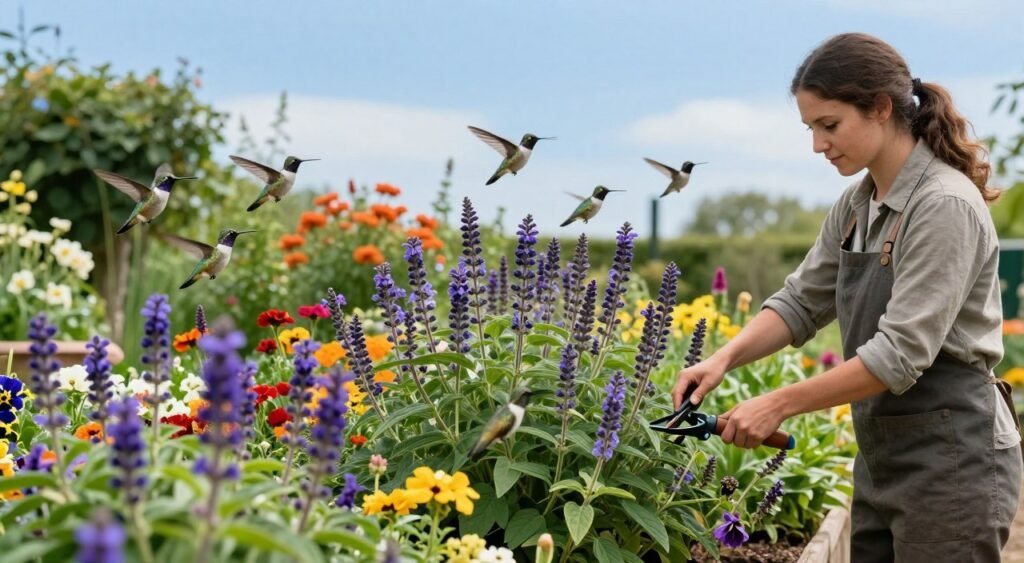
Deadheading means cutting off old flowers. It tells the plant to make new flowers instead. This keeps your garden full of nectar.
Use sharp shears to cut off old flowers. Do this right above a leaf or bud. This keeps your garden looking good and flowers coming back.
| Task | Frequency | Primary Benefit |
|---|---|---|
| Deep Watering | Twice Weekly | Root health and hydration |
| Deadheading | As needed | Extended bloom duration |
| Soil Mulching | Once per season | Moisture retention |
| Weed Removal | Weekly | Reduced nutrient competition |
Avoiding Harmful Chemicals and Pesticides
Keeping hummingbirds safe starts with what you do in your yard. By choosing organic hummingbird gardening, you keep their food safe. Hummingbirds are very sensitive to chemicals because they burn energy fast.
The Dangers of Synthetic Fertilizers
Synthetic fertilizers have too much nitrogen and phosphorus. They can harm your soil and the nectar of your flowers. This can hurt hummingbirds and other animals.
Use compost or organic mulch instead. They help your plants grow without harming them. This way, your garden stays healthy without chemicals.
Natural Pest Control Alternatives
Good hummingbird pest control works with nature. Encourage ladybugs, lacewings, and wasps to help control pests. They keep your flowers healthy for hummingbirds.
If pests are a big problem, use physical barriers or mild soap sprays. Stay away from strong insecticides. They can hurt the good bugs that hummingbirds need.
| Management Strategy | Synthetic Approach | Organic Approach |
|---|---|---|
| Soil Nutrition | Chemical Fertilizers | Compost & Mulch |
| Pest Management | Broad-spectrum Pesticides | Beneficial Insects |
| Weed Control | Chemical Herbicides | Manual Removal |
| Environmental Impact | High Toxicity | Eco-friendly |
Creating Supplemental Habitats and Water Sources
Creating a home for hummingbirds is more than just flowers. They need water and a safe place too. Adding these makes your garden a great spot for them.
Installing Misters and Birdbaths
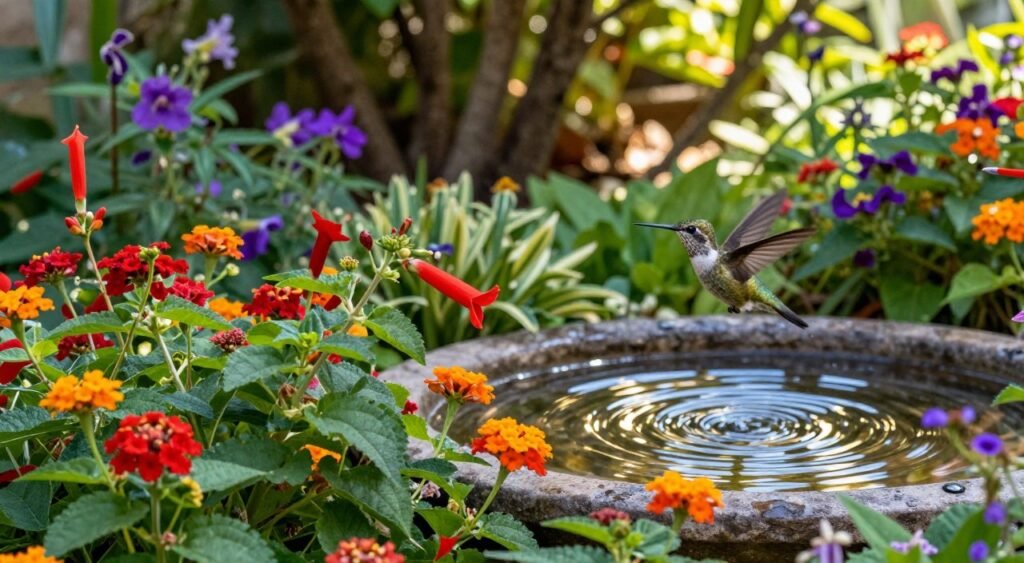
Hummingbirds don’t like deep water. They prefer shallow places or moving water to stay clean. Installing a mister is great for them to bathe in.
For attracting hummingbirds to your yard, choose shallow water. A simple saucer with stones is perfect for them to drink. Make sure the water is clean to keep birds healthy.
Providing Nesting Materials and Shelter
Shelter keeps hummingbirds safe from bad weather and predators. Dense shrubs and evergreen trees are great for hiding. Leave some parts of your yard wild to help them.
To help them nest, don’t cut back plants in spring. Give them soft things like spider silk to build homes. This helps attracting hummingbirds to your yard and makes a good home for them.
| Feature | Primary Benefit | Maintenance Level |
|---|---|---|
| Misting System | Encourages bathing | Moderate |
| Shallow Birdbath | Provides hydration | High (Daily cleaning) |
| Dense Shrubbery | Offers protection | Low |
| Nesting Materials | Supports reproduction | Minimal |
Conclusion
Creating a garden for hummingbirds is a fun journey. It connects your home to nature. You make a safe place for these amazing birds by picking the right plants and keeping the soil healthy.
By not using harmful chemicals, you help all wildlife. Every plant you add makes your garden better. This makes your garden a place hummingbirds will love for years.
Watch how hummingbirds fly and eat in your garden. It’s a special way to see nature up close. Tell your friends and family about your garden to help others care for nature too.
Your garden is important for birds flying south and living nearby. Keep track of what plants work best in your area. Enjoy watching these birds make your garden lively and full of life.