
Do you have dark spots in your yard? Many people find it hard to brighten up these areas. But, you can make them vibrant, lush retreats.
Just pick the right plants. They should love the shade and not need lots of sunlight. This way, you can have a beautiful garden with less work.
Choosing the right shade loving plants is good for your home. They need less water and care. Let’s see how to make your yard a colorful place you’ll love for years.
Assessing Your Shade Garden Environment
Your garden is special and needs careful watching before picking plants. By studying your space, you make sure your garden does well all year. Getting ready right helps avoid problems and makes a bright, cool spot.
Identifying Your Specific Shade Type
Not all shade is the same. Knowing your light patterns is key. Deep shade is under thick trees or against north walls. Dappled shade changes as light moves through leaves.
Watch your garden at different times to see shadow changes. This helps pick the right plants for your light.
Testing Soil Drainage and Moisture Retention
Good soil is key for best drought resistant flowers. Test soil by digging a hole and adding water. If water drains fast, soil is sandy. If it stays, it’s heavy clay.
Fixing soil helps roots breathe and get nutrients. Consistent moisture is important, even for plants that like dry.
Understanding Local Climate and Heat Zones
Your success depends on choosing plants for your USDA hardiness zone. These zones help with winter, but also consider summer heat. Pick heat-tolerant plants for hot months.
Always check plant tags for zone advice before buying. Matching plants to your climate makes a garden that needs less care and looks lasting beauty.
Selecting the Best Drought Tolerant Flowering Plants
You can make even the toughest spots in your yard look great. The key is to pick the right plants. Drought tolerant flowering plants keep your garden looking good all season.
Perennials That Thrive in Dry Shade
Perennials are key for a strong garden. Hellebores and Epimedium are great because they grow deep roots. They keep your garden looking good, even when it’s dry.
These best drought resistant flowers mean you don’t have to water as much. They add color and texture to spots under trees or near buildings. They’re perfect for gardens that don’t need a lot of care.
Shrubs for Structural Beauty and Blooms
Shrubs give your garden height and shape. The Oakleaf Hydrangea is a top pick for dry shade. It has big flowers and green leaves that catch your eye.
Mahonia is another great choice. It has green leaves and yellow flowers. These shrubs are incredibly hardy and make your garden look solid. They’re great for backing up smaller plants.
Bulbs and Tubers for Seasonal Color
Bulbs add energy in early spring. Muscari and Scilla are great for shaded, dry spots. They need little care once they’re planted.
These small plants are among the best drought resistant flowers for quick color. Planting them in groups makes a colorful carpet. They make your garden lively from the start of the year.
Preparing Your Garden Bed for Success
A healthy garden starts with good soil. When you work on your soil, you make it perfect for low water flowering plants. They can grow strong roots.
Clearing Debris and Improving Soil Structure
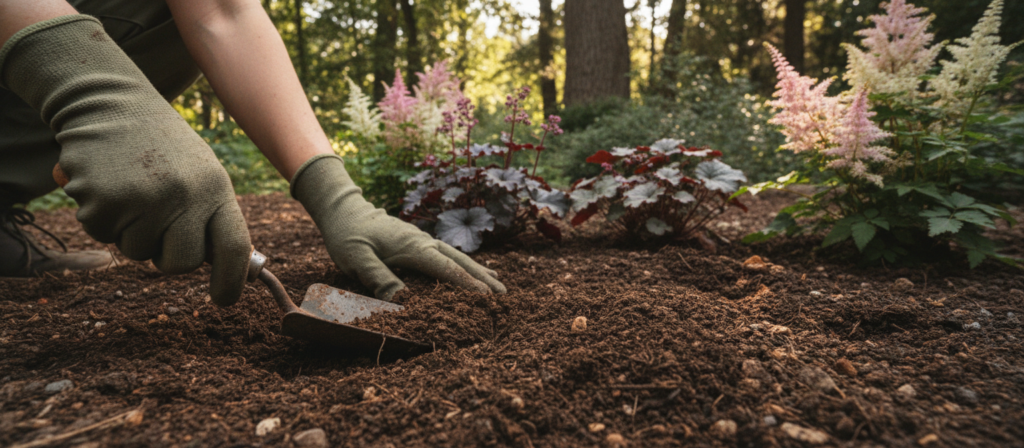
Start by removing weeds, big rocks, and wood from your garden. This lets your plants get all the nutrients they need.
After you clean the area, make the soil loose. Loosen it to eight to ten inches deep. This helps roots grow better.
Incorporating Organic Matter for Water Retention
Adding organic matter is key for a great garden. Use compost or aged manure to make your soil better.
This mix holds water well. It keeps your heat-tolerant plants moist, even when it’s dry.
Installing Mulch to Conserve Soil Moisture
After planting, put down two to three inches of organic mulch. This keeps the soil cool and moist.
Mulch also stops weeds from taking water from your low water flowering plants. It helps your heat-tolerant plants grow well all season.
Step-by-Step Planting Guide for Shade Lovers
Starting a garden is all about where you put your plants. A careful plan helps them grow strong and healthy. This way, your garden can thrive, even in tough spots.
Determining Proper Spacing for Airflow
Space is key for your low water flowering plants. Enough room means better air flow. This cuts down on disease risks. Always check the plant tag for size needs.
Too close together means plants fight for food and water. Give them room to breathe. This stops bad air from getting stuck in shaded areas.
Digging and Preparing the Planting Hole
Good soil is the base of a great garden. For dry climate flowers, dig a hole twice as wide as the root ball. But don’t dig too deep.
Don’t bury the stem to avoid rot. If your soil is heavy, loosen the hole sides. This helps roots grow well.
Techniques for Proper Root Placement
Ready your hole? Gently take the plant out of its container. If roots are tangled, carefully tease them outward. This helps them grow better.
Put the plant in the hole’s center, with the root ball level. Fill with soil and organic matter. Press down gently. A well-placed plant is the start of a beautiful garden.
| Plant Type | Recommended Spacing | Planting Depth |
|---|---|---|
| Small Perennials | 12-18 inches | Level with soil |
| Flowering Shrubs | 3-5 feet | Slightly above grade |
| Bulbs/Tubers | 6-8 inches | 3 times bulb height |
Establishing Your Water-Wise Garden
Starting a water-wise garden is easy once you plant your new flowers. It’s important to have a regular watering plan. This helps your water-wise blooms grow well, even when it’s dry.
Initial Watering Strategies for New Transplants
When you first plant, the roots need water often. Water them lightly but often to keep the soil moist. Check the soil every day for the first two weeks to keep the roots wet.
- Water early in the morning to reduce evaporation.
- Apply water directly to the base of the plant, avoiding the foliage.
- Use a gentle spray to prevent soil erosion around the stem.
Transitioning to Deep, Infrequent Irrigation
As your plants get settled, change your watering ways. Use deep water less often to help roots grow deep. This makes your plants strong and able to handle dry times better.
Instead of watering every day, water deeply once or twice a week. This helps your water-wise blooms grow strong. Your garden will need less care to stay healthy and green.
Monitoring Soil Moisture Levels During Heatwaves
Summer heat can hurt even tough plants. Watch your dry climate flowers closely during hot times. A simple way to check the soil is to feel it two inches down.
«The best way to know if your plants need water is to feel the soil two inches below the surface. If it feels dry to the touch, it is time to hydrate.»
If the soil pulls away from the planting hole, your plants need water fast. Keep an eye on the soil to adjust your watering schedule. This keeps your garden looking great even in the hottest months.
Maintenance Tips for Resilient Flowering Plants
Keeping your garden beautiful is easy with a little care each week. Spend a bit of time on your resilient flowering plants to keep them healthy. This way, you’ll enjoy a garden full of life and color.
«The glory of gardening: hands in the dirt, head in the sun, heart with nature. To nurture a garden is to feed not just the body, but the soul.»
Deadheading to Encourage Continuous Blooms
Deadheading is a simple trick to keep your garden looking great. It means removing old flowers to stop the plant from making seeds. This helps your water-wise blooms make more flowers, making your garden bloom longer.
Pruning Practices for Health and Vigor
Pruning is key to a strong garden. Cut out dead or damaged parts to help your plants breathe and get more light. This keeps your resilient flowering plants strong and healthy, even in dark spots.
- Always use sharp, sterilized shears to make clean cuts.
- Prune just above a leaf node to stimulate new, healthy growth.
- Remove crossing branches to prevent friction and potential disease entry points.
Managing Pests and Diseases in Shady Conditions
Shady spots can be wetter, attracting pests or diseases. Make sure plants are far enough apart to let air move. If you see signs of trouble, act fast to keep your water-wise blooms happy all year.
Checking your soil moisture helps prevent diseases. Don’t water from above in the shade, as it can cause powdery mildew. Keep leaves dry and soil well-drained for a healthy garden.
Design Principles for Beautiful Shade Gardens
You can turn a dark corner of your yard into a bright spot. A good shade garden needs more than just plants. It needs balance and a smart layout.
By thinking about how plants use light, you make your garden look like a pro’s work.
Layering Plants for Visual Depth
To make your garden look lush, use layers. Put tall plants in the back or center. Then, fill the middle and front with drought-friendly flowers of different heights and bloom times.
This way, your garden won’t look flat. Layering lets you lead the viewer’s eye, making small spaces feel big and lively.
Utilizing Foliage Contrast to Enhance Flowers
In dark places, leaves are more important than flowers. Mix plants with different leaves to catch the eye. Pair big leaves with small, fern-like ones to add depth.
- Use variegated leaves to brighten dark corners.
- Combine deep green foliage with silver or chartreuse accents.
- Incorporate plants with unique leaf patterns to maintain interest when blooms are absent.
Creating Focal Points in Low-Light Areas
Every garden needs a special spot for the eye to land. Use a unique container, garden art, or a standout plant as a focal point. Surround it with drought-friendly flowers to draw attention.
Here are tips for great focal points:
- Place your focal point at the end of a path to encourage movement.
- Use a bright-colored pot to contrast against dark, shady foliage.
- Ensure the scale of your focal point matches the size of the surrounding garden bed.
Troubleshooting Common Shade Gardening Challenges
Even the best shade gardens face surprises. You might deal with aggressive roots or changing light. Watching closely keeps your drought-friendly flowers healthy all season.
Addressing Competition from Tree Roots
Big trees take up a lot of water and nutrients. Use raised garden beds or big pots for your plants. This keeps roots apart and lets you control soil better.
Managing Overcrowding and Competition for Nutrients
Too many plants can stunt growth and make them sick. Thin out your plants to let them breathe and get nutrients. If your drought-friendly flowers look weak, try organic fertilizer.
| Challenge | Primary Solution | Expected Benefit |
|---|---|---|
| Tree Root Intrusion | Raised Beds | Reduced Competition |
| Nutrient Depletion | Organic Fertilizer | Improved Vigor |
| Overcrowding | Strategic Thinning | Better Airflow |
Adjusting Care When Shade Patterns Shift
Light in your garden changes as trees grow and seasons change. Watch your garden all year to see if light changes. If it gets brighter, add more drought-friendly flowers that like more sun.
If it gets darker, choose plants that like shade. Flexibility is key for a beautiful garden. Adjust watering and feeding to keep your plants happy.
Conclusion
Creating a lush garden in low-light areas makes hidden spots your favorite place outside. You have everything you need to make a beautiful space that changes with the seasons.
Choosing hardy flowering plants keeps your garden bright, even in little sunlight. These plants add color and texture with little care needed.
Good soil and smart plant placement make a lasting garden. These plants will thrive in your yard’s special conditions.
Start your garden today and see how it changes your home. A well-thought-out shade garden is a peaceful spot for you and your family to enjoy for years.