
Creating a lively garden that loves the sun is very fun. It makes your home feel welcoming. Choosing the perfect plants is key to a beautiful garden.
When you pick the best sun loving flowers, your garden stays healthy. These plants are easy to care for once they grow. Sun loving flowers for outdoor spaces make your home look amazing.
Knowing your garden’s needs is important. Whether you have a small spot or a big yard, there’s something for everyone. Begin your garden journey today. Create a bright space that shows off your style and love for nature.
Assessing Your Garden Sunlight and Environmental Conditions
Good gardening starts before you buy your first plant. It’s about knowing your local environment. By checking your space, you help your flowers grow well. Knowing your unique microclimate is key to a great garden.
Determining Your Hardiness Zone
The USDA Plant Hardiness Zone Map is very helpful. It shows which plants can handle your winters. The map splits the U.S. into zones by winter temperatures.
Find your zone to pick plants that won’t freeze. Always check the plant tag or catalog to make sure it’s right for your zone.
Measuring Daily Sunlight Exposure
Most flowers need six to eight hours of sun a day. Watch your garden at different times to see how much sun it gets.
- Full Sun: Six or more hours of direct, unfiltered sunlight.
- Partial Sun: Three to six hours of direct sunlight, often benefiting from afternoon shade.
- Dappled Light: Sunlight that filters through the canopy of trees.
Keep a simple log for a few days. This will show you how shadows move. This helps you place flowers where they get the right amount of sun.
Evaluating Soil Drainage and Quality
Soil is very important for a good garden. It gives plants nutrients and support. You need to know if your soil is sandy, clay-heavy, or rich in organic matter.
Drainage is also key. Most plants don’t like wet feet. Dig a hole and fill it with water. If it drains fast, your soil drains well.
«The soil is the great connector of lives, the source and destination of all.»
Selecting the Best Sun Loving Flowers for Outdoor Spaces
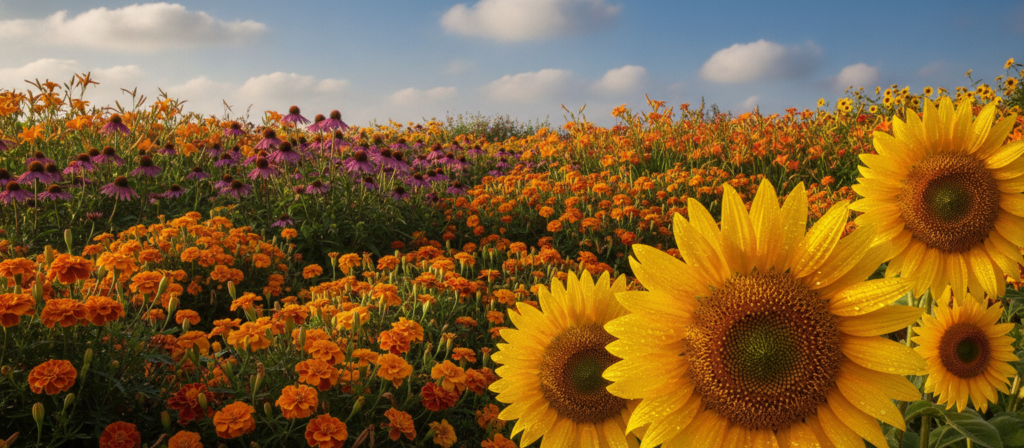
Creating a vibrant landscape is all about balance. You need to think about what you like and what your garden needs. Choosing the best sun loving flowers is key to a beautiful outdoor space that loves the sun.
Choosing Between Annuals and Perennials
Knowing your plants’ life cycles is crucial. Annuals bloom for one season and add quick color to your garden.
Perennials come back every year and are the backbone of your garden. Mixing both keeps your garden lively and dependable.
Matching Plant Height to Your Garden Layout
Think about how tall your plants will grow. Put taller sun loving flowers for outdoor spaces at the back for a stunning view.
Shorter plants in the front add depth. This way, your garden looks good and gets enough sunlight.
Considering Bloom Times for Continuous Color
A good garden has color all season. Choose plants that bloom at different times. This way, your garden changes from spring to fall.
| Plant Variety | Type | Typical Height | Bloom Season |
|---|---|---|---|
| Zinnia | Annual | 12-36 inches | Summer to Fall |
| Coneflower | Perennial | 24-48 inches | Mid-Summer |
| Marigold | Annual | 6-18 inches | Spring to Fall |
| Black-Eyed Susan | Perennial | 24-36 inches | Late Summer |
Plan carefully to keep your garden looking great. Always check the tags to make sure your best sun loving flowers have enough room.
Preparing Your Soil for Maximum Bloom Potential
Healthy soil is key to making your flowers bloom well. It’s like the engine that drives growth in your garden. By preparing your soil right, you help your plants grow strong all season.
Testing Your Soil pH Levels
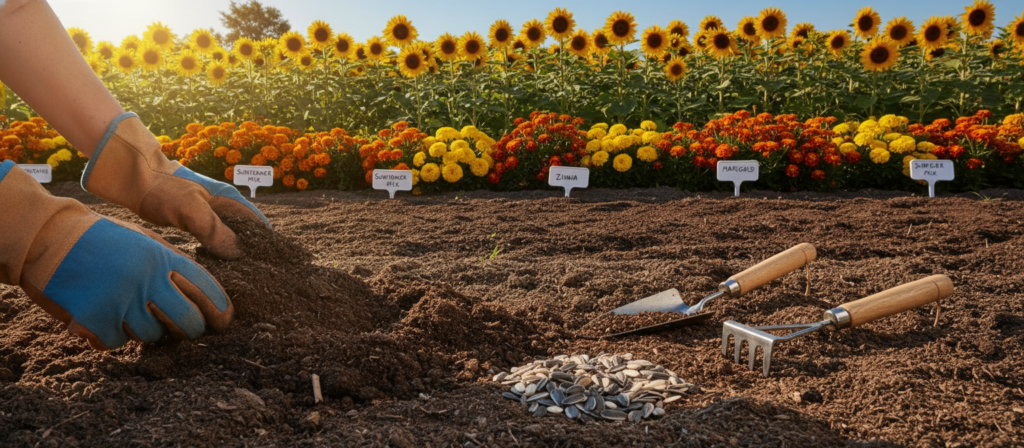
First, find out if your soil is too acidic or alkaline. Most flowers like a slightly acidic to neutral soil. If it’s off, your plants might not bloom well, even with lots of sun.
You can buy a home testing kit at a garden center. Knowing your soil’s type helps you fix it before planting. This step stops plants from missing out on nutrients and helps them grow colorful flowers.
Amending Soil with Organic Matter
After knowing your soil’s pH, work on its structure. Adding organic matter like compost or aged manure is the best way to add nutrients. It makes the soil better and helps good microbes grow.
Organic matter also makes sandy soil better and breaks up clay. Mix a few inches of compost into your soil. This gives your flowers the nutrients they need to grow big and strong.
Ensuring Proper Drainage for Sun-Loving Varieties
Sun-loving flowers need soil that drains well to avoid root rot. If your soil holds water, your plants might get sick. You can fix this by adding organic material or making raised beds.
Good air flow is key for healthy roots. If you have clay soil, add sand or perlite to make it drain better. This lets water move through the soil, keeping your plants healthy and strong.
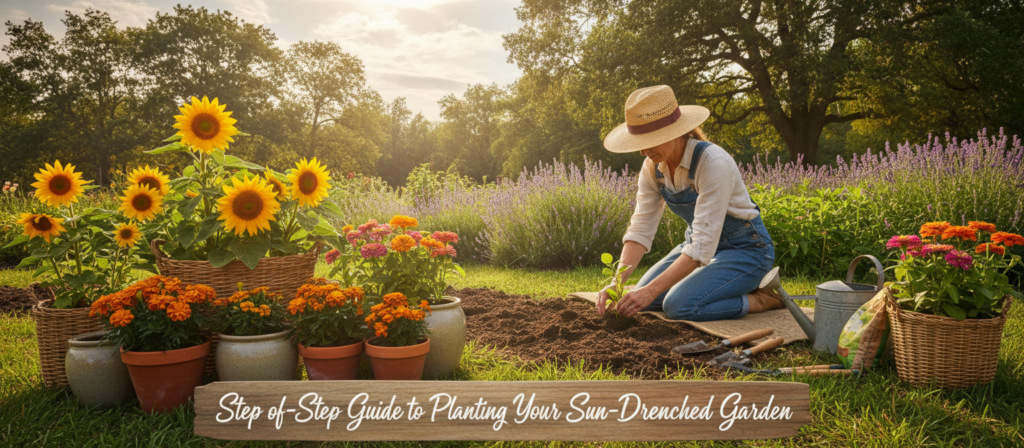
Step-by-Step Guide to Planting Your Sun-Drenched Garden
Turning your yard into a colorful garden starts with planting. It’s key to plant right to have a healthy garden. This way, your flowers grow strong roots fast.
Preparing the Planting Bed
First, remove weeds and trash to help your plants grow. Use a fork to loosen the soil up to 12 inches deep. This lets roots grow well. Adding compost helps the soil a lot.
After loosening the soil, dig a hole that’s twice as wide as the plant’s pot. Don’t make it too deep. Carefully take the plant out of its pot and spread its roots. Put the plant in the hole so the soil level is even.
Spacing Plants for Optimal Airflow
It’s important to space plants right for their health. Too close together can cause disease. Check the plant tag for how far apart to plant.
Plan where to put each plant before digging. This helps you see how your garden will look. Even if it looks empty at first, it will fill in as plants grow.
Watering Techniques for Newly Planted Flowers
New plants need water to recover from being moved. Water them well after planting to settle the soil. Don’t get the leaves wet to avoid disease.
Check the soil every day, more often when it’s hot and dry. Keep the soil damp but not too wet. As plants grow, water them less often to help roots grow deep.
Incorporating Low Maintenance Sun Loving Flowers
Gardening should be fun, not a chore. Choose low maintenance sun loving flowers for a beautiful yard with little work. These plants need very little care.
Selecting Varieties That Require Minimal Deadheading
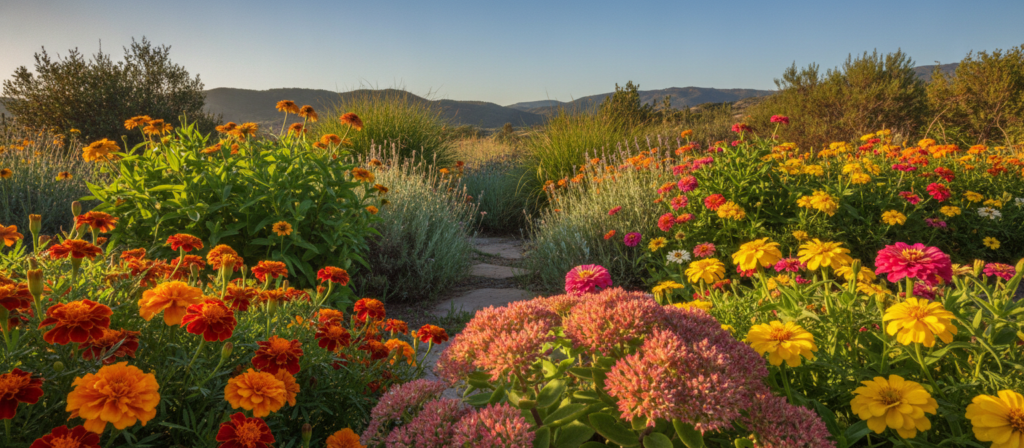
Deadheading can take a lot of time. But, many plants now drop their old flowers on their own. Choosing these varieties means your garden stays neat without daily pruning.
Sedum, some Coneflowers, and ornamental grasses are great picks. They look good even after their flowers fall off. This makes your low maintenance sun loving flowers easy to care for.
«The best gardens are those that work with nature rather than against it, allowing the gardener to sit back and enjoy the view.»
Choosing Disease-Resistant Cultivars
Pests and diseases can ruin a garden. Disease-resistant plants need less care and fewer chemicals. They fight off common problems like powdery mildew.
Look for plant tags or ask nurseries for resistant varieties. These plants are a smart choice for busy people. A healthy plant looks better and needs less care than a sick one.
Utilizing Mulch to Reduce Weed Growth
Weeds are a big problem in gardens. Mulch, like wood chips, keeps weeds away. It also helps your low maintenance sun loving flowers stay moist.
| Feature | Benefit | Maintenance Level |
|---|---|---|
| Self-Cleaning Blooms | No deadheading required | Very Low |
| Disease Resistance | Fewer chemical sprays | Low |
| Mulch Application | Suppresses weeds | Low |
Using these methods makes your garden thrive. Your garden will be something to be proud of, not a hassle. These tips help you enjoy your outdoor space all year.
Designing with Colorful and Vibrant Sun Loving Flowers
Creating a standout garden needs art and plant knowledge. Choosing the right sun loving flowers for outdoor spaces makes a living canvas. It changes with the seasons. Think about where to place them to make your garden a home highlight.
Creating Color Palettes for Visual Impact
Use the color wheel to pick plants. Try complementary colors like purple and yellow for energy. Or, use different shades of one color for calm.
Colorful sun loving flowers change your outdoor mood. Bright colors like reds and oranges excite. Soft colors like pinks and whites calm. Balance these colors so none takes over.
Layering Plants by Height and Texture
Depth is key for a lively garden. Put tall plants in the back. Short ones in the front. This layering technique lets all plants get sunlight.
Think about leaf texture too. Mix big, smooth leaves with small, feathery ones. This adds interest, even when plants aren’t blooming. It makes your garden look rich and interesting.
Using Containers to Add Vertical Interest
Containers are great for small spaces. Pots of different heights bring vibrant sun loving flowers to eye level. This works well for patios, decks, or small entryways.
Containers let you change your garden easily. Swap plants as they finish blooming. Strategic placement of these pots can lead visitors through your garden. It turns a simple area into a welcoming, curated space.
Managing Drought-Tolerant Sun Loving Flowers in Dry Climates
Your garden can still be beautiful even when water is scarce. Choose drought-tolerant sun loving flowers to save water. These plants can go a long time without rain, perfect for dry areas.
Identifying Native Sun Loving Flowers for Water Conservation
Using native sun loving flowers is a smart way to save water. They fit right into your local climate. They need less water than other plants once they grow.
«The best gardens are those that work in harmony with the local environment rather than against it.»
Native plants help local bugs and don’t need many chemicals. Check with your local office for plants that fit your area. These plants have deep roots to find water deep in the soil.
Implementing Efficient Irrigation Systems
Even tough plants need help when it’s very dry. A drip irrigation system is a smart way to water plants. It saves water by giving it right to the roots.
- Water in the early morning to lose less water.
- Put down organic mulch to keep soil cool and moist.
- Group plants with the same water needs together for easier care.
Recognizing Signs of Heat Stress in Plants
Watch your garden closely when it’s hot. Look for signs like wilted leaves or brown edges. These mean your plants are stressed.
If you see these signs, water them deeply and slowly. Always watch your garden closely. This way, you can fix problems fast and keep your garden looking good.
Essential Care Tips for Perennial Sun Loving Flowers
To keep your outdoor space looking vibrant, you must master the specific needs of your long-lived plants. Providing consistent attention ensures that your perennial sun loving flowers remain healthy and productive throughout the growing season. By following a structured maintenance plan, you can enjoy a flourishing garden year after year.
Fertilization Schedules for Peak Performance
Feeding your plants at the right time is crucial for robust growth. Most perennial sun loving flowers benefit from a balanced, slow-release fertilizer applied in early spring as new growth emerges. Avoid over-fertilizing, as this can lead to excessive foliage at the expense of beautiful blooms.
A second light application may be beneficial mid-summer for heavy bloomers. Always water your plants thoroughly after fertilizing to help nutrients reach the root zone effectively. This simple step prevents root burn and ensures steady nutrient uptake.
Pruning and Deadheading Best Practices
Deadheading is the process of removing spent blossoms to encourage your plants to redirect energy into new growth. By snipping off faded flowers, you often trigger a second flush of color. This practice keeps your garden looking tidy and prevents the plant from focusing on seed production.
Pruning should be done with clean, sharp shears to avoid damaging the stems. Focus on removing dead or diseased foliage throughout the season to maintain airflow. Proper pruning helps perennial sun loving flowers stay vigorous and resistant to common garden pests.
Preparing Your Garden for Winter Dormancy
As temperatures drop, your garden needs protection to survive the winter months. Start by clearing away debris and dead plant material to prevent fungal issues. Applying a layer of organic mulch around the base of your plants helps insulate the soil and protect delicate roots from freezing cycles.
Ensure your garden beds are well-watered before the ground freezes, as hydrated roots are more resilient. This preparation phase is essential for the long-term success of your landscape. Taking these steps now guarantees a stronger, healthier start when spring returns.
| Season | Primary Task | Goal |
|---|---|---|
| Spring | Fertilization | Boost Growth |
| Summer | Deadheading | Extend Blooms |
| Autumn | Mulching | Winter Protection |
Conclusion
Creating a garden with sun-loving flowers makes your outdoor space better. You know how to pick, plant, and care for your garden. It shows your personal style.
Gardening is always learning. Your garden will get prettier and stronger with each season. You’ll see how your plants fit your area.
Enjoy the colors and textures you’ve made. Talk about your garden with other gardeners. Or share your journey with brands like Burpee or Proven Winners.
Take good care of your garden. It will make you proud. Begin your garden today. Watch it grow under the sun’s warm light.