
Do you dream of a backyard that feels like a lush, thriving sanctuary? Creating a vibrant ecosystem is easier than you might think. This companion planting guide helps you pair species that naturally support one another.
By selecting the best companion plants for flowering gardens, you can transform your outdoor space into a self-sustaining haven. These clever pairings work together to deter pests, improve soil quality, and attract helpful pollinators throughout the season.
You have the power to cultivate a landscape that is both visually stunning and ecologically resilient. Let’s explore how these simple, natural techniques can help your greenery reach its full potential while saving you time and effort in the long run.
Understanding the Science of Companion Planting
Learning about companion planting starts with knowing your garden’s secret language. Your flower beds may seem calm, but they’re full of life.
Plants talk to each other in a silent way. They share important info like warning each other about pests. By understanding these talks, you can help your plants grow well together.
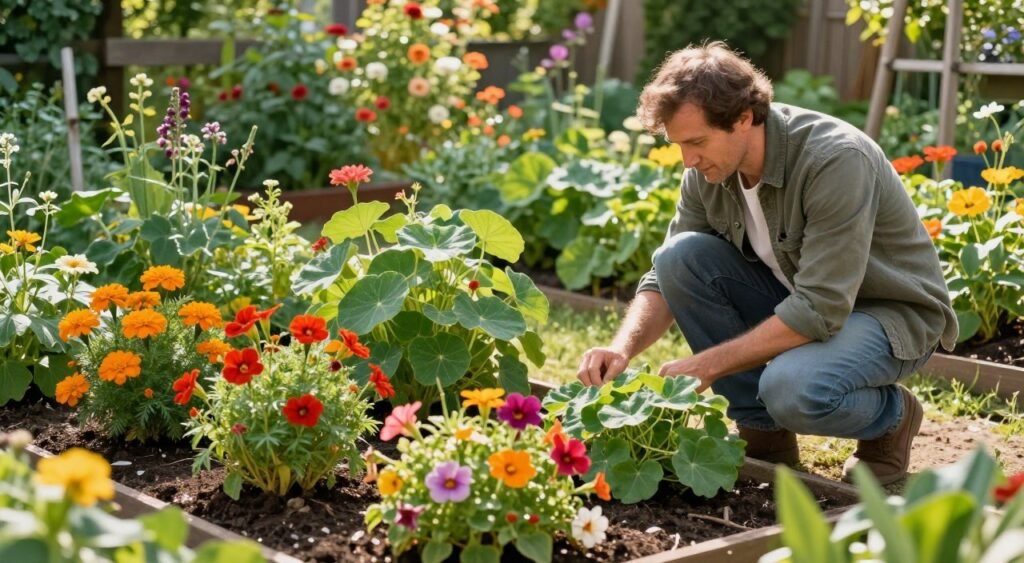
How Plants Communicate and Support Each Other
Plants are more social than they seem. They send chemical signals to their friends in the garden. These signals can warn of pests or tell of drought.
Plants also share nutrients through underground networks. When you pair the right plants, they help each other grow stronger.
- Nutrient Sharing: Deep-rooted plants help shallow-rooted ones by bringing up minerals.
- Pest Warning: Some plants send out smells to hide others from bugs.
- Structural Support: Strong plants offer shade or protect from wind for weaker ones.
The Benefits of Biodiversity in Your Flower Beds
Choosing sustainable gardening means having many types of plants. This makes your garden strong and less dependent on you.
With diverse plants, you need less chemical help. This lets good bugs control the bad ones, keeping your garden healthy.
| Feature | Monoculture | Biodiverse Garden |
|---|---|---|
| Pest Risk | High | Low |
| Soil Health | Depleted | Regenerative |
| Maintenance | High Inputs | Self-Sustaining |
By choosing sustainable gardening, you’re not just growing flowers. You’re making a living, self-regulating system. These organic gardening tips will make your garden beautiful and useful.
Assessing Your Garden Environment
Your garden is alive and needs care. Before buying seeds or moving plants, watch how your garden reacts to the weather. This step keeps your garden vibrant and healthy all season.
Evaluating Sunlight Exposure and Soil Quality
Sunlight is key for your flowers. Watch how much direct light your garden gets during the day. Most flowers need at least six hours of sun.
Soil health is also crucial. Test your soil’s pH and texture with a simple kit. This tells you if your soil is sandy, clay-heavy, or rich.
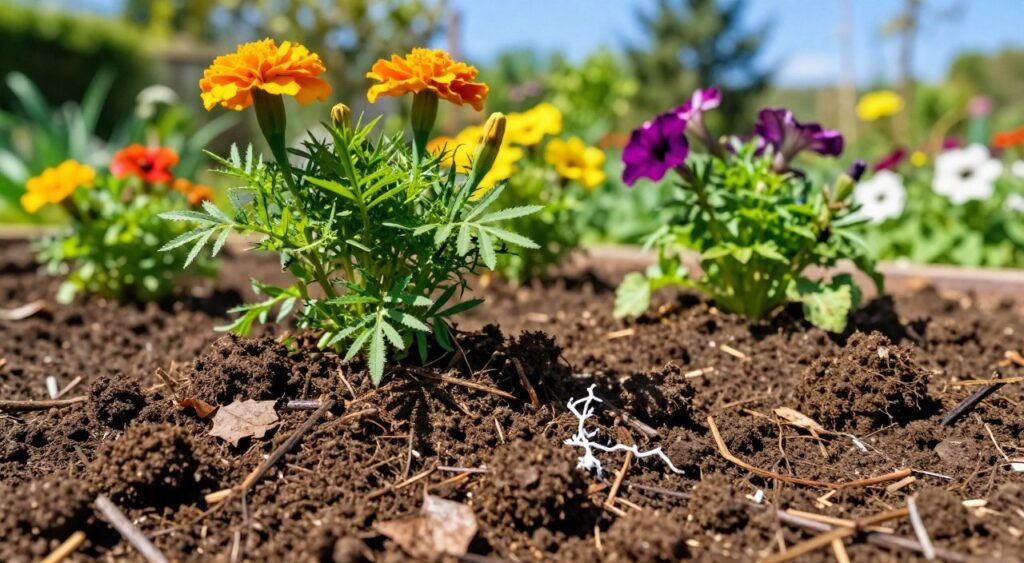
If your soil lacks nutrients or drains poorly, don’t worry. Adding compost or aged manure can help. This makes your soil better for roots and keeps your garden strong.
Identifying Your Hardiness Zone and Microclimates
Knowing your climate is key for hardiness zone gardening. Zones show which plants can handle your winter. Always check the USDA map to pick the right plants.
Also, look for microclimates in your yard. A stone wall might warm up a spot, while a low area can get frost. Understanding hardiness zone gardening means placing plants in the best spots.
Selecting the Best Companion Plants for Flowering Gardens
You can make your backyard a lively place by picking the best companion plants for flowering gardens. Choosing plants that get along well makes your garden strong and easy to care for. This way, your flower beds stay beautiful and healthy all season.
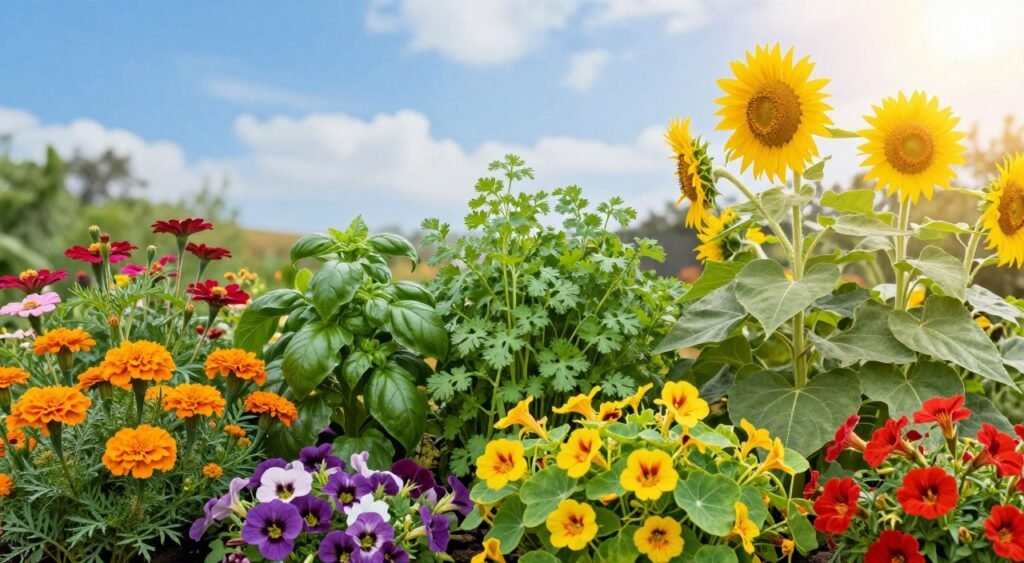
Choosing Flowers That Attract Beneficial Pollinators
Bringing nature into your garden is key to success. By adding pollinator-friendly flowers, you help bees, butterflies, and hoverflies. These beneficial pollinators help your flowers grow strong and make seeds for next year.
- Coneflowers (Echinacea): These hardy perennials are magnets for bees and butterflies.
- Lavender: This fragrant herb attracts a wide variety of pollinators while adding a calming scent to your space.
- Zinnias: These bright, easy-to-grow annuals provide a constant nectar source all summer long.
Pairing Plants for Natural Pest Deterrence
You can also use plants to keep pests away. Using natural pest control helps protect your flowers without harsh chemicals. Some plants hide the scent of your flowers or keep pests away.
Using Marigolds and Alliums to Protect Your Blooms
Marigolds keep nematodes and other pests away. They work well near roses or veggies. Alliums, like onions and garlic, confuse aphids and beetles, keeping them from your flowers.
Matching Plants with Similar Water and Nutrient Requirements
Success in planting together means matching plants’ needs. Plants that need different water or food will struggle. By matching plants with similar water and nutrient requirements, all plants get what they need to grow well.
Check what each flower needs before planting them together. This prevents fights for resources. Happy plants mean a beautiful garden full of color and life.
Planning Your Garden Layout for Maximum Impact
Start by making a plan for your outdoor space. A good flower bed design makes your garden look great and work well. Arrange your plants carefully so each one gets to show off.
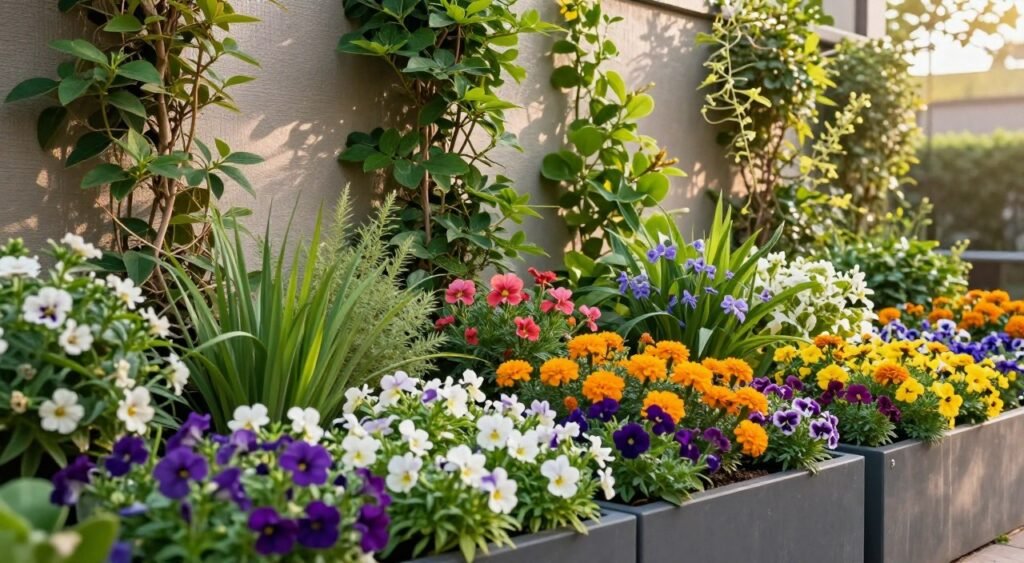
Designing for Vertical Growth and Layering
Vertical gardening adds depth to your garden. Put tall plants in the back or center of beds. This makes your garden look bigger and more interesting.
Use trellises or obelisks for climbing plants. They add height without taking up a lot of space. Layering plants of different heights makes sure your garden is always visible.
Creating Color Harmonies and Seasonal Succession
A great garden changes with the seasons. Choose plants that bloom at different times. This keeps your garden colorful all year.
Think about how plants will change with the seasons. Mix early spring bulbs with late-blooming perennials. This keeps your garden colorful from March to October.
Spacing Requirements for Healthy Air Circulation
Good plant spacing stops disease and helps plants grow strong. When plants are too close, they can get sick. Make sure to check how big your plants will get before planting.
Give your plants enough space for air and sunlight. This keeps them healthy without needing chemicals. Here’s a guide to help you space plants right.
| Plant Category | Typical Height | Recommended Spacing | Primary Benefit |
|---|---|---|---|
| Ground Covers | Under 6 inches | 8–12 inches | Weed suppression |
| Small Perennials | 12–24 inches | 15–18 inches | Pollinator support |
| Tall Shrubs/Flowers | 3–5 feet | 24–36 inches | Vertical structure |
| Climbing Vines | 6+ feet | 36+ inches | Privacy screening |
Preparing the Soil for Diverse Plant Needs
Starting a garden is all about the ground. It’s where plants get their life. Learning how to make the soil better is key for a great garden.
Testing and Amending Your Soil Composition
First, find out what your soil needs. A simple test kit can show you its pH and nutrients. Knowing your starting point helps pick the right fixes.
If your soil is too acidic or alkaline, plants may not get the nutrients they need. Add lime to raise the pH or sulfur to lower it. These organic gardening tips help your flowers grow well.
Incorporating Organic Matter for Long-Term Fertility
Organic matter is vital for a healthy garden. Adding compost, aged manure, or leaf mold makes the soil better. It helps microbes grow, feeding your plants.
Adding organic stuff often makes the soil hold nutrients better. This long-term fertility means less need for chemical fertilizers. Your plants will grow stronger and colors will be more vibrant.
Mulching Strategies to Retain Moisture and Suppress Weeds
After preparing the soil, cover it with organic mulch. A two-to-three-inch layer of wood chips, straw, or bark protects it. It keeps moisture in and weeds out.
Mulch also keeps the soil cool in hot weather. These organic gardening tips save time on weeding and watering. Here’s a quick guide to picking the right amendment.
| Amendment Type | Primary Benefit | Best Use Case |
|---|---|---|
| Compost | Nutrient Boost | General soil enrichment |
| Peat Moss | Moisture Retention | Sandy, fast-draining soil |
| Garden Lime | pH Adjustment | Raising acidic soil pH |
| Wood Chips | Weed Suppression | Top-layer mulching |
Planting Techniques for Successful Integration
To make your garden dream come true, you need a careful plan. Focus on your flower bed design to help plants grow well. This way, every new plant has a good chance to thrive.
Step One: Mapping Your Planting Zones
First, know what your garden needs. Use hardiness zone gardening to pick the right plants for your area. This stops you from choosing plants that can’t handle your local weather.
Draw a map of your garden. Note where the sun shines and where it’s wet or dry. This map is your guide to a beautiful garden.
Step Two: Staggering Planting Times for Continuous Bloom
Your garden should look good all year. Plant at different times to keep it colorful. Careful planning means flowers will always be in bloom.
- Plant bulbs with late-summer flowers.
- Check when plants bloom before buying.
- Keep a journal to track bloom times.
Step Three: Proper Planting Depth and Root Care
Right plant spacing and depth are key. Planting too deep or shallow can harm your plants. Dig a hole twice as wide as the root ball to help roots grow.
Loosen tight roots gently. This helps your plants connect well with the soil. Proper root care keeps your garden healthy.
Step Four: Watering and Establishing New Transplants
Water your plants well after planting. Deep water is better than shallow sprinkles. This helps roots grow strong and makes plants more drought-resistant.
Use trellises or arbors for vertical gardening. Install them before plants get too big. Support vines gently as they grow. Follow these steps for a beautiful garden that lasts.
Maintaining Your Companion Garden Throughout the Seasons
Your garden is like a living thing that needs care all year. Keeping up with garden maintenance makes it stay alive and full of life. This way, your garden stays a great home for beneficial pollinators.
Deadheading and Pruning for Continued Growth
Keeping your plants looking good is key. Cutting off old flowers helps them grow more. This seasonal flower care makes them bloom more.
- Snip off faded blossoms to keep your pollinator-friendly flowers looking fresh.
- Prune back leggy stems to maintain a tidy shape and improve airflow.
- Remove damaged foliage to prevent the spread of disease.
Managing Irrigation Needs During Peak Summer Heat
Summer can be hard on plants. You need to watch the soil to keep plants from getting too dry. Water deeply but not often to help roots grow.
Adding organic mulch helps keep moisture in. It also keeps the soil cool. Water in the morning to avoid losing water to the sun.
Preparing Your Garden for Winter Dormancy
When it gets cold, protect your plants. Good seasonal flower care in fall helps them come back strong in spring. Clean up to get rid of pests and diseases.
Some gardeners leave seed heads for birds and insects. This keeps your garden healthy for beneficial pollinators. By doing this, your pollinator-friendly flowers will be ready for next year.
Troubleshooting Common Pests and Growth Issues
Even the most vibrant gardens sometimes face unexpected problems. Regular garden maintenance helps you spot small issues early. This way, you can avoid big problems for your flowers.
Identifying Signs of Nutrient Deficiencies
Plants tell us what they need through their leaves. If leaves turn yellow or plants grow slowly, they might need more nutrients.
Careful observation helps you find problems early. Once you know what’s wrong, you can fix it with the right soil amendment techniques. This helps your plants grow strong again.
Natural Methods for Managing Aphids and Beetles
You don’t need harsh chemicals to keep pests away. Many gardeners use beneficial insects like ladybugs or lacewings to fight aphids.
For beetles, try natural pest control like neem oil or insecticidal soaps. These methods work well and keep your garden safe for bees and butterflies.
When to Intervene with Organic Remedies
Having a few bugs in your garden is okay. But, you should act when pests start to harm your plants.
Wait until the damage is clear before using organic solutions. Always choose gentle, organic remedies first. This keeps your garden healthy and beautiful.
Conclusion
Creating a flower garden is a fun journey. It mixes science with your own style. Now, you can make your outdoor area come alive.
By gardening sustainably, you help local bugs and insects. These small steps make your area healthier.
Building a garden takes time, but it’s worth it. Seeing your garden grow is very rewarding.
Be a caretaker of your garden. Sustainable gardening keeps your flowers safe from pests and weather changes.
Grab your trowel and start planting today. Your hard work will create a beautiful, useful, and peaceful space. It will bring happiness for many years.