
Summer brings long, sunny days that often push your garden to its limits. When temperatures climb, your plants face significant stress. This can wilt even the most resilient blooms. Learning how to care for flowers during hot weather is essential.
By implementing proactive strategies, you can shield your delicate petals from the harsh afternoon sun. These simple adjustments help your garden retain moisture. They keep it healthy despite the intense heatwaves. You do not need to be a professional botanist to achieve stunning results in your own backyard.
This guide provides a clear, step-by-step approach to keeping your outdoor space thriving. Follow these expert tips to ensure your plants remain strong and beautiful. With the right routine, your garden will become a resilient sanctuary that survives and flourishes when the mercury rises.
Understanding Heat Stress in Flowers
When summer sun gets very hot, your garden fights hard to survive. Plants change a lot to deal with the heat. It’s very important for gardeners to spot these changes early to protect their flowers.
Identifying Signs of Wilting and Dehydration
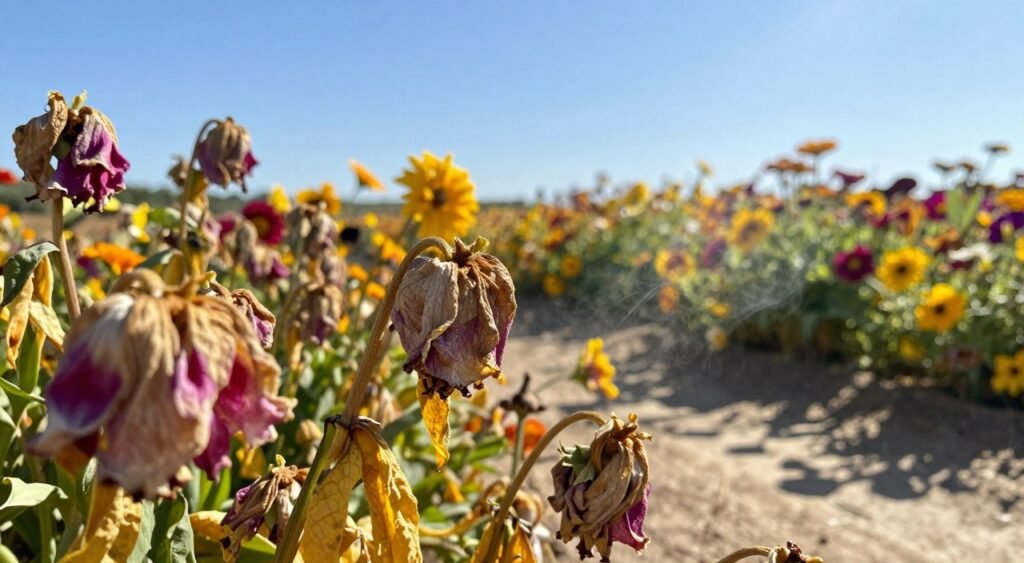
Watch for signs of dehydration in plants during the hottest times. Droopy leaves mean the plant is losing water too fast. If petals get scorched or turn brown, your flowers are losing too much water.
«The health of your garden is a direct reflection of how well you listen to the subtle cues your plants provide during a heatwave.»
Quick action can help save a struggling flower. Check the soil moisture every day. This helps your plants get the water they need to recover before it gets cooler.
The Impact of High Temperatures on Plant Metabolism
High temperatures mess with how plants grow and bloom. When it’s too hot, plants use more energy than they make. This imbalance hurts plant growth and flower production.
By controlling the environment, you can help plants stay healthy in extreme weather. Knowing how plants react to heat helps you care for them better. With the right care, your garden can stay beautiful all summer.
How to Care for Flowers During Hot Weather: Watering Strategies
Watering flowers in summer is very important. When it’s hot, plants lose water fast. Learning how to water them right is key.
Determining the Best Time of Day for Irrigation
Water your garden in the early morning. This lets the soil drink water before it evaporates. Your plants will be ready for the day.
Don’t water at night. Wet leaves can get sick. Watering in the morning helps your flowers start strong.
Deep Watering Versus Shallow Sprinkling
Don’t just sprinkle water lightly. This makes roots weak. Instead, water deeply to help roots grow strong.
Deep watering makes plants tough. Consistency is key for strong roots. This helps plants stay healthy when it’s dry.
Utilizing Drip Irrigation Systems for Efficiency
Drip irrigation saves water and is very efficient. It waters plants right at the base, not wasting water. It’s better than sprinklers or hoses.
Automating watering helps plants get water when you can’t. It stops water from running off and keeps plants dry. This prevents diseases.
| Method | Efficiency | Root Impact | Disease Risk |
|---|---|---|---|
| Hand Watering | Moderate | Variable | Low |
| Sprinkler System | Low | Shallow | High |
| Drip Irrigation | High | Deep | Very Low |
Mulching Techniques to Retain Soil Moisture
A simple layer of organic material can change how your garden handles summer heat. It creates a barrier against the sun. This is key for mulching for moisture retention, keeping plants hydrated in hot weather.
Selecting the Right Organic Mulch Materials
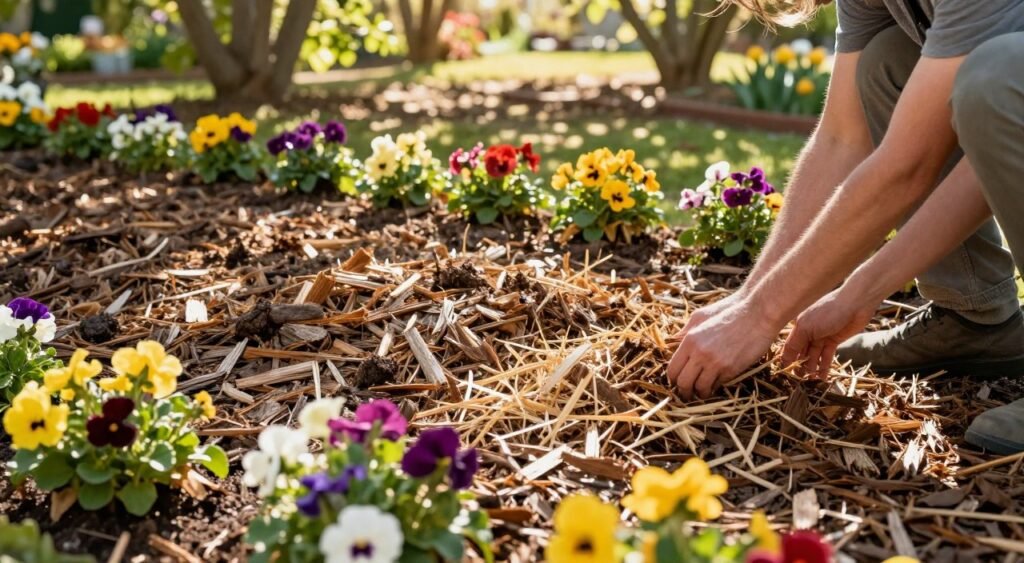
Choosing the right material is the first step for a healthy garden. Look for organic options that break down over time. They improve soil and protect plants. Shredded bark, pine needles, and straw are good for most flower beds.
Compost is also great, adding nutrients as it insulates. Stay away from synthetic materials like rubber or plastic. Natural materials let soil breathe while keeping it cool and damp.
Applying Mulch Correctly Around the Base of Flowers
Proper application is key for effective mulching. Aim for a two to three inch layer. This is enough for mulching for moisture retention without harming roots.
Keep mulch a few inches from plant stems. Too close can cause rot. Instead, make a donut shape around each plant for airflow.
Benefits of Mulching for Soil Temperature Regulation
Mulching acts as a thermal buffer. It keeps the soil cool, preventing it from getting too hot. This consistent soil temperature helps flowers bloom better, not fight heat stress.
It also cuts down on water lost to evaporation. Cool soil means roots can absorb water better. Your garden will need less water, saving you time and money in summer.
Providing Shade and Protection from Intense Sunlight
When summer sun gets too strong, your garden needs help. Protecting plants from sun damage is key to keeping them alive. This stops petals from burning and stems from drying out.
Installing Temporary Shade Cloths for Delicate Blooms
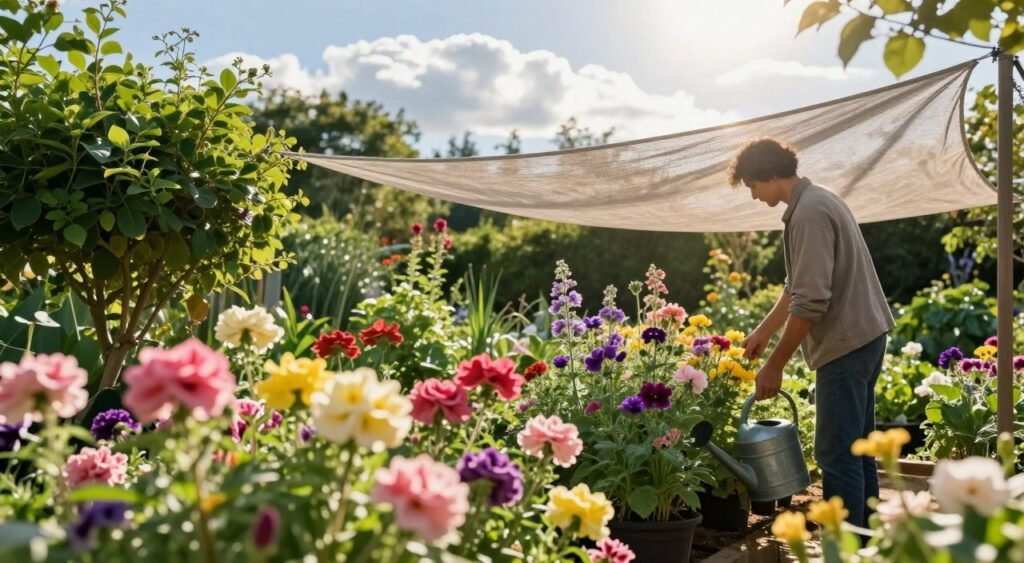
Using a shade cloth for flowers is a smart move. These fabrics block out too much sun. You can hang them over frames or stakes to keep your plants cool.
Strategic Placement of Potted Plants
If your flowers are in pots, you can move them. Put them in the shade or under a big tree in the afternoon. Always check the soil moisture before and after moving them.
Using Companion Planting to Create Natural Shade
Companion planting is a green way to help your plants. Plant tall, sun-loving plants next to small ones. This creates shade and makes your garden look better.
| Method | Best For | Primary Benefit |
|---|---|---|
| Shade Cloth | Large flower beds | Customizable light reduction |
| Potted Movement | Mobile containers | Immediate relief from heat |
| Companion Planting | Garden borders | Natural, aesthetic protection |
Proper Fertilization Practices During Heatwaves
When it gets really hot, your plants might not like food as usual. They are very sensitive when it’s hot. Adjusting your approach is key for feeding them right in the summer.
Why You Should Pause Heavy Feeding in Extreme Heat
In the heat, plants slow down to save water. Giving them too much food can hurt them. It makes them grow too fast and weak.
It’s best to pause heavy feeding when it’s cooler. This lets plants use their energy to stay healthy, not grow too fast.
Choosing Slow-Release Fertilizers for Summer Resilience
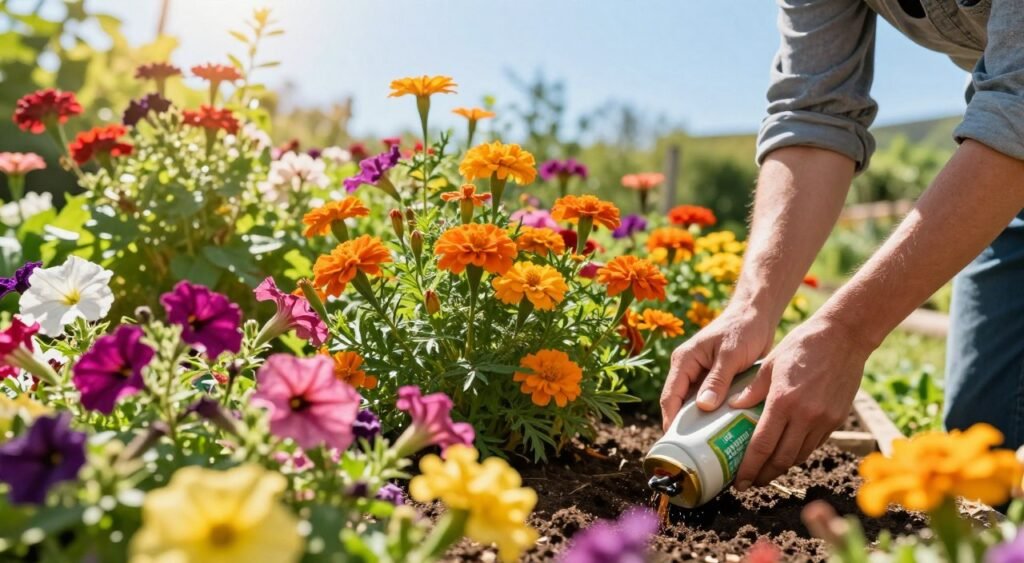
If your plants look hungry, use slow-release fertilizers. They give nutrients slowly, which is better for plants in the summer. This way, plants get what they need without getting too much.
Make sure the soil is wet before you feed your plants. This helps them soak up the nutrients better. It also stops them from getting shocked by dry soil.
Avoiding Fertilizer Burn on Stressed Foliage
Keeping plants safe from fertilizer burn is very important in summer. When it’s hot, fertilizers can dry out plants. This is because they pull water from the roots.
To protect your garden, follow these tips:
- Feed your plants in the cool morning.
- Don’t put fertilizers on leaves to avoid burning them.
- Water well after feeding to spread out the fertilizer.
| Fertilizer Type | Suitability in Heat | Risk Level |
|---|---|---|
| Quick-Release Liquid | Low | High |
| Slow-Release Granular | Moderate | Low |
| Organic Compost Tea | High | Very Low |
Pruning and Deadheading for Plant Recovery
Trimming plants is key to keeping them healthy and bright in hot weather. Plants have a hard time in the heat. They need to survive and grow seeds at the same time.
By doing summer garden maintenance early, you help your plants. They can focus on growing strong roots instead of making seeds.
Removing Spent Blooms to Conserve Plant Energy
Deadheading flowers is a great way to help your plants. When a flower fades, the plant wants to make seeds. By taking away the old flowers, you tell the plant to use its energy for leaves and roots.
This stops the plant from wasting energy on seeds in the heat. Your garden will look cleaner and feel fresher after deadheading flowers.
Trimming Back Leggy Growth to Reduce Transpiration
Heat makes plants stretch out, leading to weak stems. These stems lose water fast because they have a lot of surface area. Carefully trimming these stems helps the plant keep water better.
Remove the weakest stems to help air move around the plant. This cuts down on water loss and helps the plant grow stronger. Your plants will be less stressed during the summer.
Sanitizing Tools to Prevent Disease Spread
Heat and humidity are perfect for diseases. Pruning makes small cuts on plants, which diseases can enter through. Always sanitize your shears with rubbing alcohol or bleach to stop diseases.
Clean tools are a must for summer garden maintenance. A quick clean of your blades keeps your garden healthy. This small step helps your plants stay strong and disease-free.
Managing Pests and Diseases Thriving in Heat
Summer heat makes pests and diseases grow fast. Plants get stressed and weak. This makes them easy targets. Keeping your garden safe is key for a lively garden all summer.
Monitoring for Spider Mites and Aphids
Spider mites love hot, dry weather. They leave tiny yellow dots on leaves and webs on stems. Watching your plants closely is the best way to fight pests.
Aphids cluster on new leaves in warm weather. Look under leaves for these tiny bugs. A quick water spray can get rid of them without hurting your plants.
Identifying Fungal Issues Caused by Humidity
Summer humidity makes fungi grow fast. Powdery mildew looks like white dust on leaves. Good air flow is the first step to prevent disease.
Don’t water plants from above. Wet leaves attract spores. Water at the base to keep leaves dry. Remove dark spots or fuzzy patches to stop disease.
Healthy plants fight off pests better. Keep your garden clean and watch it closely. This way, you can enjoy your garden even in the hottest times.
Container Gardening Adjustments for High Temperatures
When it gets really hot, your container garden needs some special care. Potted plants get too hot because their roots don’t have the earth’s coolness. Follow these container gardening tips to keep your plants happy, even when it’s very hot.
Selecting Light-Colored Pots to Reflect Heat
The color and material of your pots matter a lot. Dark pots get too hot because they soak up the sun. Using light-colored pots helps keep the soil cool for your plants.
If you can’t change your pots, try wrapping them in light fabric or burlap. This helps block the sun. Even heat-resistant plants will thank you for the extra shade.
Increasing Watering Frequency for Small Containers
Small pots dry out fast because they have less soil. You might need to water your plants twice a day in the heat. Keeping the soil moist is key to stop plants from wilting.
Water until water comes out the bottom. This helps roots grow deep and strong. Always water the plants that need it most to keep them healthy all summer.
Moving Containers to Cooler Locations During Peak Sun
Changing where your plants sit can help a lot. Move them to a shaded area or a spot that gets morning sun. This keeps your heat-resistant plants safe from the afternoon sun.
| Pot Material | Heat Absorption | Best Use |
|---|---|---|
| Terracotta | Moderate | Drought-tolerant plants |
| Plastic (Dark) | High | Shaded areas only |
| Ceramic (Light) | Low | Full sun exposure |
| Metal | Very High | Decorative use only |
By making these changes, your garden will stay beautiful. Even tough plants need a little extra help when it’s very hot.
Conclusion
Keeping your garden bright during hot summers needs care, water, and smart steps. Your garden is like a living world that needs your help to stay strong against bad weather.
Using these tips helps protect your flowers from drought and heat. Even small changes can help your plants deal with the heat better.
Watching your garden closely helps you fix problems early. This way, you can keep your flowers looking good all season.
Take a walk in your yard tonight to see how your plants are doing. Share your best tips for keeping flowers cool with others in your area. Your hard work makes your outdoor space beautiful and fun all summer.