
Do you dream of a backyard full of colors all summer? To keep your garden lively, plan well and pick the right plants. Choose varieties that last long to make your outdoor space a stunning focal point.
Learning to garden means knowing your local weather and soil. Follow expert tips to make your garden look like a pro’s. Consistency is the secret to growing flowers all summer. With these tips, your garden will be a beautiful spot for you and your family all season.
Key Takeaways:
- Select hardy plant species suited for your specific USDA hardiness zone.
- Implement a consistent watering and fertilizing schedule for optimal health.
- Use deadheading techniques to encourage continuous growth and color.
Planning Your Garden for Continuous Color
Creating a garden that blooms all year is possible with the right plan. Think of your garden as a living picture that needs a good plan. By placing plants wisely, your garden will stay colorful all season.
Assessing Your Garden Sunlight and Microclimates
Good gardening starts with knowing your garden sunlight requirements. Watch how light changes in your yard at different times. Some spots get very hot in the afternoon, while others stay cool and shady.
Finding these special spots is key for healthy plants. Choosing the right plants for the right light helps them grow well. If you don’t match plants to light, some parts of your garden might not do well.
Selecting Varieties with Staggered Bloom Times
To keep your garden colorful all year, pick plants that bloom at different times. This way, you avoid empty spots between seasons. Your garden will look great from spring to fall.
Here’s a quick guide to help plan your garden’s colors:
| Plant Category | Sunlight Need | Peak Bloom Season |
|---|---|---|
| Early Spring Bulbs | Full Sun | March – May |
| Summer Annuals | Full Sun | June – August |
| Late Season Perennials | Partial Shade | August – October |
| Evergreen Shrubs | Variable | Year-Round Structure |
Preparing the Soil for Maximum Growth
Your garden’s success starts deep down where roots grow strong. A good garden needs a strong base with nutrients. By improving your soil, you help your plants grow well.
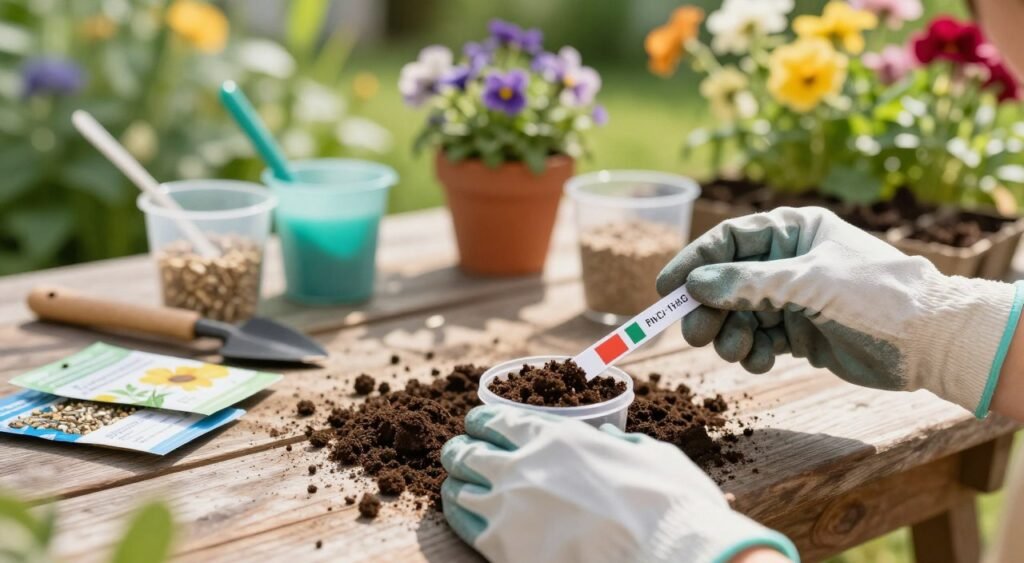
Testing and Amending Your Soil pH
First, test your soil’s pH to know its chemical balance. This test shows if your soil is too acidic or alkaline. Most flowers like a slightly acidic to neutral soil.
If your soil is off balance, you can fix it. Lime makes it more alkaline, and sulfur makes it more acidic. Keep checking your soil to make sure your plants get what they need.
Incorporating Organic Matter for Nutrient Retention
The physical structure of your soil is also key. Adding organic matter for soil like compost makes it better. It turns clay or sand into a fertile soil.
Organic matter helps your soil hold water and drain well, important in summer. It also helps microbes break down nutrients for your flowers. Spending time on this now means a better garden later.
Choosing the Best Flowers That Bloom Throughout the Summer
To have a garden full of flowers that bloom throughout the summer, you need a good plan. Mix different plants to keep your garden colorful from June to autumn. This way, you get quick color and a lasting garden.
Top Annuals for Non-Stop Summer Color
For fast growth and constant flowers, choose the best annuals for summer. These plants focus on flowers, not roots. They’re great for containers or filling gaps in your garden.
They bring explosion of color until the weather gets cold.
Here are some top annuals to consider:
- Zinnias: Easy to grow and come in many bright colors.
- Petunias: Great for hanging baskets or borders, they bloom non-stop.
- Lantana: Loves the sun and attracts pollinators.
- Cosmos: Looks delicate but blooms a lot all season.
Perennials That Provide Reliable Seasonal Blooms
Reliable perennials are key to your garden. They come back every year, saving time and money. They make your garden feel stable and permanent.
Choose perennials that bloom a lot or bloom again. Mixing them with annuals gives you both predictability and excitement. This way, your garden stays beautiful all summer.
Step-by-Step Planting Techniques for Success
Putting your new flowers in the right spot is key for a great season. Planting carefully helps them adjust fast. These steps are essential for long-term garden health.
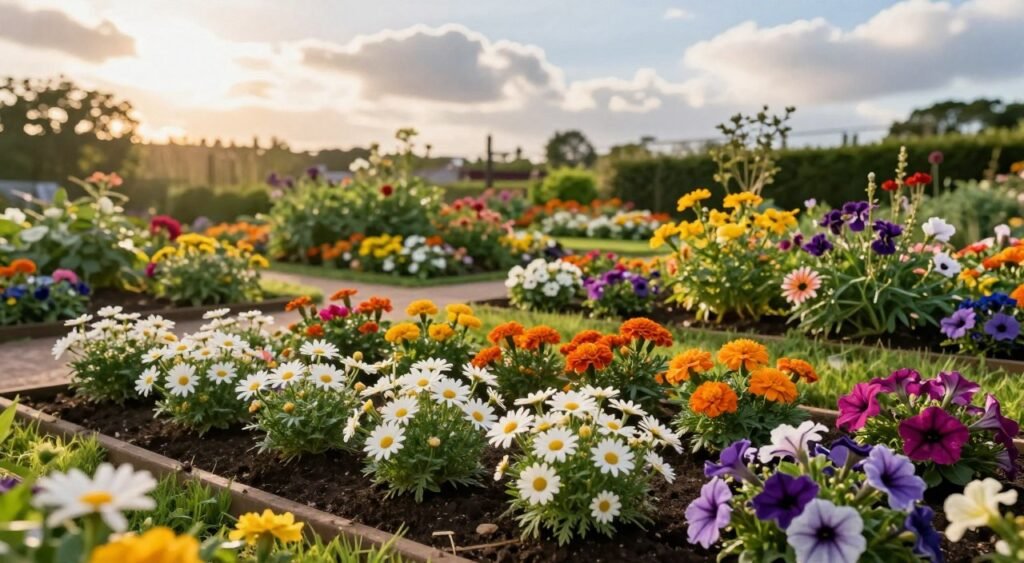
Proper Spacing to Prevent Disease and Competition
Many gardeners plant too close together. Proper plant spacing is crucial. It lets air in, cutting down disease risk.
Check tags or seed packets for spacing tips. This lets each plant grow well. It also makes your garden look neat.
Establishing Young Plants with Initial Watering
After planting, give your flowers a good soak. This helps them settle. It also stops roots from drying out too soon.
Water at the base, not the leaves. This keeps leaves dry and fights off diseases. Consistent hydration is key for a strong garden.
Mastering the Art of Deadheading
Make your garden bloom forever by handling spent flowers right. Deadheading flowers helps plants make more flowers instead of seeds. This means more color and life in your garden.
Why Removing Spent Blooms Encourages New Growth
When flowers fade, plants start making seeds. This uses a lot of energy. By removing these parts, you stop seed-making.
This action makes plants focus on growing new flowers. Your garden will look fuller and more colorful. It’s a proven strategy to keep your favorite flowers blooming.
Techniques for Different Flower Types
Not all plants need the same deadheading method. Some can be pinched with your fingers. Others need sharp tools for a clean cut.
| Plant Type | Method | Tool Required |
|---|---|---|
| Soft-stemmed Annuals | Pinching | Fingers |
| Bushy Perennials | Shearing | Garden Shears |
| Tall Spiked Flowers | Selective Pruning | Pruning Snips |
| Woody Shrubs | Heading Back | Loppers |
For delicate annuals, a quick pinch is enough. For big perennials, cut back to the next leaves. Learning these specific techniques will keep your garden looking great all season.
Optimizing Watering and Fertilization Schedules
Getting your plants to bloom all the time needs good watering and feeding. Keeping the soil moist and giving plants what they need is key. This helps your garden look great, even when it’s very hot.
Having a set schedule helps your plants grow well. It stops them from getting stressed and looking bad. This way, your garden stays beautiful, even when it’s really hot.
Implementing Efficient Irrigation Methods
Use smart summer garden irrigation like drip lines or soaker hoses. They send water right to the roots. This cuts down on water lost to the air.
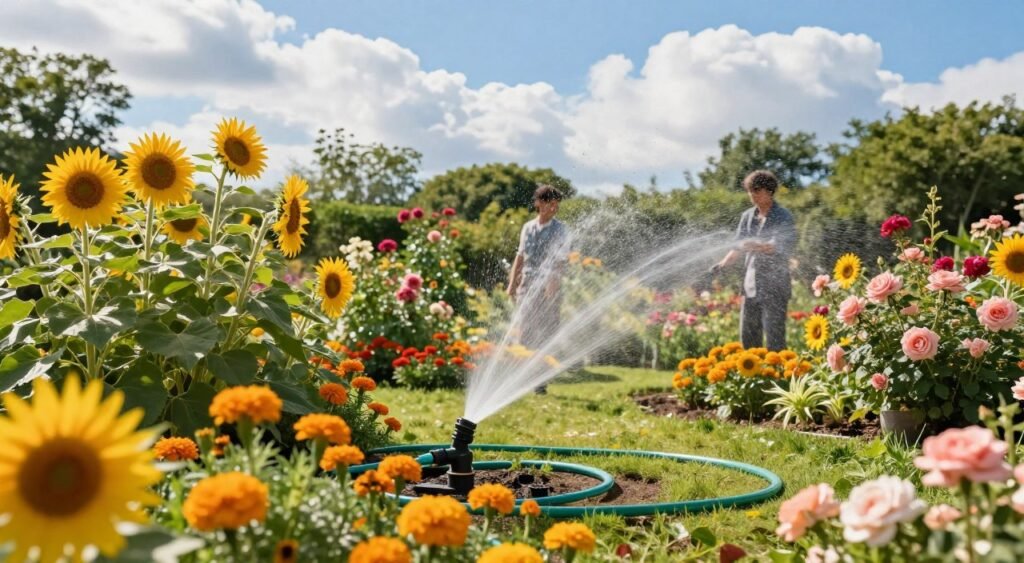
Watering at the base of the plant keeps leaves dry. This stops diseases. Keeping the soil moist is important for plants that need lots of energy to bloom.
Choosing the Right Fertilizer for Flowering Plants
Look for fertilizer for flowering plants that’s high in phosphorus. This helps plants bloom a lot and grow strong roots.
Follow the instructions on the fertilizer package to avoid harming your plants. Regular feeding helps plants keep making new flowers instead of stopping.
- Check soil moisture before applying liquid feeds.
- Use slow-release granules for long-term nutrient stability.
- Water thoroughly after fertilizing to help nutrients reach the roots.
Managing Pests and Diseases in the Summer Heat
Summer garden pest control is key for every gardener. High heat and humidity let pests and diseases grow fast. Watch closely to stop small problems from getting big.
Identifying Common Garden Pests
Check your plants often to spot problems early. Look at the undersides of leaves for aphids and spider mites. These pests harm your flowers by sucking sap.
Watch for holes in leaves or sticky spots. These signs mean beetles or whiteflies are around. Also, look for white, dusty spots on leaves for powdery mildew.
Natural and Chemical Control Strategies
Good pest control mixes habits and treatments. Encourage helpful bugs like ladybugs and lacewings. For organic options, use neem oil or insecticidal soaps.
For big problems, you might need chemicals. Pick products that target specific pests to protect bees. Catching issues early helps a lot.
| Pest/Disease | Primary Sign | Control Method |
|---|---|---|
| Aphids | Sticky residue on leaves | Neem oil or water spray |
| Spider Mites | Fine webbing on stems | Increase humidity/miticide |
| Powdery Mildew | White dusty patches | Fungicide/Air circulation |
| Japanese Beetles | Skeletonized leaves | Hand-picking/Traps |
Providing Structural Support for Tall Varieties
Keeping your garden neat needs a little extra help for big flowers. Tall flowers can fall over in storms or strong winds. Plant support stakes help keep your garden beautiful all season.
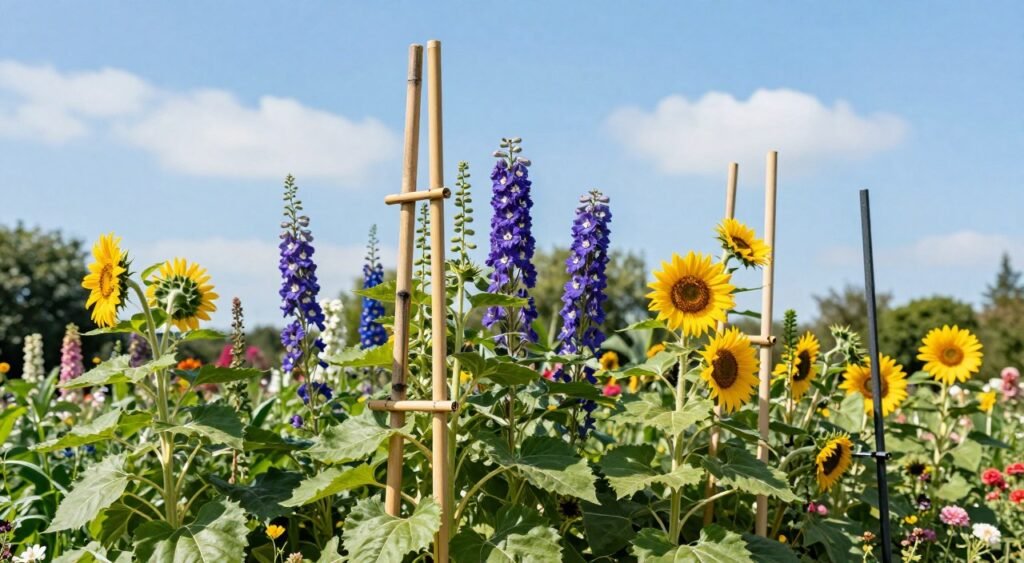
Selecting the Right Stakes and Cages
It’s important to pick the right tools for your plants. Look for things that keep plants stable but don’t show too much. Green-coated metal or bamboo is good because it blends in.
Cages are great for plants that spread out. Plant support stakes are better for single-stemmed flowers like lilies. Make sure the support is tall enough for your plant.
Installing Supports Early to Avoid Plant Damage
When to put in supports is key. Do it early so plants don’t get too big. Trying to add supports later can hurt the plant.
Putting supports in early lets plants grow through them naturally. This makes the support blend in while keeping plants strong. Your flowers will stay tall and bright, even in rainy summers.
| Support Type | Best For | Key Benefit |
|---|---|---|
| Plant support stakes | Single-stem flowers | Minimal visual impact |
| Wire cages | Bushy perennials | All-around stability |
| Grow-through grids | Clumping varieties | Natural growth habit |
Adapting Your Garden Care to Extreme Weather
Being able to change with the weather is key to a great summer garden. Weather can go from very hot to very wet, and you need to be ready. Watching your plants closely helps keep them safe from big weather changes.
Protecting Plants During Heatwaves
When it gets really hot, your main goal is to keep plants from getting too stressed. A good way to do this is by using a lot of organic mulch. This keeps the soil cool and holds onto water.
Also, giving plants some shade when it’s hottest can help. Shade cloth or a big umbrella can really help. Plants that are well-watered can handle the heat better.
«The best time to plant a tree was twenty years ago. The second best time is now.»
Managing Moisture During Heavy Summer Rains
Too much water can hurt your garden just like too much heat. Good summer rain garden care means your soil drains well to avoid root rot. If water pools, you might need to add compost or make raised beds.
Heavy rain can also make the soil too dense. Loosening the top soil helps roots breathe again. Consistency is key in managing these changes to keep your garden looking great all season.
Conclusion
Creating a beautiful backyard takes hard work and a clear plan. By using these smart tips, you make your garden strong and green all summer.
By taking care of your soil and doing regular maintenance, you lay a solid base for beauty. Every little thing you do helps make your garden look amazing.
Watch how your plants do as the weather changes. Changing how you care for them makes gardening fun and rewarding.
Share your garden’s growth with friends or join a gardening group. This helps you learn new things and get better at gardening. See how your garden grows into a beautiful, healthy spot.