
Many homeowners face a challenge with little sunlight in their outdoor areas. You might feel sad about dark spots, but nature offers a perfect solution. The right plants can make a gloomy area bright and welcoming.
Learning to pick flowers that brighten shaded patios is key to a lively retreat. You don’t need direct sun for a colorful garden. With the right plan, even hidden spots can bloom with life and color.
This guide will show you how to garden in low light. You’ll find out which plants do well without strong sun. By picking tough plants, your outdoor space will stay a stunning focal point all season. Get ready to make your dark backyard a thriving, beautiful place.
Assessing Your Patio Light Conditions
Learning to garden in low light starts with knowing your patio. Before picking plants, check the light levels on your patio. This helps avoid plants that don’t do well in your space.
Identifying Deep Shade Versus Dappled Light
Knowing your patio well is key for plants to grow well. Deep shade is where little to no sunlight reaches, like against north walls. Plants here need to handle very little light.
Dappled light, on the other hand, comes through trees or structures. It’s more flexible for many plants. Knowing these types helps pick the right plants for your containers.
Tracking Sun Patterns Throughout the Day
Watch your patio at different times over a few days. Sunlight changes with the seasons. Check in the morning, noon, and late afternoon. You might see a spot change from dark to bright.
Keep a log of these observations. This helps match your plants with your patio’s light. Here’s a guide to help you:
| Light Category | Sun Exposure | Best Plant Types |
|---|---|---|
| Deep Shade | Less than 2 hours of light | Ferns and Hostas |
| Dappled Light | Filtered, shifting light | Begonias and Fuchsias |
| Partial Shade | 3 to 6 hours of light | Impatiens and Coleus |
By mapping these patterns, you make gardening in low light easy and fun. Proper planning leads to a lively, healthy patio all season.
Understanding the Needs of Shade-Loving Plants
Success with shade-loving plants starts with knowing their special needs. These plants love the shade, unlike those that need lots of sun. When you garden in the shade, you need to think differently.
The Role of Foliage Contrast in Low Light
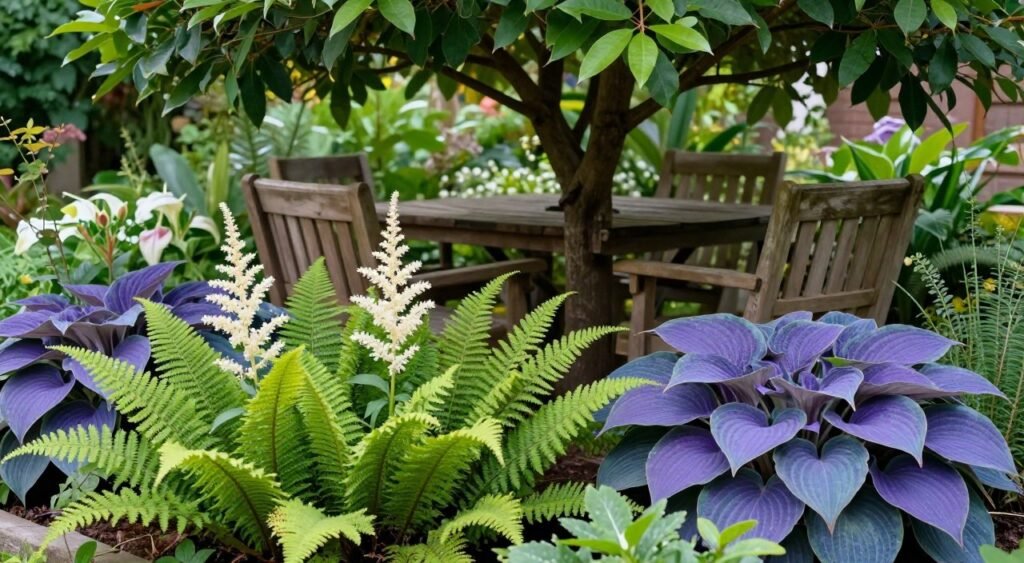
Using plants with different leaf colors can make a dark patio look brighter. Plants with white, cream, or yellow leaves reflect light. This makes dark spots look brighter.
By mixing green and colorful leaves, your space feels bigger and more alive. Plants with silver or lime-green leaves add a nice contrast. This makes your patio look even better.
Why Bloom Color Matters in Dim Spaces
In the shade, flower colors are very important. Dark colors get lost, but white or neon pink blooms pop out. These colors grab your attention and highlight your garden.
Choosing the right colors makes your shaded garden stand out. Bright petals are like little lights, welcoming you even on cloudy days. Here’s a guide to pick the best colors for your shaded area:
| Feature | Shade-Loving Plants | Sun-Loving Plants |
|---|---|---|
| Leaf Color | Variegated or Deep Green | Solid or Bronze Tones |
| Bloom Visibility | High (White/Neon) | High (Red/Orange/Yellow) |
| Light Requirement | Low to Dappled | Full Direct Sun |
| Reflective Quality | High (due to variegation) | Low (absorbs light) |
Top Flowers That Brighten Shaded Patios
Make your shaded patio colorful with nature’s best blooms. The right flowers that brighten shaded patios keep your outdoor space lively. Even with little sunlight.
«Gardening in the shade is not a limitation; it is an invitation to explore a different, more subtle palette of beauty.»
Selecting Impatiens for Vibrant Color
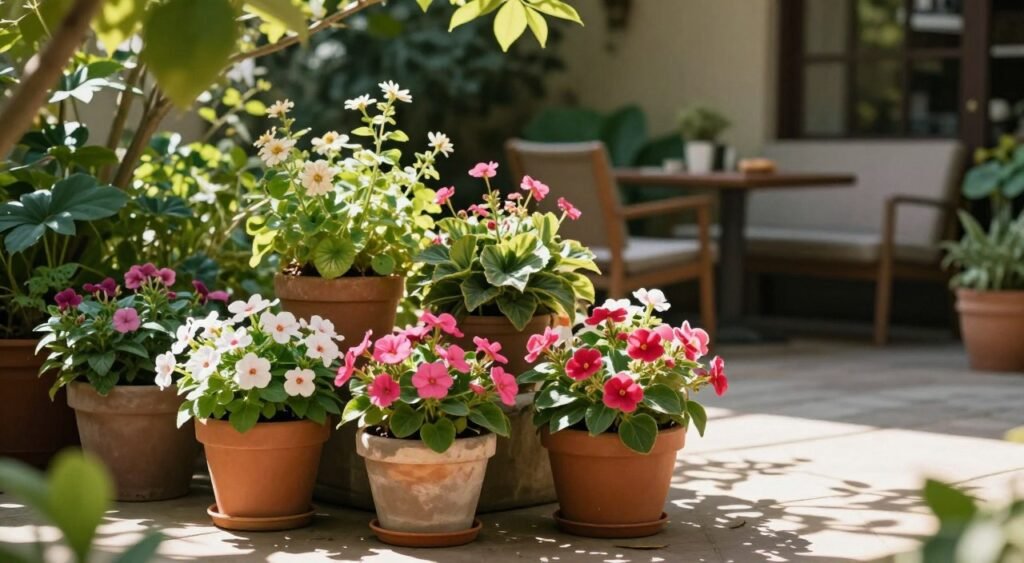
Impatiens are top picks for shade-loving plants. They bring lots of color. You can find them in many colors, from soft pastels to deep reds and purples.
They love the moist shade of containers. Plant them together for a stunning carpet of color. It makes any dark spot brighter.
Incorporating Begonias for Texture and Bloom
Begonias add depth to your garden. They have beautiful leaves and flowers. Even when not in bloom, their leaves are stunning.
Choose from upright Tuberous begonias or trailing Wax begonias. They’re exceptionally hardy and do well in low light.
Using Fuchsias for Vertical Interest
Fuchsias add height and drama. Their hanging flowers create vibrant shade blooms. They look great in hanging baskets or planters.
They love cooler, shaded spots. They bloom all summer. Focusing on vertical space saves floor space on your patio.
Preparing Containers for Shaded Environments
Learning container gardening tips is key for shaded patios. These spots get less sun, so the soil stays wet longer. You need the right stuff to keep your plants happy and dry.
Choosing the Right Potting Mix for Moisture Retention
First, pick a good potting mix. It should hold water well but also let air in for roots. Don’t use heavy garden soil, as it gets too wet.
Go for mixes with peat moss or coconut coir for steady water. Adding perlite or vermiculite helps too. They make sure roots get enough air to grow.
Ensuring Proper Drainage to Prevent Root Rot
Preventing root rot starts with good drainage. Even in shady spots, too much water can harm plants. Make sure your pots have big holes at the bottom.
If your pots don’t have holes, use a plastic liner. It makes watering easier and keeps water out. Putting pots on feet or bricks helps air get under them, keeping plants safe.
| Container Material | Moisture Level | Best Use |
|---|---|---|
| Terracotta | Low (Porous) | Plants needing drier soil |
| Glazed Ceramic | High (Retains water) | Moisture-loving shade plants |
| Plastic/Resin | Medium | Versatile for most shade varieties |
| Metal | Low (Conducts heat) | Decorative accents with liners |
Designing Your Shade Garden Layout
Mastering your patio layout lets your shade-loving plants shine. A good shade garden design needs more than just plants. It’s about how they fit in the space.
By planning your containers well, you can turn a dark corner into a green oasis.
Creating Visual Depth with Layered Heights
To make a small area look bigger, use layers. Put tall plants in the back or center. Short, trailing plants go at the front.
This stair-step approach makes your space feel bigger. It’s perfect for shaded areas that often feel flat.
«The best gardens are those that invite you to look closer, revealing new layers of beauty with every step.»
Use plant stands or decorative bricks to make some pots stand out. This adds visual interest. It makes sure each plant gets its turn in the spotlight.
Varying heights keeps your space from feeling too crowded or one-sided.
Using Light-Colored Pots to Reflect Ambient Light
A good shade patio layout uses bright elements. Choose pots in white, cream, or soft pastels. These colors brighten your space.
Light-colored pots reflect light, making your plants look better. They bounce light back into the foliage.
Here’s why light pots are great:
- Increased brightness: They make the space feel more open.
- Visual contrast: They make green plants stand out, adding a clean look.
- Temperature control: They absorb less heat, keeping roots cool in warm months.
By mixing height and light-colored pots, you create a beautiful shade garden design. Your patio will stay lively and welcoming all season.
Step-by-Step Planting Guide for Success
Make your shaded patio a lush retreat by planting carefully. Follow these container gardening tips for a great start. A step-by-step plan helps avoid mistakes and brings life to your space.
Preparing Your Containers and Soil
Choose a container with holes at the bottom for drainage. Drainage is key to stop water from harming roots in dark places. Use a light potting mix made for containers.
Don’t use garden soil in pots. It gets too heavy. Instead, pick a mix with peat moss or coconut coir. This mix keeps moisture and lets air in, helping your plants grow well.
Positioning Plants for Optimal Growth
Think about how big each plant will get when placing them. This is key for a good shade patio layout. Put taller plants in the middle or back for height.
Use plants that spill over the edges for the sides. This adds visual interest and makes sure all plants get enough light. Check each plant’s light needs to make sure they work together.
Initial Watering and Acclimation Tips
Water your plants well after planting to settle the soil. This helps them adjust and grow fast. Use a soft spray to avoid hurting the plants.
Keep your plants in a safe spot for a few days before moving them. This acclimation period helps them get used to their new home without stress. Follow these tips for a stunning shade patio layout and expert container gardening tips for the future.
Essential Maintenance for Shaded Patios
Keeping your patio looking great is all about maintenance. Shaded areas need special care because they get less sun. Your patio plant care must fit this unique spot.
Shaded plants lose water slower than sunny ones. So, don’t overwater. Too much water can harm the roots.
Managing Watering Schedules in Low-Evaporation Zones
Soil in the shade stays wet longer. Always check the top inch of soil before watering.
Use good potting mixes for moisture retention for pots. These mixes drain well but hold water. If the soil is too wet, wait a bit before watering again.
Deadheading Techniques to Encourage Continuous Blooms
Keep your patio looking good by grooming it. Deadheading flowers means removing old blooms. This stops the plant from making seeds.
By removing old blooms, the plant makes new buds. This is key for vibrant shade blooms all season.
| Task | Shaded Patio | Sunny Patio |
|---|---|---|
| Watering Frequency | Low (Check soil first) | High (Daily) |
| Deadheading | Weekly for freshness | Frequent for growth |
| Soil Moisture | Moderate to damp | Dry to moderate |
| Fertilizer Needs | Light application | Heavy application |
Managing Pests and Diseases in Humid Shade
Shaded corners of your patio can attract pests. Moisture stays on leaves and in soil. You need to watch your plants every day.
Identifying Common Shade-Loving Pests
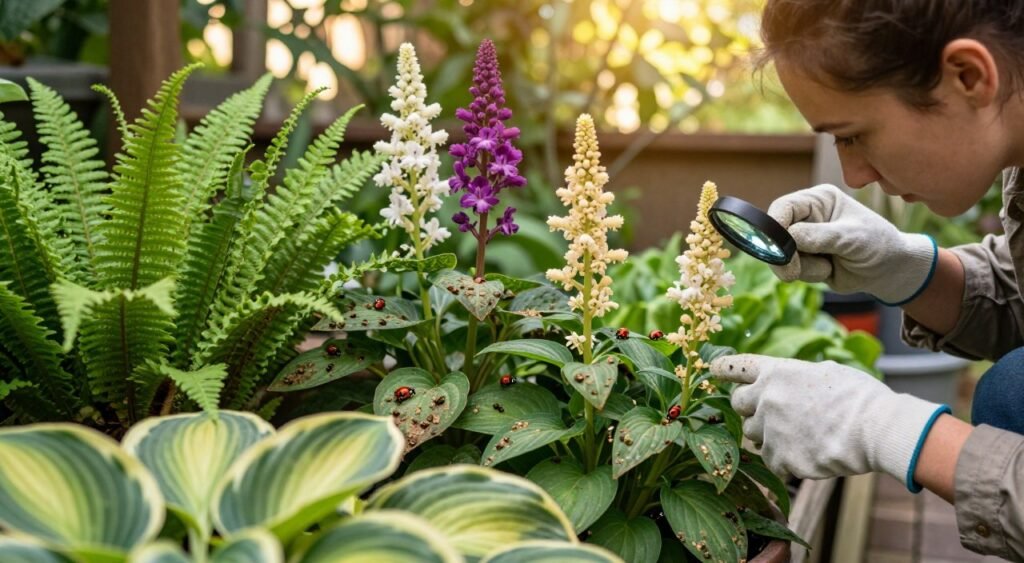
Pests like aphids, fungus gnats, and slugs love shaded areas. Aphids hide on leaves, and fungus gnats live in damp soil. Look for them often to control pests.
Find sticky spots or tiny holes? Act fast. Clean leaves with a damp cloth or use insecticidal soap. This stops problems before they spread.
Preventing Fungal Issues with Proper Airflow
Stagnant air harms your shade garden. It leads to powdery mildew and other diseases. Good air flow keeps plants healthy and prevents root rot.
Spread out your pots to improve air flow. Use a fan in enclosed areas to move air. This keeps your plants safe from humidity and pests.
Seasonal Care and Overwintering Strategies
As autumn comes, your patio garden needs a new plan to stay alive. Good patio plant care in this time keeps your plants healthy. This way, they’ll be ready to grow again when it’s warm.
Protecting Tender Perennials from Frost
When it gets colder, tender plants have a hard time. Watch the weather to know when frost is coming. If it’s really cold, move your plants to a safe place like a garage.
For plants outside, use frost blankets or burlap to keep them warm. Make sure the covering doesn’t touch the leaves. This can cause rot. A spot near the house wall can also keep roots warm.
Transitioning Your Patio Plants for the Next Season
Keeping overwintering patio plants alive is more than just moving them. Check for pests and remove dead leaves before bringing them inside. This is also when you should deadheading flowers to save energy.
Water your plants very little during the cold months. Most plants don’t need much water when they’re resting. Overwatering can kill them.
| Plant Type | Winter Location | Watering Needs | Pruning Level |
|---|---|---|---|
| Impatiens | Indoor Window | Low | Moderate |
| Begonias | Cool Basement | Minimal | Heavy |
| Fuchsias | Dark Garage | Very Low | Severe |
By following these patio plant care tips, your plants will thrive every year. Taking care of your plants all year keeps your garden beautiful.
Common Mistakes to Avoid When Gardening in Shade
Even the most seasoned gardeners can face challenges in shaded patios. Choosing the best shade flowers is a good start. But, how you care for them daily is key to success.
Overwatering and Soil Compaction Issues
Many think all plants need the same water, no matter the light. But, in shade, water evaporates slower. This can harm your plants if you water too much.
Too much water makes the soil hard. This stops roots from getting oxygen. Plants then can’t get the nutrients they need. Always check the soil before watering.
Ignoring the Need for Occasional Fertilization
Some think plants in shade don’t need food. But, a good shade garden design needs nutrients for plants to stay healthy. Without food, plants may look weak or lose color.
Even when focusing on pest control for shade plants or overwintering patio plants, don’t forget about food. A balanced fertilizer can help a lot. Regular care keeps plants strong against stress.
«Gardening is a patient process of learning what your plants need, rather than forcing them to adapt to your schedule.»
| Common Mistake | Resulting Issue | Corrective Action |
|---|---|---|
| Overwatering | Root rot and compaction | Check soil moisture first |
| Neglecting Feed | Yellowing leaves | Use balanced fertilizer |
| Poor Airflow | Fungal growth | Space plants properly |
By avoiding these common mistakes, your patio can stay beautiful. Remember, watching your plants closely is the best way to keep them healthy all year.
Conclusion
Creating a lush patio in the shade is rewarding. It turns overlooked corners into personal retreats. You now know how to pick the right plants and manage soil moisture.
Success comes from knowing your environment. By choosing plants like Impatiens or Fuchsias, your garden stays joyful all year. With care, these plants can grow well in dim spaces.
Your patio is an extension of your home. It shows your style and offers a peaceful escape. Follow these steps for a beautiful, living display in your shaded area.
Share your progress with gardening friends or local nurseries like Proven Winners. Your hard work makes your home environment better. Start today and watch your patio come alive.