
Make your outdoor walkways come alive by picking the right flowers. The best flowers for garden pathways make your garden inviting. They encourage visitors to wander through your beautiful landscape.
Choosing the right flowers is more than picking colors. You need to think about how they handle foot traffic and the weather. This way, your garden stays sustainable and resilient all year.
Creating a welcoming entrance starts with knowing your soil and sunlight. Match your plants to your environment for a garden that grows well with little care.
This guide will show you how to create a beautiful, lasting display. Whether you like a neat, formal look or a wild, cottage style, you’ll get the advice you need. Turn your walkway into a garden masterpiece.
Assessing Your Garden Pathway Environment
Starting a walkway garden means looking at the ground first. Before picking plants, you need to know your garden’s special conditions. Understanding these factors is the most critical step in keeping your garden healthy.
Evaluating Sunlight Exposure Patterns
Watch your pathway during the day to see how much sun it gets. Some spots get lots of sun, great for sun-loving garden plants. Other areas might be shady, needing shade-tolerant garden flowers.
Analyzing Soil Composition and Drainage
Start with a simple test to check your soil. Dig a hole and fill it with water. If it takes a long time to drain, you might need to change your soil. Good soil helps your plants grow strong roots.
Considering Local Climate and Hardiness Zones
Always check your local USDA hardiness zone. This helps pick plants that can handle your area’s weather. Using native garden plants is smart because they fit your local climate. This makes your garden strong and beautiful all year.
Defining Your Aesthetic and Functional Goals
Setting clear goals for your garden pathway landscaping is key. It makes sure your garden looks good and works well for you. This step helps your garden match your home and look great.
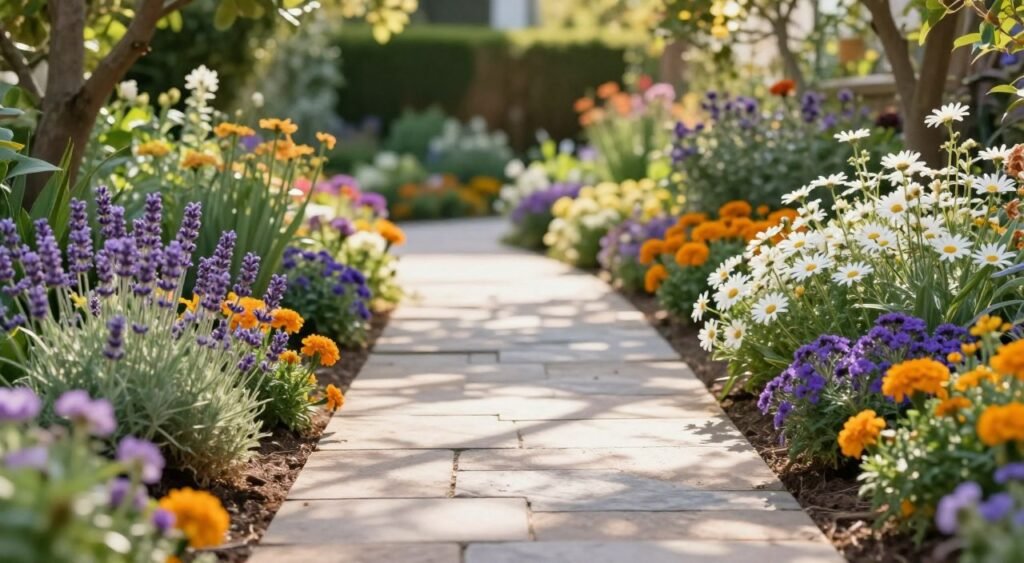
Selecting a Color Palette for Visual Flow
Choosing the right colors is important. It guides people through your garden smoothly. You can pick one color for calm or many colors for fun. Sticking to one color keeps your garden looking neat.
Balancing Formal Symmetry Versus Cottage Garden Chaos
Planning your garden is about choosing order or freedom. Formal gardens are neat and structured. Cottage gardens are wild and welcoming.
| Design Style | Primary Feature | Maintenance Level | Best For |
|---|---|---|---|
| Formal | Symmetry | High | Modern Homes |
| Cottage | Naturalism | Moderate | Casual Landscapes |
| Minimalist | Negative Space | Low | Small Walkways |
Determining Desired Bloom Times and Seasonal Interest
To keep your garden bright, think about when plants bloom. Using seasonal garden color keeps your garden lively all year. Mix plants that bloom at different times for a beautiful view all season.
- Select early spring bulbs for a burst of post-winter energy.
- Choose summer perennials to provide lush, full foliage.
- Add late-blooming shrubs or grasses for autumn texture and color.
Understanding the Best Flowers for Garden Pathways
When you design a garden path, the plants you pick are key. They make your garden look good and keep it healthy. Picking the best flowers for garden pathways means finding plants that look good and grow well.
By mixing different plants, your garden path becomes more interesting. It feels like a journey, not just a walk.
Low-Growing Groundcovers for Edging
Groundcovers are great for making your walkway look neat. They spread out and keep weeds away. Plants like creeping thyme or moss phlox are good because they can handle a little foot traffic.
Fragrant Varieties for Sensory Experiences
Adding fragrant garden plants makes walking through your garden special. Place these plants where you’ll walk by them. This way, you can smell their scent as you go.
Lavender, sweet alyssum, and dianthus are great for this. They smell nice when you touch them.
Pollinator-Friendly Blooms to Enhance Biodiversity
By gardening for pollinators, you help local bees and butterflies. Choose flowers that are rich in nectar. This makes your walkway a key path for wildlife.
Many native garden plants are perfect for this. They fit well in your local climate and need little care.
| Plant Category | Primary Benefit | Maintenance Level | Best Placement |
|---|---|---|---|
| Groundcovers | Weed Suppression | Low | Directly along edges |
| Fragrant Herbs | Sensory Appeal | Medium | Near seating areas |
| Pollinator Blooms | Biodiversity | Low | Back of the border |
Step One: Measuring and Preparing Your Planting Beds
Start by measuring and prepping your planting beds. This step is key to a beautiful garden. It helps your planting garden borders grow well for years.
Planning ahead stops plants from growing too big too fast. This saves you from the hassle of replanting.
Calculating Space Requirements for Mature Growth
Know the mature width of each plant before buying. Many people space plants too close together. This can cause problems like fungal diseases and slow growth.
«The secret of gardening is to make the plants feel at home.»
Use a tape measure to mark out your beds. Make sure each plant has enough room to grow. If you have layered plants, give the tall ones space to spread without blocking sunlight.
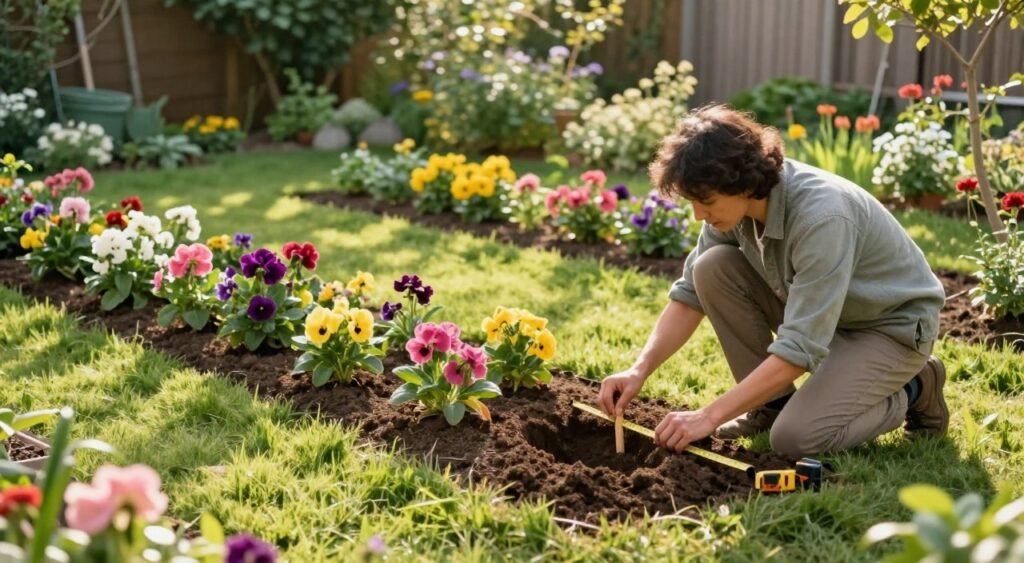
Clearing Weeds and Amending Soil Quality
After measuring, focus on soil preparation for flowers. Start by removing weeds and their roots. This stops them from competing with your new flowers.
Test your soil to know its pH and nutrient levels. Most flowers like well-draining soil with organic matter. Add compost or aged manure to the top six inches of soil. This makes the soil rich and helps plants grow strong roots.
Installing Edging Materials to Define Boundaries
Edging keeps your walkway clean and neat. You can use natural stone, brick, or even metal or plastic strips. These barriers help keep your lawn mower on track and mulch from spreading.
Make sure the edging is buried deep enough. This stops grass from growing into your flower beds. A clear boundary makes your garden look professional and makes upkeep easier.
Step Two: Selecting Durable Plant Varieties
When you design a walkway, picking durable plants keeps your garden bright all year. Places near hard paths get hot and soil gets hard. So, picking the right plants is key.
By choosing tough plants, you make a garden that’s easy to care for. It will do well even when lots of people walk by.
Choosing Perennials for Long-Term Investment
Perennial garden plants are a smart choice for your garden. They come back every spring. This saves you time and money.
Many drought-resistant garden plants are perennials. They’re great for sunny spots where water can disappear fast.
Incorporating Annuals for Continuous Color
Perennials give your garden shape, but add annuals for color all summer. These plants bloom from spring to fall. They fill in the gaps between shrubs.
You can change them every year. This lets you try new colors and textures near your path.
Selecting Foot-Traffic Tolerant Species
If your path has plants between pavers, pick ones that can handle being stepped on. Fragrant garden plants like creeping thyme are good. They smell nice when you brush against them.
Choose sun-loving garden plants for areas that get a lot of foot traffic. They stay strong even when stepped on by accident.
| Plant Category | Primary Benefit | Maintenance Level | Best Use |
|---|---|---|---|
| Perennials | Long-term structure | Low | Border edges |
| Annuals | Continuous blooms | Moderate | Accent pockets |
| Creeping Herbs | Traffic tolerance | Low | Between pavers |
Step Three: Designing Your Planting Layout
A well-planned garden layout makes a simple path beautiful. It guides visitors through your outdoor space. This part of garden walkway design balances beauty and plant needs.
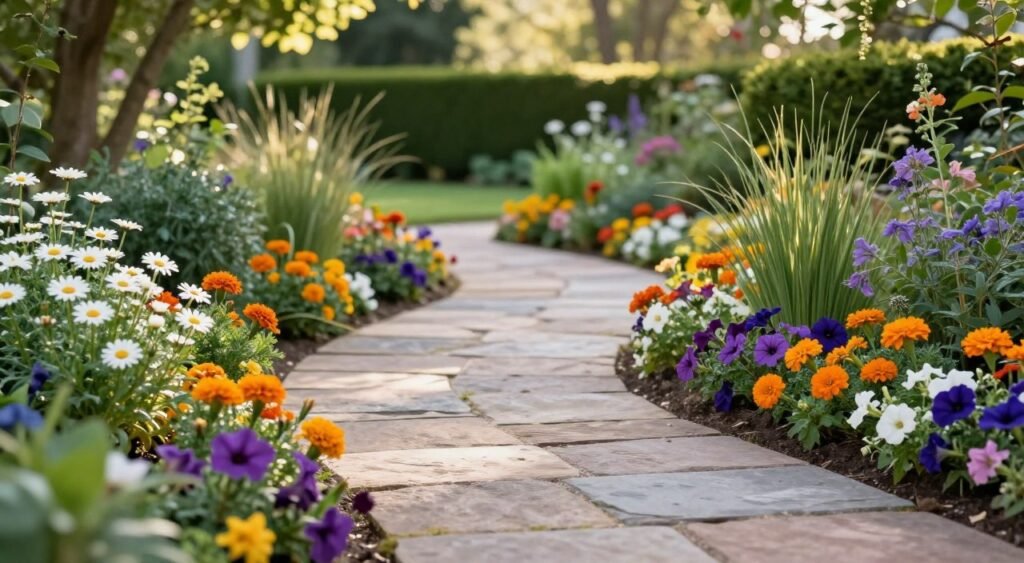
Layering Heights for Depth and Perspective
Layer your plants by their height. Put tall ones in the back for a lush look. Short plants in the front soften the path edges, key in garden pathway landscaping.
This makes your garden look bigger and more welcoming. Keeping tall plants back keeps the path clear for everyone.
Creating Rhythm Through Repetition
Repeat plant shapes or colors to unify your space. This rhythm makes your garden feel smooth. Garden layout planning keeps it from looking messy.
Grouping plants together makes a strong visual statement. This makes your garden look like a pro designed it. Repetition is key to a professional look.
Spacing Plants to Prevent Overcrowding
Space plants right for their health. Check their mature width before planting. This prevents disease and keeps your garden design aesthetics sharp.
Planting too close can harm plants. Give them space for better health and a vibrant look.
| Design Strategy | Primary Goal | Key Benefit |
|---|---|---|
| Layering Heights | Create Depth | Improved Perspective |
| Rhythmic Repetition | Unify Design | Cohesive Visual Flow |
| Strategic Spacing | Ensure Health | Better Airflow |
Step Four: Planting Techniques for Success
To get a pro look in your garden, you need to plant carefully. Follow professional garden planting tips to help your plants grow strong roots fast. This way, they won’t get shocked and will look great along your paths.
Proper Digging and Root Preparation
Start by digging a hole that’s twice as wide as the plant’s root ball. Don’t make it deeper than the pot. Loosen the roots if they’re tight or circling the pot. This helps the roots spread out in the soil.
For shade-tolerant garden flowers, make sure the soil is easy for roots to grow through. Put the plant in the hole so the root ball is level with the ground. Then, gently press the soil around the base to fill in air pockets without squishing the soil.
Watering Strategies for Newly Established Plants
New plants need lots of water in the first few weeks. They’re very sensitive. Use garden irrigation systems if you can, but sometimes you need to water by hand.
Check the soil every day by sticking your finger in it. If it’s dry, water it slowly and deeply. Consistency is the key to keeping your plants healthy all season.
Applying Mulch to Retain Moisture and Suppress Weeds
Adding organic mulch is the last step to keep your garden healthy. Use two to three inches of wood chips or bark. It keeps the soil moist and the temperature right. It also stops weeds from growing.
Make sure to leave a little space between the mulch and the plant stems. This keeps the plants healthy and makes your garden look neat. It also means you won’t have to weed as much.
Maintenance Tips for Thriving Pathway Blooms
Keep your garden path beautiful by taking care of your plants. A regular care plan makes your perennial garden plants stay bright and healthy. Just a few minutes each week can keep your garden looking great.
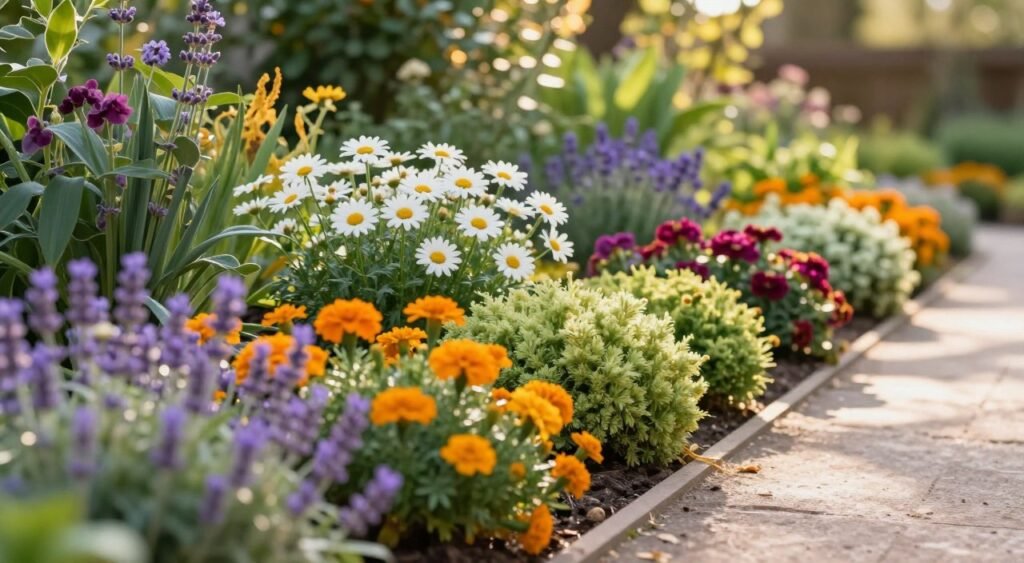
Deadheading Practices to Encourage Reblooming
Deadheading helps your low-maintenance garden flowers bloom longer. By cutting off old flowers, you stop the plant from making seeds. This lets the plant make more flowers instead.
Just cut off the old flower head above the first set of leaves. This keeps your garden looking nice and brings more color. It’s a simple trick that makes a big difference all summer.
Managing Pests and Diseases Naturally
Good garden pest management means watching for problems early. Instead of using harsh chemicals, attract good bugs. They eat bad bugs and keep your garden balanced.
If you see pests, try washing them off with water or use organic neem oil. Healthy plants with enough water and space don’t get sick as often. A strong plant fights off many garden diseases.
Seasonal Pruning and Winter Protection
When it’s almost winter, focus on pollinator-friendly gardening. Prune your plants to remove dead parts. This stops pests from staying in your garden. But, leave some seeds for birds.
Put organic mulch around your plants to keep them warm. This mulch keeps the soil from freezing and protects the roots. With these steps, your garden will be ready for spring.
Common Mistakes to Avoid When Planting Walkways
Even the most seasoned gardeners sometimes make mistakes. They want a beautiful entrance but might choose poorly. Knowing these mistakes helps keep your garden lovely and useful.
Overplanting and Blocking Access
It’s easy to want to fill every spot with plants. But overplanting makes walkways tight. You’ll always be cutting back plants just to walk.
Choose a few low-maintenance garden flowers instead. This lets plants breathe and keeps your path open. It also helps with garden pest management.
Ignoring Mature Plant Width
Many forget to check the plant tag for mature size. A small seedling can grow a lot by summer. Not planning for this means a lot of pruning.
Use garden edging ideas to keep plants in their place. This keeps your path clear. A well-planned garden grows into its space, not out.
Neglecting Irrigation Needs Near Hardscapes
Stone or concrete paths get very hot in summer. This heat dries out the soil quickly. Without proper watering, plants will suffer.
Use garden irrigation systems like drip lines for steady moisture. For hot areas, pick drought-resistant garden plants. They’ll do well even when it’s very hot.
«A garden is a grand teacher. It teaches patience and careful watchfulness; it teaches industry and thrift; above all, it teaches entire trust.»
| Common Mistake | Resulting Issue | Recommended Solution |
|---|---|---|
| Overcrowding | Blocked paths | Follow spacing guides |
| Ignoring mature size | Constant pruning | Research plant growth |
| Poor water planning | Stressed, dry plants | Install drip irrigation |
Conclusion
Creating a garden path takes time and a clear idea of what you want. You now have the tools to make a space that shows your style and helps local plants.
Using these tips helps you avoid problems that can stop plants from growing. By preparing the soil right and picking the right plants, your path will stay lively all year.
Gardening is a journey of learning and growth. Your path will change as plants grow and seasons change. Enjoy these changes to keep your garden welcoming.
Share your garden with local gardening groups or neighbors. Your beautiful path shows the power of good design. Enjoy the peace and beauty it brings to your home every day.