
Make your yard look amazing with flowering ground cover plants. They turn empty spots into a beautiful carpet. This makes your home look better right away.
These plants are not just pretty. They also stop soil from washing away and keep weeds out. This makes gardening easier for you.
Before you buy plants, think about a few things. Check your local weather, soil, and sunlight. These help your plants grow well.
Choosing the right flowering ground cover plants makes your garden last long. With the right plan, your outdoor space will stay beautiful every year.
Assessing Your Garden Environment
Starting a lush garden needs a good look at your yard. Before buying flowering ground cover plants, check your yard’s conditions. This helps them grow well.
Determining Your USDA Hardiness Zone
The USDA Plant Hardiness Zone Map is key for gardening. It shows zones by winter’s coldest average temperature.
Knowing your zone helps pick plants that will grow. Always check the hardiness rating on plant labels to make sure they fit your area.
Analyzing Soil Composition and Drainage
Good soil is key for flowering ground cover plants. Test your soil to know its type and nutrients before planting.
- Clay soil: Holds too much water, which can harm roots.
- Sandy soil: Drains fast and may need organic matter to keep nutrients.
- Loamy soil: Best for keeping water and nutrients.
If your soil drains badly, add compost or make raised beds. Good drainage stops water from harming roots.
Measuring Sunlight Patterns Throughout the Day
Sunlight is crucial for your garden. Watch your yard at different times to know where to plant.
Most flowering ground cover plants need certain sunlight levels:
- Full Sun: Gets at least six hours of direct sun.
- Partial Shade: Gets three to six hours of sun, often in the morning.
- Deep Shade: Gets less than three hours of direct light, under trees.
Knowing your light patterns helps place plants right. Taking the time to map your light keeps your garden bright and colorful.
Defining Your Landscaping Goals and Needs
Changing your outdoor space starts with knowing what you want. You need to figure out what you want it to look like and how it will work. This helps you pick the right plants for your yard.
Controlling Erosion on Slopes and Banks
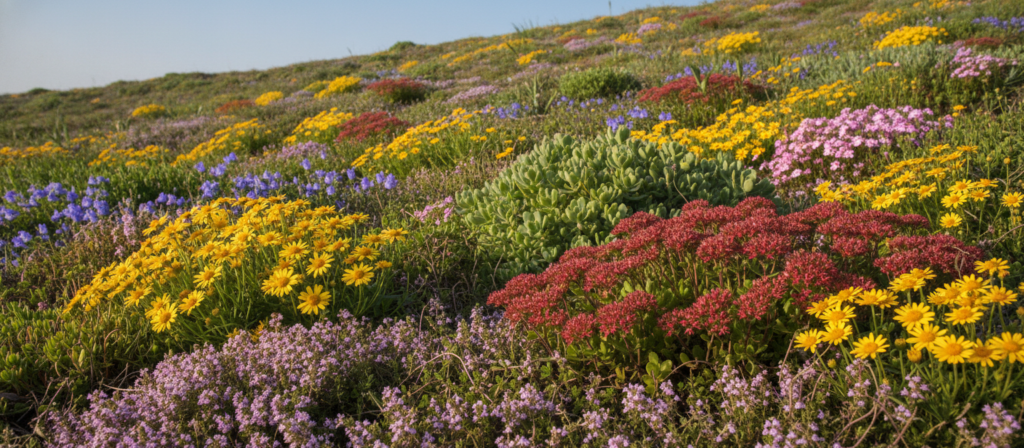
Steep areas can be a problem when it rains. The right ground cover plants for slopes can keep the soil in place. They have strong roots that hold the earth.
Choosing the correct variety is key for success. These plants form a mat that keeps the ground stable. It’s better than using expensive walls.
Suppressing Weeds in Garden Beds
Weeding can take up a lot of time. But, some plants can stop weeds naturally. They grow close together and block sunlight, stopping weeds from growing.
By picking strong, easy-to-care-for plants, you make a weed-free zone. Your garden will look great without you always fighting weeds.
Creating Aesthetic Borders and Walkway Edgings
Ground covers also make your yard look good. They can make your walkways look neat and clean. This adds a nice touch to your home.
Look for plants with different colors or textures for your paths. They make a smooth transition from hard surfaces to grass. This way, your garden is both pretty and useful.
Selecting Flowering Ground Cover Plants Based on Light Exposure
Creating a lush carpet of flowers starts with picking the right plants. The light in your yard is key to their health and blooms. By sorting your garden, you make sure each plant gets the right light for optimal growth.
Best Ground Cover for Sunny Areas
Wide-open spaces need ground cover plants for sunny areas that handle heat well. These plants love direct sunlight and stay colorful. Creeping Phlox and Sedum are great for a colorful, dense mat that also saves water.
These plants keep your soil in place and add color to your lawn. When picking ground cover plants for sunny areas, choose ones that stay green and full in hot months.
Top Picks for Shaded Garden Corners
Dark corners need special plants to look good. Best ground cover for shaded areas can make these spots inviting. Sweet Woodruff and Ajuga brighten up dark spots with their blooms and texture.
These plants are made for low light. Picking the best ground cover for shaded areas balances your garden design.
Versatile Options for Partial Shade
Many gardens have areas that get some sun and some shade. These spots are perfect for trying different plants. Lamium and Vinca minor are versatile choices for areas with changing light.
These plants cover well and bloom reliably, even with small light changes. Adding them to your garden keeps it vibrant and healthy all year.
Choosing Varieties for Specific Soil Conditions and Moisture
You can make any hard spot green by picking the right plants. Different soils need different plants to grow well. Knowing your soil helps your garden stay bright all year.
Drought Tolerant Ground Cover Plants for Dry Climates
Hot or dry yards need tough plants. Drought tolerant ground cover plants are great for these areas. They grow deep roots to survive without much water.
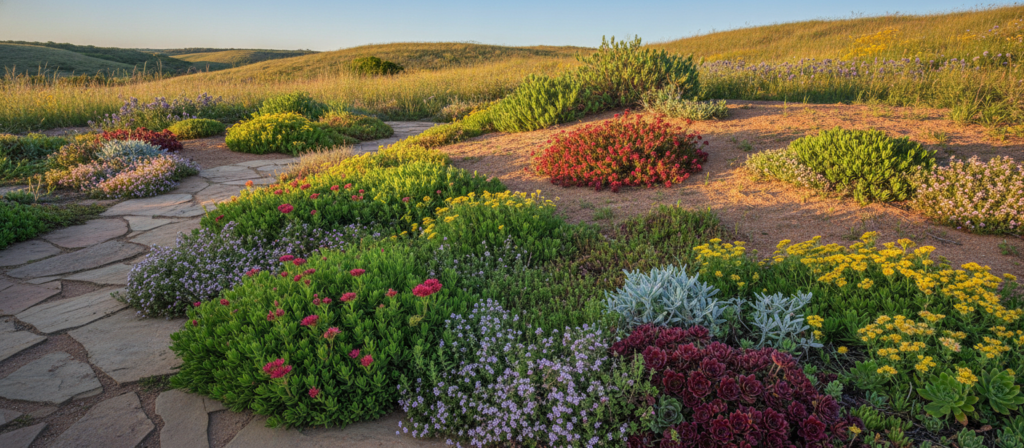
Try creeping thyme or sedum in sunny, dry spots. They need little care and look stunning. The right drought tolerant ground cover plants save water and prevent soil erosion.
Moisture-Loving Varieties for Rain Gardens
Areas that collect water need special plants. Look for plants that like wet feet but don’t rot. These are perfect for rain gardens or near downspouts.
Creeping jenny or certain ferns do well in wet spots. They control water runoff and add green to your yard. Make sure your plants can handle being wet sometimes.
Adapting to Clay or Sandy Soil Profiles
Soil type affects which plants grow. Clay holds water but can get hard. Sandy soil drains fast but can be dry.
For clay, add compost to improve it. For sandy soil, pick plants that like to drain fast. For clay, choose drought tolerant ground cover plants that can handle wet soil.
Evaluating Maintenance Levels and Growth Habits
Keeping your garden healthy is easy if you know how plants spread. Understanding your plants helps you create a balanced garden. This saves time and keeps your garden looking great all year.
Identifying Low Maintenance Ground Cover Plants
If you want a garden that’s easy to care for, choose low maintenance ground cover plants. These plants spread fast and fight weeds on their own. They need little water and pruning.
- Creeping Phlox: Perfect for rocky areas and requires minimal care.
- Sedum varieties: Excellent for dry, sunny spots with almost no fertilization needs.
- Ajuga: A hardy choice that thrives in various light conditions with little fuss.
Managing Fast Spreading Ground Cover Plants
Some plants spread fast and need careful handling. Fast spreading ground cover plants can get out of control. Use barriers like metal edging to keep them in check.
Watch your plants closely to stop them from taking over. Trim them back when they get too big. This keeps your garden looking neat and planned.
Understanding Perennial Ground Cover Plants Lifecycle
Good gardening means planning for the long-term. Perennial ground cover plants grow in spring and summer, then rest in winter. Knowing when they rest helps you prepare for cold weather.
When they’re dormant, add mulch to protect their roots. This lets them come back stronger each spring. Consistent care during growing seasons rewards you with years of beauty.
Incorporating Native Flowering Ground Cover Plants
Adding native ground cover plants to your garden is smart. They grow well in your area’s weather and soil. This makes your garden look good and stay strong.
Benefits of Choosing Regionally Native Species
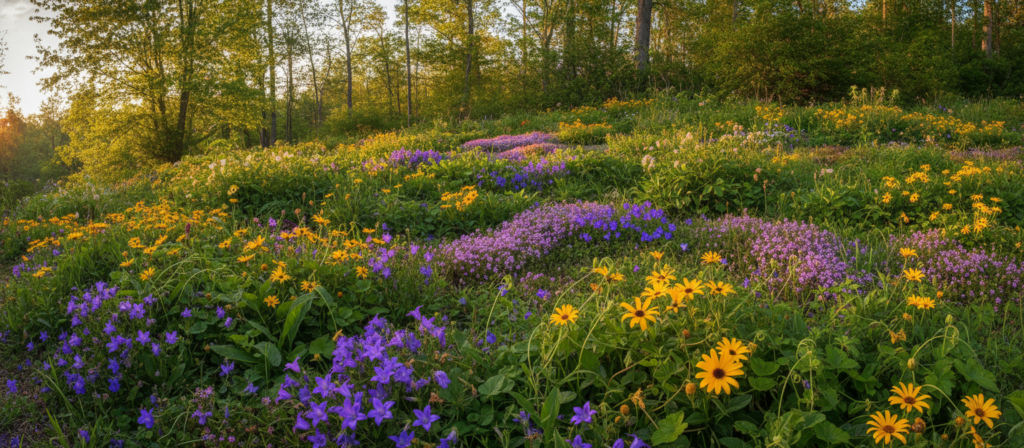
Choosing regionally native species helps your garden. They fit your local weather and soil better than other plants. This means they need less help to grow and stay healthy.
Supporting Local Pollinators and Wildlife
Your garden’s plants are key to local nature’s health. Native plants give food and homes to bees, butterflies, and bugs. They help keep your area’s wildlife happy and healthy.
Reducing Water and Fertilizer Requirements
Native plants use less water and food than others. They like your soil just the way it is. This saves you money and helps the planet.
Planning for Seasonal Interest and Bloom Times
Imagine a yard that looks fresh in spring and stays beautiful into winter. A well-planned garden looks good all year, not just in one season. By mixing your plants, your garden stays interesting and pretty all the time.
«The garden is a mirror of the soul, reflecting the beauty of every season.»
Selecting Plants for Early Spring Color
Spring is the time to wake up your garden after winter. Look for small perennials that bloom when it starts to get warmer. Creeping Phlox and Ajuga are great for early color.
These plants show that life is coming back to your garden. Put them in sunny spots for the best look. Planting them early helps your garden feel alive again.
Maintaining Summer Blooms in Your Landscape
When it gets warmer, focus on plants that love the heat. Ground covers like Sedum or Thyme bloom a lot and need little water.
Keep your garden bright by removing old flowers. This makes your plants bloom more. Keep them watered and sunny to stay healthy until fall.
Extending Interest into Autumn and Winter
A great garden doesn’t stop when flowers are gone. Choose plants for their striking foliage colors or berries. Wintercreeper or evergreen mosses keep your garden interesting when it’s cold.
Look for plants that turn colors like bronze, red, or purple in the cold. These colors make your garden warm in late autumn. Plants with persistent winter interest keep your garden beautiful all year.
Step-by-Step Guide to Planting Your Ground Cover
Getting a lush yard is more than just planting. Proper installation is key for a beautiful display. It helps your plants grow strong and stay green for years.
Preparing the Soil Bed for Optimal Growth
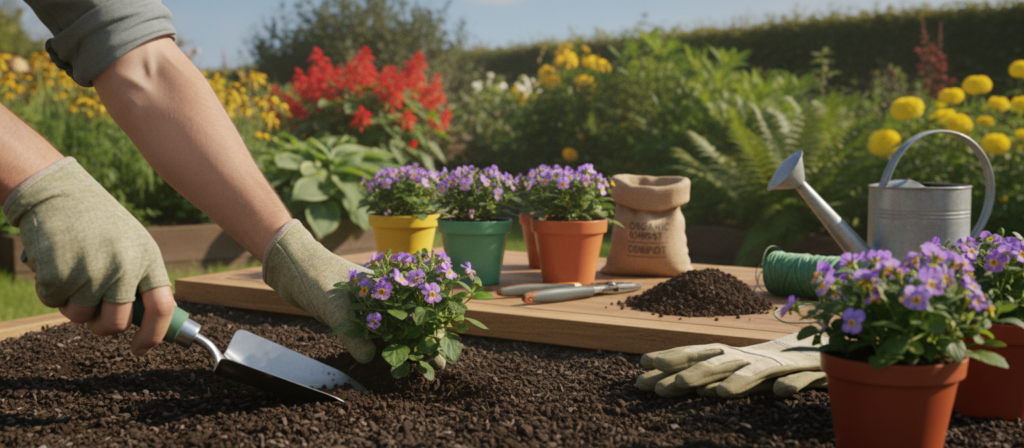
Start by removing weeds and debris. This lets your plants get the nutrients they need. Also, loosen the soil to six inches deep to help roots grow.
If your soil is heavy or poor, add compost or aged manure. This makes the soil better for your plants. A good soil bed welcomes your new ground cover.
Spacing Plants for Proper Coverage
Spacing plants right is important. Too far apart means weeds, too close means problems. Find the right spot for your plants.
Check how your plants grow to space them right. A staggered pattern works best. It lets plants spread out well.
Initial Watering and Mulching Techniques
Water your plants well after planting. This helps them adjust. Keep them moist for a few weeks while they settle.
Then, add a thin layer of mulch. It keeps moisture in and weeds out. But don’t put it too close to the stems to avoid rot.
Troubleshooting Common Issues with Ground Covers
Even the best gardens can run into problems. Ground covers are tough but can still face challenges. Keep an eye out for small issues before they get big.
Managing Pests and Disease Outbreaks
Pests and diseases love dark, still places. Check your plants often for signs of trouble. Catching problems early stops them from spreading.
- Hand-pick larger pests like slugs or beetles during the early morning hours.
- Apply organic neem oil or insecticidal soap if you notice an infestation of aphids or mites.
- Remove and dispose of any plant parts that show signs of fungal infection to stop the spread of spores.
Preventing Overcrowding and Competition
Ground covers grow fast but can get too dense. When plants are too close, they fight for water, sunlight, and food. This makes them weak and invites disease.
Keep your plants healthy by thinning out dense areas every few years. Remove old stems or crowded spots to let air flow. This helps each plant get what it needs to stay healthy.
Correcting Nutrient Deficiencies
Plants may look tired even with enough water and light. This means they need more nutrients. Look for signs like yellow leaves or weak stems:
- Yellowing leaves often mean they need more nitrogen. Use a balanced organic fertilizer.
- Stunted growth or purple leaves might mean they need more phosphorus.
- Weak stems or poor flowers could mean they need potassium or other nutrients.
Before adding anything, test your soil. This tells you exactly what your plants need. The right nutrients will make your plants look great all season.
Conclusion
Choosing the right flowering ground cover plants makes your yard come alive. You now know how to check your soil, light, and climate. This helps you pick the best plants.
By picking native plants, you help your local environment. You also make your garden easier to care for. These plants will look beautiful all year.
Gardening is a fun journey of learning. Watch how your plants grow and change with your yard. This helps you make your garden even better over time.
Begin your garden project today. You’ll have a beautiful, green space right by your door. Your hard work will make your home happier and help the planet.