
Changing your outdoor space needs a mix of hard and soft elements. Adding flowers that complement stone landscapes makes your yard look better. It brings color and softens the stone.
This way, a plain rock garden becomes a thriving, beautiful place. Look at your yard and pick plants that go well with the stone.
Think about the colors and shapes of your stone before planting. Choosing the right plants makes your stone look even better.
Knowing how flowers and stone work together helps you create a nice look. Whether it’s a small patio or a big garden, the right plants make your home look great.
Assessing Your Stone Landscape Features
Every stone feature in your yard helps your garden grow. Before starting your stone garden design, look at your yard closely. This helps your plants grow well.
Identifying Stone Types and Textures
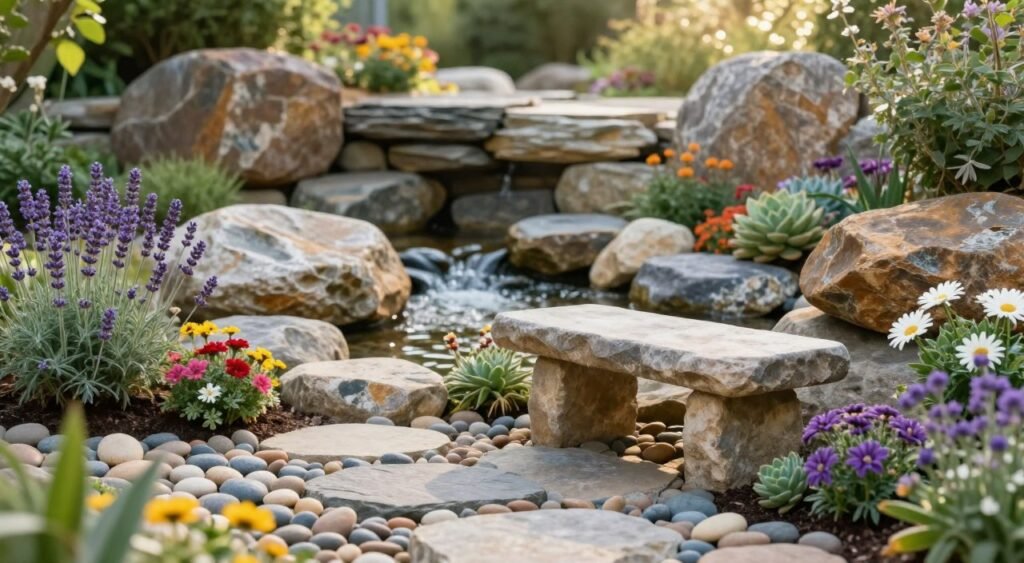
Different stones affect the environment in their own ways. Dark granite gets hot, while light limestone stays cool. Knowing what your stones are made of helps your plants.
Texture is also important in landscaping with stone. Rough stones hold water and moss. Smooth stones need different plants.
Evaluating Sunlight and Microclimates
Stone structures change the light and heat in your yard. Watch how the sun moves. A south-facing wall gets hot, while the north side stays cool.
Use this to place plants where they like it. This helps your garden grow well, no matter the weather.
Determining Soil Conditions Around Stone Structures
The ground near stones is often hard or filled with debris. You need to prepare the soil well for your garden. Dig holes to check the soil.
Rocky soil lacks the nutrients plants need. You might need to add compost or topsoil. Good soil preparation for gardens helps plants grow strong.
Your stone garden design is a living thing. By understanding your yard, you can make a beautiful balance of stone and plants.
Selecting Flowers That Complement Stone Landscapes
When you mix bright flowers with rough stone, you make a beautiful design. Picking the right flowers that complement stone landscapes needs a good eye for colors. It also helps to know how shapes look with hard surfaces. This way, a simple rock garden can become a fancy and welcoming place outside.
Matching Floral Colors to Stone Tones
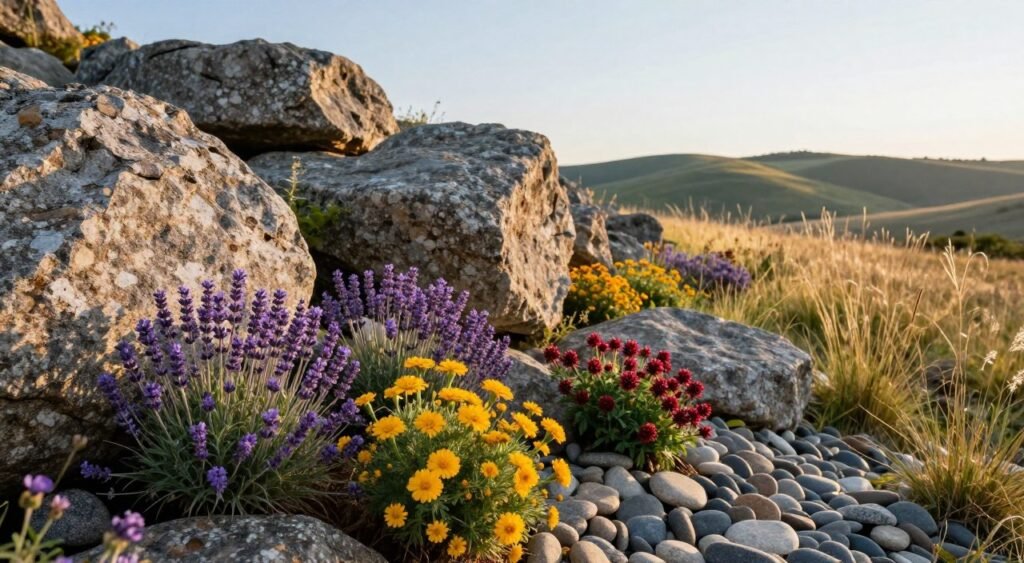
Your garden color palettes should match the stone’s natural colors. For example, cool stones like slate or grey granite look great with soft blues, purples, or white flowers. These colors make a calm and peaceful look.
Warm stones like limestone or sandstone go well with oranges, yellows, or deep reds. These colors bring out the rock’s golden sides, making everything look together.
«Nature does not hurry, yet everything is accomplished.» — Lao Tzu
This saying tells us that a good garden balances nature and plants.
Balancing Soft Petals with Hard Surfaces
The key to a great texture in garden design is mixing soft petals with hard stone. Plants with soft leaves or flowers can soften the look of boulders or walls. This mix keeps the garden from feeling too hard or cold.
Use plants like hydrangeas or lavender to soften the look of stone paths. These plants add a soft touch that makes the stone paths feel more welcoming. Strategic placement of these plants makes the stone stand out.
Considering Growth Habits and Scale
It’s important to think about the size of your plants and the stone. Plants should not cover the stone or get lost against it. Use small plants to highlight the base of big boulders, and tall plants to frame stone walls.
- Creeping Phlox: Perfect for softening the edges of stone steps.
- Ornamental Grasses: Provide height and movement against solid rock faces.
- Sedum: Ideal for filling gaps in stone without hiding the texture of the rock.
Remember the size of your plants when you plan. A small plant can grow big and hide the stone. Keeping the right size ensures your garden looks balanced and beautiful.
Designing for Seasonal Interest and Longevity
Your stone garden design should change with the seasons. Pick the right plants to keep your garden interesting all year. It should look great from spring to winter.
Choosing Perennials for Year-Round Structure
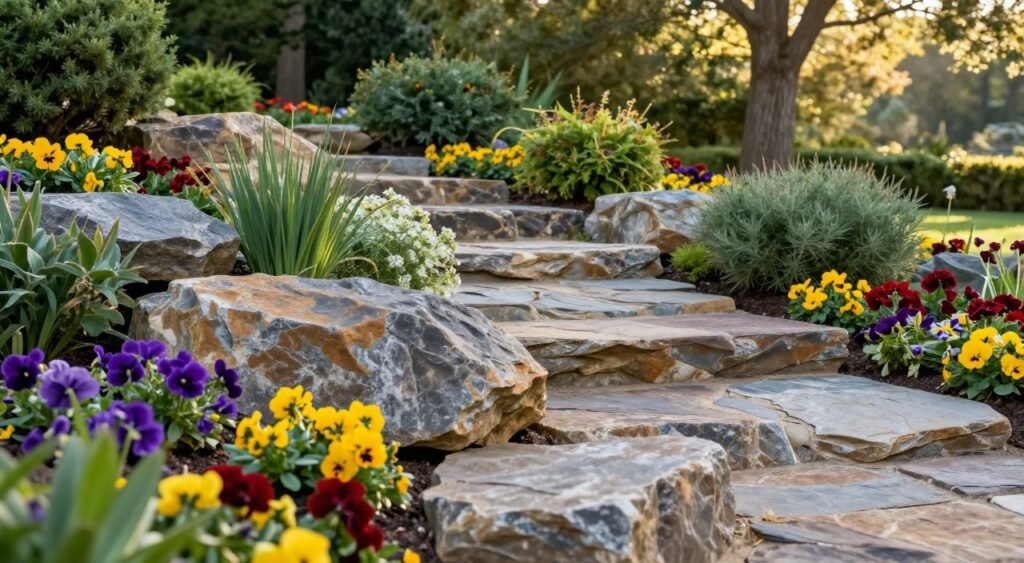
Perennials are the heart of a good garden. Choose perennial flowers for stone that look good all year. Plants with strong stems or leaves add stability.
Evergreen perennials keep your garden green in winter. They make sure your garden looks alive even when it’s cold.
Incorporating Annuals for Seasonal Pops of Color
Annuals add quick color to your garden. Plant them between stones for a full look. Many drought-tolerant flowers do well here.
Annuals let you change your garden’s look every year. This keeps it fresh and exciting.
Planning for Bloom Succession
Good seasonal garden planning means plants bloom one after another. This keeps your garden colorful all the time.
| Season | Plant Type | Key Benefit |
|---|---|---|
| Spring | Bulbs & Early Perennials | Early color burst |
| Summer | Drought-Tolerant Annuals | Heat resistance |
| Autumn | Ornamental Grasses | Textural interest |
| Winter | Evergreen Shrubs | Structural stability |
Plan your garden to flow smoothly through the seasons. Consistency is the key to a garden that looks great all year.
Integrating Plants into Rock Gardens and Crevices
You can make stone gaps green by picking the right plants. Rock gardens and stone crevices are special. They need plants that love dry, well-drained spots.
Selecting Alpine and Crevice-Loving Plants
Look for drought-tolerant flowers for your rocky spots. Alpine plants have deep roots to find hidden water. They grow small to fit well with the stone.
Think about using Sedum, Saxifraga, or Aubrieta. They add color to grey or brown stones. They make your boulders and pavers look better.
Techniques for Planting in Tight Stone Spaces
Planting in stone path planting needs patience and care. First, clean out the crevices for soil. Use a mix with grit or sand for the roots.
Place the plant crown above the soil to avoid rot. Firm the soil gently to help the roots grow strong.
Managing Drainage and Moisture Needs
Follow alpine garden tips for a healthy garden. These plants don’t like water, so good drainage is key. Make sure water flows through the stone gaps.
Watch your plants closely at first to keep them watered right. Most will need little water once they’re settled. Use the table below to pick the best plant for your stone spot.
| Plant Type | Sunlight Needs | Water Requirement | Best Use |
|---|---|---|---|
| Creeping Thyme | Full Sun | Low | Stone Path Gaps |
| Alpine Phlox | Partial Shade | Moderate | Rock Crevices |
| Stonecrop (Sedum) | Full Sun | Very Low | Dry Rock Walls |
| Moss Campion | Full Sun | Low | Tight Stone Pockets |
Softening Hardscapes with Trailing and Spilling Plants
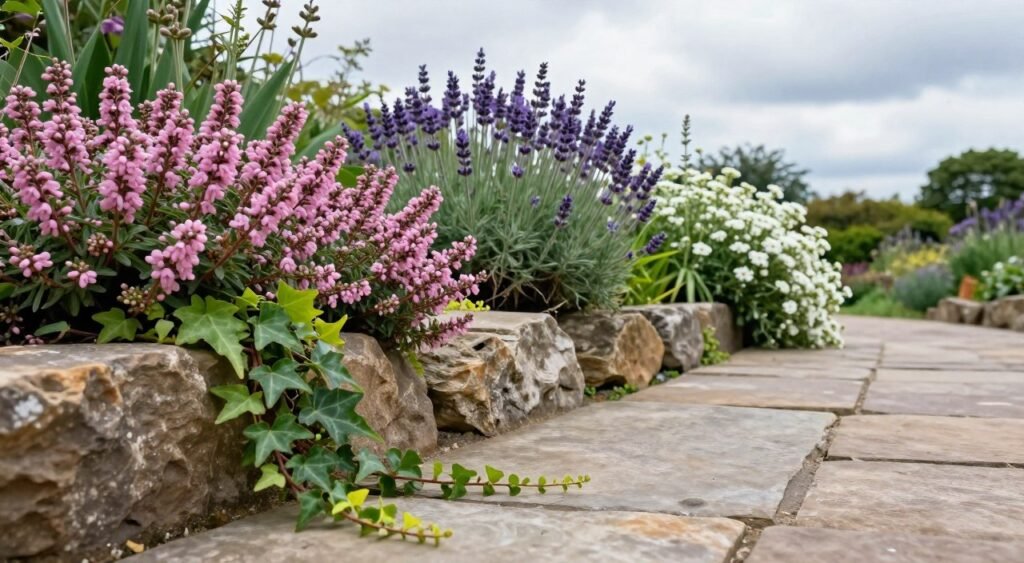
Trailing plants connect rock’s solidity with nature’s flow. They soften landscaping with stone spaces. This makes your outdoor area feel cozy and inviting.
Best Varieties for Cascading Over Retaining Walls
Choosing the right plants is key. Look for ones that handle heat and look beautiful as they spill over.
- Creeping Phlox: Perfect for early spring color and dense, mat-forming foliage.
- Aubrieta: Known for its vibrant purple and pink blooms that drape beautifully over edges.
- Trailing Rosemary: A functional choice that provides both texture and culinary benefits.
- Creeping Jenny: Offers bright chartreuse leaves that contrast sharply against dark stone.
«The most successful gardens are those where the architecture of the stone and the wildness of the plants exist in a state of constant, beautiful conversation.»
Creating Natural Transitions Between Stone and Soil
To look professional in stone wall landscaping, don’t plant in straight lines. Plant in crevices or let them spill over in clusters. This makes your garden feel natural and not forced.
Think about the size of your stone when picking plants. Big boulders can handle big plants. Small stone steps need smaller plants. This way, plants and stone work well together.
| Plant Variety | Sun Requirement | Growth Habit | Best Use |
|---|---|---|---|
| Creeping Phlox | Full Sun | Dense Mat | Wall Edges |
| Aubrieta | Partial Shade | Cascading | Stone Steps |
| Trailing Rosemary | Full Sun | Trailing Shrub | Retaining Walls |
Maintenance Tips for Spilling Plants
Keep your stone path planting healthy with the right care. Regular pruning is crucial. It keeps plants from getting too big or woody. Trim back after they bloom to encourage new growth.
Watch the soil moisture, as stone can get hot. Consistent watering and some fertilizer will keep your plants looking great. This stops them from taking over the stone.
Using Foliage to Enhance Stone Aesthetics
Flowers change with the seasons, but foliage stays all year. By focusing on leaves, you can make your garden look good all the time. This way, your garden stays pretty even when flowers are gone.
Selecting Textural Contrast with Ferns and Grasses
Adding texture to your garden is key when you have stone. Ferns have soft, feathery leaves that make stone look softer. Their leaves add a lush feel to the hard rock.
Ornamental grasses add movement and height to your garden. When the wind blows, they sway, making the stone seem alive. Pick grasses that like the light where your stone is to keep them healthy.
Utilizing Silver and Grey Foliage to Mirror Stone
Choosing plants that match your stone’s color is smart. Silver and grey plants connect your garden to the stone. This makes your garden look modern and timeless.
Plants like Lamb’s Ear or Dusty Miller have soft leaves that go well with rough stone. They reflect the stone’s grey tones, letting the stone be the main focus. This look is great for a calm, simple yard.
Creating Depth with Varying Leaf Shapes
To avoid a flat look, mix different leaf shapes and sizes. Combining big, round leaves with long, thin ones adds depth. This makes your garden feel bigger and more interesting.
Here’s a table to help pick the right foliage for your stone:
| Plant Category | Primary Benefit | Best Stone Pairing |
|---|---|---|
| Ferns | Softens hard edges | Shaded rock crevices |
| Ornamental Grasses | Adds vertical movement | Large boulder groupings |
| Silver Foliage | Mirrors stone color | Grey slate or granite |
| Broadleaf Evergreens | Provides year-round bulk | Retaining wall bases |
Practical Planting Steps for Stone Environments
Starting a garden near rocks is fun and rewarding. The first step is to prepare the soil well. This is because rocks can make the soil hard to drain or compact.
First, remove any trash or loose gravel. This helps the roots of plants grow better.
Preparing the Planting Bed Near Stone
After clearing, check the soil’s quality. If it’s too clay or sandy, add compost. This makes the soil better for plants.
Consistency is key for a good garden. Preparing the soil well helps plants stay healthy for a long time.
Ensuring Proper Root Development in Rocky Soil
Choose plants that do well in tight spaces. Make holes for planting twice as wide as the roots. This helps roots grow outwards.
If you hit rock, use raised beds or pots. This keeps the garden looking natural.
Follow these alpine garden tips for strong plants. Make sure the plant’s crown is above the soil. This stops rot and helps plants survive dry times.
Mulching and Finishing Touches
Use mulch to protect your plants. Organic mulch or stone chips keep the soil cool and weed-free. They also keep moisture in during hot times.
Clear soil from the stones for a clean look. A neat garden shows off the plants and stones well. These steps keep your garden looking great for years.
Maintenance Strategies for Stone-Integrated Gardens
Keeping a garden with stone and plants is special. Unlike soil-based gardens, stone walls need special care. This care keeps plants healthy and bright all year.
Managing Weed Control in Stone Gaps
Weeds can sneak into stone gaps, ruining your garden’s look. Instead of harsh chemicals, pull them out by hand. Use a special tool or a hori-hori knife to get roots without harming the stone.
To stop weeds, fill gaps with fine gravel or crushed stone. This makes it hard for weeds to grow. Check these spots often to catch weeds before they spread.
Watering Techniques for Stone-Adjacent Beds
Stone gets hot and dries out soil quickly. Water deeply but not often to help roots grow deep. This keeps plants cool in summer.
Drip irrigation is great for these areas. It waters roots without wasting water or staining stone. Always check soil moisture before watering to avoid too much water.
Pruning and Grooming for a Polished Look
Regular grooming keeps your garden looking great. As plants grow, they might hide the stone. Prune them to show off the stone.
Take off dead leaves to keep things neat and prevent pests. This simple step makes your garden look professional all year.
Conclusion
Creating a balanced landscape is all about mixing art and gardening skills. You can make hard stone look soft and welcoming. It shows off your personal style.
Look at how plants and light work together on your property. Moving plants a little can make a big difference. It makes your garden look better and healthier.
Choosing the right plants keeps your stone features alive and colorful. Watch your garden grow and change with the seasons. It’s a fun journey.
Share your garden journey with others. Post about it on Instagram or join local gardening groups. Your creativity might inspire others to start their own gardens.