
Turning your yard into a special place starts with a dream. By picking the right ornamental flowering plants for landscaping, you can make your home look better. You also create a welcoming space.
A beautiful garden is more than pretty. It’s a sanctuary for local pollinators like bees and butterflies. They help your area grow strong. Choosing beautiful flowers for landscaping lets you show your style and help nature.
Good gardening needs planning and knowing your area. When you plan your garden, you feel ready to make it colorful all year. Begin by picking plants that fit your climate and style.
Assessing Your Yard Conditions for Optimal Growth
Changing your outdoor space starts with knowing your yard. Before buying the best ornamental plants, learn about your yard. This helps avoid mistakes and makes your plants happy for a long time.
Evaluating Sunlight Exposure and Soil Quality
First, see how sunlight hits your yard. Most plants need at least six hours of sun. Others like partial shade.
Watch your yard at different times. Find out where it’s sunny and where it’s not.
Then, check your soil. It can be sandy, silty, or clay. Good soil is key for a healthy garden. It gives plants what they need to grow.
Do a simple test to see if your soil holds together or falls apart. This tells you if you need to add something to it.
| Soil Type | Texture Feel | Drainage Speed | Nutrient Level |
|---|---|---|---|
| Sandy | Gritty | Very Fast | Low |
| Silty | Smooth/Powdery | Moderate | Medium |
| Clay | Sticky/Plastic | Very Slow | High |
Understanding Your USDA Hardiness Zone
Your area affects which plants can live there. The USDA Hardiness Zone map shows this. It groups areas by temperature.
Knowing your zone helps pick the best ornamental plants for your area.
«Successful gardening is not about forcing nature to adapt to your desires, but rather learning to work in harmony with the specific conditions of your local environment.»
Choosing plants not for your zone can be a mistake. Always check if a plant fits your zone before buying. This keeps your garden looking good all year.
Planning Your Landscape Design Layout
Planning is key to great landscaping with flowers. A good garden needs a smart layout and a clear order. This makes your yard look nice and balanced.
Good planning turns a simple lawn into a lively outdoor space. It keeps plants from getting too crowded. This way, each plant can grow well.
Creating Focal Points with Flowering Shrubs
Garden flowering shrubs make great focal points. They catch your eye and hold your garden together. These plants add beauty and structure for many seasons.
«The garden is a mirror of the soul, reflecting the care and creativity you pour into its design.»
Put these shrubs near doors or at your home’s corners. They help guide visitors. Choose garden flowering shrubs that won’t grow too big for your space.
Layering Plants for Visual Depth and Texture
Layering plants adds depth to your garden. It makes sure you can see all plants from where you sit. This makes your garden interesting and full.
Begin with tall plants at the back. Then, add medium-sized ones, and finish with small ones up front. Learning these landscaping with flowers tricks makes your garden look rich and planned.
Selecting the Best Ornamental Flowering Plants for Landscaping
Your garden comes alive with the right ornamental flowering plants for landscaping. This choice shapes your yard’s look and feel. Mixing reliable and temporary plants keeps your garden looking great all year.
Choosing Perennials for Long-Term Garden Structure
Perennials are the backbone of a good garden. They come back every year, growing stronger and more beautiful. Choosing hardy plants like Peonies, Coneflowers, or Daylilies is a smart investment for your garden’s future.
These plants are key for a stable garden. They save you from replanting often and provide a solid base for your design. By focusing on these, you’ll make your garden one of the top flowering plants for garden design in your area.
Incorporating Annuals for Seasonal Color Pops
Annuals add vibrant, short-term colors to your garden. They fill gaps and brighten containers during the growing season. They bloom often, keeping your yard lively and fresh.
Annuals let you change your garden’s colors every year. This makes your landscape lively and interesting. Here’s a comparison to help you choose:
| Feature | Perennials | Annuals |
|---|---|---|
| Lifespan | Returns for many years | Lasts one growing season |
| Maintenance | Requires seasonal pruning | Needs frequent deadheading |
| Visual Impact | Provides structural stability | Offers intense color pops |
| Best Use | Permanent garden borders | Pots and accent areas |
By mixing perennials and annuals, your yard will be a hit with garden lovers. A mix of lasting structure and seasonal flair makes your home look professional.
Preparing the Soil for Planting Success
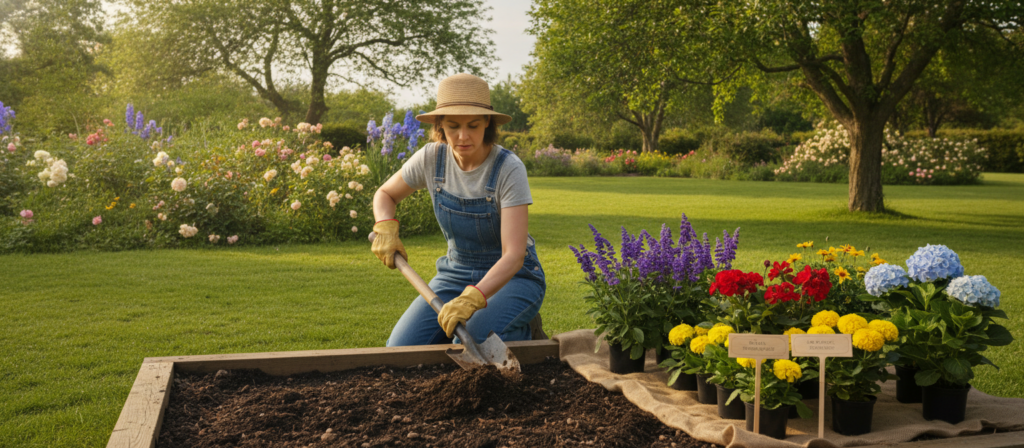
Your garden’s success starts with the soil. Healthy soil is like the lifeblood of any thriving landscape. It helps roots grow strong and plants get the nutrients they need. By taking care of your soil now, you avoid using harmful chemicals later. This helps your plants stay healthy for a long time.
Testing and Amending Soil pH Levels
First, find out your soil’s pH level. Most plants like a slightly acidic to neutral soil. You can buy a home testing kit at a local garden center to check your soil.
If your soil is too acidic, add lime to make it more alkaline. If it’s too alkaline, use sulfur or peat moss to lower it. Keep checking your soil’s pH to make sure your plants are happy.
Improving Drainage and Nutrient Content
The way your soil feels is important for your plants. Clay soils hold too much water, which can hurt roots. To fix this, mix in coarse sand or compost to help water drain better.
Sandy soils let water and nutrients slip away too fast. Adding compost, aged manure, or leaf mold helps keep moisture and nutrients in. These steps make your soil perfect for your plants to grow well.
Step-by-Step Guide to Planting Your Ornamentals
Turning your yard into a lively place needs careful planting. When you take good care of your beautiful flowers for landscaping, they grow strong. This makes your garden look great all year.
Digging the Proper Hole Depth and Width
The hole you dig is key for a healthy plant. Make it wide enough to fit the root ball twice over. Avoid digging too deep to keep the roots healthy.
«To plant a garden is to believe in tomorrow.»
Techniques for Proper Root Ball Placement
Be very gentle when you take plants out of their pots. If the roots are tangled, gently spread them out. This helps your ornamental plant varieties grow well in the soil.
Ensuring Correct Spacing Between Varieties
Spacing plants right is key for a good garden. Make sure each plant has enough room to grow. This optimal airflow helps prevent diseases and keeps your garden looking great. Always check how much space each plant needs.
Establishing a Watering Schedule for New Blooms
It’s key to water your new plants the same way every time. They need water to get settled and grow roots. This helps them adjust from the nursery to your garden.
Determining Water Needs Based on Plant Type
Every plant wants water in its own way. Group your plants by how much water they need. This stops some plants from getting too wet and others from getting too dry.
Check the soil by sticking your finger in it. If it’s dry, it’s time to water. Watering deeply helps plants grow strong roots.
Implementing Efficient Irrigation Systems
Old sprinklers waste a lot of water. Try drip irrigation or soaker hoses instead. They water the roots directly, saving water and keeping leaves dry.
Use timers to water your plants when it’s best. Early morning is usually best. This keeps your plants healthy and blooming all season.
Mulching and Fertilizing for Vibrant Growth
Healthy plants need good soil care. Mulch protects roots from cold and heat. It also keeps your garden clean.
Selecting the Right Mulch for Moisture Retention
Mulch is like a blanket for your garden. It stops weeds and keeps soil wet. Pick the right mulch for best results.
Here are some good choices:
- Shredded Hardwood: Keeps soil moist and rich.
- Pine Straw: Good for plants that like acid and looks natural.
- Compost: Feeds soil as it breaks down.
Put on two to three inches of mulch. Don’t let it touch plant stems to avoid rot. This keeps your landscaping blooms healthy and wet.
Applying Organic Fertilizers at the Right Time
Feeding your garden is all about timing. Use organic fertilizers in spring and mid-summer. This gives plants the nutrients they need.
Organic fertilizers feed plants slowly. They make soil better over time. Here’s how to use them right:
- Check your soil pH first. This helps plants use nutrients better.
- Water well after applying. This helps nutrients reach roots.
- Don’t fertilize in winter. Plants can’t use extra food then.
By following this plan, your landscaping blooms will grow strong. A well-fed garden fights off pests and stress better.
Pruning and Deadheading for Continuous Flowering
Make your yard colorful all year with two easy habits. Regular care keeps your garden looking great all season. Spend a little time each week to keep your ornamental plant varieties looking good.
Mastering Deadheading Techniques for Repeat Blooms
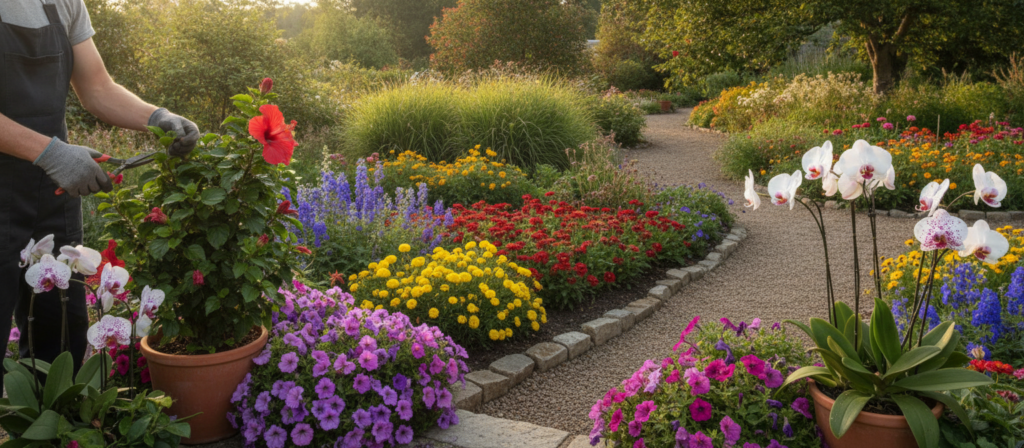
Deadheading means cutting off old flowers before they make seeds. This stops the plant from using energy on seeds. Instead, it makes new buds and more landscaping blooms for you.
«Pruning is not just about aesthetics; it is a conversation between the gardener and the plant, ensuring that every branch has the space and light it needs to thrive.»
To deadhead well, use sharp shears to cut the stem just above healthy leaves. This makes the plant fuller and more compact. Doing this often makes your plants bloom longer.
Seasonal Pruning Strategies for Flowering Shrubs
Managing garden flowering shrubs needs a special approach. Seasonal pruning keeps them shaped and healthy. Always remove dead or damaged wood first.
When pruning woody plants, timing is key. Prune spring-bloomers right after they finish flowering. Summer-bloomers do best with a trim in late winter or early spring.
| Plant Category | Maintenance Goal | Best Time to Prune |
|---|---|---|
| Spring-Blooming Shrubs | Shape and Size | Immediately after flowering |
| Summer-Blooming Shrubs | Vigorous Growth | Late winter or early spring |
| Perennial Flowers | Repeat Blooms | Throughout the growing season |
Learn these skills to make your landscaping blooms last longer. Whether it’s delicate perennials or strong garden flowering shrubs, your hard work will pay off. Regular care makes your outdoor space beautiful and strong.
Managing Common Garden Pests and Diseases
Keeping your garden safe from pests is key to beautiful flowers. Watch your garden closely to fight off pests and diseases. This way, your top flowering plants for garden design stay healthy.
Identifying Early Signs of Plant Stress
Plants show signs when they need help. Look for discolored leaves or plants that are not growing well. These signs mean pests might be eating them.
Spotting problems early stops them from getting worse. Check leaves and stems for webs or bugs. This helps you fix issues before they harm your top flowering plants for garden design.
Utilizing Integrated Pest Management Practices
Integrated Pest Management (IPM) is a smart way to garden. It uses natural solutions and good bugs to fight bad ones. This keeps your garden healthy and balanced.
Use disease-resistant plants and space them right for air. If needed, use safe treatments like neem oil. These choices help your garden and the environment.
Designing for Year-Round Seasonal Interest
You can make your outdoor space change with the seasons. A pro way to landscaping with flowers keeps your yard looking great all year. By picking the right plants, your yard will change with the seasons.
Selecting Spring and Summer Blooming Varieties
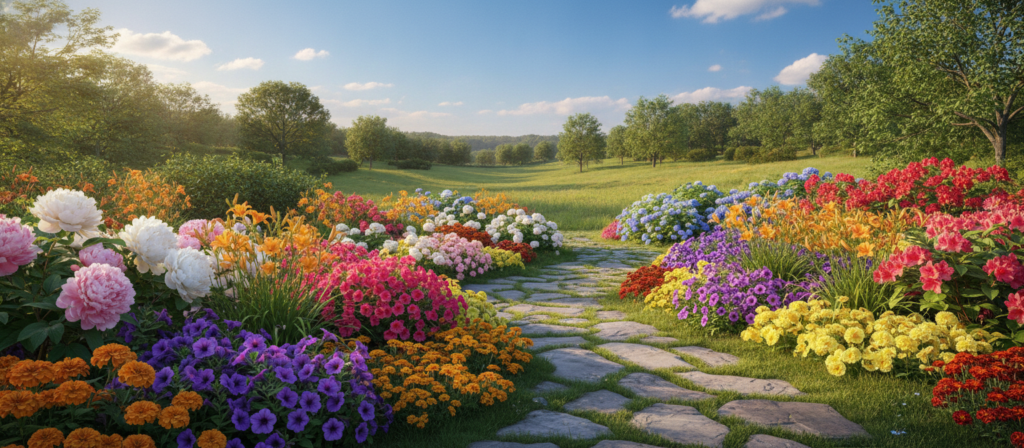
Choosing the right seasonal blooming plants is key for a lively garden. You want colors and smells to change often. Start with spring bulbs like tulips and daffodils.
Then, add flowering shrubs like azaleas and lilacs. When it gets warmer, switch to summer plants. Use coneflowers, daylilies, and hydrangeas for long-lasting blooms.
Integrating Fall and Winter Interest Plants
Good garden planning includes thinking about winter. Use plants with colorful bark like red-twig dogwood. They look great against a winter sky.
Don’t forget plants with berries and evergreen leaves for winter. Hollies and winterberry shrubs add color even in cold weather. By thoughtfully layering these plants, your garden stays beautiful all year.
Tools and Equipment for Professional Landscaping
Keeping your landscape beautiful needs more than just love for it. You also need the right tools. Good tools make gardening easier and more fun. This is key for growing the best ornamental plants.
Essential Hand Tools for Planting and Maintenance
You need reliable hand tools for a healthy garden. A sharp pair of bypass pruners is crucial for clean cuts. This helps prevent diseases in your plants.
You’ll also need a strong trowel for digging small holes. And a good shovel for bigger planting jobs.
Ergonomic design is important when picking tools. Tools that are easy to hold will make your work less tiring. This way, your best ornamental plants get the care they need to grow well.
Safety Gear and Protective Equipment
Don’t forget about your safety when gardening. Yard work can cause injuries if you’re not careful. Always wear tough gardening gloves to protect your hands.
Wearing safety glasses is also a smart practice. They keep your eyes safe from flying mulch or branches. With these simple steps, you can focus on your best ornamental plants without worry. A safe gardener is always more productive.
Conclusion
Building a stunning landscape is a rewarding journey. It mixes art with gardening skills. You now know how to pick the right plants and keep your garden healthy.
Gardening is always changing. Your garden will grow and change with the seasons. Watch how your choices grow and fit the local weather.
Be proud of your garden. Whether you pick bright flowers or changing plants, you help the environment. Share your garden with friends or gardening groups to get new ideas.
Begin your garden project today. Create a vibrant, healthy yard. It will bring you joy for many years.