
Creating a home for pollinators in your yard is a deeply rewarding hobby. By picking the right plants, you can make your yard come alive. This helps local animals and makes your home look beautiful.
Selecting specific varieties is key. The right plants turn your yard into a butterfly paradise. This guide helps gardeners of all levels to attract butterflies to your garden all year.
You don’t need a big yard to help. Even a small area can be a haven with the right plants. Start today and see your yard become a hub of life. Your hard work will help these creatures thrive.
Understanding the Needs of Butterflies
Starting to attract butterflies to your garden means learning what they need. They need more than just pretty flowers. By picking the right butterfly garden plants, you help create a healthy home for them.
Identifying the Life Cycle Requirements
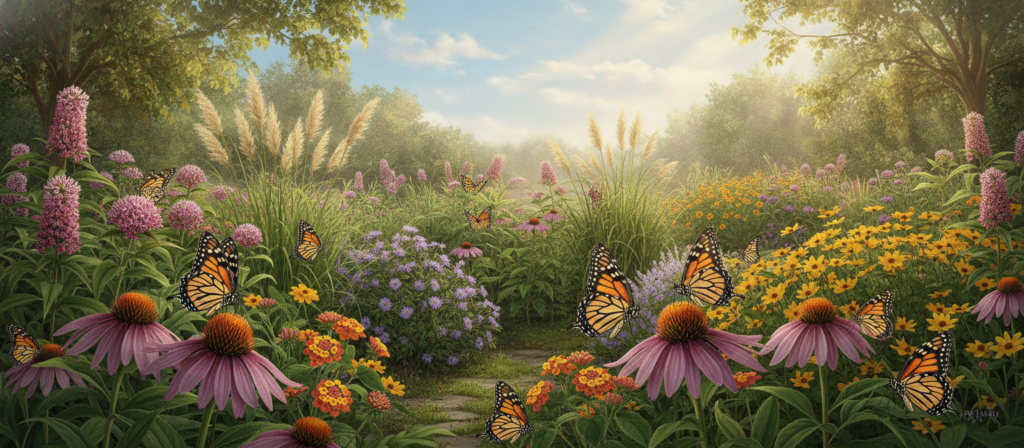
Butterflies go through a cool change from egg to adult. Each step needs special help. Make sure your garden has food for young ones and nectar for grown ones.
- Host plants are key for eggs and caterpillars.
- Nectar-rich flowers give energy for flying adults.
- Safe spots are needed for pupation and protection.
The Importance of Sun and Shelter
Butterflies need sun to stay warm. They like sunny spots to warm up. Without these, even the prettiest gardens won’t attract them.
Shelter is also crucial for protection. Use shrubs, grasses, and trees to block wind and rain. These help butterflies stay safe when it’s bad outside.
Water Sources and Puddling Stations
Butterflies also need water for minerals and salts. Create a puddling station in a sunny area. It’s like the damp soil they find in nature.
To make a good station, use a shallow dish with sand or soil. Keep it wet. Add flat stones for butterflies to land on while drinking. Meeting these needs helps attract butterflies all season.
Planning Your Butterfly-Friendly Garden Layout
Your dream of a vibrant butterfly sanctuary starts with a good plan. By organizing your space well, your butterfly-friendly plants will thrive. They will also welcome local pollinators.
Choosing the Right Location in Your Yard
Butterflies need warmth to fly. Choose a spot that gets at least six hours of direct sunlight every day.
This warmth helps them fly and move their wings. Also, pick a spot that protects them from strong winds. This keeps smaller species safe in your garden.
Designing for Visibility and Accessibility
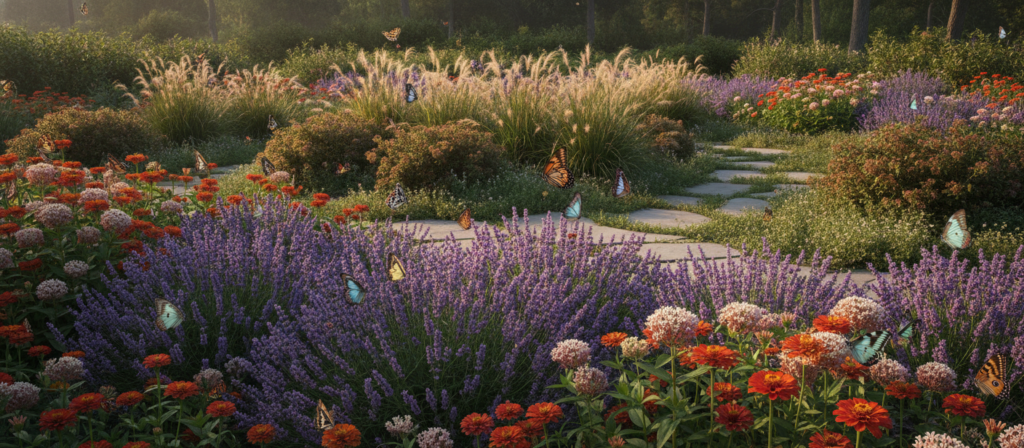
A good garden is fun for you and the insects. Put your butterfly garden plants near windows or where you sit. This way, you can watch without bothering them.
Make sure your garden beds are easy to get to. This helps you keep the garden healthy and full of life all season.
Grouping Plants for Maximum Pollinator Attraction
Butterflies like big patches of color. Group your butterfly-friendly plants together. This makes it easy for them to find food.
This saves them energy and makes your yard look amazing. Your garden will be a colorful, lively place for many species.
Selecting the Best Flowering Plants That Attract Butterflies
Turning your yard into a butterfly home is easy. Just pick the right flowers. The right plants are key to a successful garden. They give butterflies the energy they need to fly and have babies.
Criteria for Choosing High-Nectar Varieties
Butterflies need lots of energy to fly around your garden. Choose plants that make lots of nectar. Look for flowers that are easy for them to land on and eat from.
Having food all the time keeps butterflies happy. Mix plants that bloom at different times. This keeps the energy flowing all season.
Native Versus Non-Native Plant Considerations
Native plants are best for a healthy garden. They have grown with local insects for thousands of years. They give the best food for native butterflies and fit your local weather and soil.
Non-native plants can also attract butterflies. But, they might not help native butterflies as much. Native plants are easier to care for and need less chemicals.
Color Palettes That Appeal to Butterflies
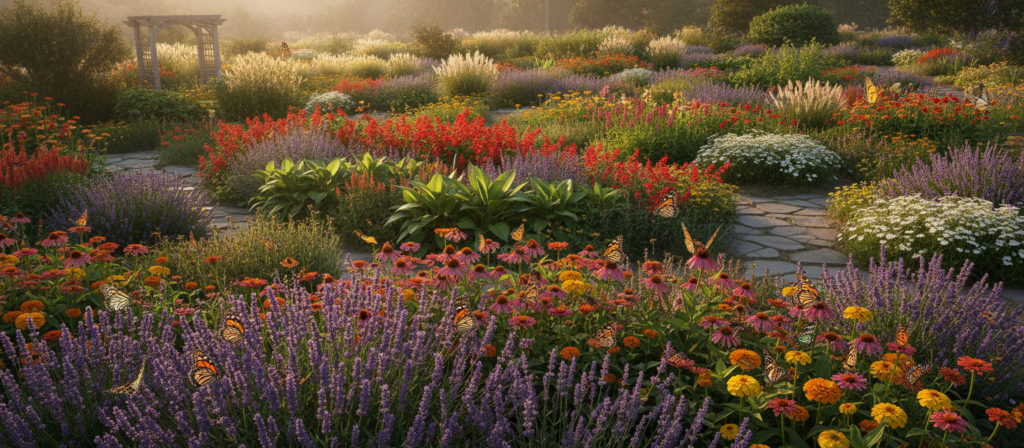
Butterflies love certain colors like purple, yellow, and red. Using these colors in your garden will attract more butterflies. This makes your garden more lively and colorful.
| Plant Category | Primary Benefit | Color Range | Maintenance Level |
|---|---|---|---|
| Native Perennials | High Nectar Quality | Purple, Yellow, Red | Low |
| Annual Flowers | Rapid Growth | Bright Oranges, Pinks | Moderate |
| Flowering Shrubs | Shelter and Food | White, Lavender | Low |
Choosing the right butterfly-attracting flowers makes a great garden. A diverse garden is a happy garden. You’ll see lots of colors and movement all summer.
Essential Nectar Plants for Adult Butterflies
To keep butterflies happy, we need good nectar plants. Adult butterflies need sugar to keep going. By picking the right butterfly nectar plants, your garden can become a butterfly home.
«A garden is a grand teacher. It teaches patience and careful watchfulness; it teaches industry and thrift; above all, it teaches entire trust.» — Gertrude Jekyll
Perennials That Provide Reliable Food Sources
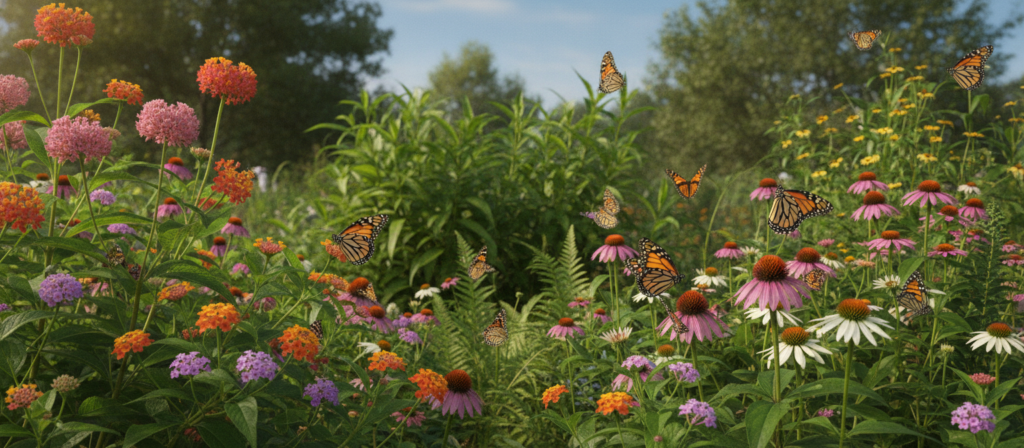
Perennials are key for a garden that helps pollinators. They come back every year. Plants like Purple Coneflower, Bee Balm, and Blazing Star bloom all season.
Annuals for Quick and Vibrant Nectar Production
Annuals are great for a quick garden boost. They grow fast and flower a lot. Zinnias, Cosmos, and Lantana are good for filling gaps.
Shrubs and Trees That Support Large Populations
Big plants like shrubs and trees give lots of nectar. They attract many butterflies. Adding these plants keeps your garden busy, even in hot summer.
Incorporating Host Plants for Caterpillar Development
Butterfly nectar plants feed adult butterflies. But host plants are where caterpillars grow. They turn into beautiful butterflies here. Adding these plants to your garden helps butterflies thrive.
Why Host Plants Are Vital for Conservation
Many people focus on adult butterflies. But the young ones are just as important. Some butterflies need special plants to survive.
For example, Monarch butterflies need milkweed. Without these plants, butterflies can’t grow. Adding host plants to your garden helps butterflies live and grow.
Selecting Specific Plants for Common Butterfly Species
To attract many butterflies, know which ones live in your area. Each butterfly likes different plants. Start with plants that attract common butterflies.
- Milkweed: Essential for Monarch caterpillars.
- Parsley and Dill: Favorites for the Black Swallowtail.
- Spicebush: The primary host for the Spicebush Swallowtail.
- Violets: Necessary for the Fritillary butterfly.
Managing Caterpillar Feeding Without Damaging Your Garden
Seeing holes in leaves might worry you. But minor leaf damage means your garden is working well. It shows your garden is helping pollinators grow.
Plant host plants in less seen parts of your yard. This way, you can keep your butterfly nectar plants looking good. You’ll see butterflies change from caterpillars to beautiful insects right before your eyes.
Seasonal Planting Strategies for Continuous Blooms
To keep butterflies happy, your garden needs nectar all year. Plan for each season to keep your yard full of life. Choosing the right plants for butterfly habitat is key.
Good planning fills the gaps between blooms. Plants for butterfly conservation give them the energy they need. Consistency is the key to keeping them around all season.
«The secret to a successful pollinator garden lies in the rhythm of the seasons, ensuring that no butterfly goes hungry from the first thaw to the final frost.»
Spring Flowers to Kickstart the Season
Spring butterflies are hungry and ready to find a mate. Plant early bloomers to give them energy right away. Here are some spring plants to consider:
- Wild Columbine for early nectar access.
- Phlox to provide a carpet of color and food.
- Bleeding Hearts for shaded garden corners.
Summer Bloomers for Peak Butterfly Activity
Summer is when your garden should be at its best. This is when butterflies are most active. Plant lots of colorful flowers together to attract them.
Choose plants that bloom a long time and have lots of nectar. Sun-loving perennials are great in the summer. They help butterflies fly and lay eggs.
Fall Plants to Support Migrating Species
Late-season flowers help butterflies get ready to migrate. As it gets cooler, they need lots of energy. Add plants for butterfly conservation to your garden for them.
Include hardy asters and goldenrods for the fall. These plants do well in cooler weather. They help many species survive until winter.
Maintaining Your Pollinator Garden for Maximum Impact
Keeping your garden healthy helps butterflies survive. By taking care of your butterfly-friendly plants, you make a safe place for them. This care keeps your garden a home for local wildlife all year.
Safe Watering Practices for Your Garden
Watering right is key for your pollinator garden plants. Water at the base, not overhead, to stop fungus. This way, water goes straight to the roots.
Don’t soak the soil too much. Many plants like dry soil. Use drip irrigation or a soaker hose to keep it right. Always check the soil before watering to avoid rot.
The Dangers of Pesticides and Herbicides
Chemicals harm butterflies a lot. Pesticides and herbicides kill good bugs too. Use natural ways to keep pests away.
«A garden free of synthetic chemicals is the greatest gift you can offer to the pollinators that visit your home.»
If pests show up, try removing them by hand or use natural enemies. Avoid harmful sprays to keep your garden safe.
Deadheading and Pruning for Continued Growth
Deadheading boosts nectar. It makes your pollinator garden plants grow more flowers. This keeps food coming for butterflies.
Pruning keeps plants healthy and looking good. Cut out dead parts to stop disease. Here’s a guide for your garden care.
| Task | Frequency | Benefit |
|---|---|---|
| Deep Watering | Weekly | Promotes deep root growth |
| Deadheading | Bi-weekly | Increases nectar production |
| Organic Mulching | Annually | Retains soil moisture |
| Light Pruning | Seasonal | Improves plant structure |
Avoiding Common Mistakes in Butterfly Gardening
Success in butterfly gardening is not just about what you plant. It’s also about what you avoid. Even the most careful gardeners can make mistakes. These mistakes can stop pollinator garden plants from doing well. Knowing these common errors helps you improve your garden for local wildlife.
Over-Mulching and Soil Health Issues
Many gardeners use a lot of mulch to keep weeds away and hold moisture. But too much mulch blocks insects from getting to the soil. This can hurt the life cycles of many species that need to touch the earth.
Use thin layers of organic compost or leaf litter instead. This keeps the soil healthy and lets insects move around. Healthy soil is the foundation of a good ecosystem.
Ignoring the Need for Overwintering Sites
Many gardeners clean up their gardens too much before winter. This removes the shelter that pupae and dormant adults need to stay warm. Leaving some debris, like hollow stems and dried leaves, is crucial.
For plants for butterfly conservation, let your garden look a bit wilder in winter. Keep perennials up until spring. This helps more butterflies survive.
Planting Too Sparsely for Effective Attraction
Butterflies have trouble finding small, scattered flowers. If your pollinator garden plants are too spread out, fewer butterflies will visit. Planting in bigger groups makes your garden more visible and attractive.
- Group the same species together to create a «landing pad» effect.
- Ensure your color palette is bold enough to be seen from a distance.
- Focus on density to provide a reliable and efficient nectar source.
By grouping your plants, you make your garden better for butterflies. A well-planned garden buzzes with life all season.
Conclusion
Creating a butterfly garden is a rewarding journey. It makes your local area better. You also connect more with nature.
Every small garden helps a big cause. It supports butterflies that need certain plants to live.
Begin your garden today and see the change. Your yard will become a colorful, lively place. Tell others about your garden to encourage them to help too.
Your garden will be a lasting gift to your community. It will be a place of life and color all year round.