
Ever wonder why some flowers mean so much to us? For ages, people have told captivating tales about nature. This guide helps you learn about flowers featured in myths and legends that have shaped our world for thousands of years.
Exploring these old stories helps us appreciate nature more. You’ll see how flowers became symbols of love, sadness, or new beginnings. It’s like seeing your garden as a place where every flower has a story from the past. Let’s dive into the secret history of these plants and how they’ve touched our culture.
Understanding the Cultural Significance of Mythological Flora
How did simple plants become the base of big stories? Ancient people looked at nature with great respect. They used mythological flora to understand life’s big questions.

The Role of Plants in Ancient Storytelling
In ancient storytelling, plants were more than just scenery. They were key parts that showed deep feelings like sadness, love, and change. These stories helped people see their world in a magical and careful way.
Here’s how these stories worked in old times:
- Metaphorical representation: Plants showed the cycle of life, from start to end.
- Moral guidance: Stories with plants taught about being humble or the dangers of pride.
- Supernatural connection: Certain plants were seen as links or messengers between gods and people.
Why Flowers Became Symbols of Divine Power
Flowers were seen as divine power symbols because of their short beauty and ability to come back. When a flower bloomed after winter, it was seen as a sign from above. This view let people share their beliefs and fears through nature.
By linking plants with gods, people felt closer to the powers that ruled their lives. These divine power symbols reminded everyone of the sacred order. Through ancient storytelling, we see how these plants shaped a culture’s identity. Their impact still shapes how we see nature today.
How to Research Flowers Featured in Myths and Legends
To understand flowers featured in myths and legends, you need to mix old stories with new science. This mix of history and science helps you find the real plants behind the myths.
Utilizing Botanical Databases and Folklore Archives
Start by looking at digital repositories. These are key for today’s research. Check out botanical databases like the Missouri Botanical Garden’s Tropicos or the International Plant Names Index.
These sites give you info on many plants. They also have maps. At the same time, look at folklore archives. These help you see how plants were seen in old cultures. University libraries and online collections have old texts that show how people saw plants back then.
«The study of plants is not merely a scientific endeavor; it is a conversation with the past, where every petal tells a story of human wonder and divine connection.»
Cross-Referencing Ancient Texts with Modern Plant Taxonomy
After you get your info, it’s time for plant taxonomy. This helps sort plants by what they look like. Match what old texts say with what plants look like today.
Look for clues like leaf shape, flower color, and where plants grow. By matching these with today’s science, you can find the right plants. This way, your research stays true to the facts.
Verifying Scientific Names for Historical Accuracy
Being accurate is key when working with old records. Plant names change over time, causing confusion. Always check the scientific name to make sure you’re right.
Using the right names keeps your study clear. This makes your hobby into a serious study of nature. Here’s a table with the best resources for your research:
| Resource Type | Primary Function | Key Benefit |
|---|---|---|
| Botanical Databases | Scientific classification | High accuracy |
| Folklore Archives | Cultural context | Historical depth |
| Taxonomy Guides | Species identification | Standardized naming |
Identifying Flowers Associated with Greek and Roman Deities
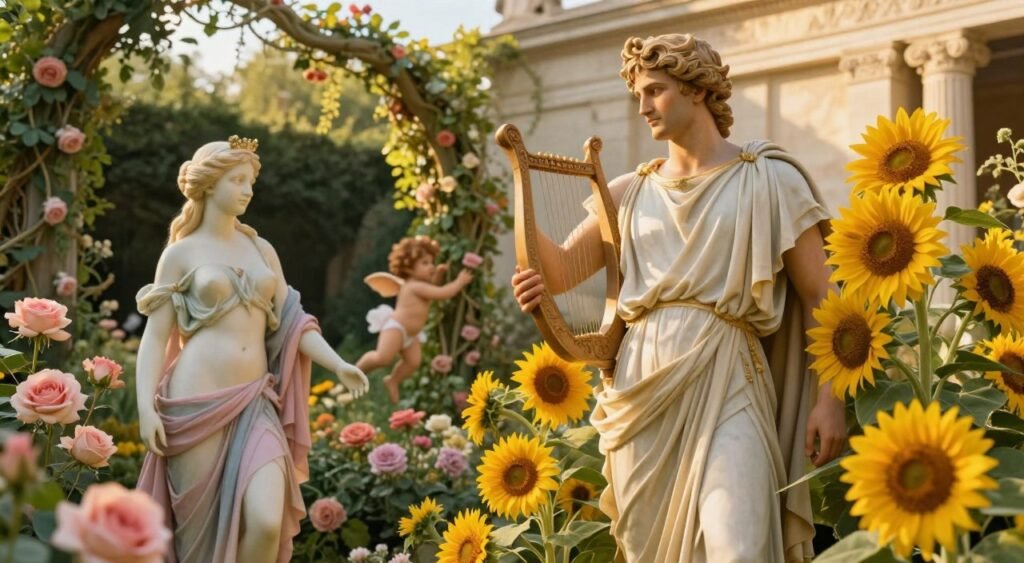
Many flowers in your garden tell stories of Greek and Roman deities. These plants were more than just pretty. They stood for divine power, loss, and beauty that lasts forever. Learning about these stories makes us appreciate the plants more.
The Narcissus and the Tragedy of Self-Love
The Narcissus flower is famous for a myth. A beautiful youth loved his own reflection so much, he died. Where he once stood, a flower bloomed.
This flower warns us about being too proud. It’s a reminder of the fine line between loving oneself and being too full of oneself.
Hyacinthus and the Blood of the Fallen Hero
The Hyacinth flower is tied to a sad story of Greek and Roman deities. Apollo, the god, accidentally killed Hyacinthus during a game. Apollo was so sad, he didn’t let Hades take Hyacinthus’s soul.
Then, Apollo turned Hyacinthus’s blood into a beautiful, fragrant flower. This turned a sad moment into a symbol of love and memory.
Roses and the Devotion to Aphrodite
The rose is closely tied to Aphrodite, the goddess of love. A story says the rose turned red from Aphrodite’s blood. She got hurt on a thorn while saving her lover, Adonis.
«The rose is the flower of love, a symbol of the heart’s deepest passions and the fragility of life itself.»
This story made the rose a key part of art in the West. It stands for love, desire, and the complex feelings we have.
| Deity | Associated Flower | Symbolic Meaning |
|---|---|---|
| Narcissus | Narcissus | Vanity and Self-Reflection |
| Apollo | Hyacinth | Grief and Remembrance |
| Aphrodite | Rose | Love and Passion |
Exploring Floral Symbolism in Eastern Folklore
The rich tapestry of Eastern folklore shows how flowers shape culture and spiritual practice. Plants are more than just decorations; they carry deep meanings. By looking into these traditions, you learn to appreciate the floral symbolism that has guided many.
The Lotus as a Symbol of Enlightenment in Buddhism
In Buddhism, the lotus is very special. It stands for the path to enlightenment. The flower grows in dirty water but blooms clean and beautiful.
This shows our own journey to find peace and understanding.
«The lotus flower blooms most beautifully from the deepest mud.»
Cherry Blossoms and the Transience of Life in Japanese Tradition
In Japan, cherry blossoms, or sakura, remind us of life’s short time. They bloom and then fall, showing us impermanence. This idea is seen in art, poetry, and everyday life, teaching us to live in the moment.
Chrysanthemums and Imperial Authority
The chrysanthemum is a symbol of power and nobility in Asia. It was once a sign of imperial authority. It’s also seen as a symbol of long life and energy, used in medicine and festivals.
Learning about these plants helps us connect with Eastern values. The lotus and cherry blossom teach us about resilience and living in the moment. These stories show the deep connection between people and nature.
Uncovering the Legends of European Wildflowers
Exploring the legends of European wildflowers shows a magical side. For ages, these plants were more than plants. They were seen as links to the supernatural.
By learning these stories, a simple walk in the woods becomes a journey through history.
The Primrose and the Gateway to Faerie Realms
The primrose was seen as a sacred key in old traditions. Folklore says it can open doors to faerie realms. Holding primroses lets you see spirits that others can’t.
Foxgloves and the Protection of Woodland Spirits
Foxgloves are well-known European wildflowers. They protect woodland spirits. People were warned to respect them.
They believed foxgloves sheltered fairies in storms. Damaging them could bring bad luck.
Bluebells and the Enchantment of the Forest Floor
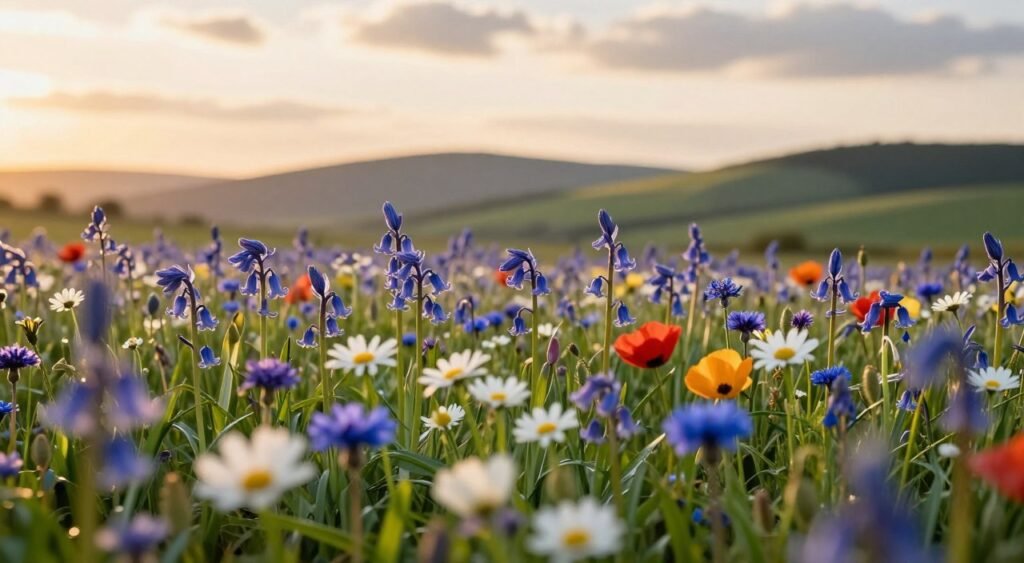
Bluebells cover the forest floor with color. Their legend is as captivating as their beauty. They are linked to enchantment.
Old tales say bluebell ringing means spirits are near. Walking into bluebells might trap you in a fairy dance.
| Flower Name | Primary Legend | Symbolic Meaning |
|---|---|---|
| Primrose | Gateway to Faerie | New Beginnings |
| Foxglove | Spirit Protection | Hidden Magic |
| Bluebell | Forest Enchantment | Everlasting Love |
Step-by-Step Guide to Creating a Myth-Inspired Garden
Your outdoor space can become a living library of plants and myths. By making a myth-inspired garden, you turn a simple area into a special place. It honors the stories of old times. This needs both plant knowledge and a love for ancient legends.
Selecting Plants Based on Their Mythological Origins
Start by picking mythological flora that interests you. Learn about the mythological origins of plants to match your garden’s theme. For example, roses connect to Aphrodite, and narcissus ties to Greek myths.
Think about your area’s climate when picking plants. You want to honor history but also keep plants alive. Choose species that are both meaningful and can grow well in your area.
Designing Your Garden Layout for Narrative Flow
A good garden tells a story as you walk through. Group plants by their cultural or geographic roots. Use paths to guide visitors through different parts of your garden, like from Eastern lotus ponds to European wildflower meadows.
Add special points like statues or benches for reflection. These help tell your garden’s story. By arranging your mythological flora well, every part of your garden feels special and connected.
Maintaining Your Mythic Garden with Traditional Care Methods
To honor your plants’ history, use old care methods without harsh chemicals. Many ancient cultures used organic soil amendments and natural pest control. Try composting or companion planting to keep your myth-inspired garden healthy all year.
Watching your plants closely is important. Prune and water them carefully, seeing it as a meditative practice. By caring for your plants this way, you keep their stories alive for many years.
Documenting Your Findings in a Mythological Floral Journal
Your journey into the world of legendary plants is special. It needs a place for reflection and notes. A mythological floral journal is perfect for this.
Choosing the Right Medium for Your Observations
First, pick how you’ll store your research. You might like a leather-bound notebook. It feels old and matches the stories you’re studying.
Or, you might prefer digital tools. They let you add images, sounds, and links. Your mythological floral journal should be fun to use every day.
Recording Symbolic Meanings and Personal Reflections
Your notes should feel personal. When you write about a flower’s meaning, think about how it relates to you. This makes your journal special.
Writing down your thoughts helps you understand myths better. It turns your notes into a meaningful narrative of your growth.
Sketching and Pressing Specimens for Future Reference
Visuals are important. Even simple drawings can help you remember plants. They’re great for later identification.
Pressing flowers is also useful. Once dry, they can be kept in your mythological floral journal. They serve as a lasting reference for your adventures.
| Method | Best For | Key Benefit |
|---|---|---|
| Physical Notebook | Artistic expression | Tactile connection |
| Digital App | Quick updates | Easy searchability |
| Pressed Specimens | Visual reference | Preservation of form |
Preserving the Legacy of Mythic Plants
You play a big role in keeping the stories of legendary plants alive. By protecting these plants, you connect us to the ancient world. Preservation is more than science. It’s about respecting the stories that have shaped our history for ages.
Participating in Botanical Conservation Efforts
Getting involved in botanical conservation helps save rare plants. Many plants from old tales are in danger. You can help by supporting groups that work on saving native plants.
- Join local native plant societies to learn about regional species.
- Volunteer for habitat restoration projects in your community.
- Support seed banks that prioritize the preservation of mythological flora.
- Advocate for policies that protect endangered plant populations in your area.
Sharing the Stories of Mythic Flora with Your Community
Teaching others about flowers featured in myths and legends is key. When you share these stories, you make people care more. They are more likely to protect what they understand and love.
Think about starting small workshops or a community garden for mythological flora. Label your plants with their legendary stories. This makes your garden a place of learning. It keeps the cultural value of these plants alive and interesting.
The preservation of our natural heritage is a shared responsibility that bridges the gap between the past and the future.
Your work in botanical conservation makes a big difference. By mixing science with stories, you help these plants’ magic live on. Every step you take keeps these old tales alive today.
Conclusion
Your journey into mythic flora turns your backyard into a living library. It connects you to human history. By choosing certain blooms, you link modern gardens to ancient stories.
Every flower has a story that lasted for centuries. Adding these plants to your space keeps cultural tales alive. You help keep these stories alive for others to enjoy.
Start collecting legendary flowers to connect with nature. Write down your gardening journey in a journal. This makes gardening a way to explore old stories and symbols.
Share your plant stories with your community. This helps everyone see the beauty of nature and stories together. Your efforts keep ancient traditions alive today.